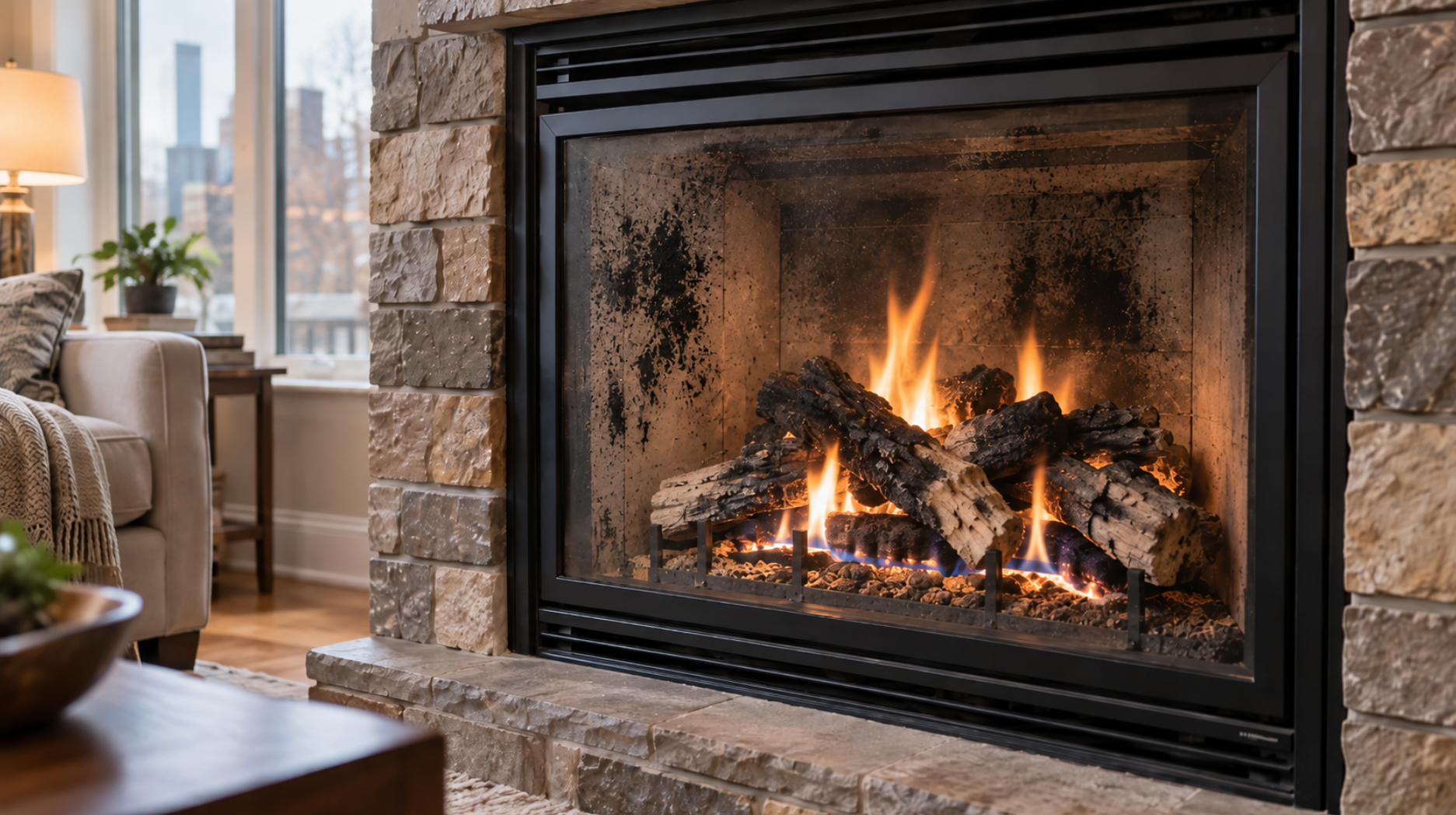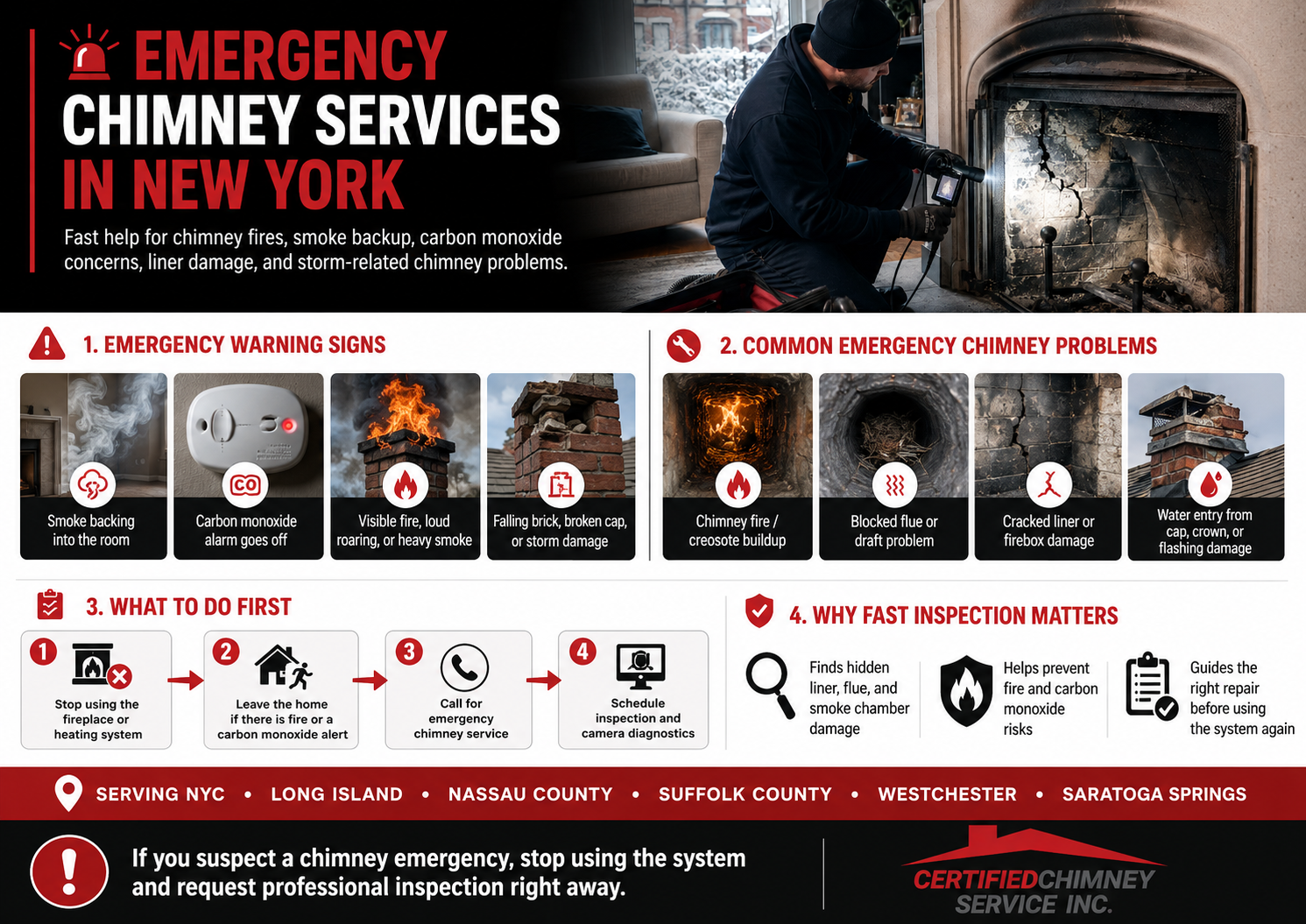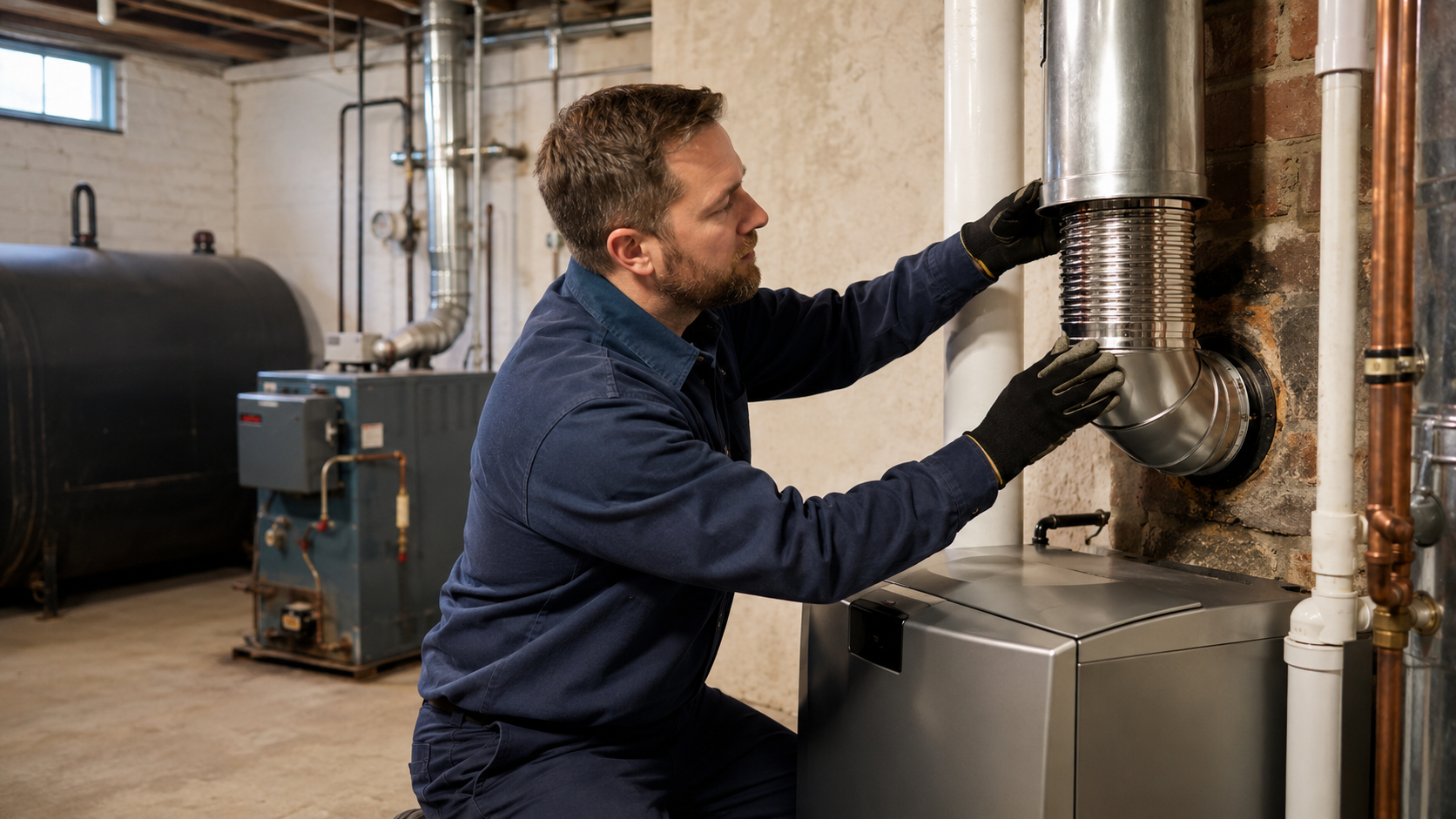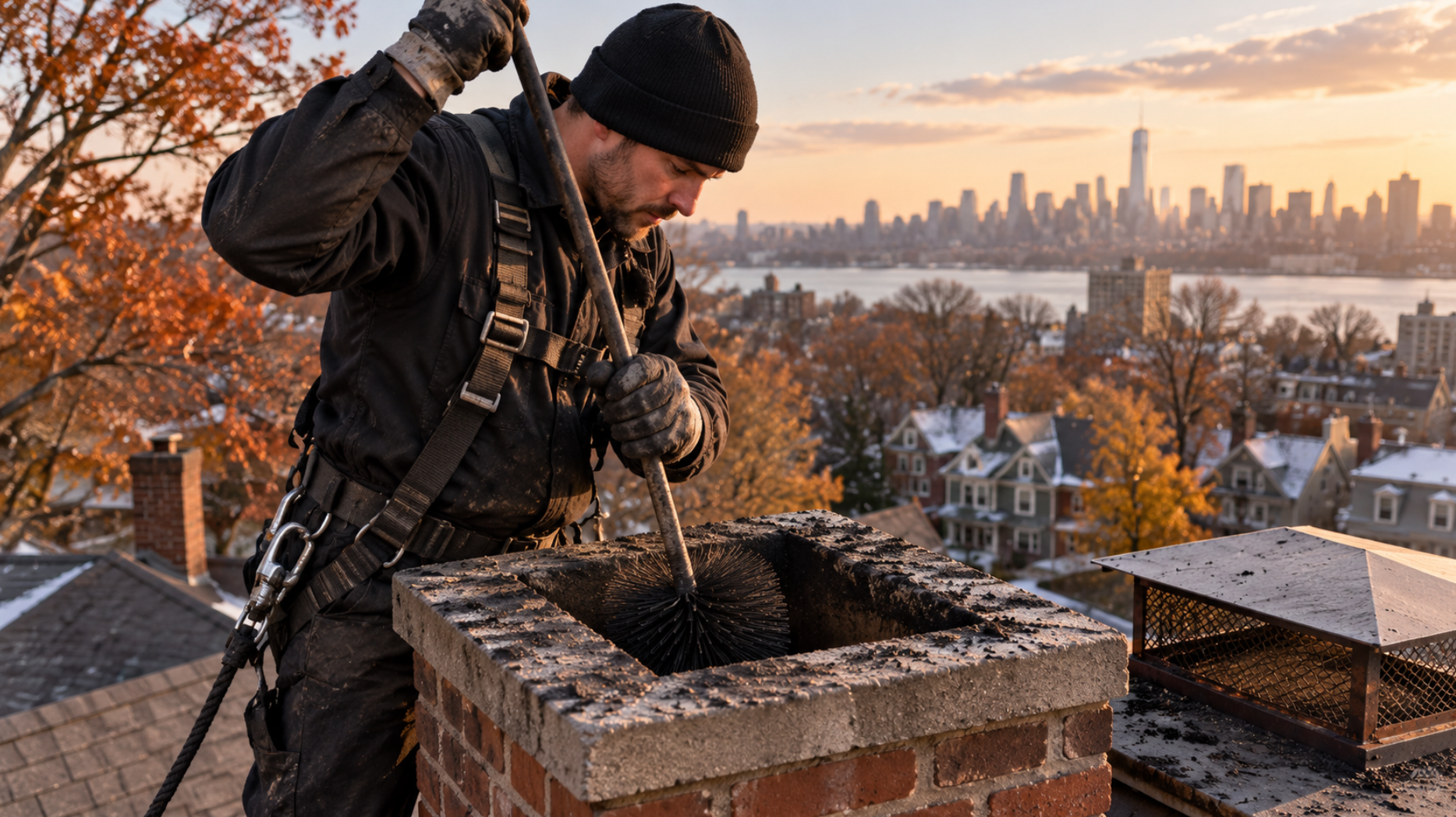
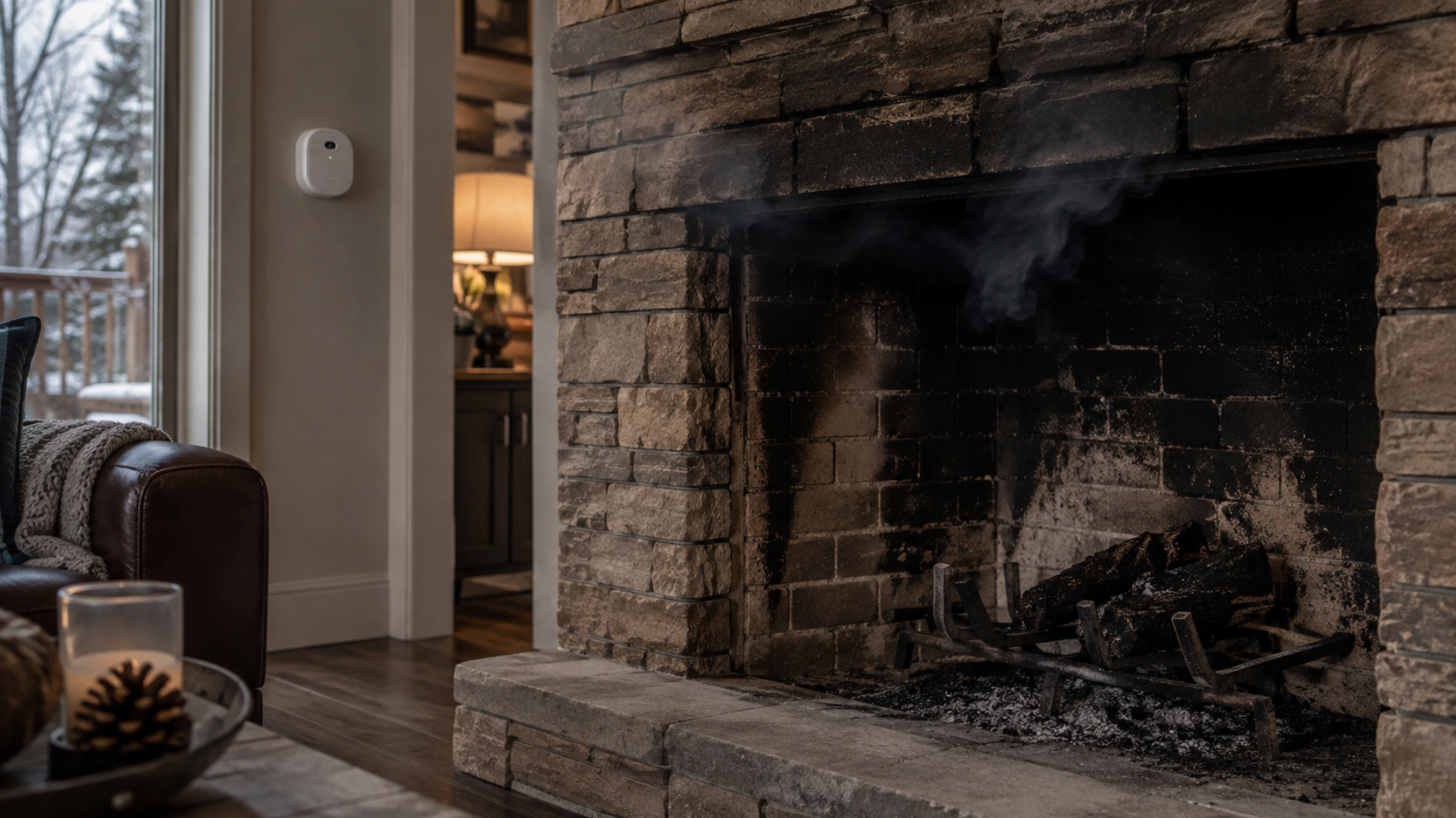
The first cold week of the year is when many New Yorkers discover their fireplace smokes. Nothing broke overnight. The physics of the chimney changed, and a flue that behaved all summer starts to struggle.
Why temperature matters so much
Draft is driven by the difference between the warm air in the flue and the cold air outside. When outdoor temperatures fall, that gap should actually help. The trouble is the first few minutes of a fire, when the flue itself is cold and a plug of heavy air sits in it. Until that plug is pushed out, smoke can spill into the room.
Common causes in colder weather
- Cold flue plug. Exterior chimneys on the north side of a house are the worst offenders.
- Tight houses. Weatherstripped homes starve the fire of make up air.
- Blocked or sooty flues. Creosote and nests narrow the passage.
- Wrong cap or no cap. Wind gusts push air back down.
- Competing fans. Kitchen and bath exhausts pull air from the chimney.
What helps right away
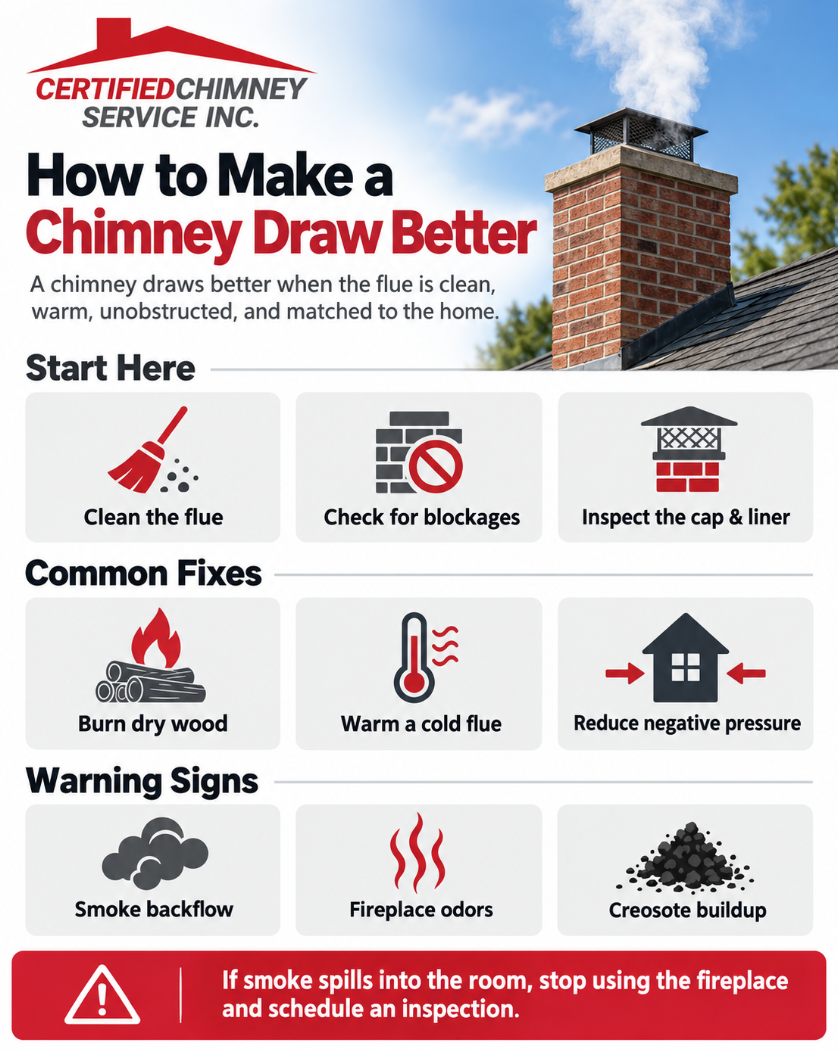
Open the damper fully, warm the flue with a rolled up piece of newspaper held near the top of the firebox, and crack a window nearby before lighting. Burn dry hardwood only.
What a pro fixes permanently
| Finding | Fix |
|---|---|
| Heavy creosote or debris | Sweep and clear |
| Cracked or oversized liner | Reline to the right size |
| Wind downdraft | Install a properly designed cap |
| Opening too large for the flue | Lower the opening or add a smoke guard |
If you want to understand what a technician looks at, our guide to the chimney inspection levels covers it, and a visit from the services team finds the real cause rather than guessing.
FAQ
Why does it smoke only on cold, windy days? Wind shifts pressure around the chimney top and can force air down.
Will a bigger fire help? No. Overfiring can damage the flue and rarely fixes poor draft.
How Draft Actually Works
A chimney moves smoke because hot gas is lighter than cold air. The taller the flue and the bigger the temperature difference between the flue and the outdoors, the stronger the pull. When fall arrives and outdoor air gets colder, the difference grows, which should help. But a cold masonry flue on the outside wall of the house can chill smoke before it climbs, and the column of cold air sitting in the chimney can actually push down into the room when you first light a fire.
The Cold Plug Problem
After weeks of sitting idle, the flue fills with dense, cold air. When you light kindling, the small flame cannot overcome that plug, so smoke rolls into the room. Priming the flue before the main fire solves most of these cases.
- Open the damper fully and hold a rolled, lit sheet of newspaper up near the damper for 30 to 60 seconds
- Crack a window in the room until the fire is established
- Build the fire top down so it burns hot immediately
- Use dry kindling, not large logs, to start
Other Causes of Poor Draft in New York Homes
- Tight houses: modern windows and insulation leave little makeup air, so exhaust fans and dryers pull air down the chimney
- Short chimneys: flues that do not clear the roof ridge by two feet within ten feet can see wind downdrafts
- Oversized flues: an old flue with a newer, smaller appliance never heats up
- Blockages: nests, leaves, or creosote narrowing the flue
- Nearby trees or taller buildings: these create turbulence at the chimney top
What a Technician Will Check
A professional will measure the flue size against the appliance, look for obstructions with a camera, check the cap for clogged mesh and inspect the damper. In many cases, simple changes such as a taller flue extension, a draft-inducing cap or an outside air kit fix the issue.
Tips Before the First Cold Snap
- Schedule the sweep before heating season
- Replace the damper if it does not open fully
- Seal gaps around the fireplace to keep warm air from escaping
- Test carbon monoxide alarms before the first fire
Frequently Asked Questions
Why does my fireplace smoke only when it is very cold
Very cold outdoor air and a cold flue can create a plug of dense air. Priming the flue before lighting helps.
Can a chimney cap reduce draft
A clogged or undersized cap can. A properly sized cap should not.
Is smoke in the room dangerous
Yes. Smoke carries carbon monoxide and particulates. Stop using the fireplace and have it inspected.
Local Help and Related Reading
Our crews handle chimney repair in Brooklyn, chimney repair in Queens, the Bronx, Huntington and Yonkers. See every town on our service areas page or visit our services.
More to read: The Real Cost of Skipping Your Chimney Inspection Before Winter.
For wider guidance, see the EPA Burn Wise program and the U.S. Department of Energy. New Yorkers can also check NYSERDA for state energy resources.