
A Level 2 chimney inspection is a more detailed chimney inspection that includes a visual review of accessible chimney components and video scanning of the flue liner. In New York, a Level 2 inspection is often recommended when a home is being sold, after a chimney fire, after lightning strike damage, when changing the fuel type, or when making chimney system modifications. Certified Chimney NY provides chimney inspections, chimney cleaning, chimney repairs, video equipment inspections, and chimney safety services across Long Island, NYC, Westchester, and surrounding New York communities.
A Level 2 chimney inspection reviews the chimney exterior, chimney interior, accessible attics or crawl spaces, fireplace hearth, chimney cap, chimney crown, chimney chase cover, masonry chimney, chimney liner, chimney flue, and venting system. It may also check visible connections to a wood-burning fireplace, wood stove, pellet stove, gas logs, heating flue, or other appliance. The key difference is video scanning. A chimney technician uses a chimney camera, video scope, closed circuit camera, or video scanning system to inspect internal flue liner joints and hidden chimney damage.
Video scanning helps a chimney inspector see areas that cannot be fully checked from the fireplace opening or chimney top. Camera-assisted inspections can identify cracked liners, missing mortar, gaps between flue liners, creosote buildup, fire damage, damaged fireplace firebrick, chimney piping issues, and structural integrity concerns. This matters because hidden defects can create fire hazards, carbon monoxide leaks, draft problems, and costly structural repairs. A written inspection report may document the findings and explain whether chimney repairs, chimney cleaning, masonry repair, or chimney liner work is needed.
A Level 1 inspection is the basic inspection used when the chimney system has not changed and there are no known performance issues. A Level 2 inspection is more detailed and includes video scanning or similar inspection methods. A Level 3 inspection is the most invasive inspection level and may require special equipment or opening parts of the structure when a serious hidden hazard cannot be confirmed otherwise. The Chimney Safety Institute of America says the three inspection levels were adopted into NFPA 211 to help homeowners understand the work required to examine a system properly.

You may need a Level 2 chimney inspection during the transfer of a property, after a chimney fire, after building fires, after seismic events, after a lightning strike, after storm damage, or when changing to a dissimilar type of fuel or appliance. A Level 2 inspection may also be recommended when adding gas logs, installing a wood stove, changing a pellet stove, replacing a chimney liner, or addressing a fireplace draft problem. Certified Chimney NY also recommends Level 2 inspections when buying or selling a property or making major chimney changes.
Do not use the fireplace before a Level 2 inspection if you suspect a chimney fire, cracked liner, smoke backup, carbon monoxide issue, damaged chimney cap, chimney chase cover damage, or a major fireplace draft problem. Using the fireplace before inspection can make fire safety risks worse. If the chimney simply needs routine service, the technician can explain whether chimney cleaning should happen before, during, or after the inspection process. Cleaning may be needed if soot, creosote buildup, or debris blocks the camera view.
A Level 2 inspection often takes longer than a Level 1 inspection because the chimney service technician must review accessible venting elements and use video equipment inside the flue. The exact time depends on chimney height, chimney type, number of flues, roof access, fireplace condition, appliance connections, and whether the system has heavy creosote buildup or visible damage. Homes with multiple chimneys, masonry chimneys, chimney chase covers, gas appliances, wood stoves, or heating flues may require more time and a more detailed inspection report.
Certified Chimney NY provides Level 2 chimney inspection services, chimney inspections, chimney cleaning, chimney sweep service, video scanning, fireplace repair, masonry repair, chimney chase cover replacement, dryer vent cleaning, glass door installation, chimney repairs, and venting solutions across New York. Their team serves Long Island, NYC, Westchester, Nassau County, Suffolk County, and surrounding communities. Request service through Certified Chimney NY to schedule a Level 2 chimney inspection and review your chimney safety before a home sale, system change, or fireplace use.
Get answers to common questions about chimney cleaning, chimney sweeping, inspections, creosote removal, and fireplace safety for New York homes.
Chimney cleaning is the process of removing soot, creosote, ash, debris, nesting material, and other obstructions from the chimney system. Depending on the fireplace and chimney, a professional chimney sweep may clean the flue, smoke chamber, firebox, damper area, and accessible areas around the chimney cap. The technician may also inspect visible components for damage or conditions that require additional repair.
A chimney sweep can remove soot, creosote deposits, ash, leaves, bird nesting material, animal debris, loose mortar, broken flue tile pieces, and other blockages. Creosote is especially important to remove because it is combustible and can contribute to chimney fires when it accumulates inside the flue.
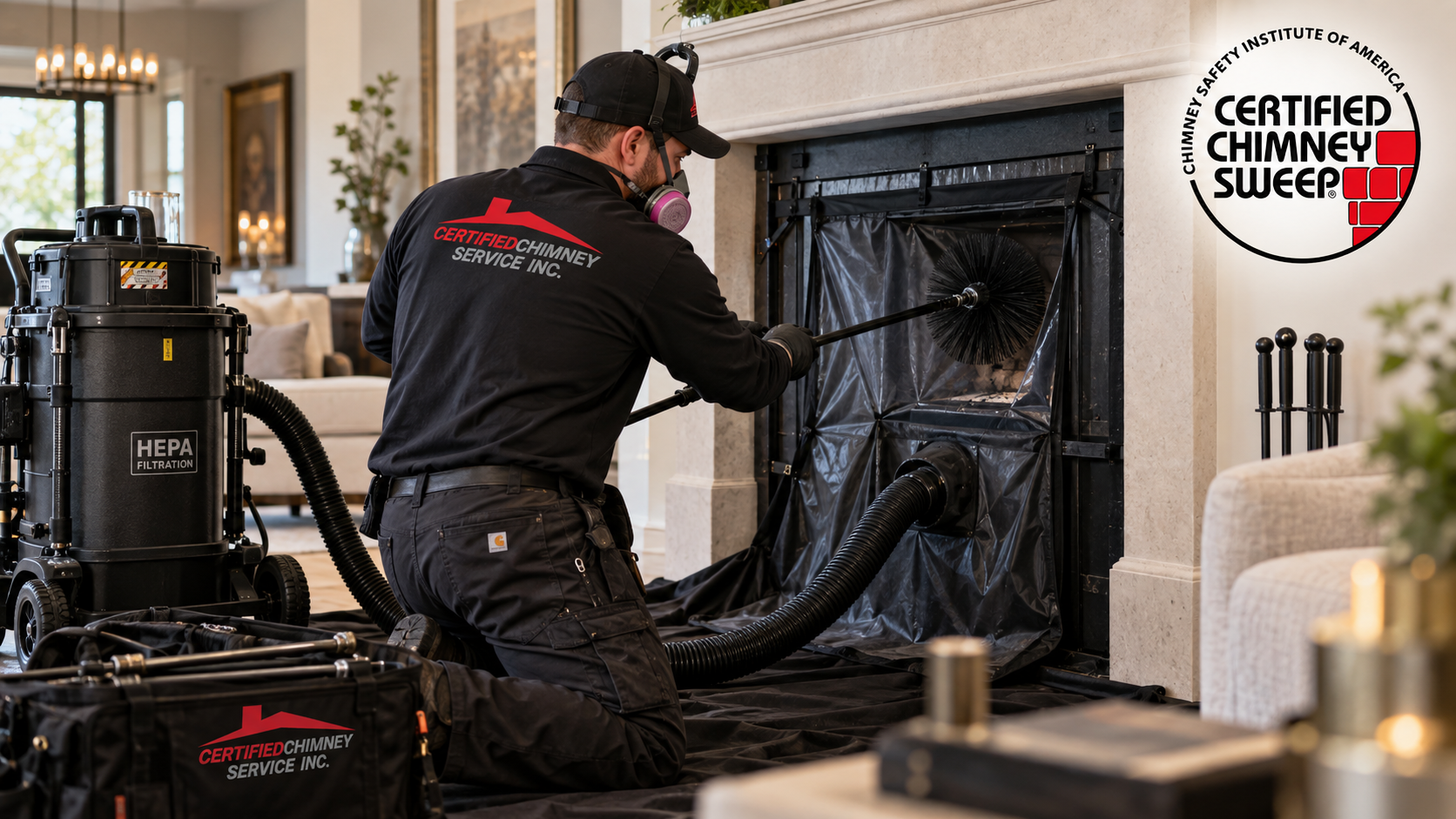
Professional chimney cleaning typically begins by protecting the area around the fireplace with coverings and controlled vacuum equipment. The chimney sweep then uses specialized brushes, rods, rotary cleaning equipment, or other tools to loosen and remove deposits from the flue. Video inspection equipment may also be used when the technician needs a closer look at the chimney liner or hidden portions of the system.
No. Chimney cleaning removes soot, creosote, ash, and debris, while a chimney inspection evaluates the condition of the chimney and fireplace system. An inspection may identify cracked flue tiles, liner deterioration, masonry damage, water intrusion, damaged chimney caps, blockages, or evidence of a previous chimney fire. The two services often work together but serve different purposes.
Chimneys should be inspected at least annually, while cleaning should be performed whenever deposits or obstructions are present. How frequently cleaning is needed depends on fireplace use, the type of fuel being burned, the condition of the chimney, and how quickly creosote accumulates. Heavily used fireplaces and wood stoves may require more frequent service.
Chimney cleaning helps reduce chimney fire risk by removing combustible creosote and other deposits from the flue. Cleaning cannot guarantee that a chimney fire will never occur, which is why inspection is also important. Damaged liners, improper clearances, blockages, and other chimney conditions can create additional safety concerns.
Modern chimney sweeping is designed to control soot and debris during the cleaning process. Professional chimney sweeps commonly use drop cloths, fireplace coverings, vacuum systems, and specialized brushes to help contain debris and protect the surrounding room while the chimney is being cleaned.
Warning signs can include strong smoky odors, visible soot or creosote, poor fireplace draft, smoke entering the room, debris falling into the firebox, animal sounds inside the chimney, or reduced fireplace performance. A chimney that has not been inspected recently should also be evaluated before regular fireplace use.
Schedule professional chimney cleaning and inspection with Certified Chimney NY.
Covers fireplaces, wood stoves, pellet stoves, and heating systems including gas and oil systems. Book now before the winter rush fills our schedule.