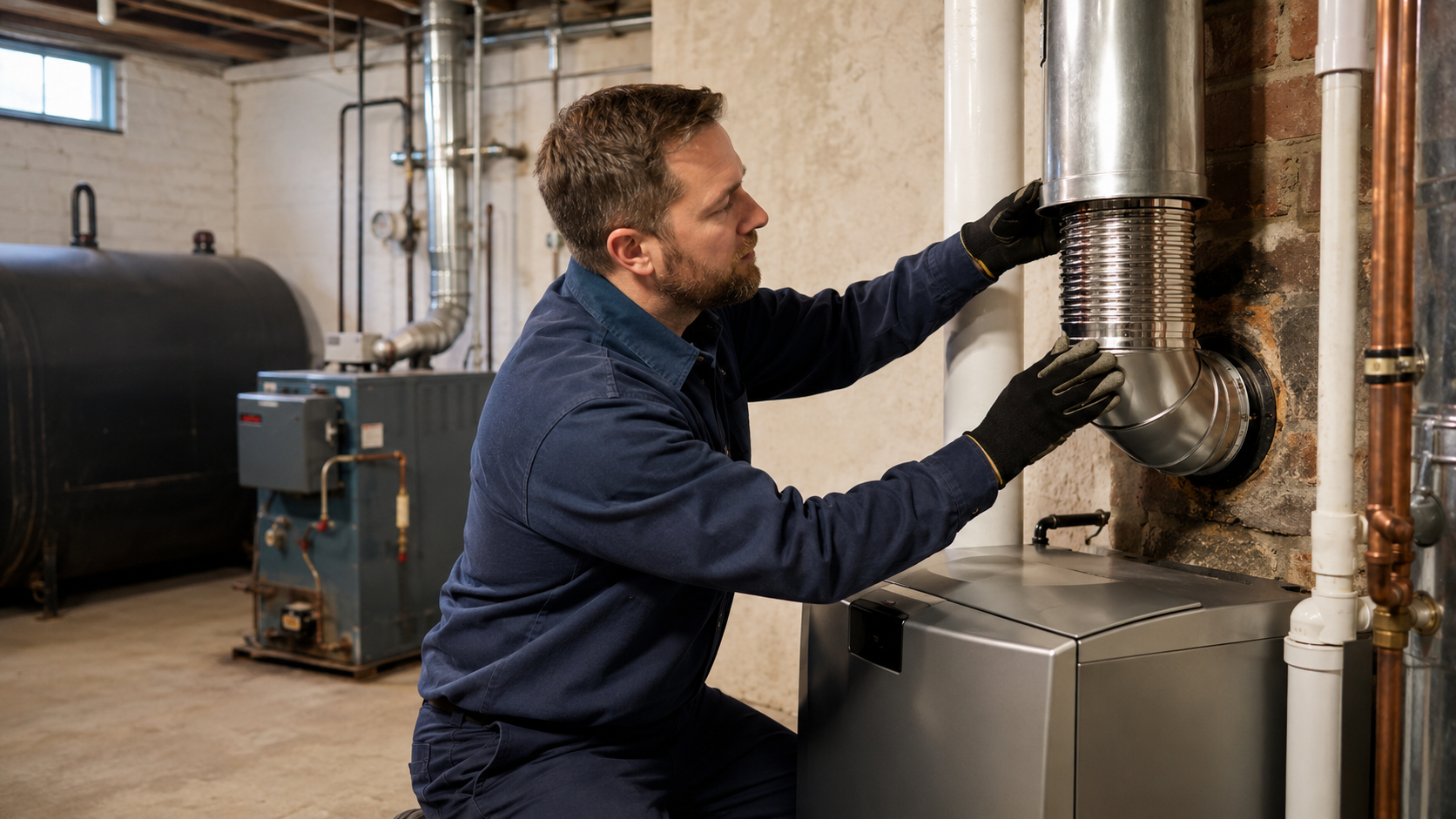
Many New York homeowners are leaving oil heat for gas. The new furnace is the easy part. The chimney, which was built for hot oil exhaust, often needs work before gas can safely use it.
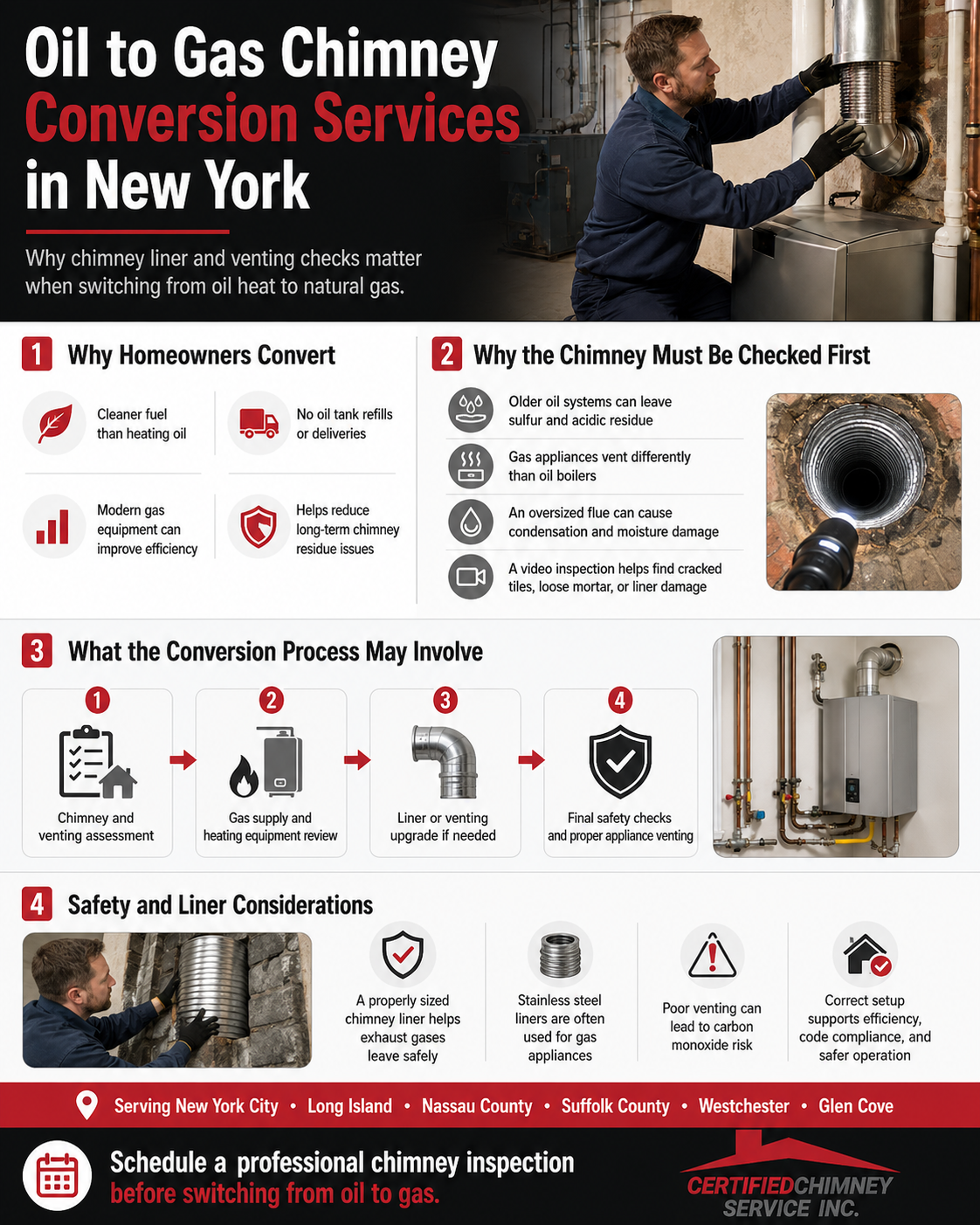
Why the chimney has to change
Gas appliances burn cooler and more efficiently than oil, so the exhaust is cooler and wetter. In a large masonry flue that moisture condenses on the walls, eats away at mortar and can block the flue with debris. A smaller, correctly sized liner keeps the exhaust warm and moving.
What the conversion usually involves
- Inspect the existing flue with a camera.
- Remove old soot and scale left by oil.
- Install a stainless steel or approved liner sized to the new appliance.
- Cap the top and seal around it.
- Test the draft with the new equipment running.
Why fall is a good time
- The heating season has not started, so there is no loss of heat during the work.
- Contractor schedules are lighter than in deep winter.
- You can confirm everything works before the first cold snap.
Cost and savings snapshot
| Item | What to expect |
|---|---|
| Liner work | Depends on height and flue shape |
| Furnace or boiler | Separate from chimney work |
| Annual fuel cost | Often lower with gas |
| Maintenance | Annual inspection still recommended |
The U.S. Department of Energy has general guidance on heating system efficiency, and our team sizes the liner to your specific equipment.
Frequently asked
Can I keep using my fireplace after converting? Usually yes, as long as it has its own flue.
Do I need a permit? Often yes. Your installer and local building department can confirm.
The Chemistry Behind Oil to Gas Chimney Problems
Oil exhaust is hot, dry and heavy with sulfur and soot. Gas exhaust is cooler and carries a large amount of water vapor. When the cooler, wetter exhaust meets a big masonry flue, the vapor condenses on the flue walls. That condensate is acidic, and over a heating season it eats mortar, flakes clay tiles and can leave brick wet from the inside. Many oil to gas conversions fail early because the chimney was never changed.
Sizing the New Liner
A liner has to match the appliance output. Too large and exhaust never warms up. Too small and it chokes. Installers use the appliance rating and the flue height to select a diameter, usually stainless steel, and often insulated when the chimney is on an outside wall.
Steps Before the Gas Crew Arrives
- Camera inspection of the existing flue and any damage
- Remove oil soot and scale so it does not break loose
- Decide whether the same flue serves the water heater or boiler
- Install the new liner and top plate
- Seal the cleanout and connect the appliance
- Verify draft with the equipment running
Water Heaters and Shared Flues
If your gas water heater and furnace share one flue, both must be sized together. A new high efficiency furnace may vent through plastic pipe out the side wall, leaving the water heater alone in a flue that is now too large. That is a common cause of backdrafting after a conversion.
Budgeting
- Liner cost depends on chimney height and appliance
- Cleaning old oil residue adds time
- Cap and top plate are small but important
- Permits or inspections may apply in your town
Frequently Asked Questions
Can I use my old oil chimney for gas without a liner
Usually not safely. The flue is typically oversized and unsuitable for gas exhaust.
Will my fireplace still work
Often yes, if it has a separate flue. Check with an inspector.
Who should do the liner install
A certified chimney technician working with your gas installer.
Local Help and Related Reading
Our crews handle chimney repair in Brooklyn, chimney repair in Queens, the Bronx, Huntington and Yonkers. See every town on our service areas page or visit our services.
More to read: Buying a Home This Fall? Why a Chimney Inspection Belongs on Your Closing Checklist, 12 Point Fire and Safety Inspection Explained, How Long Island Homeowners Should Prep Their Chimney for the First Fire of the Season.
For wider guidance, see the EPA Burn Wise program and the U.S. Department of Energy. New Yorkers can also check NYSERDA for state energy resources.