
Licensed and Insured
Certified Chimney is fully licensed and insured, giving you peace of mind with every service across Long Island, NYC, and Westchester County.
Certified Experts
Our highly trained, certified chimney technicians uphold the highest standards of safety and quality on every project.
Customer Satisfaction Guaranteed
We prioritize your satisfaction, offering personalized service and expert attention to keep your chimney in top condition.
Emergency Chimney Services help homeowners respond when a chimney problem creates an immediate safety concern. In New York, cold weather, heavy fireplace use, coastal moisture, and aging masonry can quickly turn small chimney issues into fire safety hazards. A chimney fire, carbon monoxide leakage, puff back, broken chimney cap, damaged chimney liner, or blocked chimney system should not be ignored. These problems can affect the fireplace, flue, smoke chamber, and nearby living areas. Fast chimney services help protect the home, reduce risk, and guide the right chimney repair before the system is used again.
Homeowners should call for emergency chimney help when they notice smoke backing into the room, strong odors, falling brick, visible flames in the chimney, or carbon monoxide alarms. These signs may point to draft problems, creosote deposits, ventilation issues, or physical damage inside the chimney structure. If the fireplace keeps being used, the risk of chimney fires or carbon monoxide exposure can increase. This matters most during winter in New York City, Long Island, Nassau County, and Suffolk County, when fireplaces and heating systems work harder.
A chimney fire can happen when creosote deposits ignite inside the chimney liner, smoke chamber, or flue. Creosote forms when wood does not burn cleanly, airflow is poor, or the chimney has not been cleaned often enough. If a chimney fire occurs, heat can damage clay liners, stainless steel flue liners, masonry fireplaces, and nearby framing. Homeowners should stop using the fireplace and call emergency services if flames, loud roaring sounds, or heavy smoke appear. The National Fire Protection Association provides NFPA 211 Standards for safer chimney and venting practices.
After a chimney fire, the fireplace should not be used until certified technicians inspect the full chimney system. Heat can crack the flue liner, weaken chimney masonry, damage firebrick fireboxes, and create hidden fire safety hazards. Even if the outside looks normal, the inside may need video scoping or high-definition camera diagnostics. This helps find cracked liners, loose mortar, or areas where heat escaped. A proper inspection helps decide whether Chimney cleaning, chimney repair, stainless steel liners, masonry restoration, or a stainless steel liner is needed.
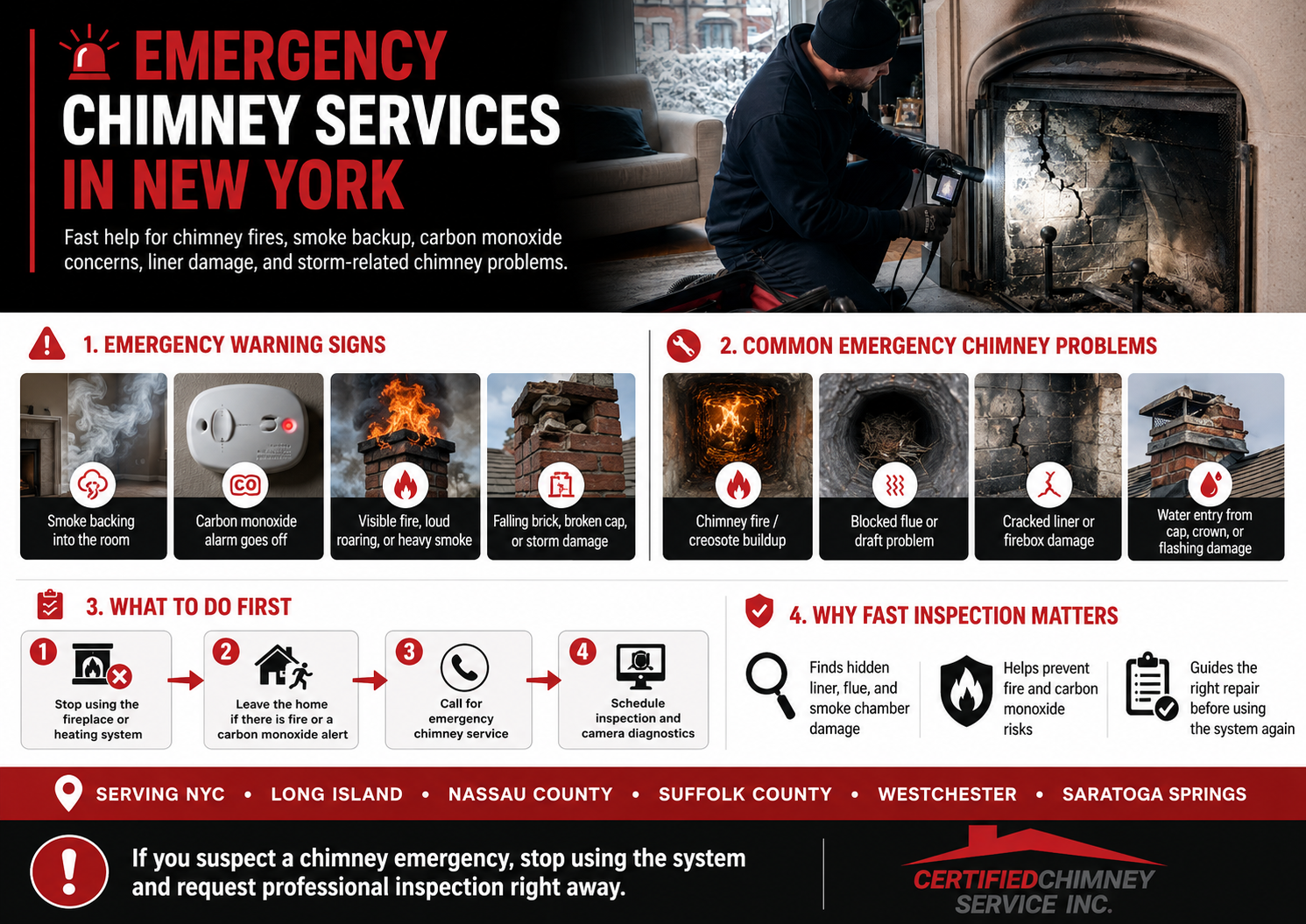
Carbon monoxide is a serious emergency risk because it cannot be seen or smelled. A blocked chimney, damaged chimney liner, poor draft, or wrong venting setup can allow carbon monoxide to enter the home instead of leaving through the flue. This can happen with wood fireplaces, gas fireplace installations, oil to gas heating equipment, and other heating appliances. Homeowners should leave the home and seek help if carbon monoxide alarms sound. The CDC explains that carbon monoxide exposure can be dangerous, so venting problems should be treated quickly.
A puff back happens when smoke, soot, or combustion gases push back into the living space. This can come from blocked airflow, draft problems, creosote buildup, a cold flue, or trouble with oil to gas heating equipment. The result can be soot stains, odors, damaged walls, and a fireplace that feels unsafe to use. In some homes, puff back issues also point to larger flue maintenance or chimney liner problems. Emergency chimney inspection helps find the cause before the homeowner uses the fireplace or heating system again.
New York storms can damage the Chimney Cap, chimney crown, flashing, and masonry around the roofline. Wind can loosen caps, rain can enter cracked crowns, and freeze-thaw cycles can open gaps in brick or mortar. Once water gets inside, it can weaken chimney linings, rust metal parts, and damage the chimney structure. This is common across the Empire State, especially near Long Island, NY Harbor, the Hudson River, and older New York homes with Dutch-colonial stone or brick chimneys. Emergency repair helps stop water before it spreads indoors.
A chimney liner helps carry smoke and exhaust out of the home while protecting the masonry structure. If the liner cracks, collapses, or separates, heat and gases can reach unsafe areas. Emergency inspections may show that steel liners, chimney linings, or stainless steel flue liners are needed to restore safer venting. Stainless steel is often used because it can work with many fireplace and heating systems when sized correctly. The best liner choice depends on the appliance, chimney condition, code needs, and the results of a detailed chimney inspection.
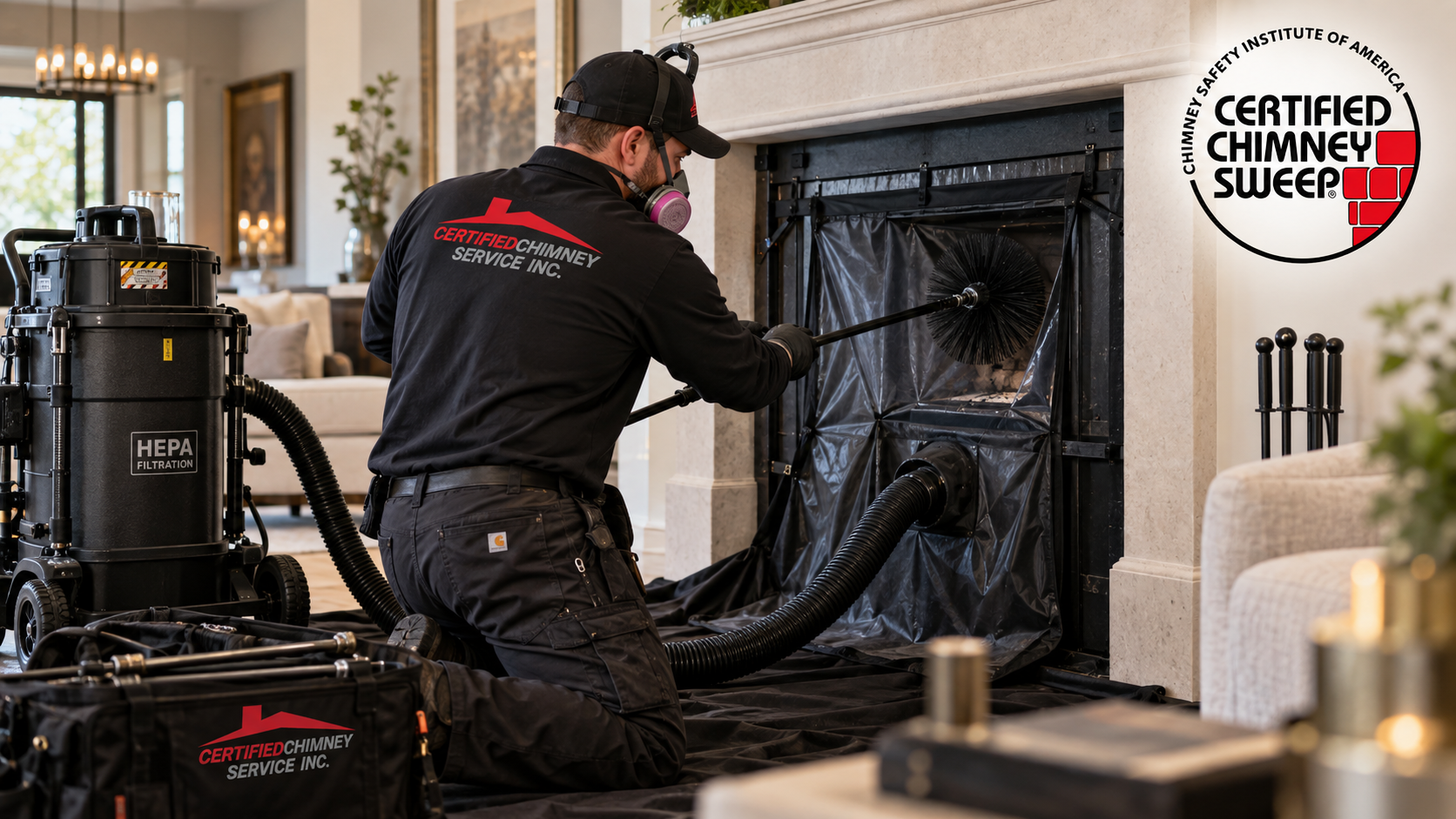
Emergency Chimney Cleaning may be needed when creosote deposits, nests, soot, or debris block the chimney system. A chimney sweep may use rotary brushes, fireplace sweeping tools, and HEPA-filtered vacuums to remove buildup while controlling dust inside the home. This matters because blocked airflow can cause smoke backup, odors, carbon monoxide concerns, and higher chimney fire risk. A Level 1 chimney sweep may be enough for basic cleaning, but visible damage or safety concerns may require deeper inspection. Cleaning helps restore airflow and makes hidden problems easier to see.
Fireplace restoration may be needed after a chimney fire, puff back, water leak, or long-term heat damage. The repair plan may include brick repair, firebrick construction, ceramic logs, damper repair, smoke chamber work, or masonry restoration. These repairs matter because the fireplace must contain heat and guide smoke into the chimney system. If firebrick fireboxes are cracked or loose, heat can reach areas that should stay protected. A safe restoration plan helps homeowners return the fireplace to proper use without guessing about hidden damage.
Chimney Inspections are important during emergencies because many problems happen inside the flue, where homeowners cannot see them. Certified technicians may use video scoping and high-definition camera diagnostics to inspect the liner, smoke chamber, chimney crown, and masonry. This helps find cracks, blockages, fire damage, water entry, or poor repairs. A visual check from the fireplace opening is often not enough when safety is involved. The Chimney Safety Institute of America explains that annual inspection by a qualified professional can help prevent chimney fires and carbon monoxide problems.
New York City homes and buildings may also involve NYC building and safety codes, especially when chimneys connect to gas appliances, metal chimney systems, or major renovation work. Code concerns matter because the chimney must safely remove exhaust gases and protect nearby materials from heat. If a repair does not meet proper safety standards, the home may still have fire safety hazards after the work is done. Emergency chimney work should focus on stopping the immediate danger first, then confirming the system is safe before regular use resumes.
Emergency chimney service can also matter during real estate transactions, custom home projects, and major heating upgrades. A damaged liner, failed cap, blocked flue, or fireplace issue can delay closing, affect inspections, or create new repair needs for buyers and sellers. In custom homes, chimney fans, electric units, masonry fireplaces, and gas systems may all need different safety checks. If the chimney problem is urgent, a fast inspection helps document the issue and guide repair. This gives homeowners, agents, and contractors clearer next steps.
Certified Chimney provides emergency chimney services, chimney repair, Chimney Inspections, Chimney Cleaning, fireplace restoration, liner repair, masonry restoration, chimney cap service, and related chimney & fireplace services across New York. Their CSIA-certified technicians serve New York City, Long Island, Nassau County, Suffolk County, Westchester, Saratoga Springs, and surrounding communities. If you suspect a chimney fire, carbon monoxide issue, puff back, liner damage, or storm damage, stop using the system until it is checked. Request service through Certified Chimney NY for urgent chimney help and clear repair guidance.
See All Services
Don’t Hesitate to Reach Out – We’re Here to Help Every Step of the Way
Covers fireplaces, wood stoves, pellet stoves, and heating systems including gas and oil systems. Book now before the winter rush fills our schedule.