
Licensed and Insured
Certified Chimney is fully licensed and insured, giving you peace of mind with every service across Long Island, NYC, and Westchester County.
Certified Experts
Our highly trained, certified chimney technicians uphold the highest standards of safety and quality on every project.
Customer Satisfaction Guaranteed
We prioritize your satisfaction, offering personalized service and expert attention to keep your chimney in top condition.
Oil to gas chimney conversion services help New York homeowners switch from heating oil to natural gas while keeping the chimney system safe. The conversion process often involves a gas boiler, gas piping, gas lines, liner selection, safety checks, and a chimney & venting assessment. This matters because oil-fired boilers and gas heating systems vent exhaust gases differently. If the flue size or chimney liner is wrong, the system may create carbon monoxide risks, poor draft, or moisture damage. A proper Oil to Gas Conversion Service helps protect heating efficiency, indoor safety, and long-term costs.
Many homeowners in New York consider Oil to Gas Conversion because natural gas can offer cleaner operation, fewer oil delivery services, and modern efficiency when paired with the right equipment. Heating oil systems can leave sulfur deposits, particulate matter, and acidic residue inside older chimneys. Over time, that buildup can damage masonry, weaken clay liners, and increase chimney repair needs. Switching to a gas heating system may help reduce fuel storage concerns and lower the home’s carbon footprint. The best outcome depends on Gas Supply access, equipment condition, fuel costs, and proper installation.
A chimney & venting assessment should happen before the new gas boiler or natural gas heating appliance is connected. Certified technicians check the chimney liner, chimney structure, chimney waterproofing needs, flue size, and signs of past damage. A video-assisted chimney inspection can show cracked tiles, loose mortar, sulfur deposits, or moisture damage inside the flue. This step matters because gas-operated appliances need safe venting for carbon dioxide, water vapor, and possible carbon monoxide. If the existing chimney is not ready, chimney liner installation or chimney sweeping may be needed before the conversion is completed.
A chimney liner protects the chimney walls and helps exhaust gases leave the home safely. During an Oil to Gas Conversion, the old flue may be too large for the new appliance. When the flue is oversized, exhaust can cool too fast, create condensation, and damage the chimney. Stainless steel liners, stainless-steel liner systems, or a stainless steel chimney liner may be recommended when the existing liner is not safe for natural gas appliances. The National Fire Protection Association is a trusted fire safety source, and venting should always follow current safety standards.
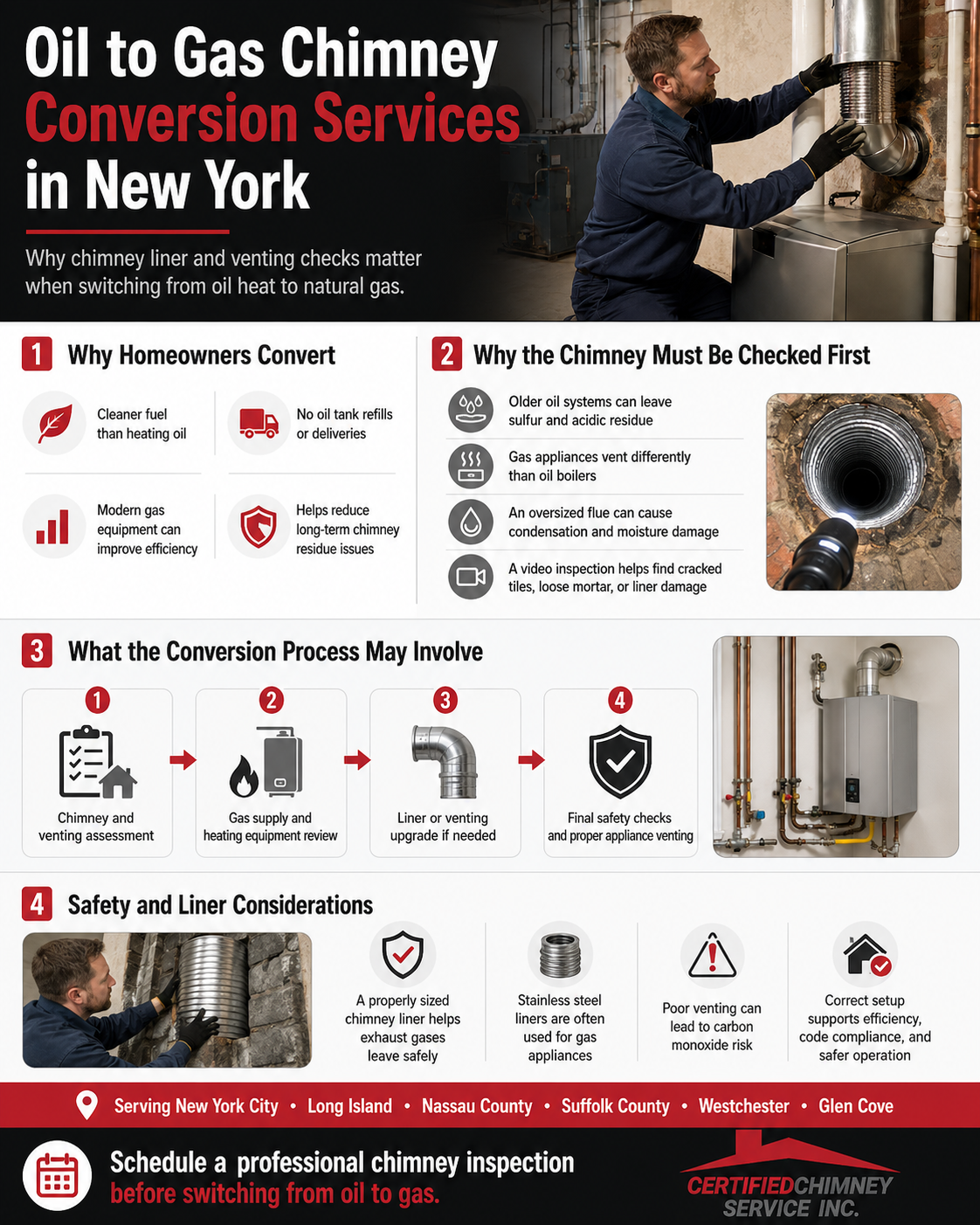
The conversion process usually starts with confirming natural gas availability, reviewing the existing oil-based heating systems, and planning the heating system installation. Homeowners may need to work with National Grid, PSEG Long Island Programs, or the local utility for Gas Supply, forms, and service connection steps. A licensed plumbing or heating contractor handles gas lines, gas piping, Burner Replacement, appliance connection, and Safety Checks and Certifications. The chimney service team focuses on the venting path, chimney liner installation, chimney sweeping, and final safety checks. This keeps each part of the project handled by the right trade.
A High-Efficiency Gas Boiler may vent differently than an older Oil Boiler, so the chimney may need a stainless steel liner, direct-vent / sidewall vent, or another approved venting system. Some systems use B-Vents / A-Vents, while others are designed for sealed combustion. The right choice depends on the appliance, building layout, flue size, and code requirements. Homeowners should also ask about rebate paperwork, Section 25C tax credit rules, emissions standards, and long-term cost savings. The IRS energy efficient home improvement credit page can help homeowners review current federal credit details.
Safety checks are critical because natural gas appliances must vent correctly during normal use and during an emergency situation. Poor draft, blocked vents, or the wrong chimney liner can allow carbon monoxide to enter living areas. This gas is dangerous because it cannot be seen or smelled. The CDC carbon monoxide guide explains why working detectors and proper appliance venting matter. New York homeowners should also consider local building codes, chimney fire prevention, and compliance-focused inspections. Some buildings may also need extra review because of emissions standards or January 1, 2030 efficiency-related rules.
Certified Chimney provides BOil to Gas Conversion Services, chimney liner installation, chimney repair, chimney sweeping, chimney waterproofing, chimney inspections, stainless steel liners, and related Chimney Service support across New York. Their team serves New York City, Long Island, Westchester County, Nassau County, Suffolk County, Glen Cove, and nearby communities. Homeowners can request help through Certified Chimney NY’s oil to gas conversion service to check the chimney, liner, and venting setup before switching to natural gas. A clear inspection helps protect safety, improve heating efficiency, and support Customer Satisfaction from the start.
See All Services
Don’t Hesitate to Reach Out – We’re Here to Help Every Step of the Way
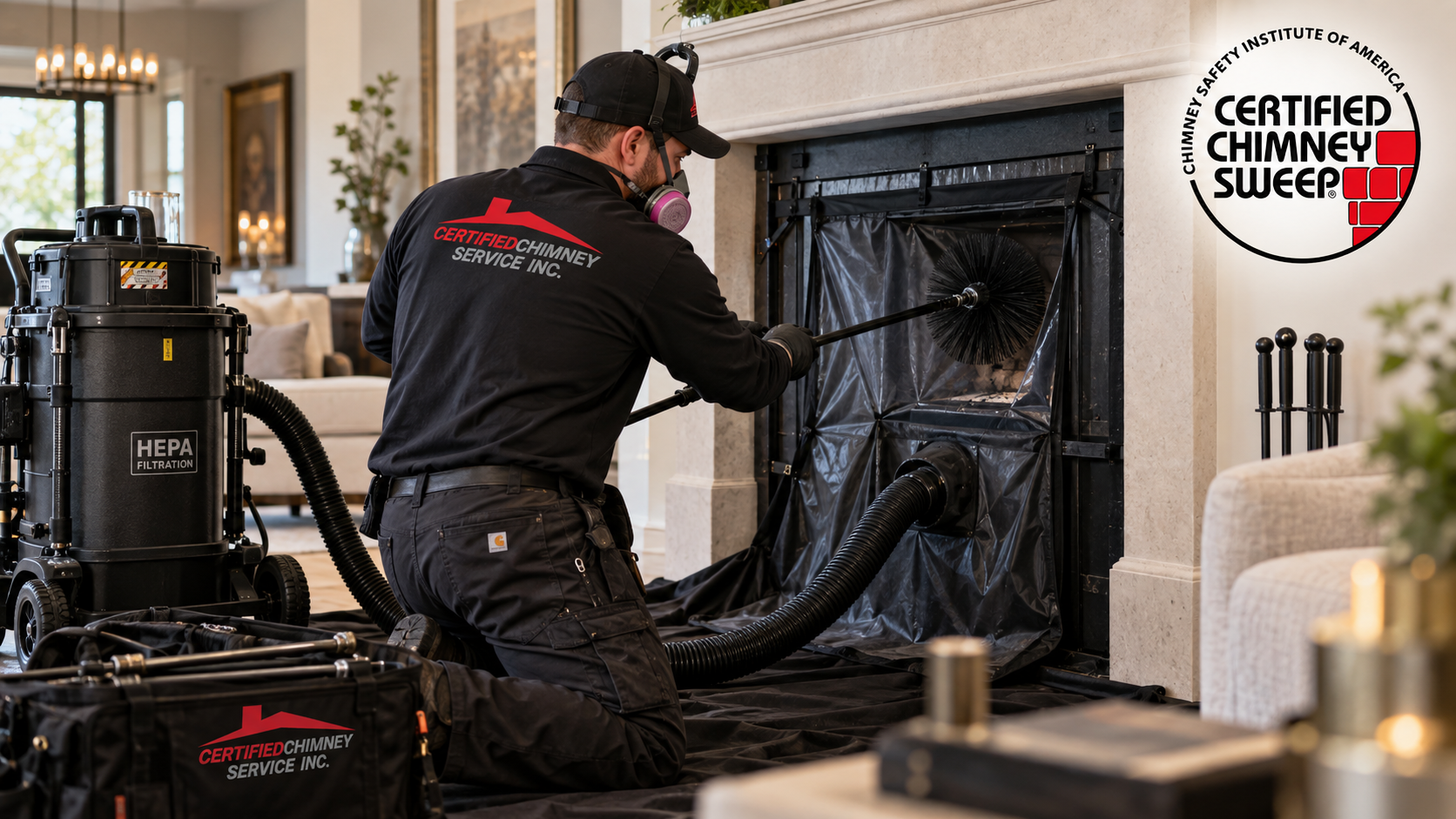
Covers fireplaces, wood stoves, pellet stoves, and heating systems including gas and oil systems. Book now before the winter rush fills our schedule.