
A blocked chimney flue can cause smoke blowback, carbon monoxide hazards, dense smoke, soot stains, burning smells, poor draft, and higher fire risk. In New York homes, flue blockage can happen when creosote buildup, animal nests, bird nests, leaves and twigs, damaged masonry, broken flue tiles, or a stuck flue damper restricts the chimney system. Certified Chimney NY provides chimney sweeping, chimney cleaning, chimney inspection, creosote removal, blocked flue clearing, masonry repair, chimney liner review, and professional maintenance across New York.
A flue blockage is anything that prevents smoke, exhaust gases, and combustion byproducts from moving safely through the chimney flue. The chimney flue is the passage inside the chimney system that carries smoke and gases out of the home. A blockage may occur in a fireplace flue, furnace flue, wood heater vent pipe, stove pipe, or appliance venting system. When airflow is restricted, the system may not vent properly. This can create smoke backflow, carbon monoxide concerns, and fire safety problems.
Smoke blowback is one of the clearest signs of a blocked chimney. If smoke comes back into the room when you open the firebox door, the chimney may have a flue obstruction, negative pressure, damper control issue, or blocked chimney cap. Dense smoke inside the home should never be ignored. It can affect indoor air quality and may signal that exhaust gases are not leaving the home properly. Stop fireplace usage and schedule a flue inspection before lighting another fire.
Negative pressure can make a flue blockage feel worse. Exhaust fans, HVAC systems, tight windows, and pressure problems can pull air down the chimney instead of letting smoke rise. A blocked or partially blocked flue makes this problem more dangerous because there is less open space for venting smoke. A chimney sweep can perform a smoke test, inspect the venting path, and check whether the issue is negative pressure, a damaged flue, or a physical blockage.
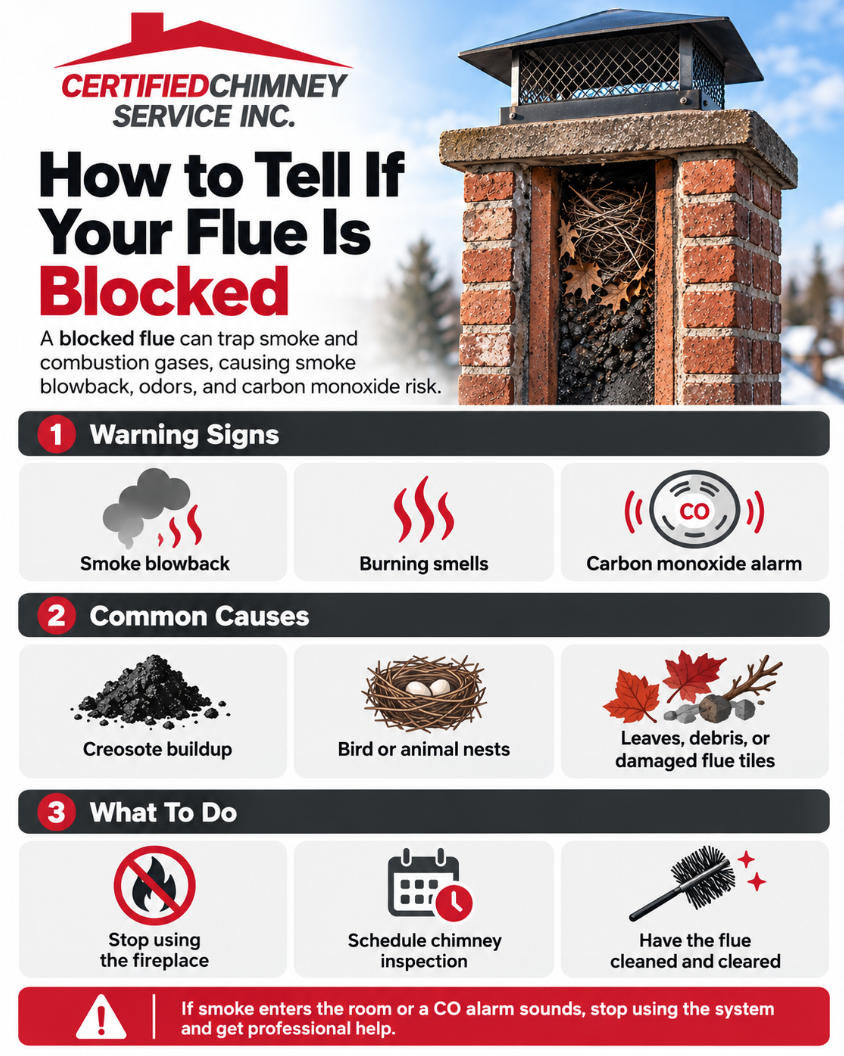
Soot stains around the fireplace opening, smoke shelf, firebox door, or nearby walls can point to venting smoke and poor draft. A strong smoke smell or burning smell may mean soot deposits, creosote build-ups, or animal debris are trapped in the flue. CSIA says masonry fireplaces should be swept when there is 1/8 inch of sooty buildup, and sooner if glazed creosote is present. A professional cleaner can remove deposits and check whether the flue liner is still safe to use.
Creosote deposits are a major fire risk because creosote is combustible. If enough buildup collects inside the chimney flue, it can ignite and cause a chimney fire. Chimney fires can damage flue tiles, mortar joints, chimney liners, and the masonry structure. Signs of past chimney fires may include popping sounds, cracked tiles, warped metal, puffy creosote, or damaged masonry. A chimney sweep service can provide creosote removal, chimney sweeping services, and inspection documentation for safety and insurance purposes.
Bird nests, birds’ nests, animal nests, leaves, twigs, and debris can block the chimney flue, especially when the chimney cap is missing or damaged. A chimney cap helps keep wildlife, rain, and debris out while allowing exhaust gases to escape. If you hear animal sounds, see nesting material, or notice a sudden draft problem after seasonal inactivity, the flue may be blocked. Do not try to burn out a nest. A professional chimney sweep can remove nesting materials safely and inspect the chimney cap.
Water leaking into the chimney can loosen mortar, damage flue tiles, stain masonry, and create debris that falls into the flue. Warning signs include water stains, musty odors, white staining, mortar cracks, pieces of tile in the firebox, or visible chimney leak issues. A damaged chimney liner can also narrow the flue and interfere with airflow. If water intrusion is present, the home may need chimney repair, masonry repair, chimney cap work, flashing repair, or firebox and liner work before regular use continues.
A blocked furnace flue or appliance vent pipe can create carbon monoxide hazards. Carbon monoxide is dangerous because it has no smell or color. CDC says carbon monoxide can cause sudden illness or death, and fuel-burning equipment should be used and vented safely. Warning signs may include a carbon monoxide alarm, headaches, dizziness, nausea, moisture inside your windows, soot stains near appliances, or unusual odors near a heating system. If a carbon monoxide alarm sounds, leave the home and call emergency services immediately.
Certified Chimney NY helps New York homeowners identify blocked chimney problems with chimney sweeping, chimney cleaning, flue inspection, chimney inspection, video cameras, smoke tests, creosote removal, blocked flue clearing, chimney liner service, masonry repair, and professional maintenance. Their team serves Long Island, NYC, Westchester, Nassau County, Suffolk County, the Hudson Valley, and surrounding areas. Request service through Certified Chimney NY if you notice smoke blowback, soot buildup, animal nests, water leaking, burning smells, or carbon monoxide concerns.
Learn how to recognize a blocked chimney flue, what causes flue obstructions, and when to stop using your fireplace or heating system and schedule professional service.
Common signs of a blocked chimney flue include smoke entering the room, poor draft, strong burning or smoky odors, soot stains around the fireplace opening, debris falling into the firebox, animal sounds in the chimney, or a carbon monoxide alarm. If smoke or combustion gases are not venting properly, stop using the system until the chimney has been inspected.
Common causes include creosote buildup, soot deposits, bird or animal nests, leaves, twigs, damaged chimney caps, broken flue tiles, loose masonry, and debris from water damage. A stuck or partially closed damper can also restrict airflow and create symptoms similar to a blockage.
Yes. A blocked chimney or appliance flue can prevent combustion gases from venting safely outdoors. This can increase the risk of carbon monoxide entering the home. If a carbon monoxide alarm sounds, leave the property immediately and contact emergency services.
Stop using the fireplace and allow the fire to go out safely. Smoke blowback can be caused by a blocked flue, closed damper, negative pressure, chimney cap problem, or damaged venting system. A chimney professional can inspect the flue and determine whether cleaning, blockage removal, or repairs are needed.
Yes. Birds, squirrels, raccoons, and other animals may enter chimneys that have missing or damaged caps. Nesting material can restrict the flue and interfere with safe venting. Do not try to burn a nest out of the chimney. Professional removal and chimney inspection are safer options.
Yes. Heavy creosote buildup can narrow the flue and reduce the amount of space available for smoke and gases to escape. Creosote is also combustible, which increases chimney fire risk. Chimney sweeping removes soot and creosote deposits and allows the flue to be inspected for damage.
Yes. Water intrusion can deteriorate mortar, crack flue tiles, and loosen masonry materials that may fall into the chimney passage. Signs can include water stains, musty odors, pieces of tile or mortar in the firebox, white staining on masonry, or visible chimney leaks.
DIY blockage removal is not recommended when the cause is unknown. A blockage may involve creosote, animals, damaged liner sections, masonry debris, or another condition that requires inspection. Professional chimney sweeps have the tools to clear the flue and check whether the chimney is safe to use afterward.
A chimney professional may inspect the fireplace, damper, chimney cap, flue liner, and venting path. Depending on the situation, video cameras, smoke testing, chimney brushes, or other inspection equipment may be used to locate obstructions, damaged liner sections, creosote buildup, or airflow problems.
Stop using the system and schedule chimney inspection and cleaning before lighting another fire.
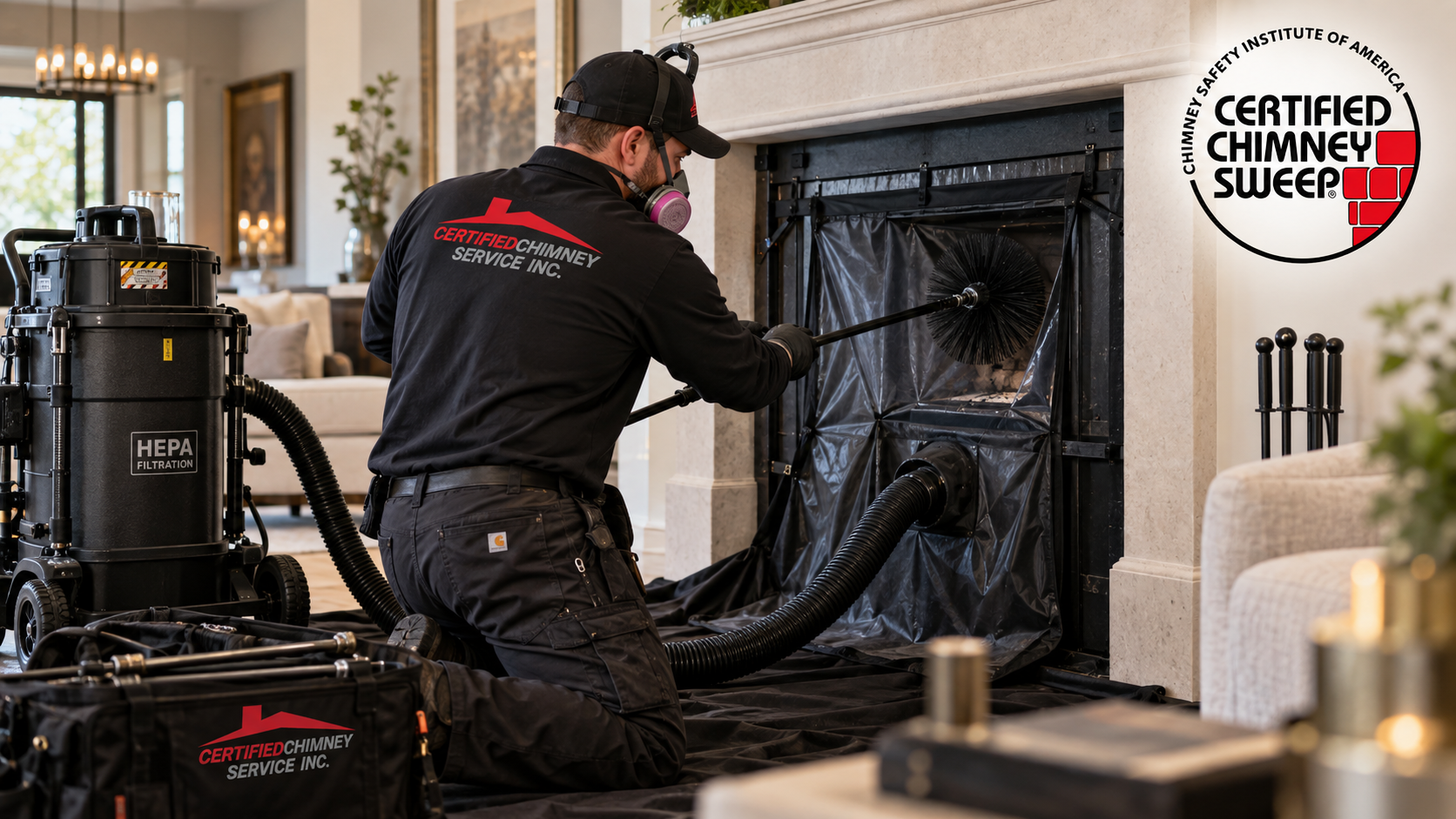
Covers fireplaces, wood stoves, pellet stoves, and heating systems including gas and oil systems. Book now before the winter rush fills our schedule.