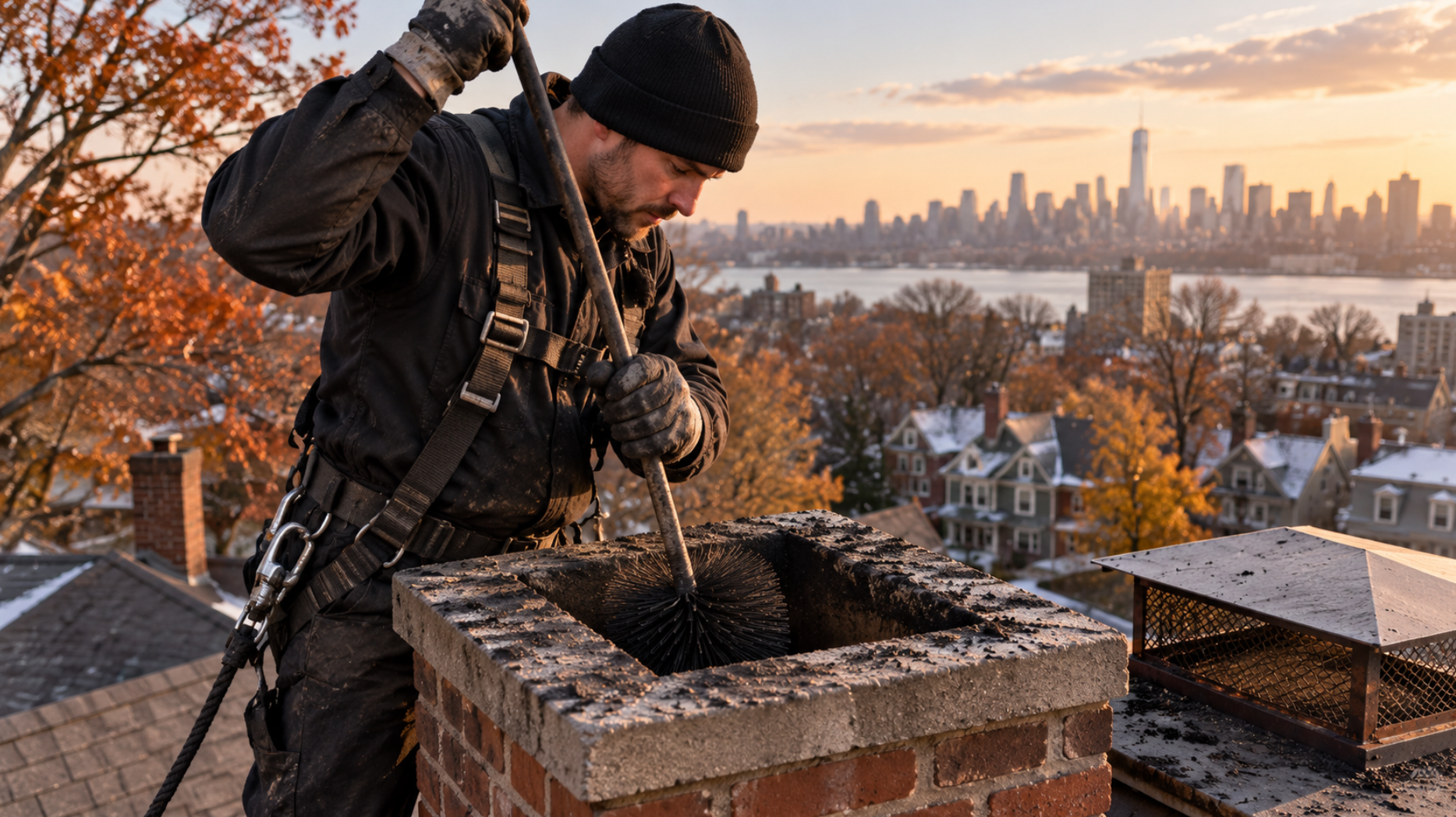
The first fire of the season should feel cozy, not like a gamble. Long Island chimneys sit through salt air, summer humidity and storms, so a few minutes of preparation matters more here than most places.
A five minute walk around first
From the yard, look at the top of the chimney. Check for a leaning or missing cap, missing mortar, white salt staining and loose bricks. Then look at the roofline for flashing that has lifted.
Inside checklist
- Open the damper fully and make sure it moves freely.
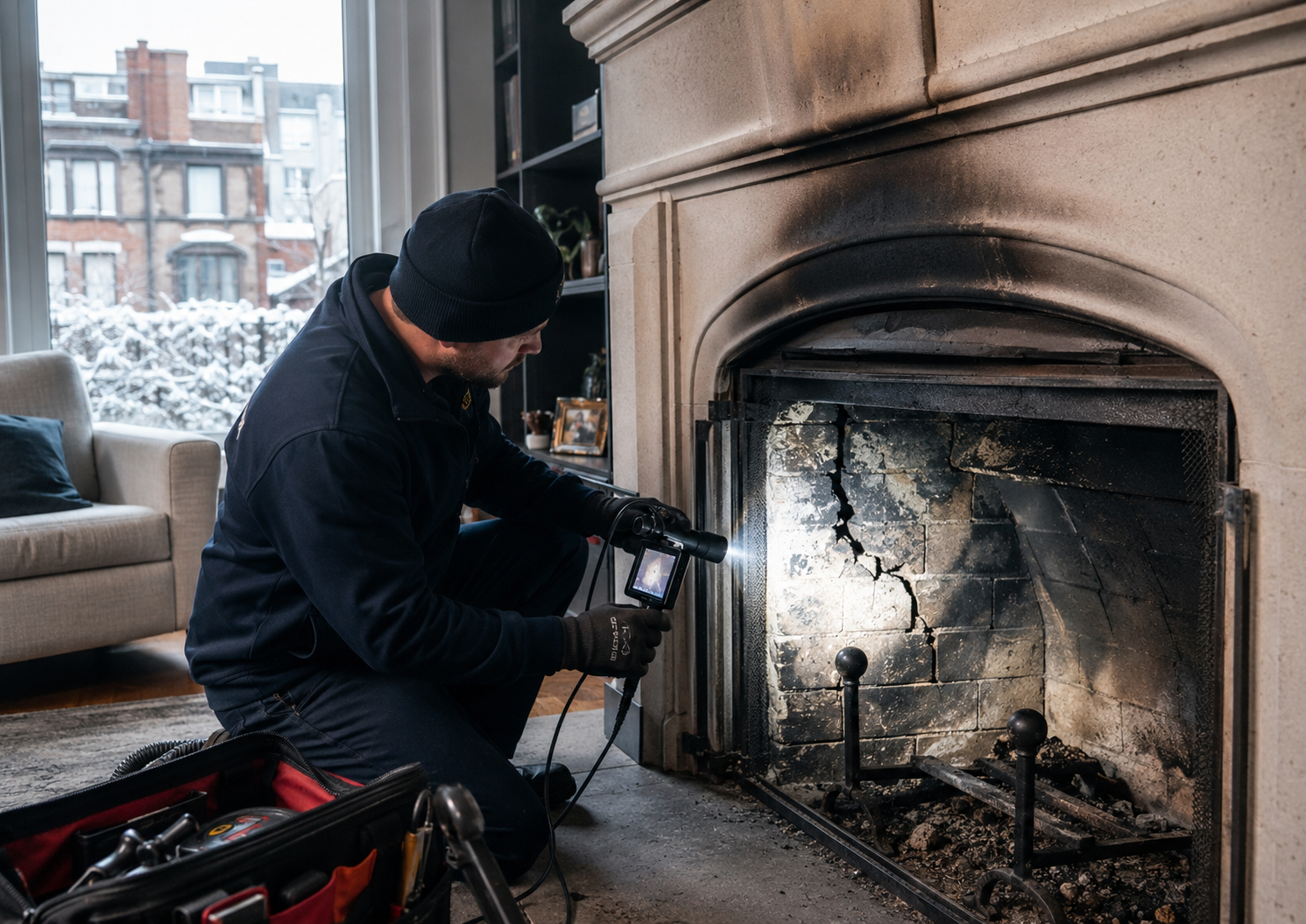
- Shine a flashlight up the flue and look for nests or debris.
- Check the firebox for cracked brick or loose mortar.
- Test smoke and carbon monoxide alarms.
- Stack only dry, seasoned hardwood.
When to bring in a pro
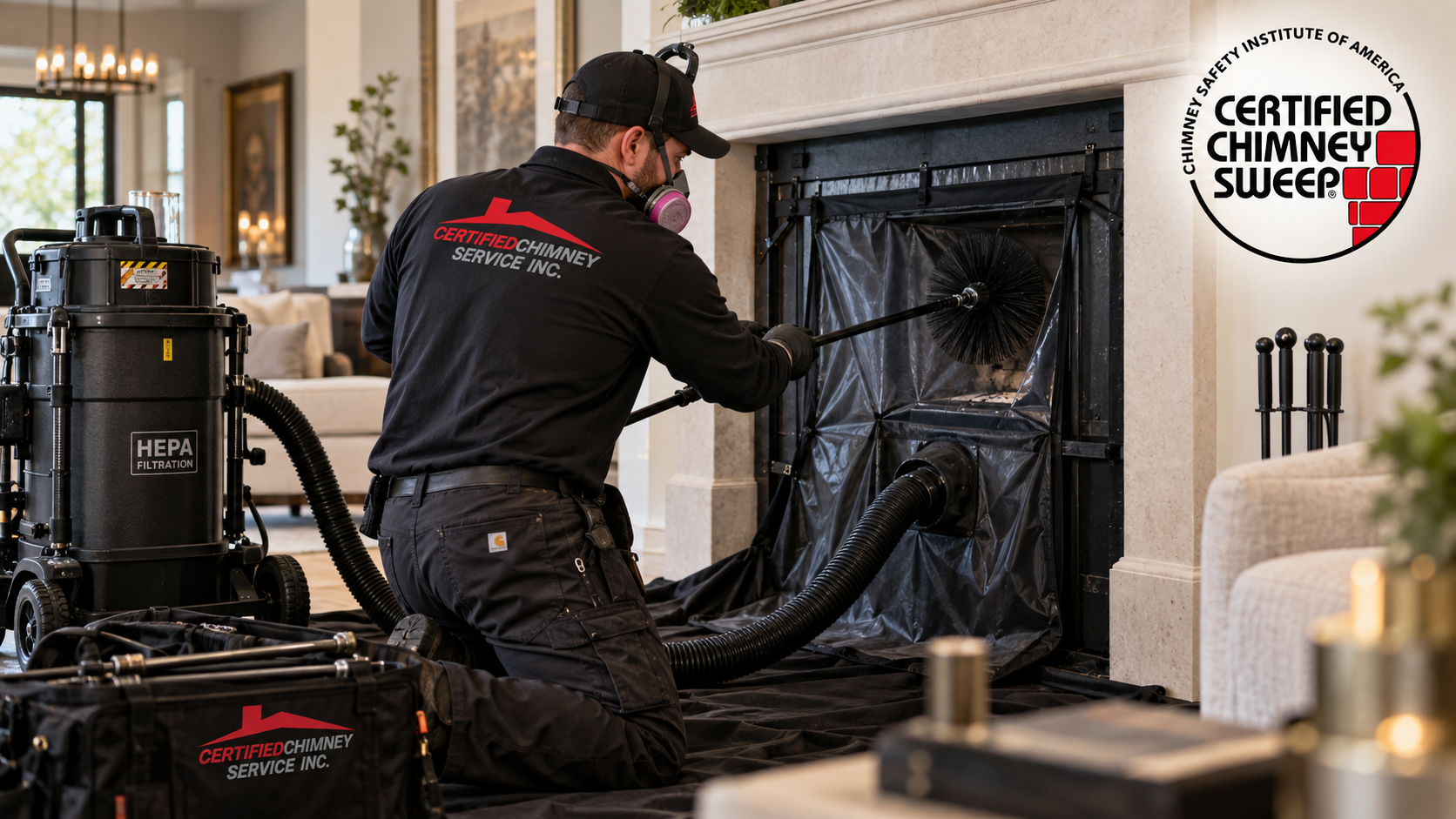
Call for a sweep and inspection if the chimney was last cleaned more than a year ago, if you see black glazed creosote, or if anything in the walkaround looked off. See our fall inspection guide for why October fills up quickly.
Your first burn
Start small with kindling to warm the flue, then add logs gradually. Avoid treated wood, cardboard and trash, which add toxins and sparks. The EPA Burn Wise program has simple tips for cleaner burning.
Common questions
Can I just brush it myself? Light surface cleaning is possible, but a pro finds damage you cannot see.
Walk Around the Outside First
Before you light the first fire, look at the chimney from the yard. Check for leaning, missing cap pieces, cracked crown, loose bricks and any new stains. Binoculars help. If you find any damage, call for an inspection before using the fireplace.
Inside the Firebox
- Open the damper and make sure it moves freely and seals
- Shine a flashlight up the flue and look for debris, nests or heavy soot
- Check the firebrick for cracks or missing pieces
- Clear old ash, leaving about an inch as insulation
- Make sure the hearth is free of flammables
Fuel and Fire Habits
Use wood that has been dried for at least six months. Hardwoods such as oak, ash and maple burn hot and produce less creosote. Do not burn trash, plywood, painted wood or Christmas trees. Build small, hot fires and leave the damper open until the fire is completely out.
Safety Devices
- Test smoke and carbon monoxide alarms
- Keep a fire extinguisher nearby
- Use a metal screen or glass doors
- Keep a metal ash bucket for cooled ashes
Long Island Considerations
Coastal humidity can leave creosote damp and odorous, and nor’easters can loosen caps and crowns. A pre-season inspection is especially valuable for homes close to the water.
Frequently Asked Questions
How early should I get my chimney swept
September or early October, before the busy season.
Can I use the fireplace right after a sweep
Yes, once the technician confirms it is safe.
What if I smell smoke or see soot
Stop and schedule an inspection.
Local Help and Related Reading
Our crews handle chimney repair in Brooklyn, chimney repair in Queens, the Bronx, Huntington and Yonkers. See every town on our service areas page or visit our services.
More to read: Chimney Crown and Cap Damage: What Fall Storms Leave Behind in New York, Buying a Home This Fall? Why a Chimney Inspection Belongs on Your Closing Checklist, 12 Point Fire and Safety Inspection Explained.
For wider guidance, see the EPA Burn Wise program and the U.S. Department of Energy. New Yorkers can also check NYSERDA for state energy resources.