You open the damper or turn on the furnace for the first time in months and a sharp smell fills the room. Fall odors from a chimney are common, and almost always have a cause you can identify.
What the smell usually points to
| Smell | Likely cause |
|---|---|
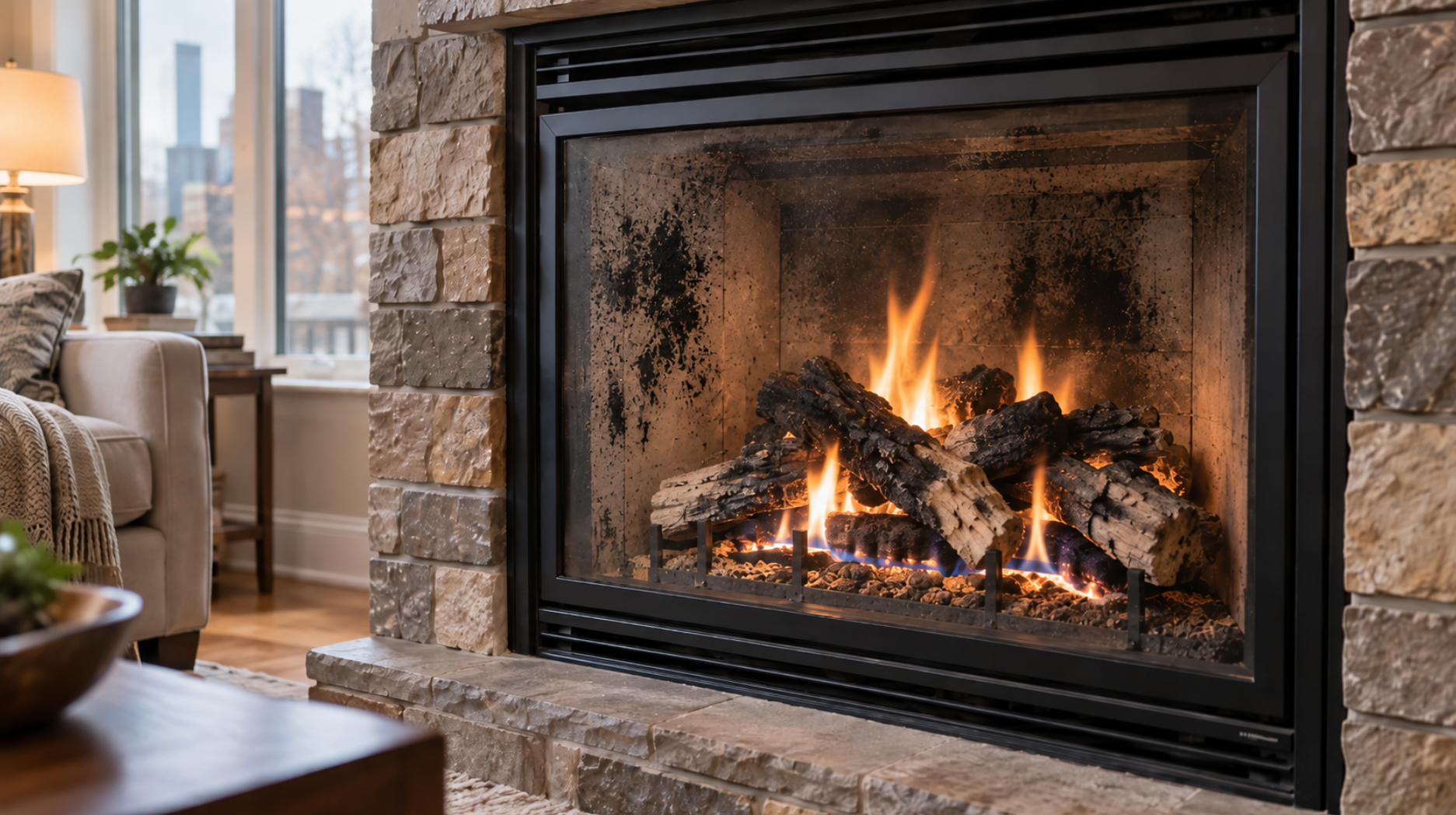
| Campfire or tar | Creosote reactivated by humidity |
| Musty or damp | Water leaking through crown or flashing |
| Rotten or sour | Animal nest or trapped animal |
| Gas or sulfur | Appliance or venting issue, call at once |
Why fall is the worst time
Creosote absorbs moisture all summer. When the first cool, humid days arrive and air starts moving down the flue, the odor releases. A downdraft or a house under negative pressure pulls the smell into the living space.
Fixes that work
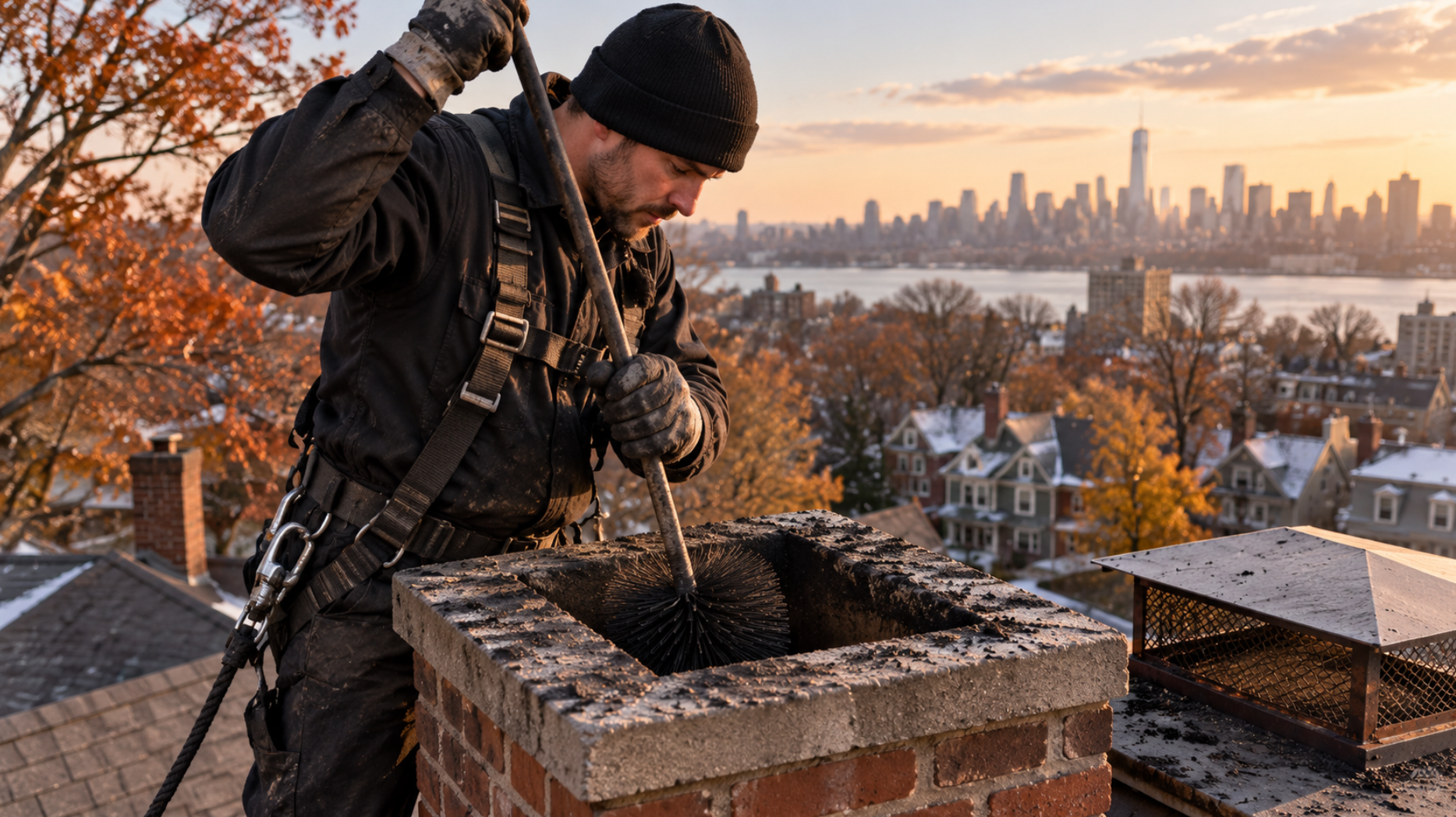
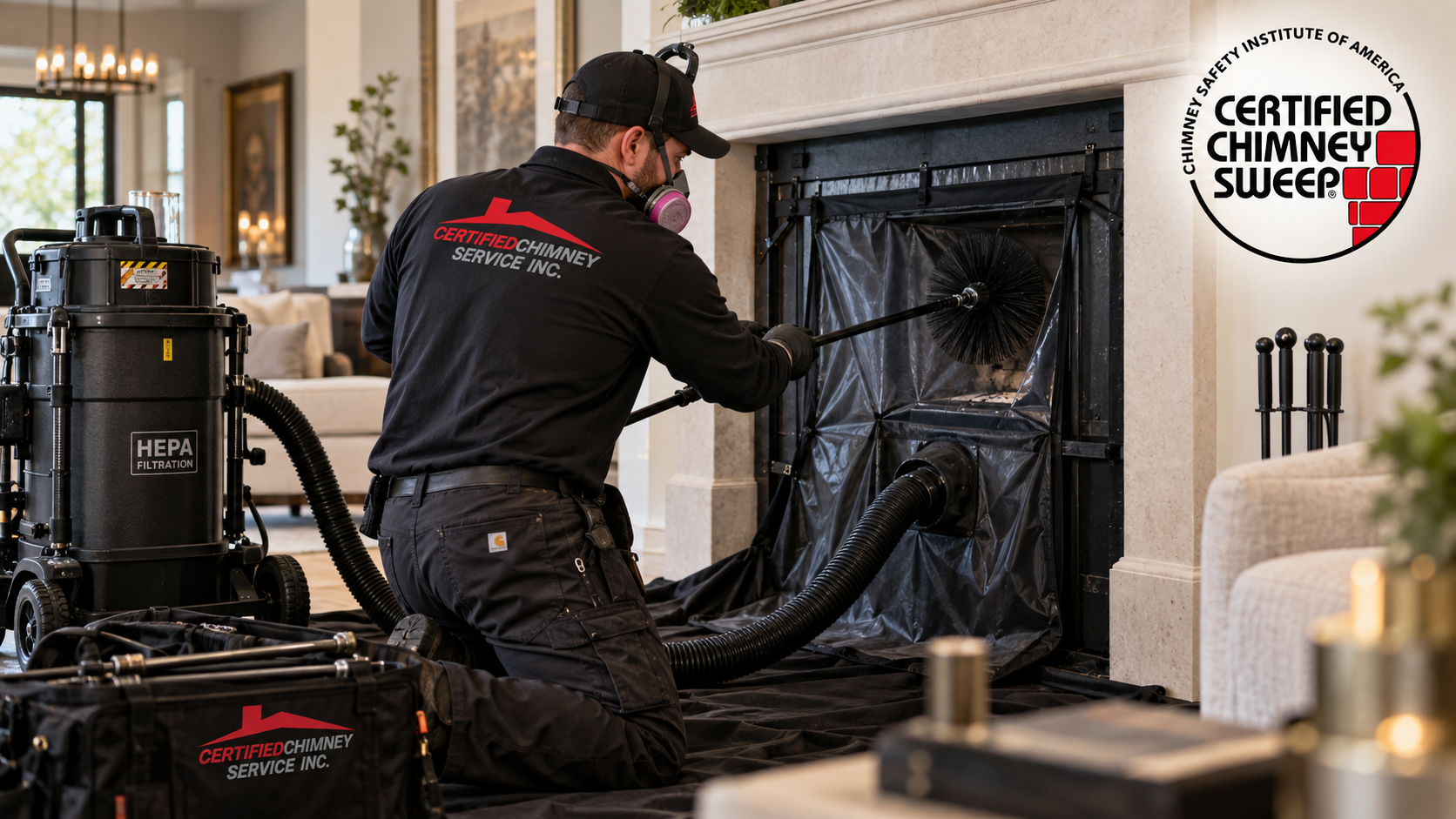
- Have the chimney swept to remove the source of the odor.
- Seal leaks at the crown, cap and flashing so moisture stops entering.
- Install a cap with mesh to keep animals out.
- Use a tight fitting damper or top sealing damper to block downdrafts.
- Run a dehumidifier in damp basements that share air with the flue.
What not to do
Skip candles and sprays. They hide the smell without fixing creosote or moisture. The CSIA recommends a professional inspection when odors keep returning.
If the smell is worse after rain, our guide to chimney inspections after storms shows what leaks to look for. Or book a cleaning and inspection and we will trace the source.
Quick answers
Will the smell go away on its own? Rarely. It returns every time humidity rises.
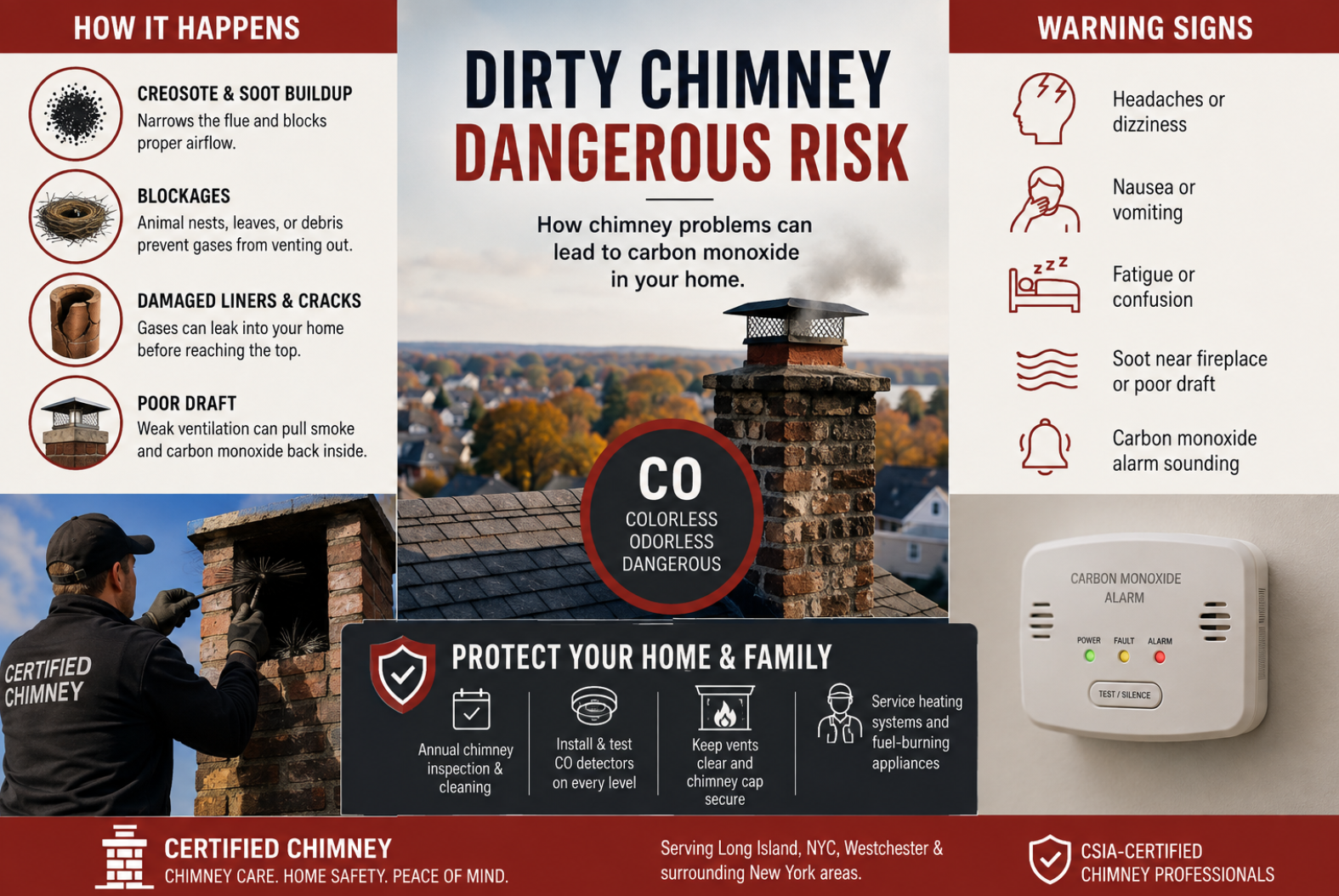
Is it harmful? Creosote fumes irritate lungs and eyes, and some odors signal carbon monoxide risk, so it is worth fixing.
Why Chimneys Smell Worse in Fall
The first cool, damp days of fall change how air moves through a chimney. Creosote and soot that sat dry all summer pick up moisture from humid air, and their odor intensifies. At the same time, temperature swings between day and night can pull air down the chimney into the house, carrying the smell with it.
Match the Smell to the Cause
- Campfire or tar smell: creosote or soot buildup
- Musty, wet smell: water entering through the cap or crown
- Rotten or sweet smell: a dead animal or nest
- Sharp chemical smell: oil residue or old combustion deposits
- Gas smell: call your gas company and leave the home
Fixing the Source
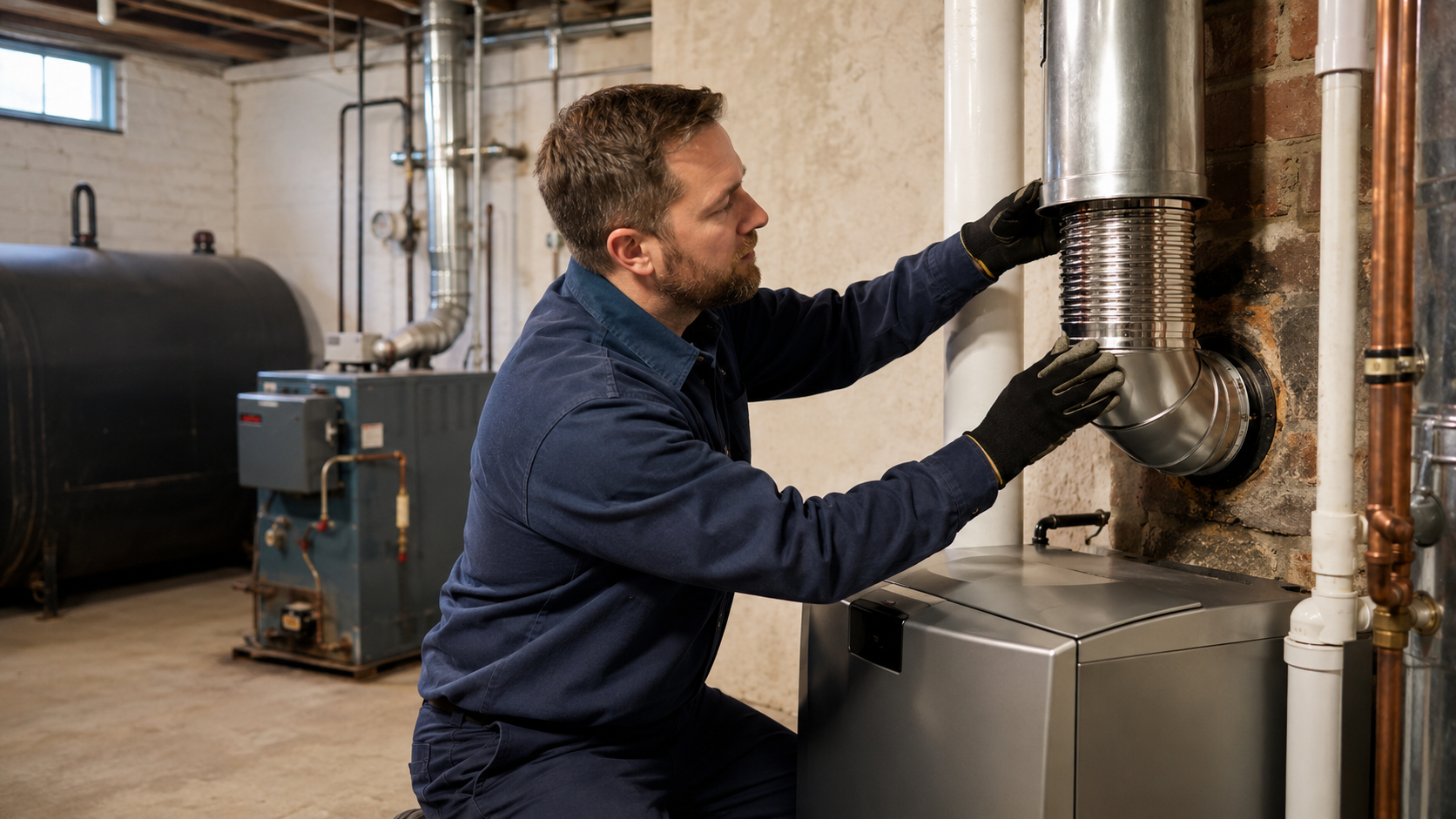
Deodorizers can mask a smell for days but do not remove it. The lasting fix is to clean the flue, repair water entry, remove animals and install a cap. Some homes also benefit from a top sealing damper that keeps air from flowing down in warm weather.
Prevent Fall Chimney Odors
- Sweep before the first fire
- Install a cap with a mesh screen
- Repair crown and flashing leaks
- Close the damper when not in use
- Run a dehumidifier in damp basements near the chimney
Frequently Asked Questions
Is a chimney smell a sign of a problem
It usually points to buildup, moisture or an animal, all of which need attention.
Do baking soda or sprays work
They only help briefly.
How soon should I call
If the smell is strong or comes with stains, call right away.
Local Help and Related Reading
Our crews handle chimney repair in Brooklyn, chimney repair in Queens, the Bronx, Huntington and Yonkers. See every town on our service areas page or visit our services.
More to read: How Long Island Homeowners Should Prep Their Chimney for the First Fire of the Season, Oil to Gas Conversion: Is Fall the Right Time to Switch Your Chimney System?, What Actually Qualifies as an Emergency Chimney Repair.
For wider guidance, see the EPA Burn Wise program and the U.S. Department of Energy. New Yorkers can also check NYSERDA for state energy resources.