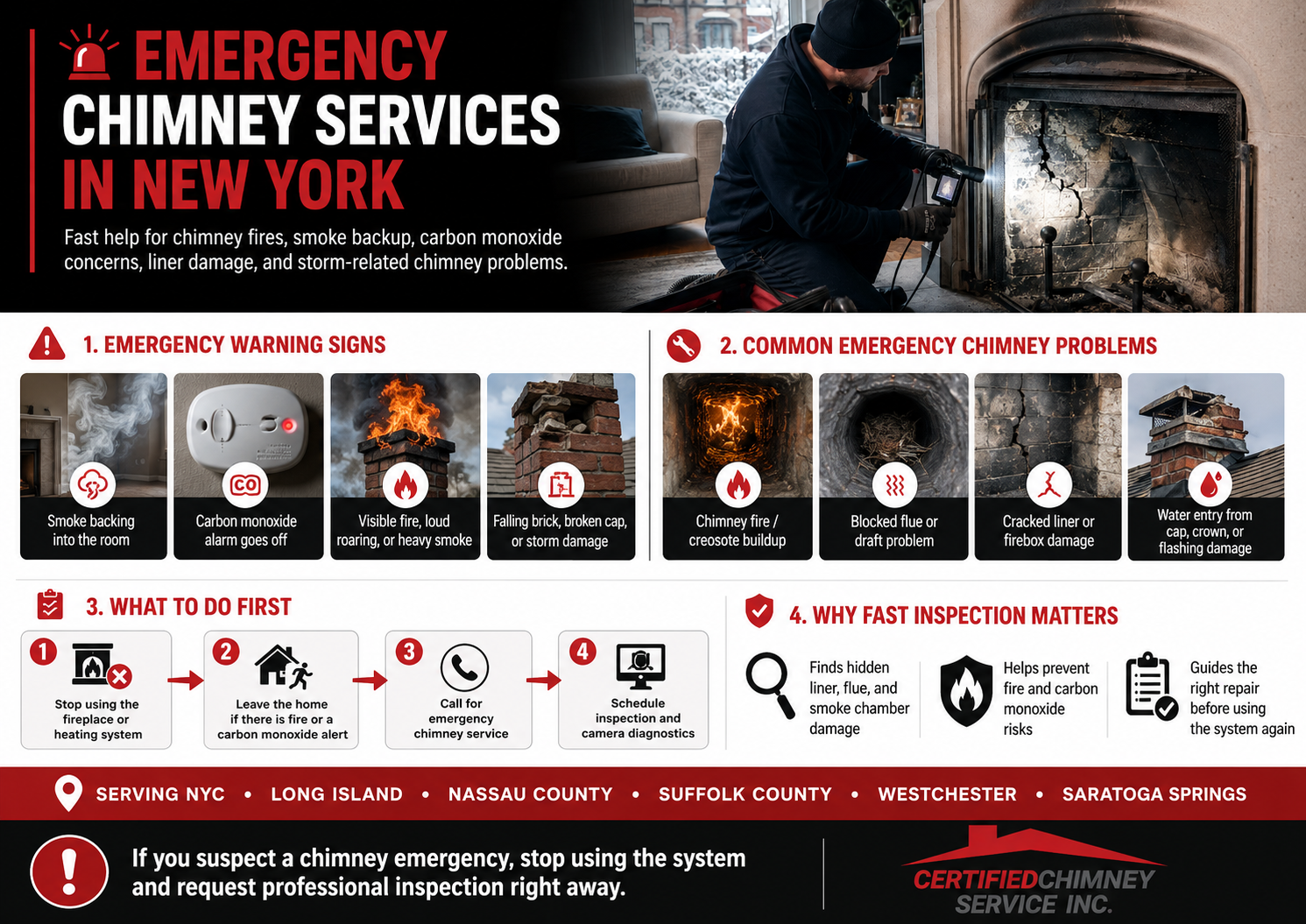
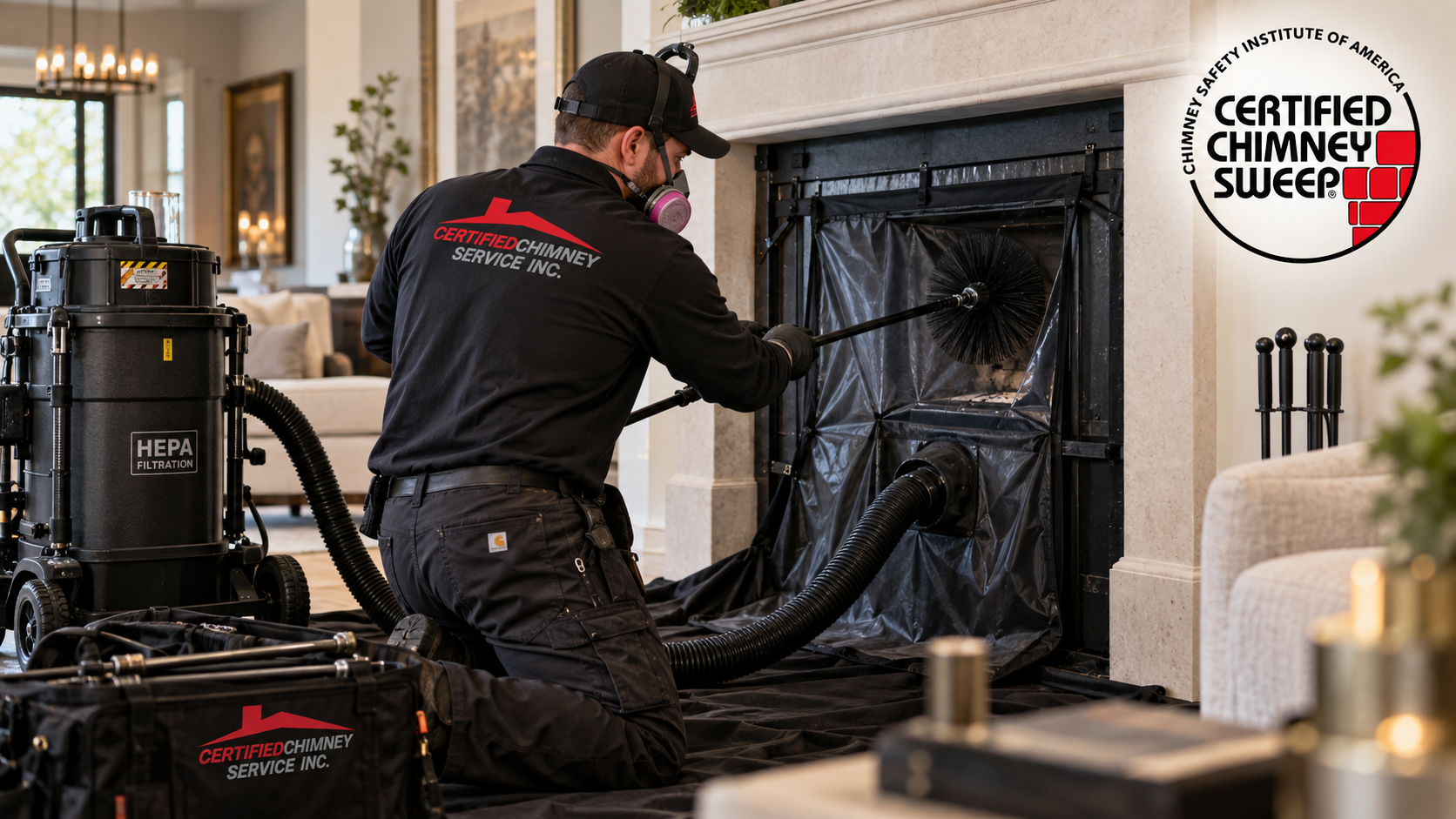
A chimney inspection feels optional right up until something goes wrong. Then it turns into a leak, a smoke damaged living room or an insurance conversation nobody wants. For most New York homes the visit costs a small fraction of what it prevents.
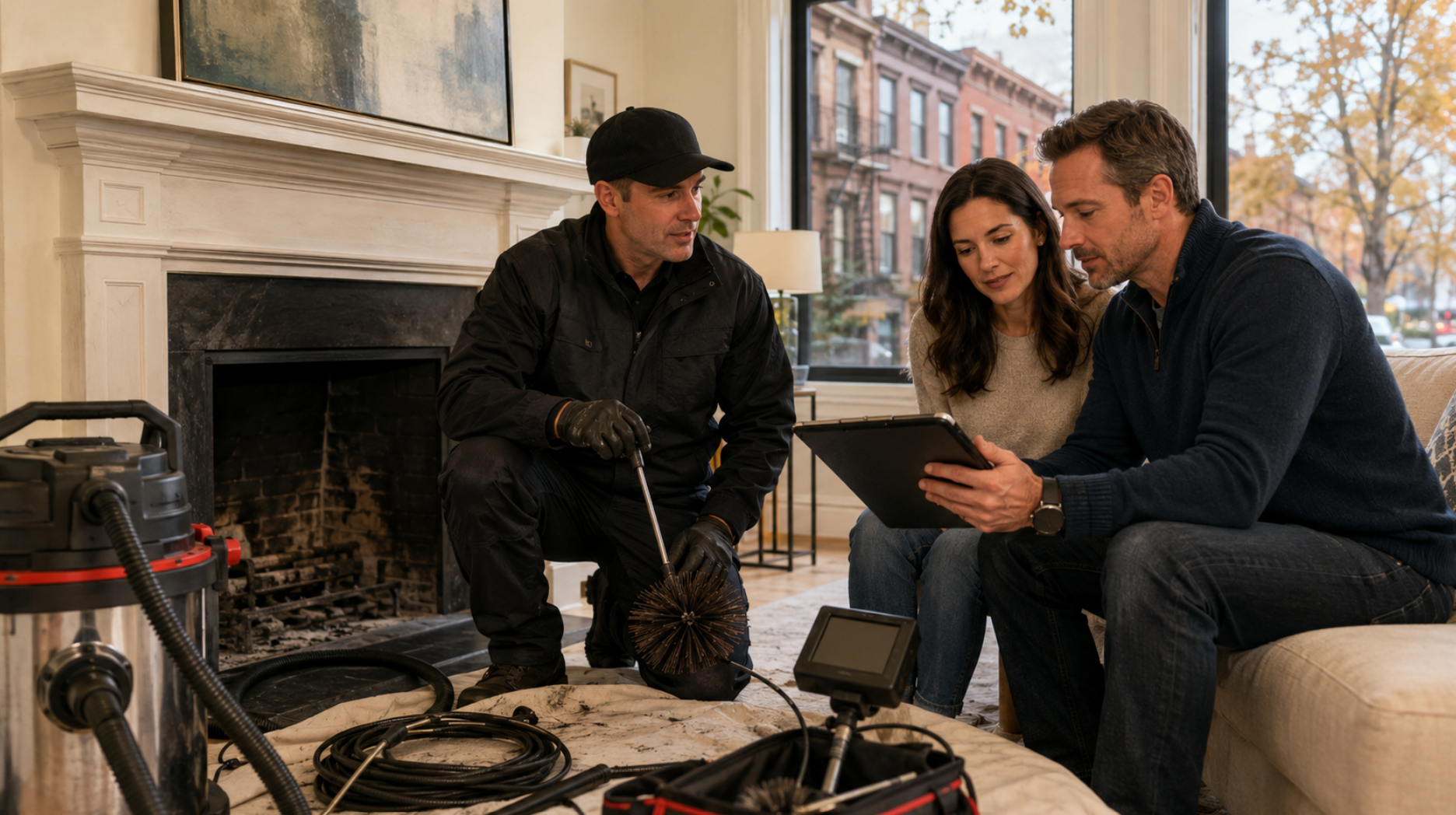
What an inspection costs compared with what it prevents
| Problem found early | Typical result | If ignored |
|---|---|---|
| Hairline crown crack | Sealed in one visit | Water damage to brick and ceiling |
| Creosote glaze | Cleaned and monitored | Chimney fire risk |
| Cracked flue tile | Liner repair | Carbon monoxide and heat transfer to framing |
| Loose cap | Replaced quickly | Animals, rain and downdrafts |
The pattern is simple. Small defects get cheaper to fix the earlier they are caught, and most of them are invisible from the ground.
The hidden costs people forget
Insurance and resale
If a fire starts in a chimney that was never inspected, an insurer may question maintenance records. Buyers and their inspectors also look for recent chimney documentation, and a missing report can slow a sale.
Emergency pricing
Once the weather turns cold, schedules fill up and urgent calls cost more than planned visits. Booking in the fall is almost always cheaper and easier.
What the visit actually covers
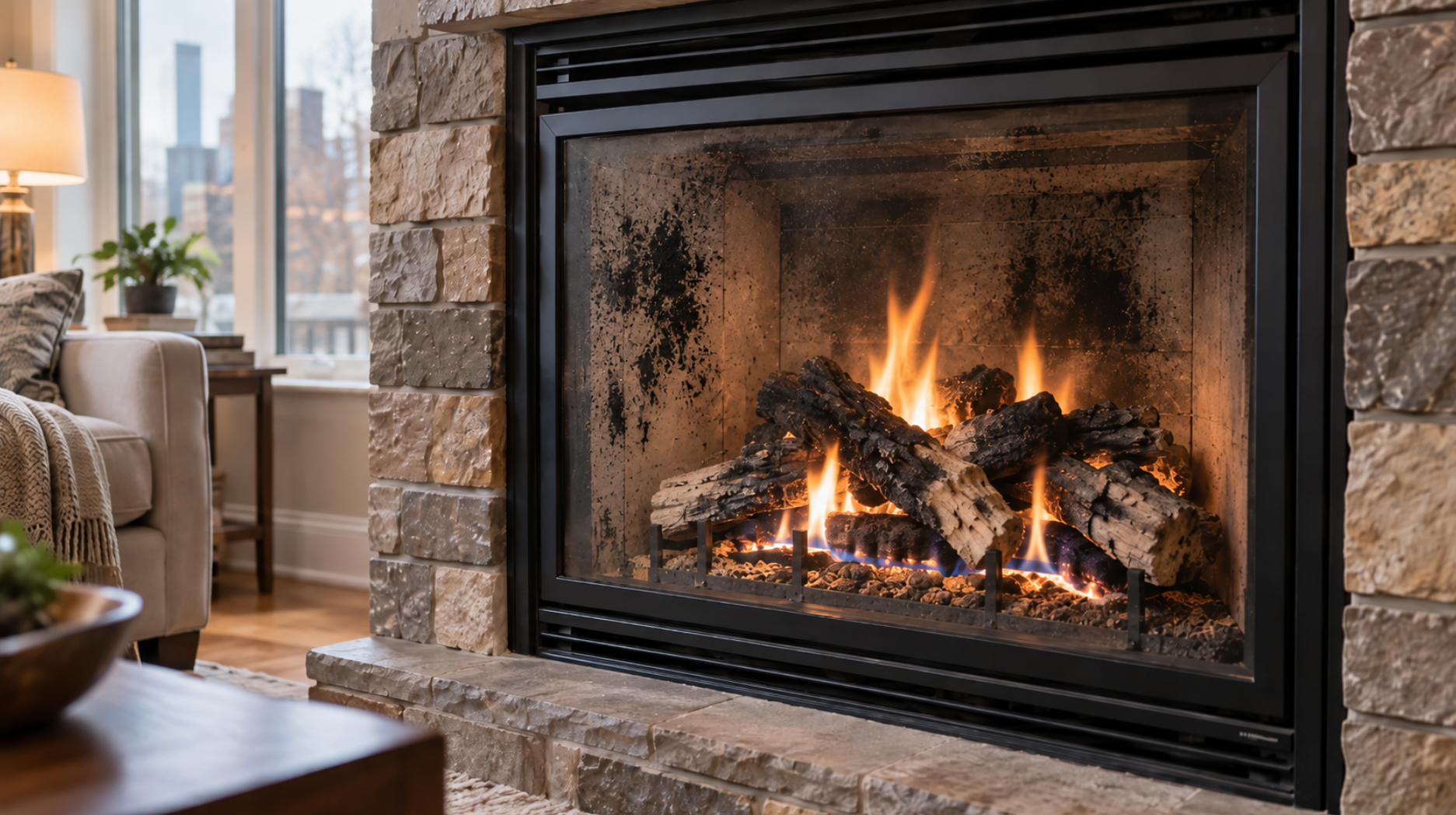
- A look at the firebox, damper and smoke chamber
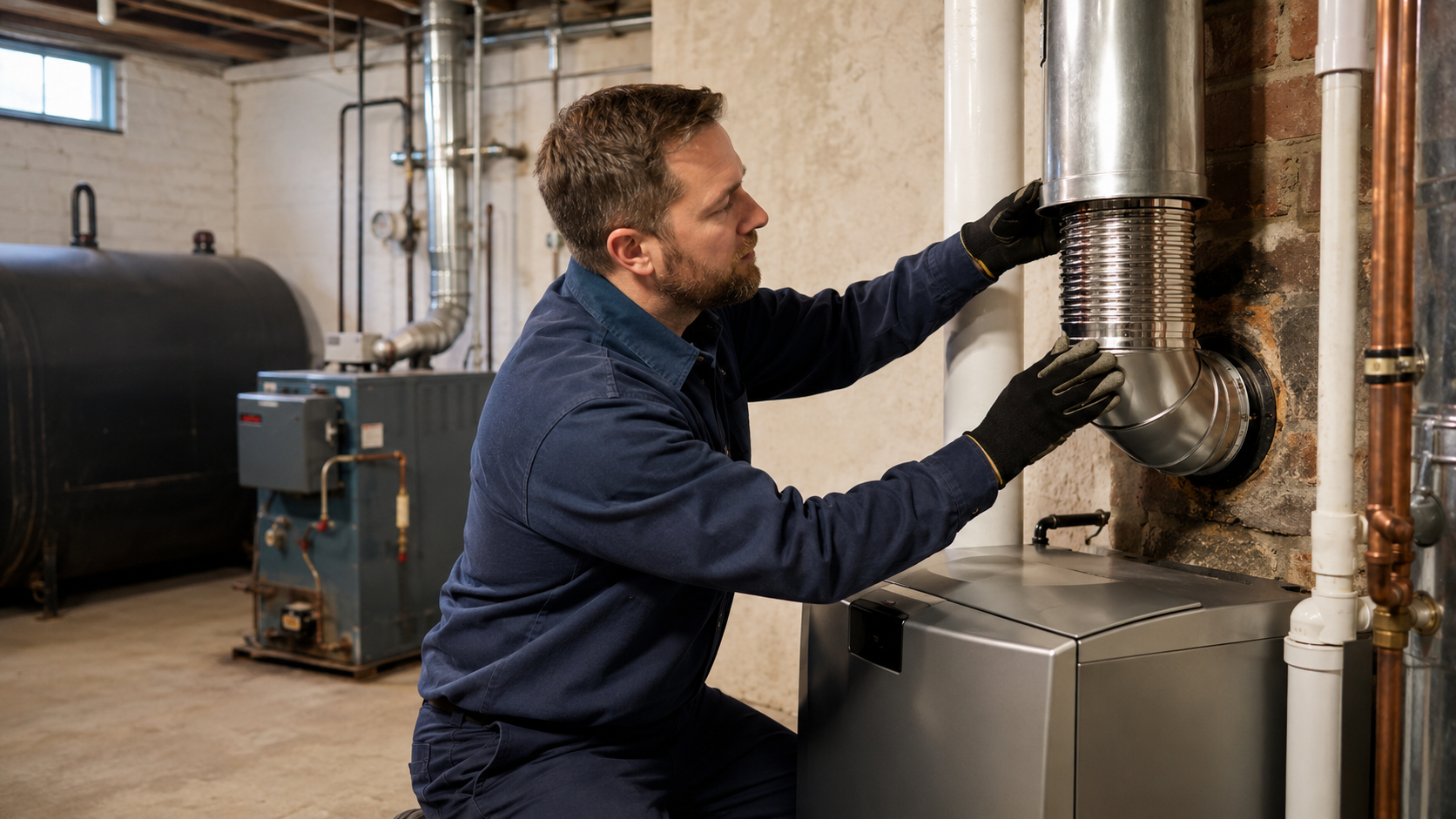
- A camera pass through the flue when needed
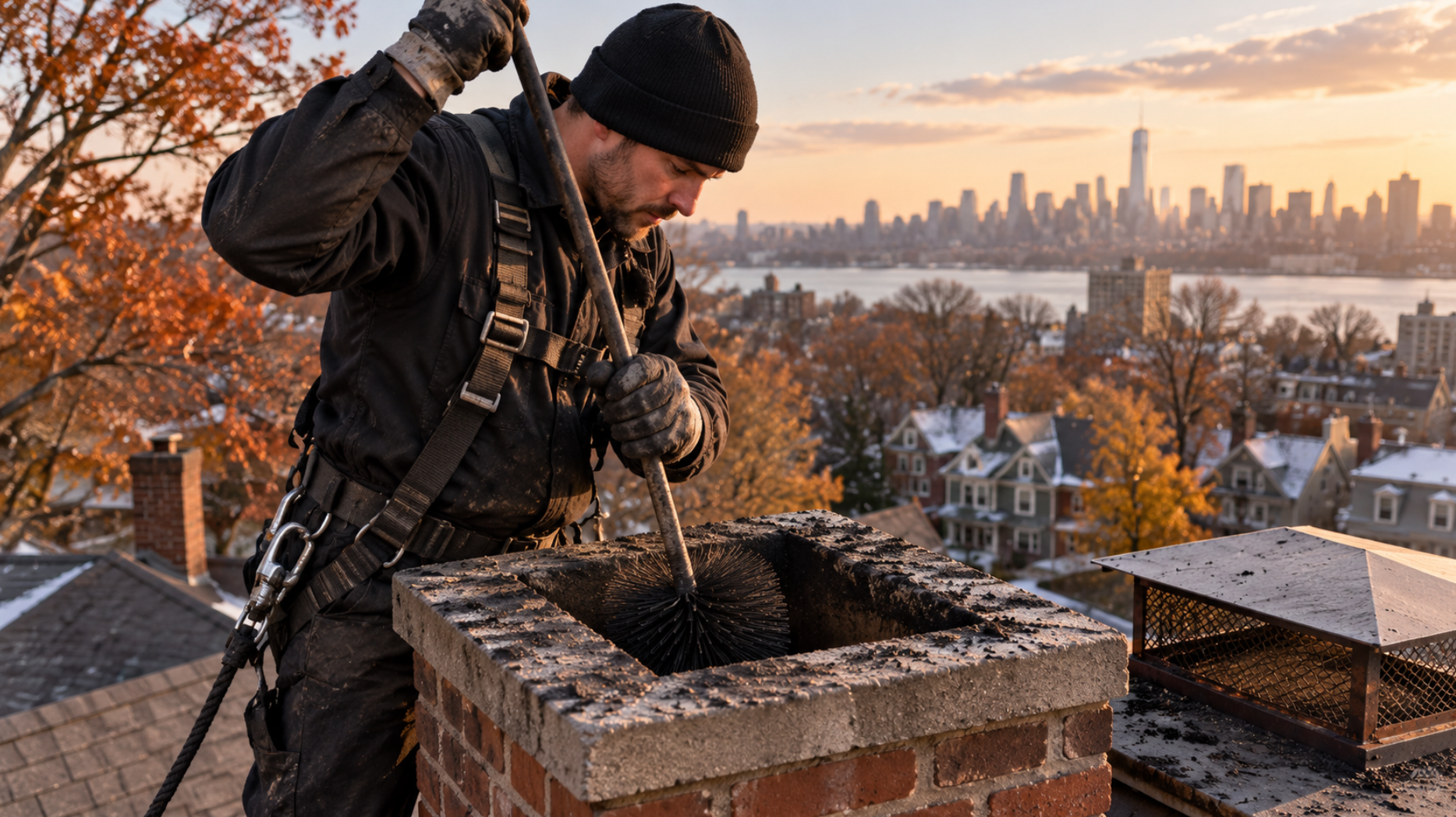
- A check of the crown, cap, flashing and masonry above the roofline
- A written summary so you know what is urgent and what can wait
Our CSIA certified technicians explain every finding in plain language, so you decide what to do with the facts in hand.
Quick questions
How often should I schedule one? Once a year, and after any chimney fire, storm damage or change of heating appliance.
Can I skip it if I rarely use the fireplace? Not safely. Animals, moisture and aging masonry do not wait for you to light a fire.
Local Help and Related Reading
Our crews handle chimney repair in Brooklyn, chimney repair in Queens, the Bronx, Huntington and Yonkers. See every town on our service areas page or visit our services.
For wider guidance, see the EPA Burn Wise program and the U.S. Department of Energy. New Yorkers can also check NYSERDA for state energy resources.