In New York, a chimney liner is required any time a flue carries combustion gases, and a damaged or missing liner is a safety defect even in an older home. Codes follow NFPA 211 and the model residential code, and both expect a continuous, intact liner sized for the appliance connected to it.
When a Liner Is Required or Strongly Recommended
- A new gas, oil or wood-burning appliance is connected to an old flue
- A wood stove or insert is installed in a fireplace
- You converted from oil to gas, which changes flue gas temperature and moisture
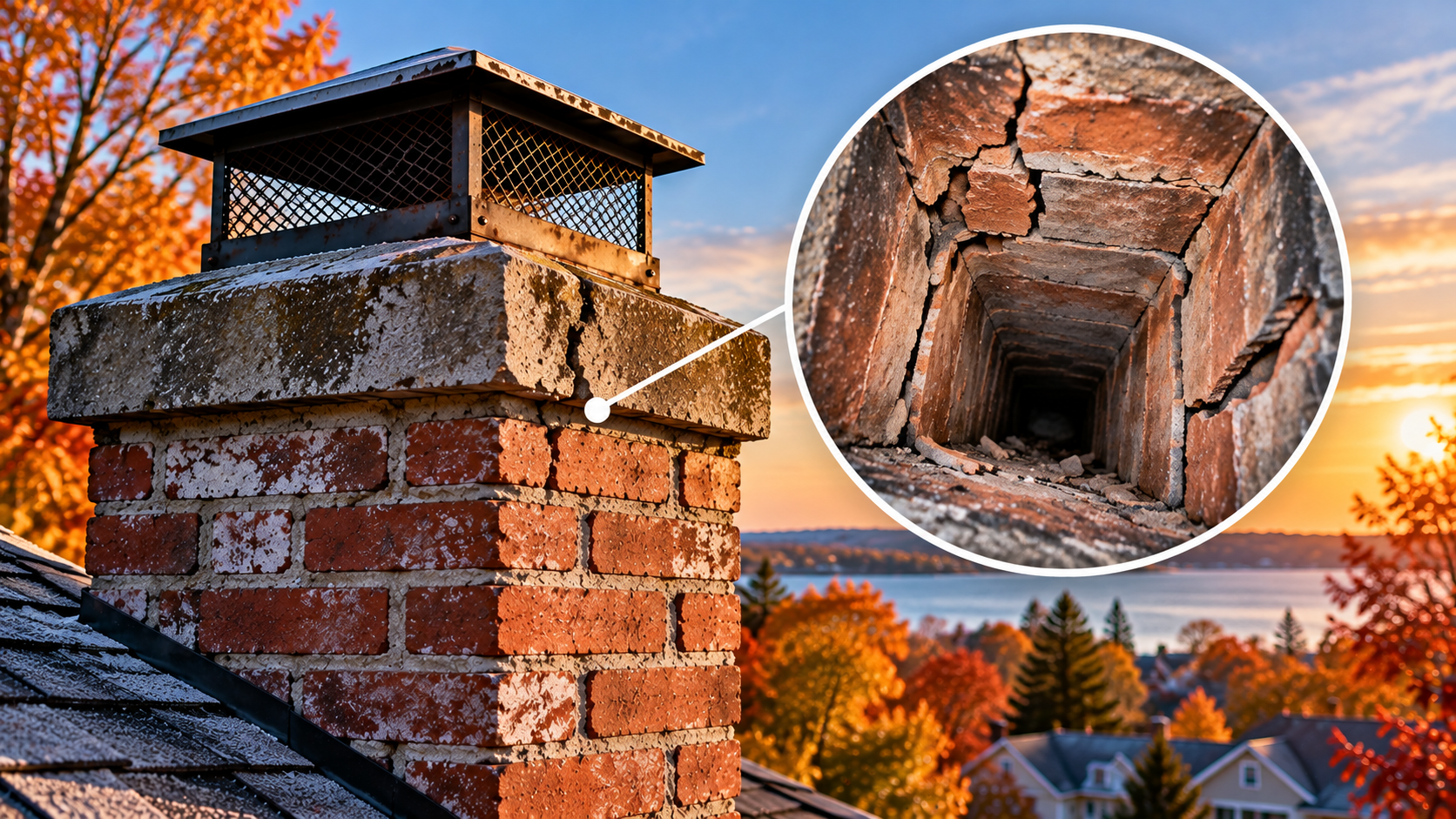
- An inspection finds cracked tiles, missing mortar joints or gaps
- The existing flue is unlined, common in older New York homes
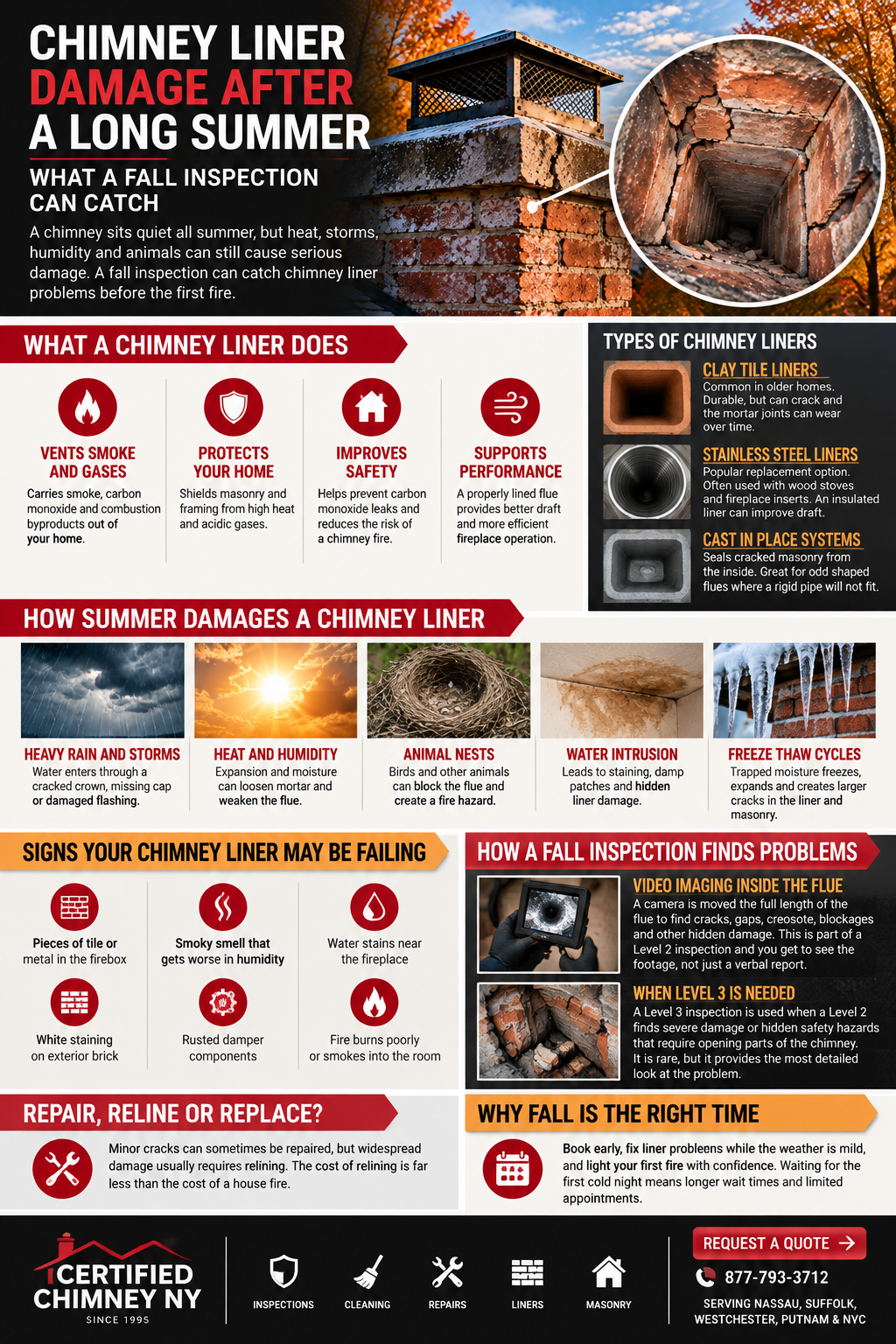
Types of Chimney Liners
Stainless Steel
The standard for relining. Flexible or rigid stainless steel is insulated and rated for all fuels, often with a lifetime warranty.
Clay Tile
Traditional in masonry chimneys. Durable but brittle, and thermal shock can crack individual tiles.
Cast-in-Place
A cement-like material poured around a form to create a seamless liner, used when the flue is badly deteriorated.
What a Liner Does
It contains heat and gases, protects the masonry from corrosive condensation, and prevents carbon monoxide from leaking through cracks into living spaces. It also gives the flue the right diameter, which improves draft.
Cost and Timing
Relining costs vary with flue height, shape and liner type. Most installs take a day, and a camera inspection beforehand gives you a firm quote instead of a guess.
Not sure what your chimney has Ask a certified technician to run a camera through it. A Level 2 inspection gives you a recorded view of every foot of the flue.
Code and Standards Behind Liner Requirements
Chimney liner rules come from national fire codes adopted into New York building practice. NFPA 211 expects flues to be lined, continuous and free of gaps, and appliance manufacturers add their own venting requirements. When a mortgage lender, insurer or home inspector sees an unlined flue, they typically ask for a repair or a relining quote.
How to Know Whether Your Chimney Has a Liner
- Look up the flue with a flashlight: clay tiles appear as square or round sections about two feet long
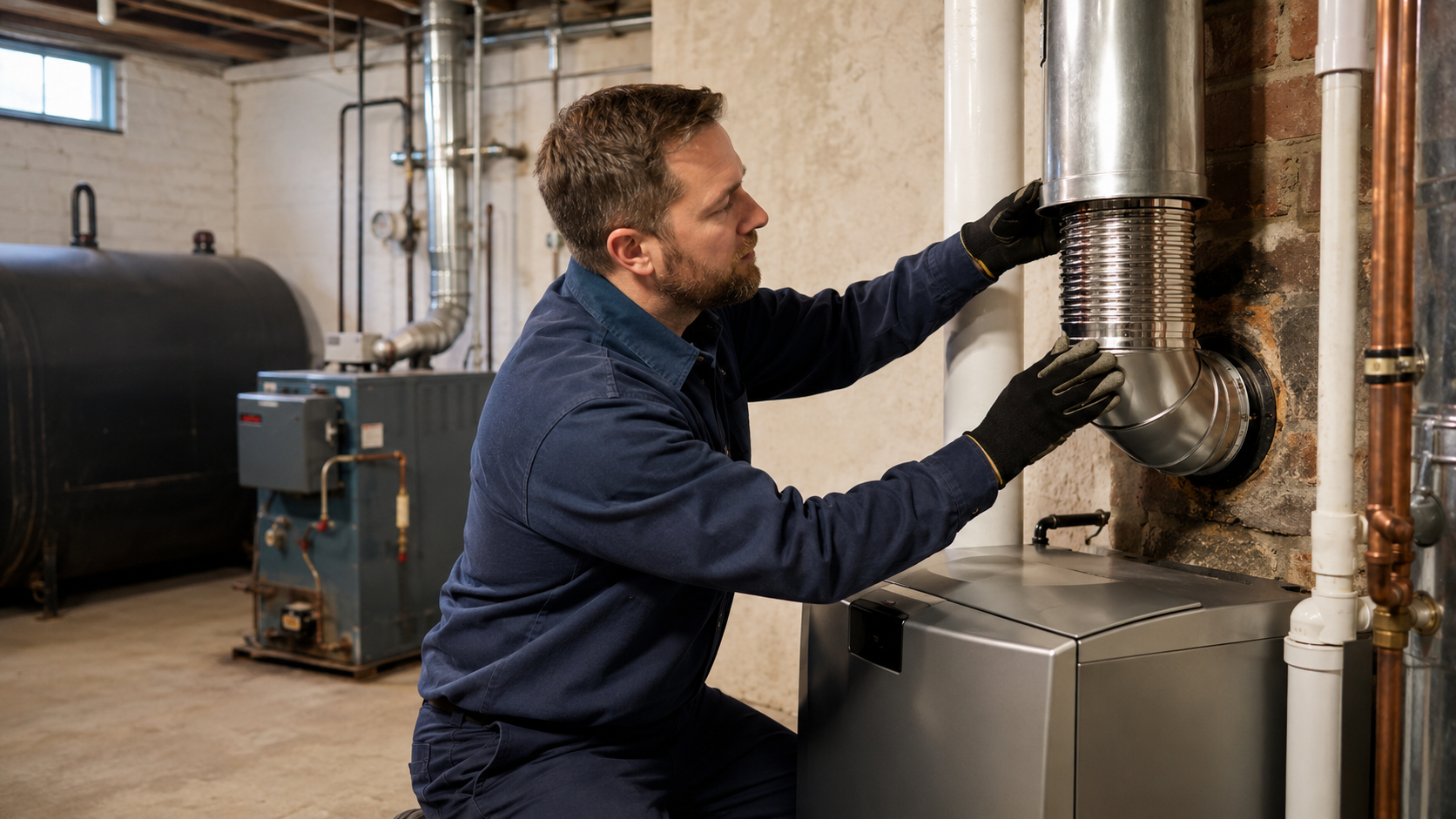
- Stainless steel liners look like a smooth metal tube or a ribbed flexible pipe
- Older homes built before the mid twentieth century may have brick only, with no liner at all
- A camera inspection confirms the type and condition
Common Liner Problems
- Cracked or spalled clay tiles from thermal shock
- Missing mortar between tiles
- Corrosion in metal liners that were not rated for the fuel
- Wrong size for the appliance, causing poor draft
- Collapsed sections after a chimney fire
Matching Liner to Fuel
Gas appliances need a liner sized for low-temperature, moisture-heavy exhaust, while wood stoves need a liner rated for high heat and insulated to reduce creosote. High efficiency furnaces often need special venting. Always choose a liner that matches the appliance manual.
What Relining Involves
- Camera inspection to size the liner
- Cleaning the existing flue
- Lowering the liner from the roof and sealing at the top
- Installing a top plate and cap
- Connecting at the bottom to the appliance or fireplace
Frequently Asked Questions
How long does a stainless liner last
Quality liners come with warranties of 25 years to a lifetime.
Can a cracked tile liner be repaired
Sometimes a few tiles can be replaced, but severe damage normally calls for a full reline.
Do I need a liner for a gas fireplace
Usually yes. Gas exhaust is acidic and attacks unlined masonry.
Local Help and Related Reading
Our crews handle chimney repair in Brooklyn, chimney repair in Queens, the Bronx, Huntington and Yonkers. See every town on our service areas page or visit our services.
More to read: Chimney Odors in Fall: Causes and Fixes for New York Homes, How Often Should You Sweep a Chimney in New York, Chimney Leaks in New York: Causes, Fixes and Prevention.
For wider guidance, see the EPA Burn Wise program and the U.S. Department of Energy. New Yorkers can also check NYSERDA for state energy resources.