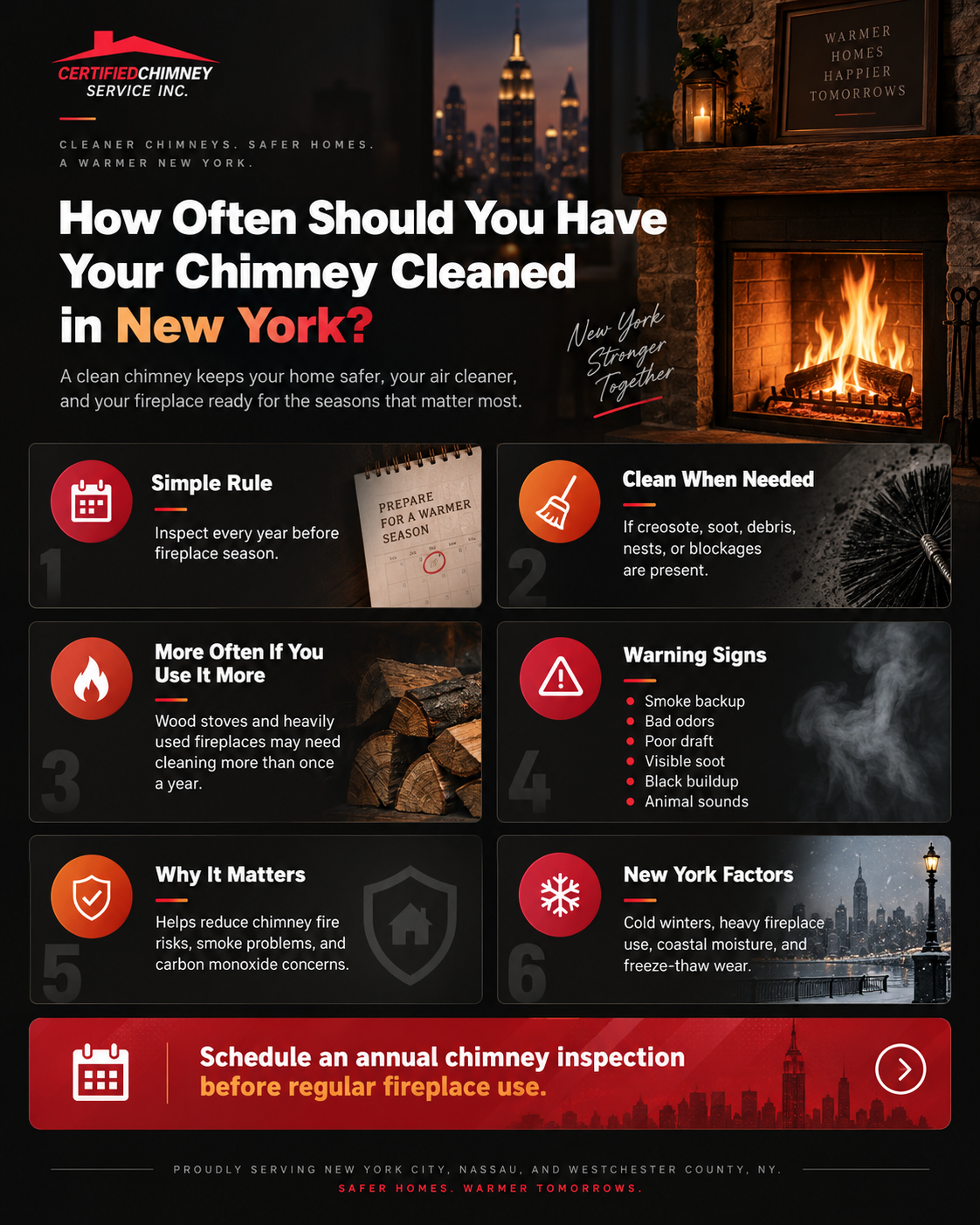
Most New York homeowners should have a chimney inspected every year and swept whenever that inspection finds buildup. The NFPA 211 standard calls for an annual inspection of every chimney, fireplace and vent, and the right sweeping schedule depends on what you burn, how often you burn it, and what kind of flue you have.
Sweeping Schedules by Fuel Type
- Wood fireplace or wood stove: sweep once a year, or after roughly a cord of wood if you burn heavily. Creosote of one-eighth inch or more is the point where a cleaning is recommended.
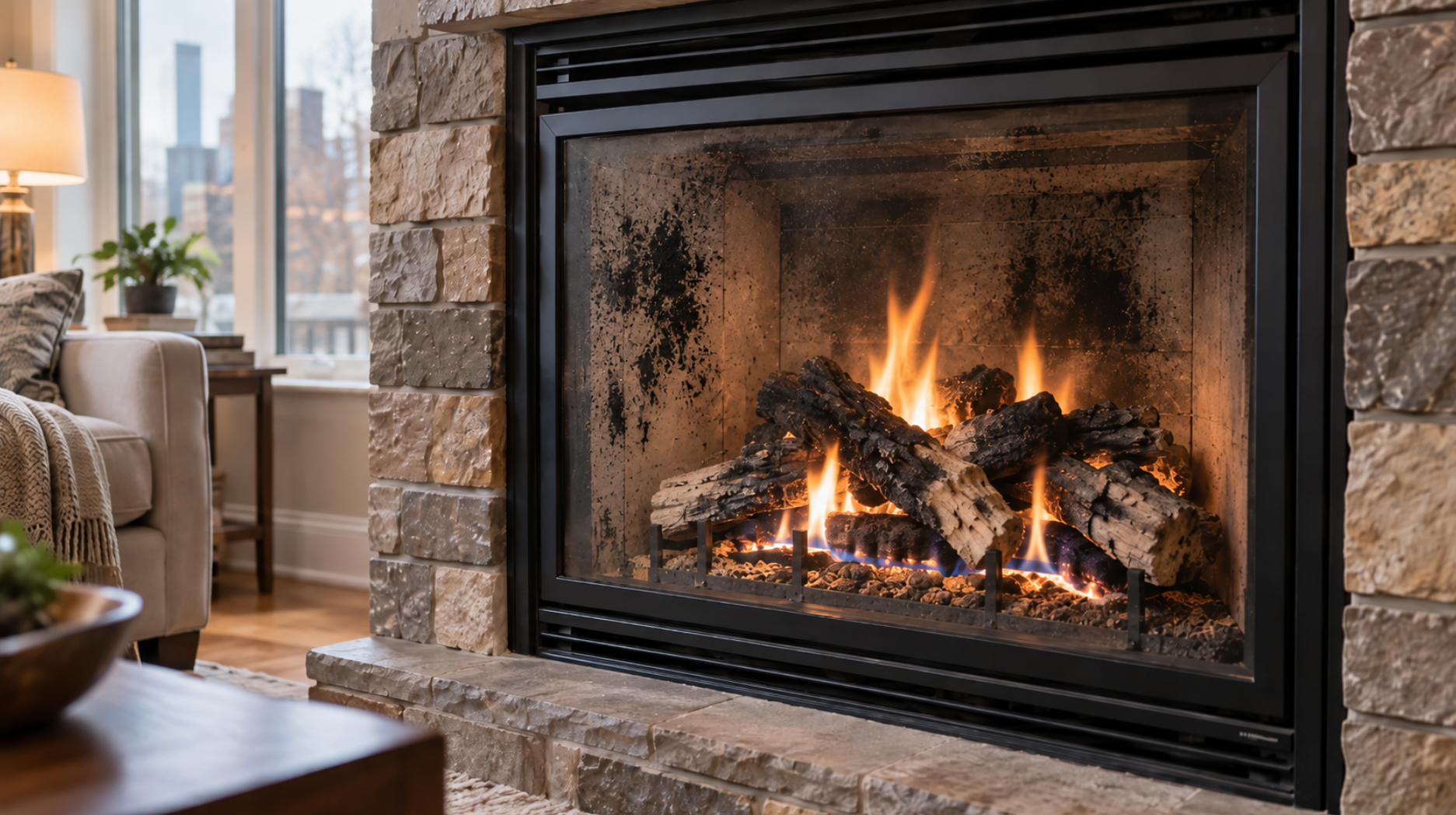
- Gas fireplace: inspect annually and clean as needed. Gas burns cleaner but still produces moisture, debris and occasional soot.
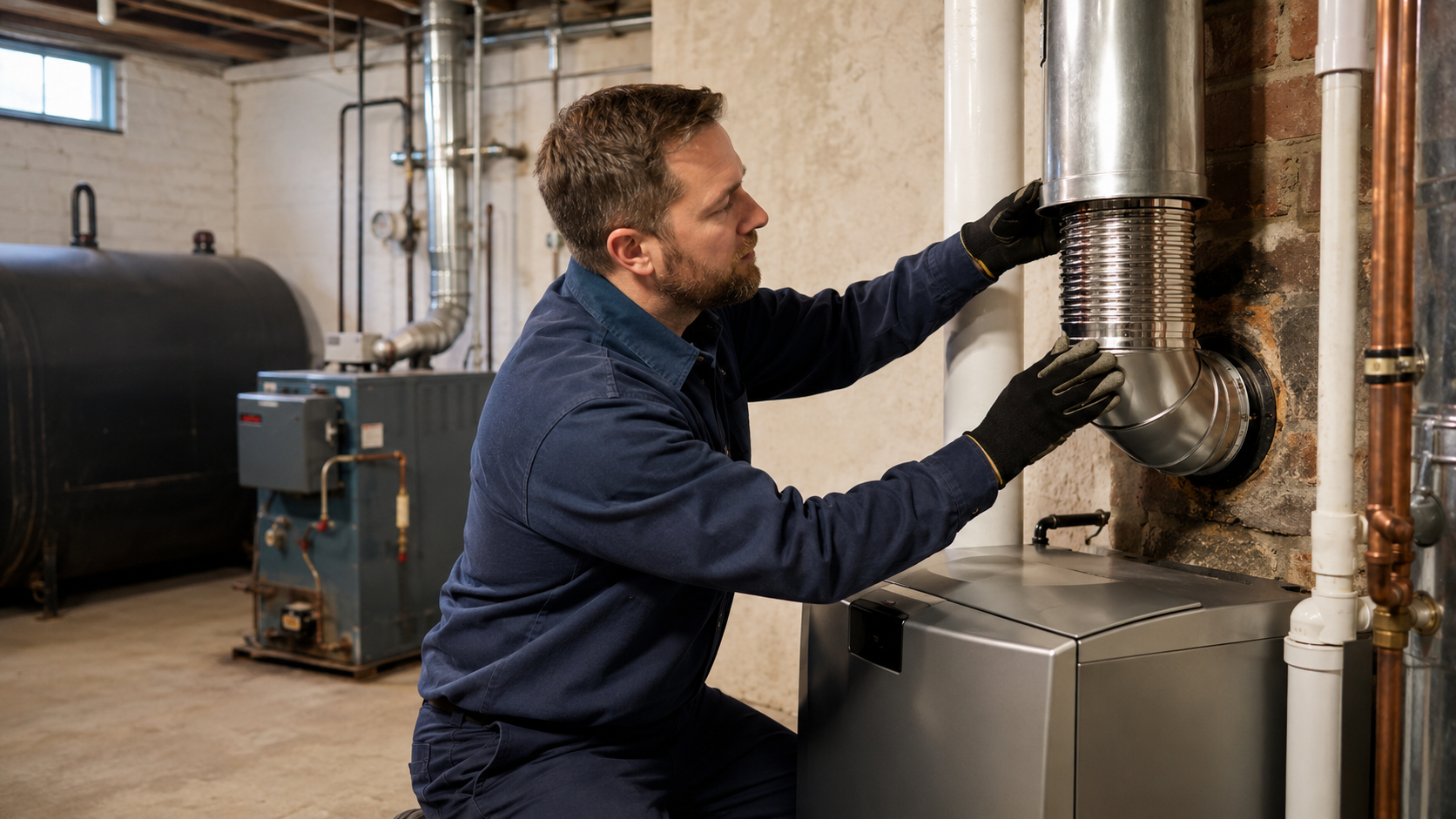
- Oil furnace or boiler: sweep and inspect yearly. Oil produces sulfur-rich soot that corrodes flue liners quickly.
- Pellet stove: clean the vent regularly and have a full professional service annually.
Why Annual Sweeping Matters in the New York Climate
Long Island, Westchester and the five boroughs see repeated freeze and thaw cycles. Moisture that sits in a dirty flue freezes, expands and cracks masonry and clay tiles. A sweep removes the acidic deposits that hold water against the liner and lets the inspector see the cracks and gaps that need repair.
Signs You Should Not Wait Until Next Year
- Dark, flaky or tar-like deposits on the damper or smoke shelf
- A smoky fireplace or a strong odor, especially in humid weather
- Slow, lazy fires that never catch fully
- Black stains around the fireplace opening or soot falling into the firebox
- Animal noises or debris in the flue
What a Professional Sweep Includes
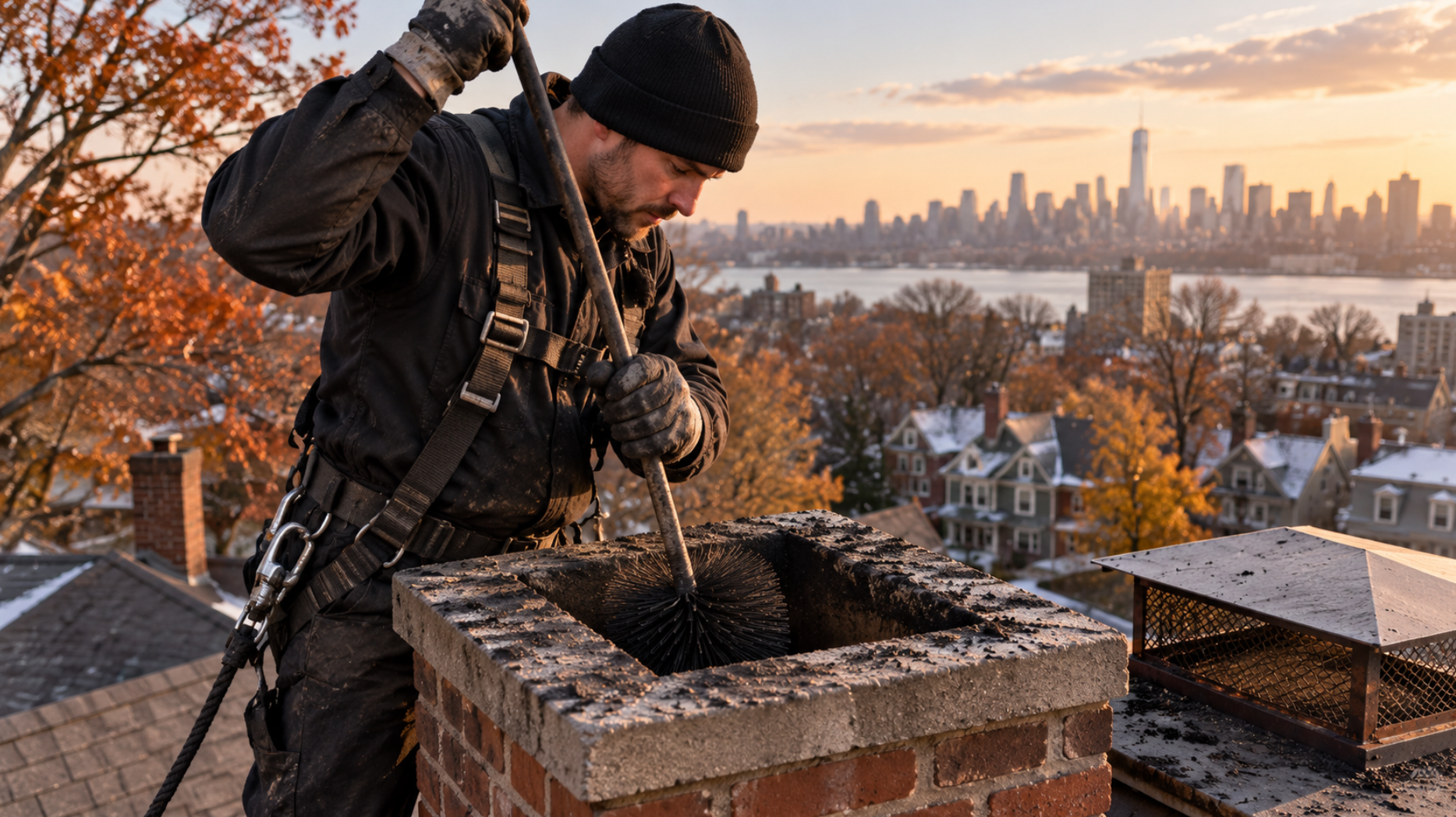
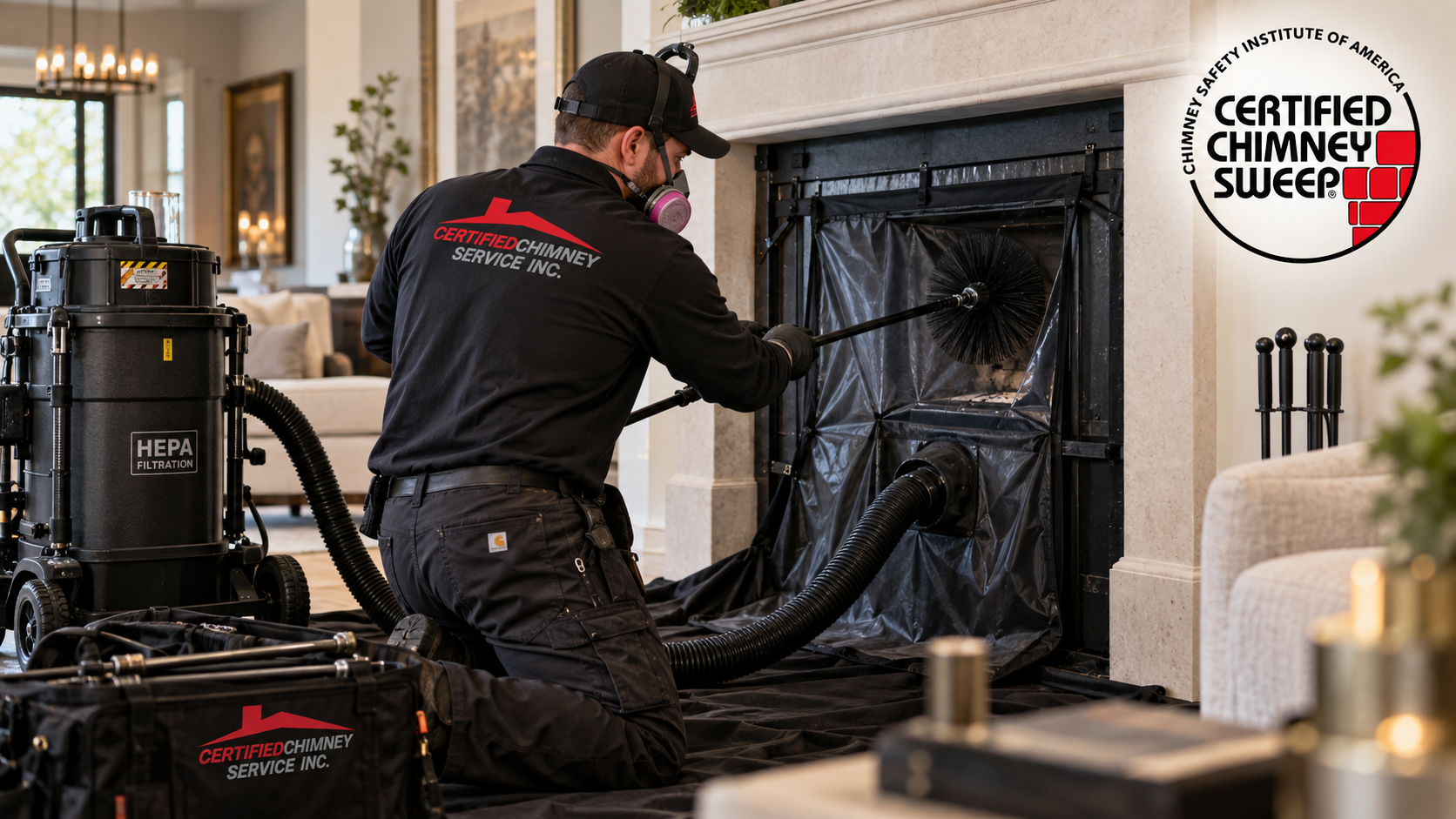
A certified sweep uses rotary brushes and a HEPA vacuum to clean the flue, firebox, smoke chamber and damper, then runs a camera through the system. That camera step is what separates a Level 1 inspection from a quick brushing, and it is how hidden liner damage is caught before it becomes a fire or carbon monoxide hazard.
Best Time of Year to Schedule
Book in late summer or early fall. Appointment calendars fill quickly once the first cold snap arrives, and a sweep done before the season means any repair can be finished before your first fire.
Sweeping a Chimney Step by Step
Understanding what happens during a sweep helps you judge whether you are getting a thorough job. A proper visit follows a set order so nothing is missed.
- Protection: drop cloths cover the hearth and floor, and a vacuum with a HEPA filter is attached to the firebox so dust stays out of the home.
- Pre-inspection: the technician looks at the firebox, damper and smoke shelf with a flashlight before any cleaning begins.
- Brushing: rotary or manual brushes sized to the exact flue clear creosote from the walls, working from the firebox upward or from the roof down.
- Smoke chamber and shelf: these areas collect debris and creosote and are often skipped by low-cost services.
- Final scan: after cleaning, the surfaces are clear enough for a camera or visual check to find cracks and gaps.
How Often Different Households Should Sweep
The one-year rule is a minimum. A home that burns wood every weekend from November to March will build deposits faster than a home that lights a few fires around the holidays. Apartments and co-ops with shared flues may be on a building maintenance schedule, which the board should confirm. Rental properties and short-term rentals benefit from a sweep before each heating season because tenant habits vary widely.
Signs Your Schedule Needs to Tighten
- Creosote that returns to heavy buildup within a single season
- A stove that runs at low temperatures for long periods
- Frequent use of softwood or wood that has not dried
- A new insert or appliance that has changed the draft
Cost of Skipping a Sweep
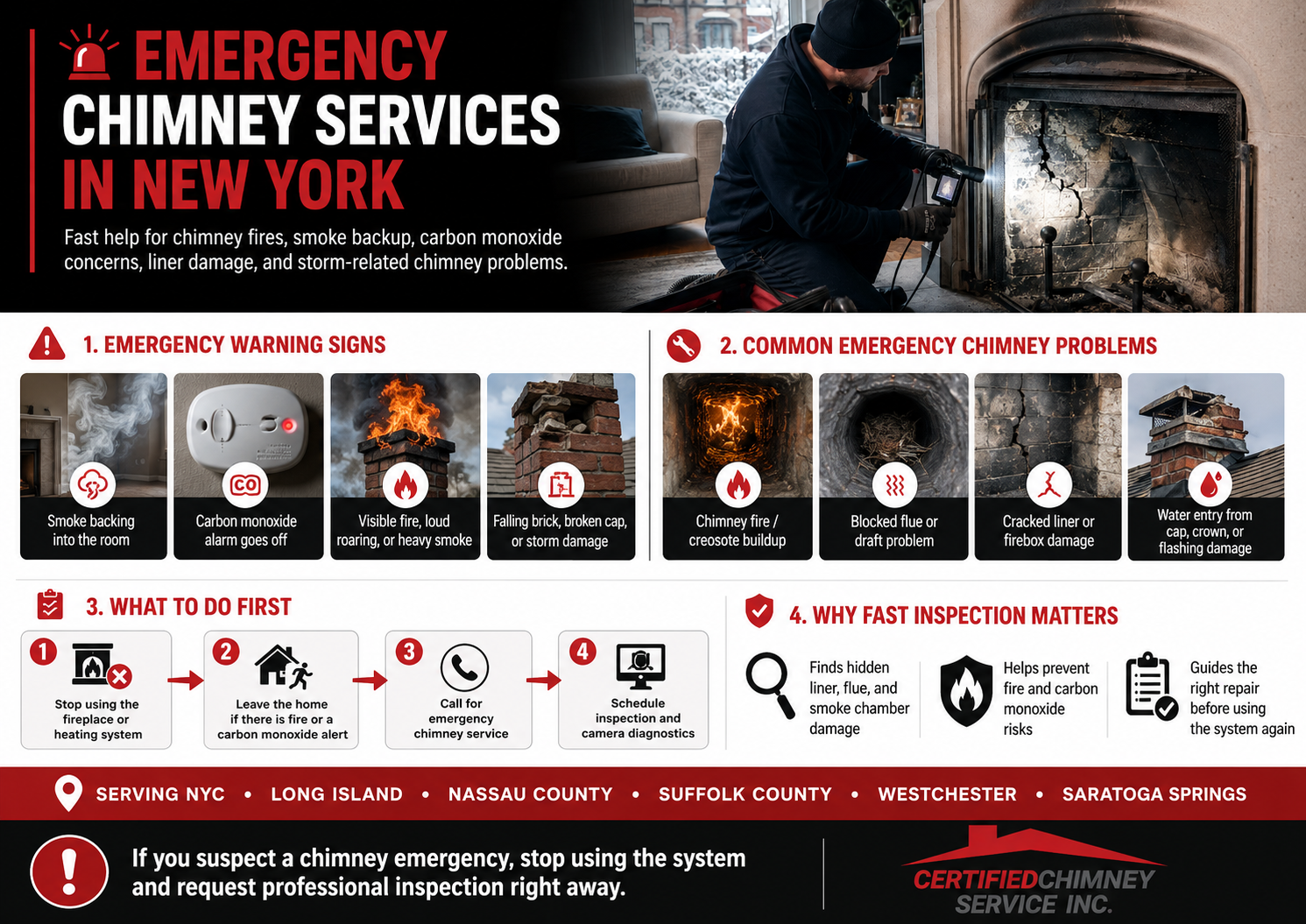
A cleaning is the least expensive item in chimney care. Skipping it invites creosote fires, which can crack liners and cost thousands to repair, and a dirty flue also reduces draft so smoke and carbon monoxide are more likely to enter the room. Insurance carriers may deny a claim if they find evidence that a chimney was never maintained.
Frequently Asked Questions
Can I sweep my own chimney
You can buy brushes and rods, but most homeowners cannot see the damage a camera reveals, and working on a roof is dangerous. A certified sweep also leaves you with a written report you can show an insurer or buyer.
Does a gas fireplace need sweeping
Not as often, but it needs an annual inspection because debris, moisture and animals can block a gas flue.
What time of year is best
Late summer through early fall. Booking early avoids the October rush.
How long does a sweep take
Most visits take 45 to 90 minutes for a single flue.
Local Help and Related Reading
Our crews handle chimney repair in Brooklyn, chimney repair in Queens, the Bronx, Huntington and Yonkers. See every town on our service areas page or visit our services.
More to read: Oil to Gas Conversion: Is Fall the Right Time to Switch Your Chimney System?, What Actually Qualifies as an Emergency Chimney Repair, Chimney Odors in Fall: Causes and Fixes for New York Homes.
For wider guidance, see the EPA Burn Wise program and the U.S. Department of Energy. New Yorkers can also check NYSERDA for state energy resources.