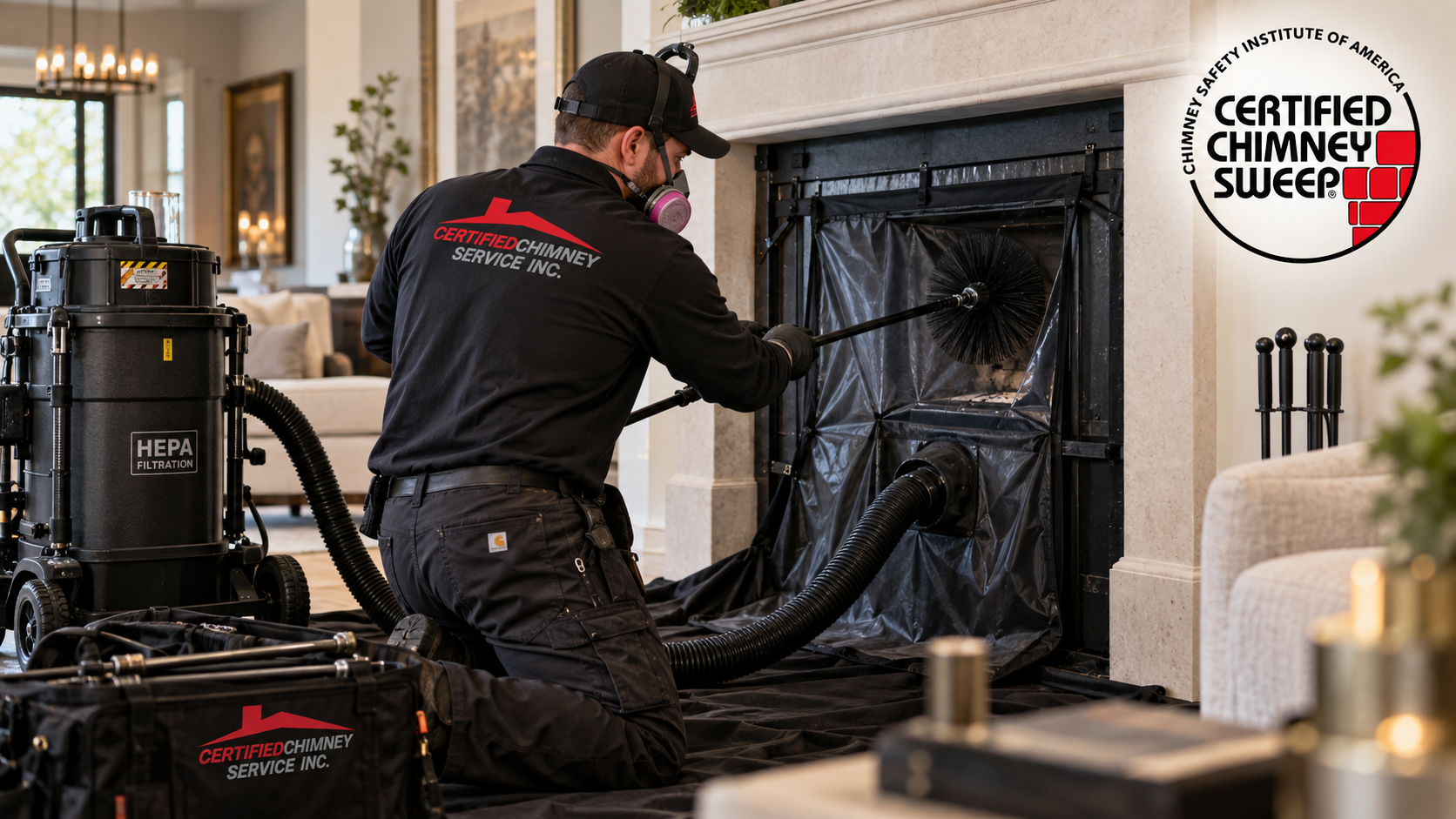
A 12 point fire and safety inspection is a structured walk through the chimney system, from the firebox to the top of the stack. The idea is simple. Every part that can fail gets checked, noted and photographed so nothing is missed.
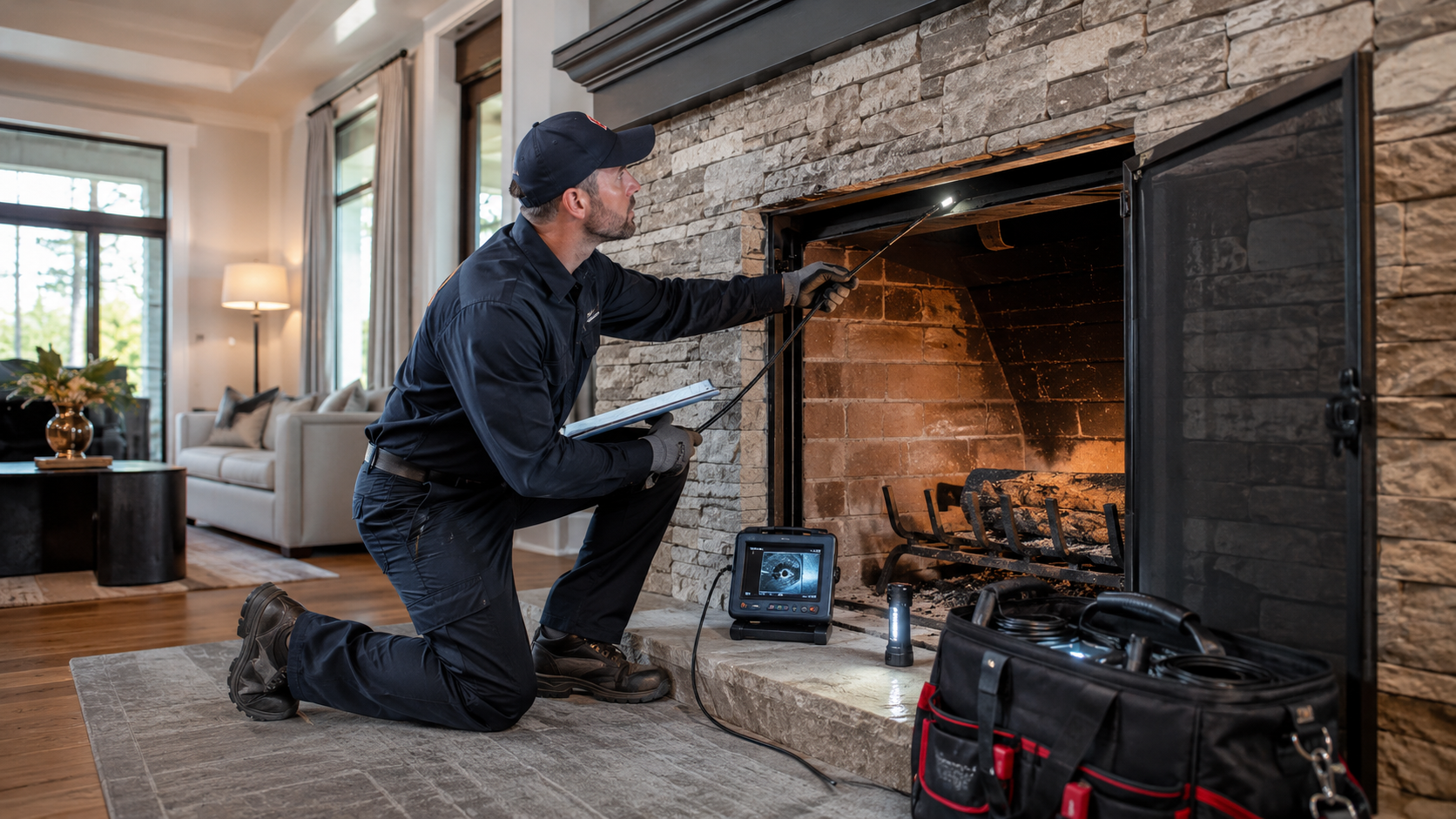
The twelve points at a glance
- Firebox walls and floor
- Damper operation
- Smoke chamber
- Flue liner condition
- Creosote and soot levels
- Hearth and clearances to combustibles
- Chimney masonry above the roofline
- Crown
- Cap and spark arrestor
- Flashing
- Connected appliances and venting
- Carbon monoxide and smoke alarm check
Why it is more than a sweep
A sweep removes buildup. This inspection looks for damage and hazards that buildup can hide. In the rooms below the chimney it also checks that alarms are present, because the CDC notes carbon monoxide has no smell or color.
Who should book one
- Homeowners who have never had a full inspection
- Anyone who just bought a house
- Owners after a chimney fire, storm or long stretch without use
- Landlords needing records for insurance
Compare it with our overview of what a certified chimney inspection includes, or see the Level 2 explainer if you need a camera inspection.
FAQ
How long does it take? Usually about an hour for a standard home.
How often? Yearly, with the NFPA standard behind that recommendation.
What the 12 Point Format Is Designed To Do
A structured inspection keeps every area of the system from being missed. Many homeowners think of a chimney as a hole in the wall, but it is a set of connected parts, each of which can fail on its own. Walking through the full list also helps you understand the report you receive.
The Areas Reviewed
- Exterior masonry: brick condition, mortar joints and leaning
- Crown: cracks, slope and overhang
- Cap and spark arrestor: presence, fit and condition
- Flashing: sealing at the roofline
- Flue liner: cracks, gaps and corrosion
- Smoke chamber: parging and smoothness
- Damper: operation and rust
- Firebox: firebrick and mortar
- Hearth and clearances: distance to combustibles
- Appliance connection: stove pipe, insert or gas log connection
- Draft: flow and smoke spillage
- Carbon monoxide and alarm check: detector placement and function
How Findings Are Rated
A good report separates findings into safe, needs attention soon and unsafe to use. Unsafe findings, such as a cracked liner or missing clearance, mean the fireplace should not be used until repaired.
When to Schedule
Book before the first fire of the season. If you use the fireplace heavily, schedule more often. After a chimney fire, storm or home purchase, request a Level 2 inspection.
Frequently Asked Questions
How long does the inspection take
About an hour for a single flue.
Do I get photos
Yes. A report should include photos or video of each problem.
Can the inspection be done in winter
Yes, but icy roofs can limit access.
Local Help and Related Reading
Our crews handle chimney repair in Brooklyn, chimney repair in Queens, the Bronx, Huntington and Yonkers. See every town on our service areas page or visit our services.
More to read: Chimney Draft Problems: What Changes When the Temperatures Drop, Chimney Crown and Cap Damage: What Fall Storms Leave Behind in New York, Buying a Home This Fall? Why a Chimney Inspection Belongs on Your Closing Checklist.
For wider guidance, see the EPA Burn Wise program and the U.S. Department of Energy. New Yorkers can also check NYSERDA for state energy resources.