
Most homeowners picture a chimney inspection as someone glancing up the flue with a flashlight. A real one is more thorough than that, and the difference shows up in what gets found. A certified chimney inspection is a documented check of the entire chimney system, from the firebox to the chimney cap, performed by a trained technician who knows what failure looks like before it becomes a fire.
Since 1995, Certified Chimney has served Nassau, Suffolk, Westchester and Putnam counties and New York City. This guide covers the inspection process, the inspection levels, and how to read the inspection report you receive afterward.
Anyone can print “chimney sweep” on a truck. Certification separates a person who sweeps soot from a certified chimney sweep who can diagnose a failing fireplace system.
The Chimney Safety Institute of America runs the best known credential in the trade, and its CSIA FAQ explains how annual inspections fit the NFPA 211 standard. A CSIA Certified technician has passed an exam, and keeping the credential means Continuing Education. Ask any of the chimney professionals you are considering for proof, not just a logo.
A chimney visit means ladders, roofs and open fireplaces inside your living space. Licensed, insured chimney professionals protect you if something goes wrong. If a company hesitates when you ask, move on.
A Level 1 inspection covers the parts of the chimney we can reach without tearing anything apart. We look at the firebox, the damper, the flue and the exterior, and check for blockages, soot and obvious damage. It is the right choice for a chimney you have used regularly with no changes. Our chimney inspections page explains what is included.
A Level 2 goes further, using cameras to look inside the flue. It is recommended when you buy or sell a home, after a chimney fire, or after any major change to the chimney system, such as a new appliance. If you are buying, a real estate chimney inspection is worth doing before closing.
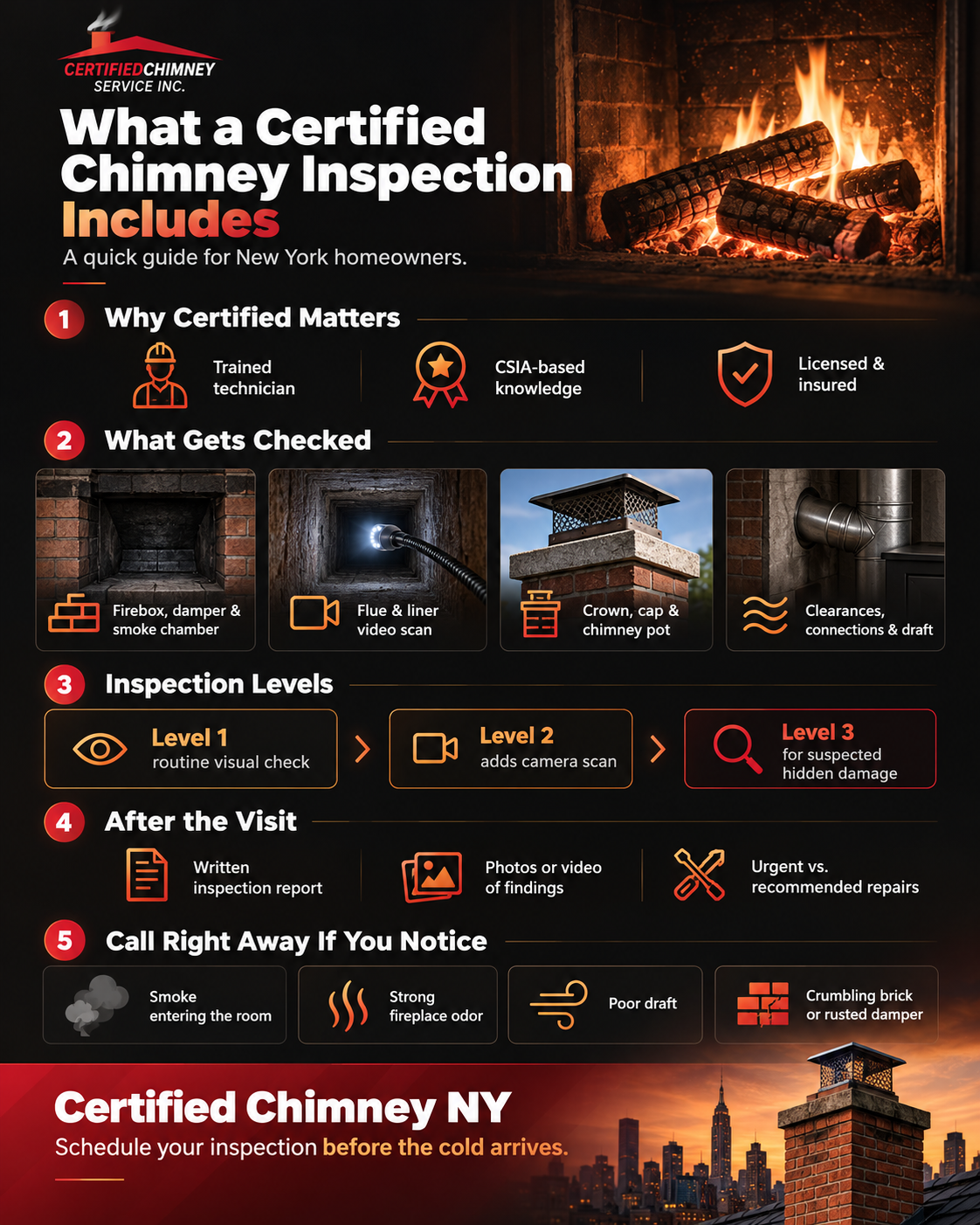
The firebox takes the most heat, so cracked firebrick and failed mortar joints show up here first. The damper should open fully, close tightly and move without force. Above it, the smoke chamber needs a smooth, intact surface so smoke and gases keep moving upward.
This is the part you cannot see, and it is where most serious problems hide. Technicians use video scanning to look through the chimney flue for cracked tiles, gaps, heavy creosote and blockages. A video scan gives you real footage instead of a verbal guess. A damaged chimney liner or worn flue liner can let heat reach the wood framing around your chimney, which is how many chimney fires start.
Water is the slow enemy of every chimney structure. A cracked chimney crown, missing chimney cap or crumbling chimney pot lets moisture in, and moisture breaks masonry down from the inside. These get checked from the roof, not from the ground.
Stove pipes, thimbles and the distance between the venting system and combustible material all get measured, along with chimney ventilation and draft. When the situation calls for it, a smoke test or pressure test confirms that smoke leaves the house and not into it. Small errors here are easy to fix and costly to ignore.
Not every fireplace inspection needs the same depth. NFPA 211 defines three inspection levels, and knowing which one applies keeps you from overpaying or under checking.
A Level 1 inspection (also written Level I) is a visual check of everything reachable without tools, for a chimney in regular use with no changes. A Level 1 Chimney Inspection suits an annual visit, and our chimney inspection services page lists what it covers.
A Level 2 inspection, sometimes called Level II, adds video scanning inside the flue. A Level 2 Chimney Inspection is required when you buy or sell a home, change fuel type, or after a chimney fire or storm. Buyers should read why a real estate chimney inspection matters before closing, since Level II work is exactly what that report is built on.
A Level 3 inspection, also called Level III, is the deepest of the three, reserved for suspected hidden damage. A Level 3 Chimney Inspection may involve removing parts of the chimney to reach the problem.
An inspection is only useful if you understand the result. A proper inspection report explains what was found, includes photos or footage of any problem, and ranks what is urgent and what can wait. Our 12 point fire and safety inspection follows that structure, so nothing is left to interpretation.
If the inspection report shows heavy buildup, the next step is usually professional chimney cleaning. The EPA notes that nearly 7 percent of home fires are caused by creosote buildup in the chimney, which is why it never gets skipped. A second inspection report copy goes to you for your records, which matters at resale.
Some warning signs mean you should call now instead of waiting for your annual visit. Smoke entering the room, a strong smell from the fireplace in warm weather, rust on the damper, or a fire that struggles to draw all point to trouble. Our guide on how to tell if your flue is blocked walks through the signs, and the seasonal maintenance tips help you stay ahead of them. For urgent problems, our 24/7 emergency service is available.
How long does an inspection take? A Level 1 visit usually takes under an hour. A Level 2 visit with a video scan takes longer, depending on the flue.
Do gas fireplaces need one? Yes. A gas fireplace system carries carbon monoxide risks and corrosion problems, even though it burns cleaner.
Is an inspection the same as a cleaning? No. An inspection checks condition. A cleaning removes soot and creosote. Many homeowners book both in one visit.
Who sets the standard? The National Fire Protection Association publishes NFPA 211, which calls for chimneys to be inspected at least once a year.
Certified Chimney serves Nassau, Suffolk, Westchester, Putnam and New York City. Call 877-793-3712 or request a quote and we will get your chimney checked before the cold arrives.
Learn what a certified chimney inspection includes, how inspection levels differ, when video scanning is used, and what you should expect after the technician finishes.
A certified chimney inspection evaluates the chimney system from the fireplace to the chimney top. Depending on the inspection level, the technician may check the firebox, damper, smoke chamber, flue liner, chimney exterior, crown, cap, masonry, venting connections, clearances, draft, and other accessible components.
Certification shows that the technician has completed industry training and demonstrated knowledge of chimney inspection, venting, fireplace safety, and applicable standards. Homeowners should also verify that the chimney company is properly insured before allowing roof or fireplace work to begin.
The technician may inspect the firebox for cracked firebrick or failed mortar, test the damper for proper operation, examine the smoke chamber, and check the flue and chimney liner for cracks, gaps, creosote buildup, debris, or blockages. Accessible venting connections and clearances may also be reviewed.
A camera scan is commonly used during a Level 2 inspection to evaluate areas inside the flue that cannot be fully seen from the fireplace opening or chimney top. Video scanning can help reveal cracked flue tiles, missing mortar, gaps, heavy deposits, blockages, or other hidden liner damage.
A Level 1 inspection is the routine visual inspection used when the chimney system has not changed and there are no known problems. A Level 2 inspection is more detailed and typically includes video scanning of the flue. A Level 3 inspection is reserved for suspected hidden hazards and may require removing parts of the chimney or surrounding construction to reach the problem.
A proper inspection should leave you with a clear explanation of the chimney's condition. Depending on the service, the report may include written findings, photographs or video footage, recommended repairs, and information about which issues require immediate attention and which can be monitored or scheduled later.
No. A chimney inspection evaluates the condition and safety of the chimney system. Chimney cleaning removes soot, creosote, ash, and debris. If the inspection finds significant buildup, professional chimney cleaning may be recommended before regular fireplace use.
Do not wait for a routine annual visit if smoke enters the room, the fireplace has a strong odor, the fire struggles to draw, the damper is rusted, pieces of brick or flue tile appear in the fireplace, or you suspect a blockage or damaged chimney liner. These conditions should be evaluated before further fireplace use.
Have the complete chimney system inspected and receive clear findings before hidden damage becomes a larger fireplace or venting problem.
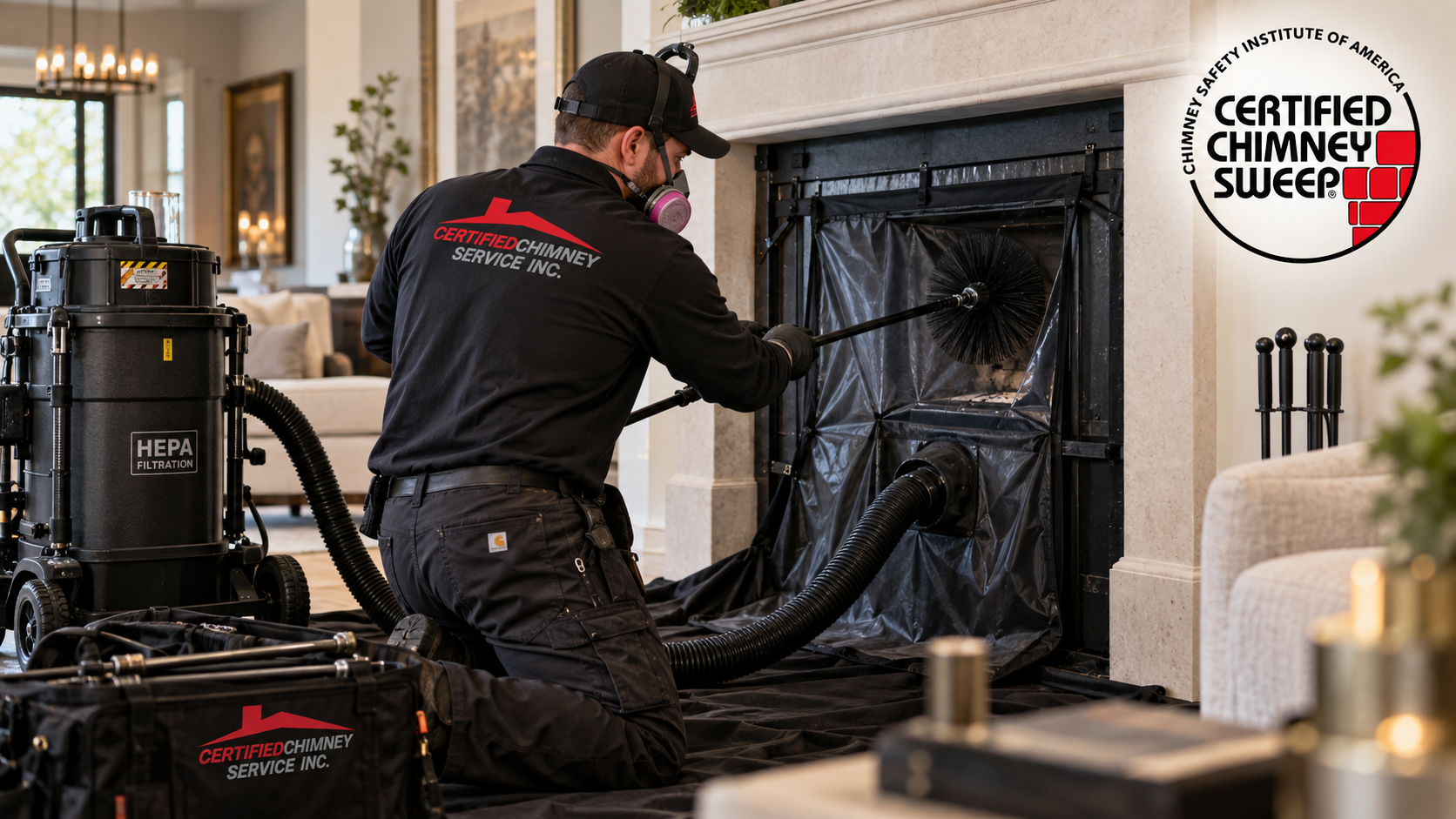
Covers fireplaces, wood stoves, pellet stoves, and heating systems including gas and oil systems. Book now before the winter rush fills our schedule.