There is nothing cozier than a crackling fire on a frigid winter evening, right up until that fire stops venting and smoke starts pouring back into the room. Most homeowners assume their chimney is broken or blocked, but the real cause is usually more interesting than that. Smoke reversal is rarely a chimney problem on its own. It is a sign that your whole home’s air pressure is out of balance.
Dealing with a smoky fireplace? Call 877-793-3712 and we’ll help you figure out why.
The Physics Behind Winter Draft Problems
A fireplace is essentially a thermal engine. It needs a steady supply of air to feed combustion and a clear, heated pathway up the flue to vent the exhaust. When that engine fails to start, it is almost always because there isn’t enough heat yet to create buoyancy.
The “Cold Plug”: When Air Becomes a Physical Barrier
In winter, the air sitting in an unused chimney is often much colder than the air in your living room. Cold air is denser than warm air, so that column of frigid air settles at the bottom of the flue like an invisible plug. When you first light a fire, the smoke isn’t yet hot enough to push through it, so it stalls and spills back into the room instead of rising. That cold plug has to be displaced before the fireplace will draft properly.
How Temperature Differences Drive or Kill a Draft
Chimney draft relies on what’s called the stack effect. Warm air rises and escapes out the top of the chimney, creating low pressure at the bottom that pulls more air into the firebox. If the temperature difference between the inside of the flue and the outside air is too small, that draft stays weak. In extreme cold, if the flue isn’t insulated or preheated, the exhaust gases cool and lose buoyancy before they ever reach the top, and the whole system stalls.
Is Your House Fighting Your Fireplace?
A home is essentially a sealed container with its own internal air pressure. Once you turn on exhaust appliances, that pressure shifts, and it can overpower the gentle, passive draft a chimney relies on.
- Kitchen range hoods can move 400 to 1,000 cubic feet of air per minute, which creates a massive pressure differential and effectively steals the air your fireplace needs
- Bathroom exhaust fans running at the same time can starve a fire of oxygen, especially in a smaller house
- HRV or ERV ventilation systems that aren’t balanced correctly can quietly depressurize the whole home
- Central vacuum systems add their own smaller pull, which can be enough to push things past the tipping point
Modern, energy-efficient homes make this worse, not better. Older, drafty houses let the fireplace breathe through gaps around windows and doors. A tightly sealed home has nowhere for replacement air to come from, so the fireplace pulls it from the one open path available, which is back down the chimney.
Quick Fixes Before You Call a Pro
| Try this | Why it helps |
|---|---|
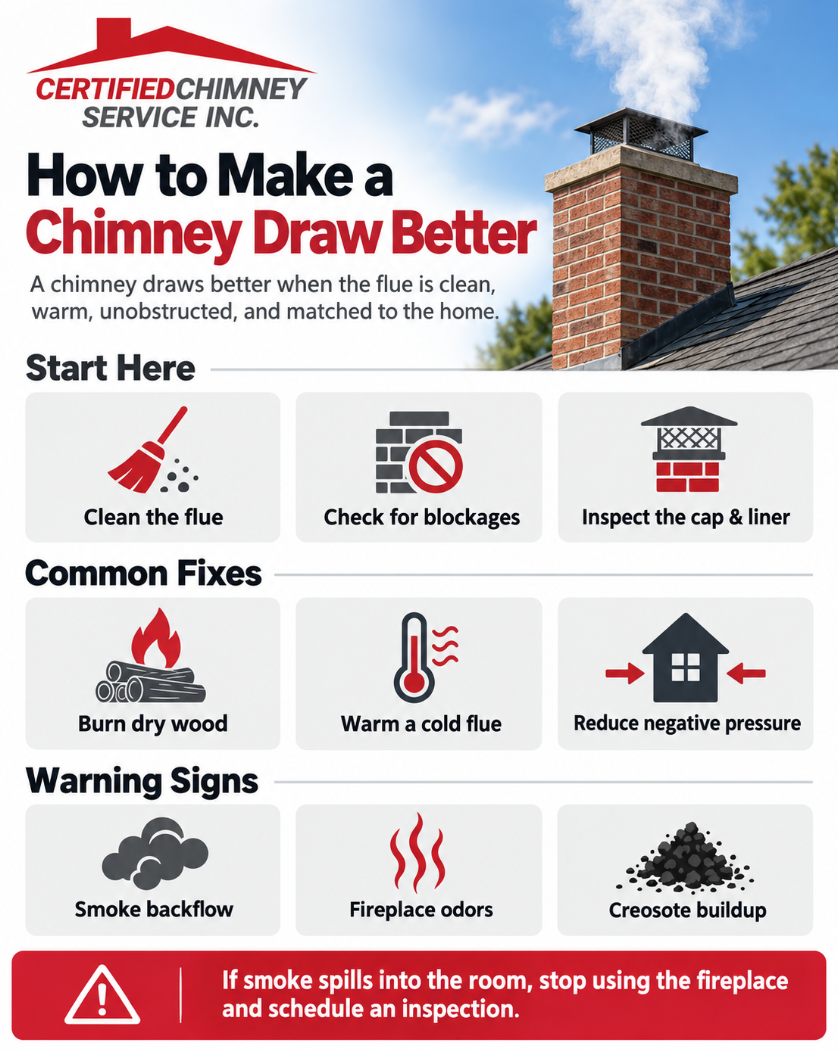
| Warm the flue with a rolled up newspaper held near the damper before lighting the main fire | Breaks the cold plug and starts a thermal current upward |
| Check that the damper is fully open, not partially stuck | A partially closed damper is one of the most common causes of smoke spilling into the room |
| Crack a window in the same room as the fireplace | Gives outside air a direct path in, which often equalizes pressure immediately |
Check Your Fuel Before Blaming the Chimney
If the mechanics of the house and chimney check out, the wood itself might be the problem. Burning wood with too much moisture wastes most of its energy boiling off water instead of producing clean heat, which leads to cooler, smokier fires with weak draft. Firewood should sit at 20% moisture or less. A cheap digital moisture meter on the ends of a split log will tell you where you stand. Building the fire top down, with larger logs on the bottom and kindling on top, also helps the flue heat gradually and avoids the smoky burst that comes from lighting a big pile from underneath.
Structural Issues That Cause Smoke to Roll Back
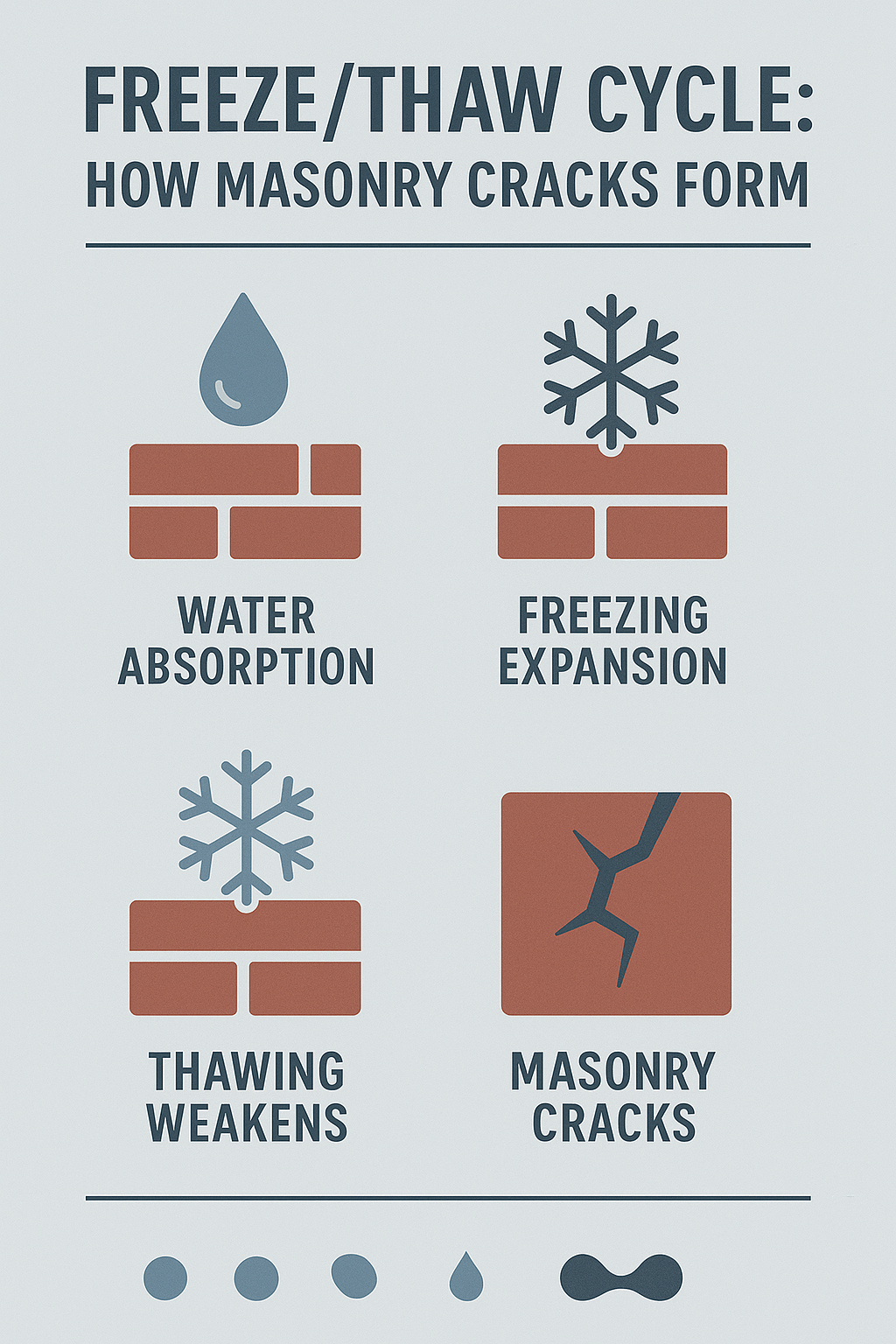
Creosote buildup narrows the flue the same way plaque narrows an artery, choking off airflow as it accumulates. Snow can bridge across an unprotected chimney cap in a heavy storm and seal the top of the flue entirely. On a wood stove or insert, a warped baffle plate or a failing door gasket lets smoke bypass the flue path it’s supposed to follow. And a fireplace opening that’s too large for its flue liner forces more air toward the chimney than it can actually handle, which pushes smoke straight back out into the room. A professional inspection catches all of these before they turn into a guessing game every time you light a fire.
When a Smoky Fireplace Means Stop and Call Someone
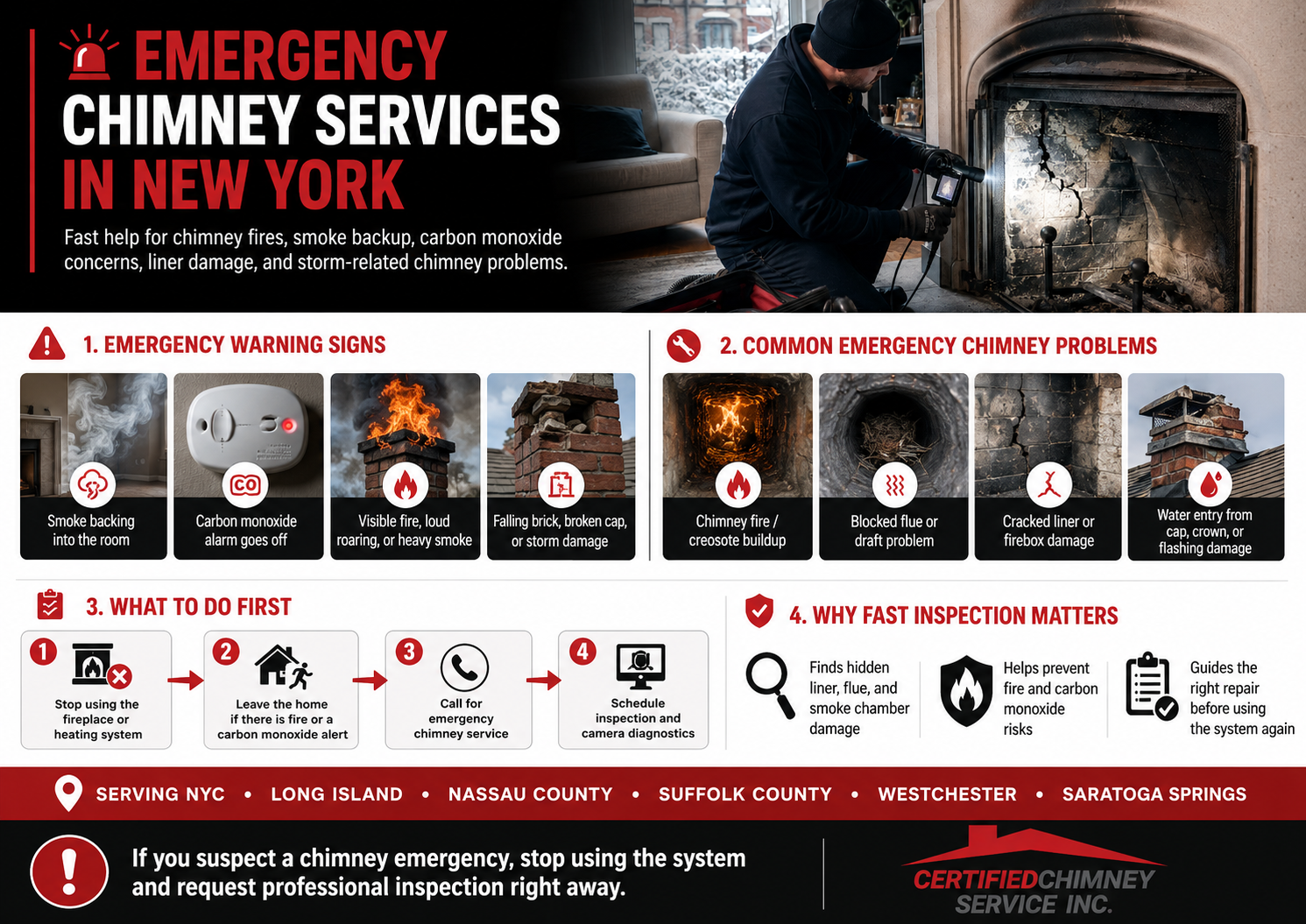
Smoke always carries carbon monoxide, which is colorless and odorless. Never treat a smoking fireplace as just an annoyance. If you see cracks in the masonry, rust on the damper, or smoke leaking through bricks in an attic or wall, stop using the fireplace immediately and have it inspected. Make sure working carbon monoxide detectors are placed near every bedroom and at least one near the fireplace, and if an alarm ever sounds, get out and ventilate before doing anything else.
Frequently Asked Questions
Why does my fireplace only smoke when the kitchen exhaust fan is running?
A range hood can pull 400 to 1,000 cubic feet of air per minute out of the house, which creates enough negative pressure to overpower a passive chimney draft and pull smoke back down instead of letting it rise.
Will cracking a window really stop my fireplace from smoking?
Often, yes. It gives the house a direct path for replacement air so the fireplace isn’t competing with exhaust fans or an airtight building envelope for the air it needs to draft properly.
How do I know if unseasoned wood is causing the smoke?
Check the moisture content with a meter. Firewood above 20% moisture burns cooler and smokier because the fire wastes energy evaporating water instead of producing clean, draft-friendly heat.
Local Resources on Chimney and Home Air Quality (click to expand)
A smoky fireplace almost always has a specific, fixable cause once someone looks at the whole system instead of just the chimney. Call Certified Chimney NY at 877-793-3712 to get it diagnosed, or request service online and we’ll follow up with a time that works.