The first hard freeze of the season isn’t just a shift in the weather. For a chimney that’s been quietly deteriorating all year, it’s often the moment small cracks turn into real structural problems, and the moment a repair that would have cost a few hundred dollars in October turns into one that costs thousands in January.
Want your chimney checked before the freeze sets in? Call 877-793-3712 and we’ll get you scheduled.
What’s Actually Happening Inside the Masonry
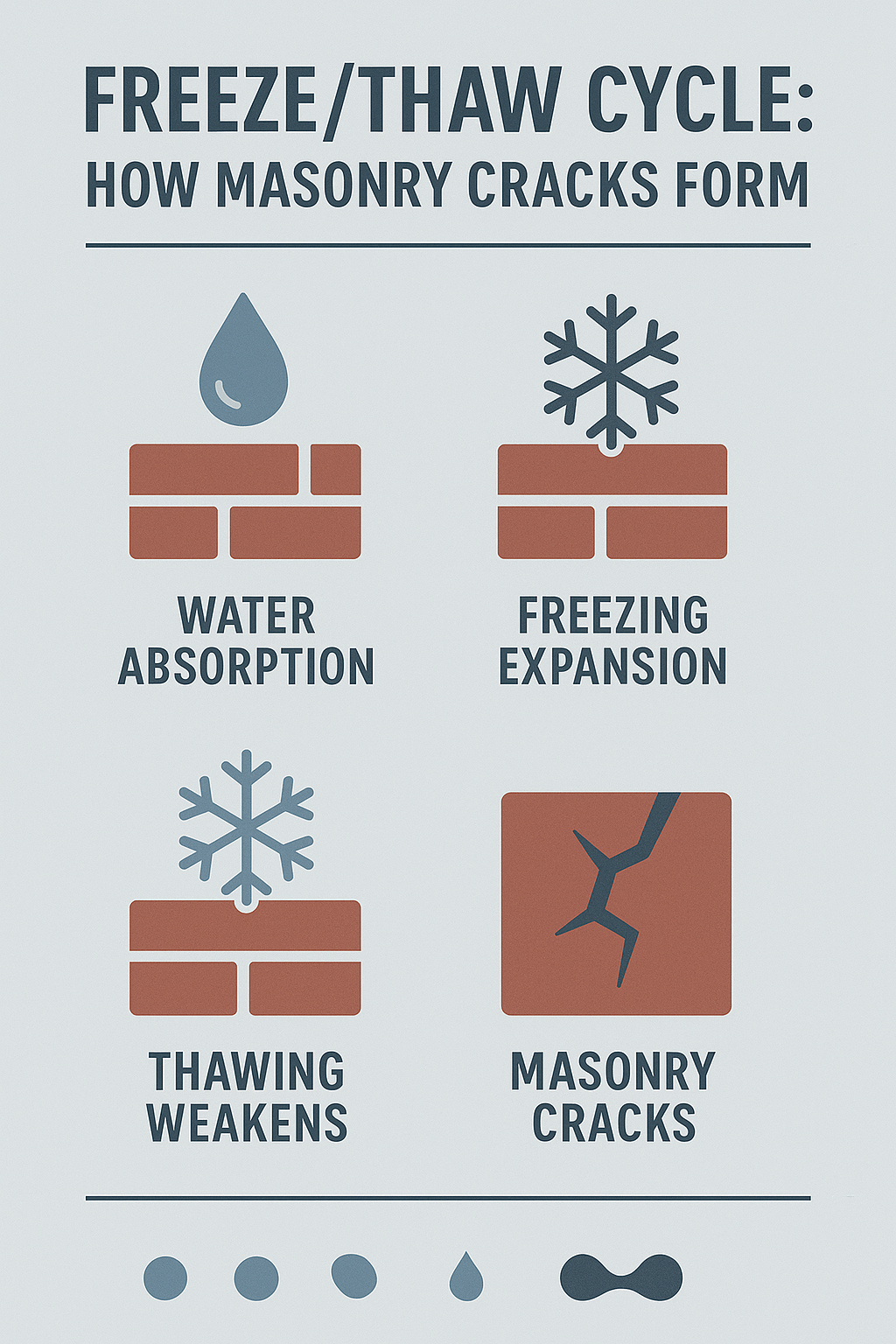
New York sees more than thirty freeze and thaw cycles each winter, and every one of them is a small mechanical stress test on a chimney’s exterior. Water finds its way into tiny cracks or a weak chimney crown, and when the temperature drops that water freezes and expands by about 9%. That expansion acts like a wedge, pushing cracks wider and forcing the outer layer of brick away from the structure underneath it.
Two signs usually show up first. Spalling is when the face of a brick peels or pops off, leaving the softer interior exposed. Efflorescence is the white, powdery residue left behind as water moves through masonry and salts rise to the surface as it evaporates. Either one means water has already found its way in, and the deep freeze hasn’t even started yet.
Why Waiting Costs So Much More
Fixing a few deteriorating mortar joints in the fall, a process called tuckpointing, is a relatively small job. It seals the joints before winter so water never gets a chance to reach the vulnerable interior of the chimney. Put that same repair off until spring, after a winter of freezing and thawing has had its way with those same cracks, and a simple repointing job can turn into a full rebuild.
There’s also a timing problem that has nothing to do with the chimney itself. Once temperatures drop, everyone discovers their chimney issues at the same time, and that surge in demand drives up labor costs and stretches out scheduling. Getting ahead of that rush, rather than calling once everyone else already has, is its own kind of savings.
Older New York Homes Carry Extra Risk
A lot of pre-war homes were built with soft, lime based mortar meant to flex and breathe with the building. Repairing one of these chimneys with modern Portland cement, which is much harder and more rigid, traps moisture instead of letting it escape and often accelerates damage to the surrounding brick. Matching the original material matters as much as making the repair at all.
The Damage You Can’t See From the Ground
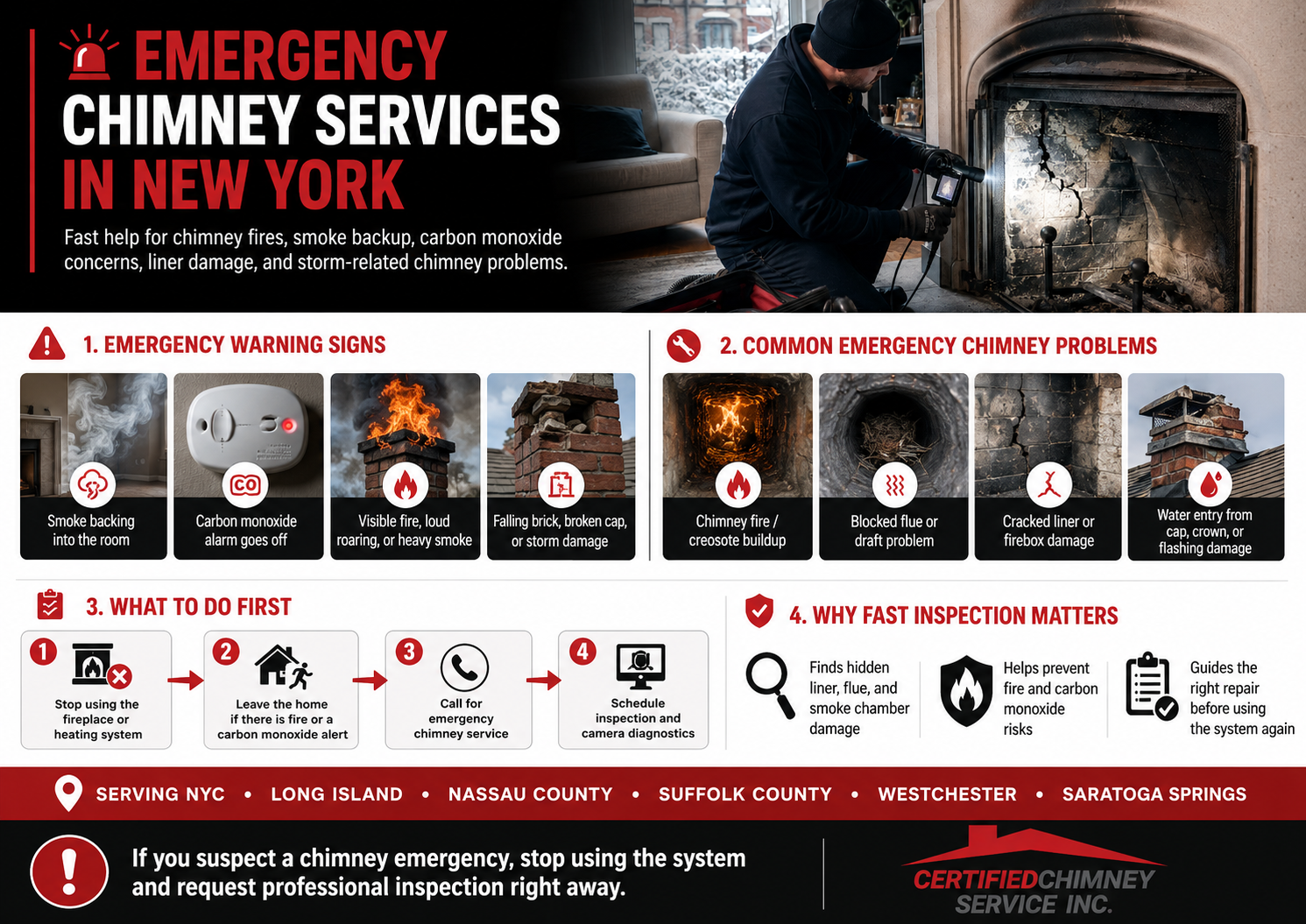
A chimney’s exterior is only half the story. Sudden thermal swings, like a cold flue suddenly carrying hot exhaust, can crack clay tile liners from the inside. A cracked liner lets combustion gases, including carbon monoxide, escape into the house instead of venting outside, which is why a camera assisted inspection matters more than a quick look from the yard.
Signs It’s Time to Call Before the Freeze, Not After
| What you see | Why it matters before winter |
|---|---|
| White, chalky residue on the brick | Water is already moving through the masonry |
| Bricks that look flaked or crumbled | The protective outer layer is already compromised |
| A cracked or crumbling chimney crown | Water is being funneled straight into the stack |
| Loose or lifted flashing at the roofline | A leak into the ceiling or walls is usually not far behind |
Why Timing the Repair Matters Too
Masonry mortar needs a minimum temperature to cure properly. Once it’s cold enough, repairs either need specialized heated additives, which cost more, or they simply won’t hold until the next freeze and thaw cycle breaks them apart again. That’s one more reason an October inspection beats a January emergency call.
Frequently Asked Questions
How much more does a winter chimney repair typically cost compared to a fall one?
It varies by the scope of the damage, but a minor repointing job addressed early is almost always a fraction of the cost of a full rebuild after a winter of freeze and thaw damage.
Can I wait until spring to deal with a chimney crack I noticed in the fall?
It’s risky. A small crack typically gets worse with every freeze and thaw cycle over the winter, so waiting often turns a minor fix into a much bigger one.
What’s included in a pre-winter chimney inspection?
A thorough inspection covers the firebox, the flue liner and the exterior masonry, including the crown and flashing, so you have a full picture and a written estimate before anything becomes an emergency.
Local Resources on Chimney and Masonry Care (click to expand)
An inspection now is a small cost next to a repair made after the freeze has had its way with your chimney. Call Certified Chimney NY at 877-793-3712 to schedule one, or request service online and we’ll follow up with a time that works.