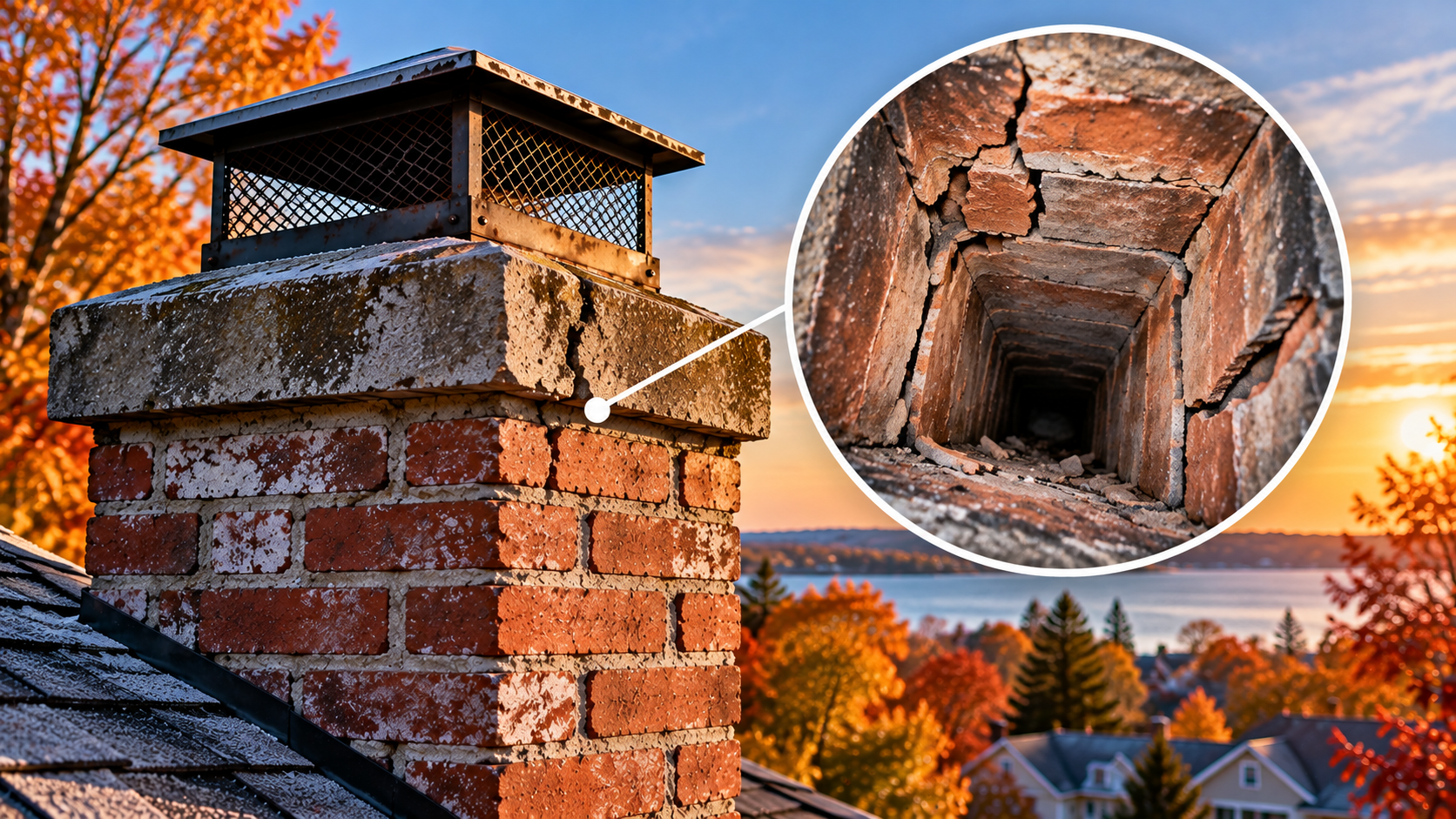
The best time to repair a chimney is late summer, before demand spikes and before cold weather makes outdoor masonry work harder. Several signs on the roof, in the firebox and inside the house tell you repair is overdue.
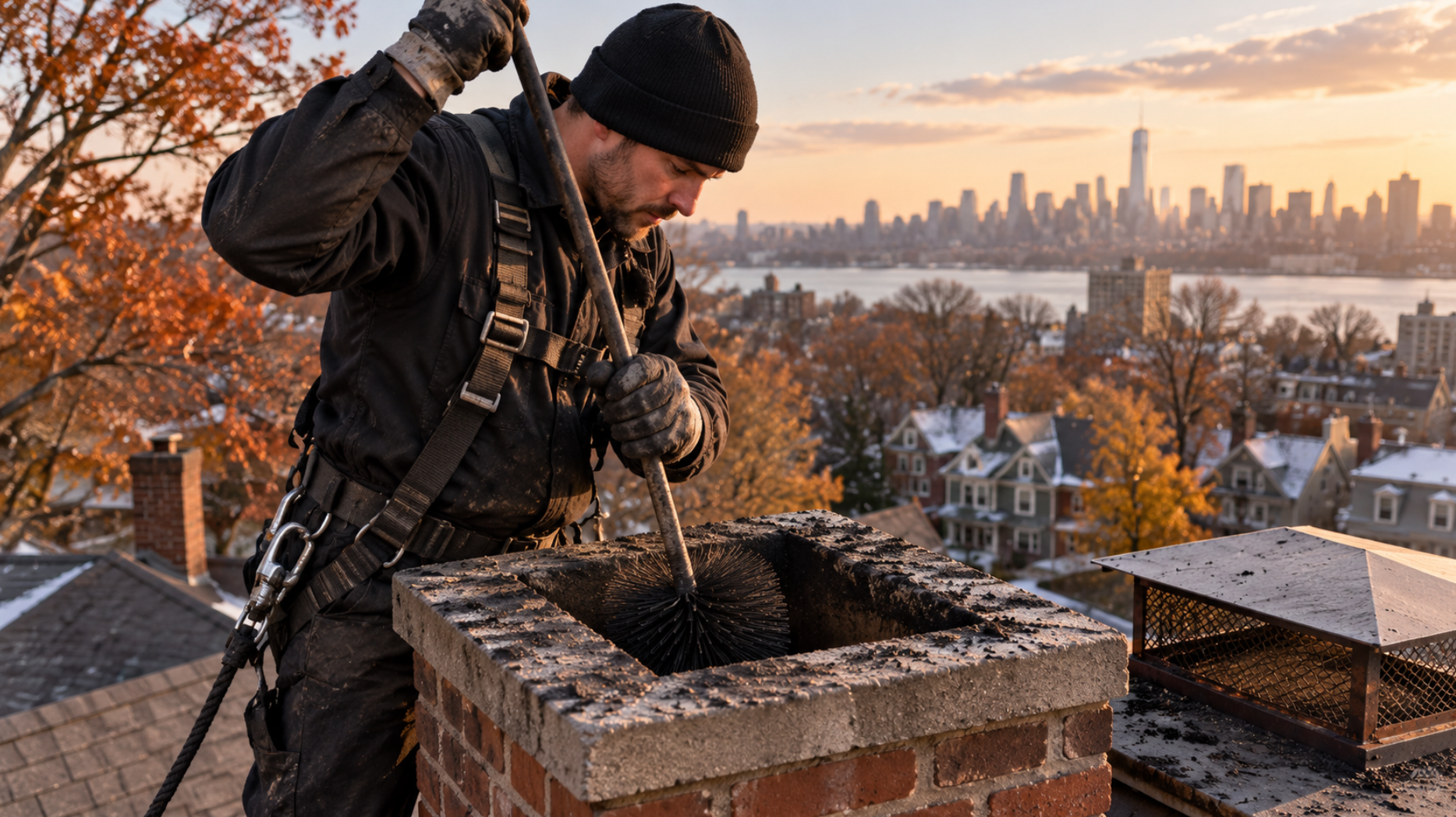
Exterior Signs
- Cracked or crumbling mortar
- Leaning or loose bricks
- White staining on masonry
- Rust on the cap or flashing
- Missing chimney cap
Interior Signs
- Water stains on ceiling near the chimney
- Rust in the firebox or on the damper
- Strong odors after rain
- Smoke entering the room
- Debris falling into the firebox
What To Do
Schedule an inspection in August or early September. A technician can prioritize safety repairs, such as liners, and cosmetic masonry work that can wait.
Common Hidden Problems Found Before Fall
- Cracked crowns that let in freezing rain
- Missing mortar high on the stack
- Loose or damaged flashing
- Birds nesting under a missing cap
- Rust on dampers and smoke shelves
Repair Priorities
Start with items that affect safety, then water entry, then appearance. Liner damage and blockages come first because they affect carbon monoxide and fire risk.
Frequently Asked Questions
How long do repairs take
Many repairs finish in a day. Larger masonry work can take several days.
Can I light a fire after repairs
Yes, once the technician confirms the system is safe.
What is the cheapest repair that helps the most
A cap with a mesh screen.
Local Help and Related Reading
Our crews handle chimney repair in Brooklyn, chimney repair in Queens, the Bronx, Huntington and Yonkers. See every town on our service areas page or visit our services.
More to read: Gas Logs vs Wood Burning Fireplaces: Maintenance Differences, What to Expect During a Chimney Camera Inspection, Chimney Inspection Cost in New York: What to Expect.
For wider guidance, see the EPA Burn Wise program and the U.S. Department of Energy. New Yorkers can also check NYSERDA for state energy resources.