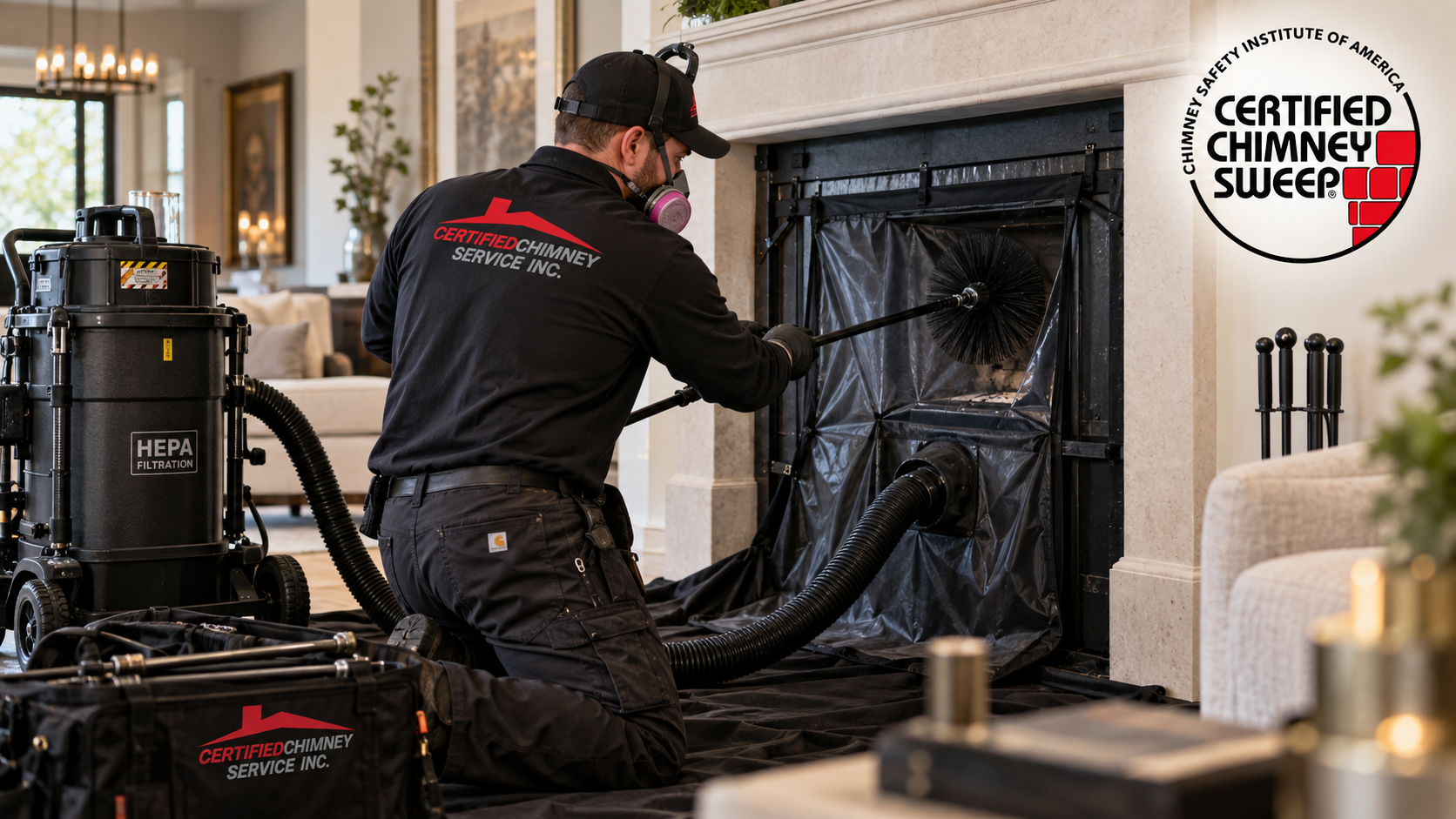
A chimney camera inspection sends a video scanner up the flue so the technician can see every foot of the liner, which is the only way to find cracks, gaps and deposits that cannot be seen from the fireplace. It is the core of a Level 2 inspection.
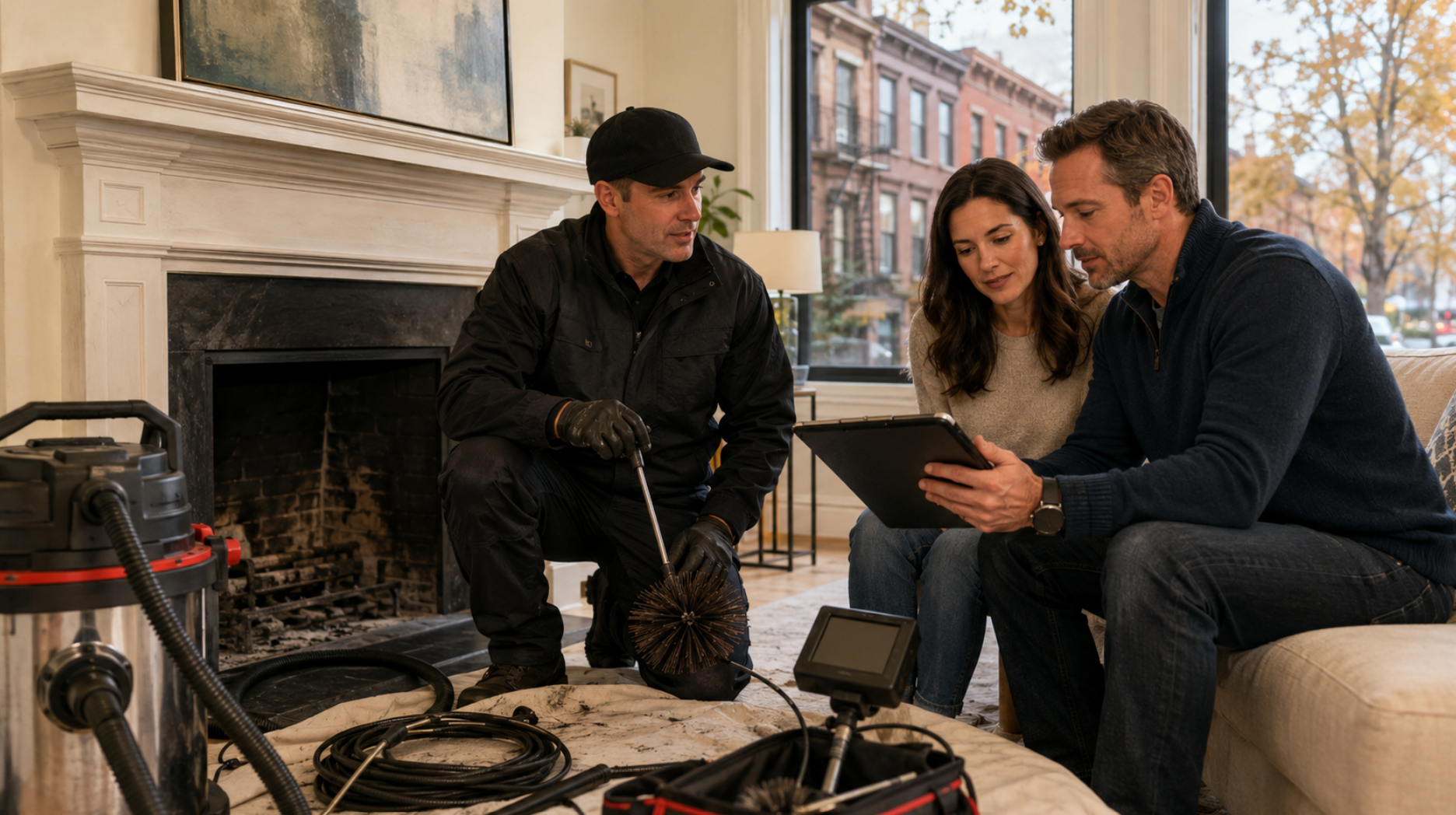
How the Inspection Works
- The technician protects the floor and opens the damper
- A camera on a rod or crawler travels up the flue while recording
- The technician examines the smoke chamber, liner joints and top of the chimney
- Photos and video are saved for your report
What the Camera Can Find
- Cracked or missing clay tiles
- Gaps between liner sections
- Creosote glaze and blockages
- Water damage and rust
- Nests and debris
How Long It Takes
Most single flue inspections take 45 minutes to an hour. Multiple flues or complex systems take longer.
When You Need Level 2
- Buying or selling a home
- After a chimney fire, storm or earthquake
- When changing fuel type or appliance
- When a Level 1 inspection finds a possible defect
The report you receive should include annotated photos and clear recommendations so you can make decisions with confidence.
Why Video Inspection Matters
Cracks as thin as a pencil line can let heat pass into the wall behind a flue. These cracks are invisible from the firebox and only a camera can find them. The video also lets homeowners see what the technician sees, which builds trust before any repair is recommended.
How to Prepare
- Clear furniture and rugs around the fireplace
- Let the fireplace cool for at least 24 hours
- Have the appliance manual ready for stoves and inserts
- Note any odors, drafts or past repairs to share with the technician
Reading Your Report
Look for photos of problem areas with clear descriptions, a rating of severity and a recommended action. A good report separates urgent safety items from optional improvements.
Frequently Asked Questions
Does the camera work in a bent flue
Yes, flexible cameras and crawlers navigate offsets and bends.
Is a camera inspection required to sell a house
Buyers commonly request a Level 2 inspection.
How often should I repeat it
After any chimney event or change, and every few years even when nothing seems wrong.
The Technology Behind a Chimney Camera
A chimney inspection camera is a sealed, high-resolution lens on a flexible rod or a motorized crawler with lights. It records video as it moves, so the technician and the homeowner can review every foot of the flue, pause on a crack and measure the gap. This is the standard tool for Level 2 inspections under NFPA 211.
What the Footage Shows
- Joint gaps between clay tiles
- Cracks running the length of a tile
- Missing mortar and spalled sections
- Offsets and bends
- Creosote buildup and glazing
- Obstructions such as nests, fallen bricks or debris
Common Findings and What They Mean
A hairline crack in a clay tile may be monitored. Gaps at tile joints let heat and carbon monoxide reach the framing and usually mean the flue needs relining. Glazed creosote must be removed before safe use. A collapsed section requires immediate repair.
After the Inspection
- Review the video and photos with the technician
- Ask for a written report with ratings for each finding
- Get an itemized estimate for repairs
- Keep the report for insurance, resale and your own records
Frequently Asked Questions
Can the camera see the whole chimney
Almost always. Very tight bends may limit access.
Does the camera damage the flue
No. It is designed to move through a flue safely.
Why is Level 2 more expensive than Level 1
It requires more time, specialized equipment and a detailed report.
Local Help and Related Reading
Our crews handle chimney repair in Brooklyn, chimney repair in Queens, the Bronx, Huntington and Yonkers. See every town on our service areas page or visit our services.
More to read: Chimney Repointing and Tuckpointing in New York: What It Is and When You Need It, Can You Use a Fireplace in a New York City Apartment or Co-op, Gas Logs vs Wood Burning Fireplaces: Maintenance Differences.
For wider guidance, see the EPA Burn Wise program and the U.S. Department of Energy. New Yorkers can also check NYSERDA for state energy resources.