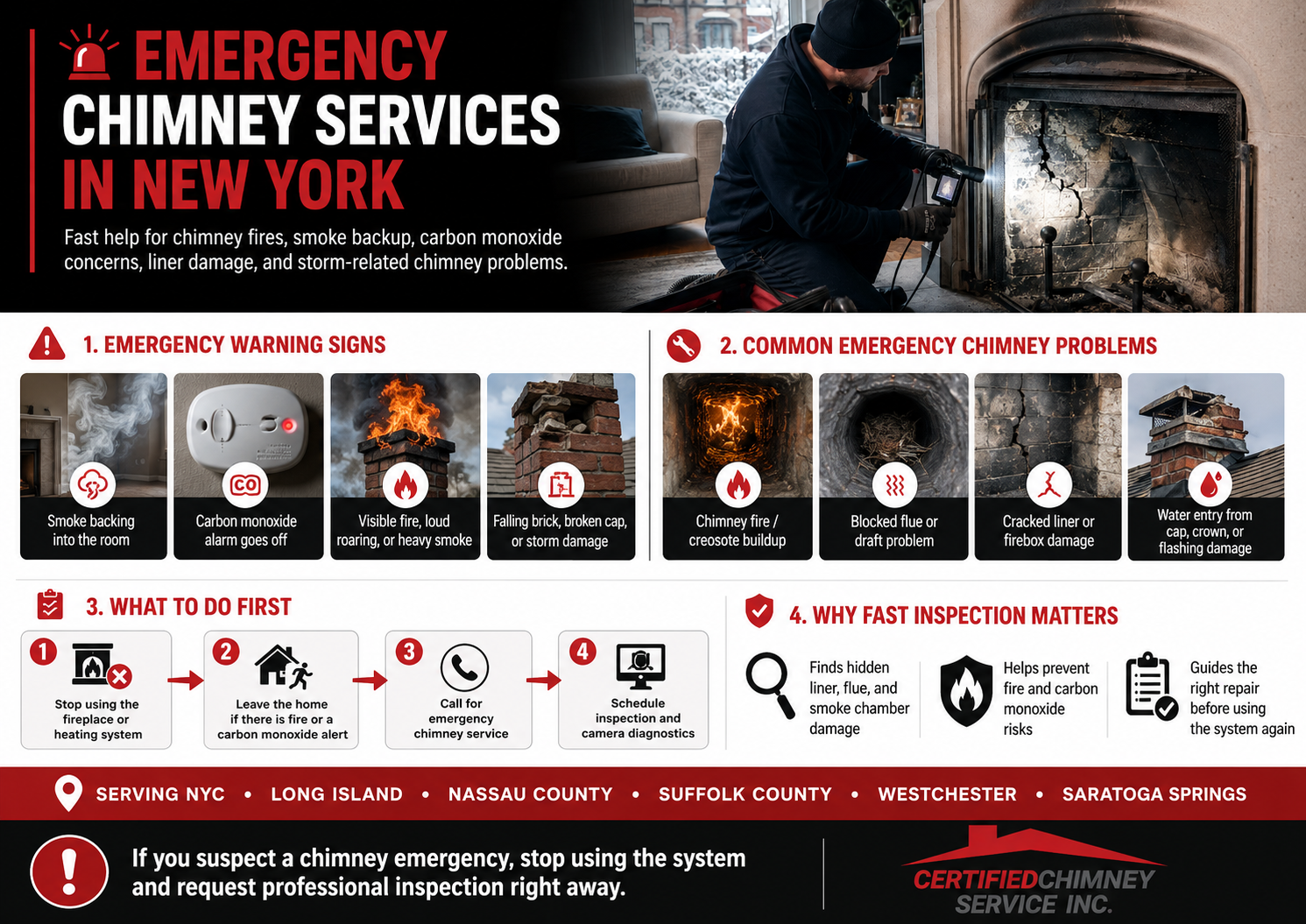
Gas fireplaces do not need chimney sweeping as often as wood fireplaces, but they are not maintenance free. Both systems need an annual inspection, and each fails in different ways.
Wood Burning Fireplace Maintenance
- Annual sweep to remove creosote
- Inspection of damper, firebox and smoke chamber
- Flue liner check for cracks
- Cap and crown inspection
Gas Fireplace Maintenance
- Annual burner and pilot inspection
- Cleaning logs, glass and vents
- Checking the flue for debris, moisture and corrosion
- Testing carbon monoxide alarms
- Inspecting gas connections for leaks
Hidden Problems Unique to Gas
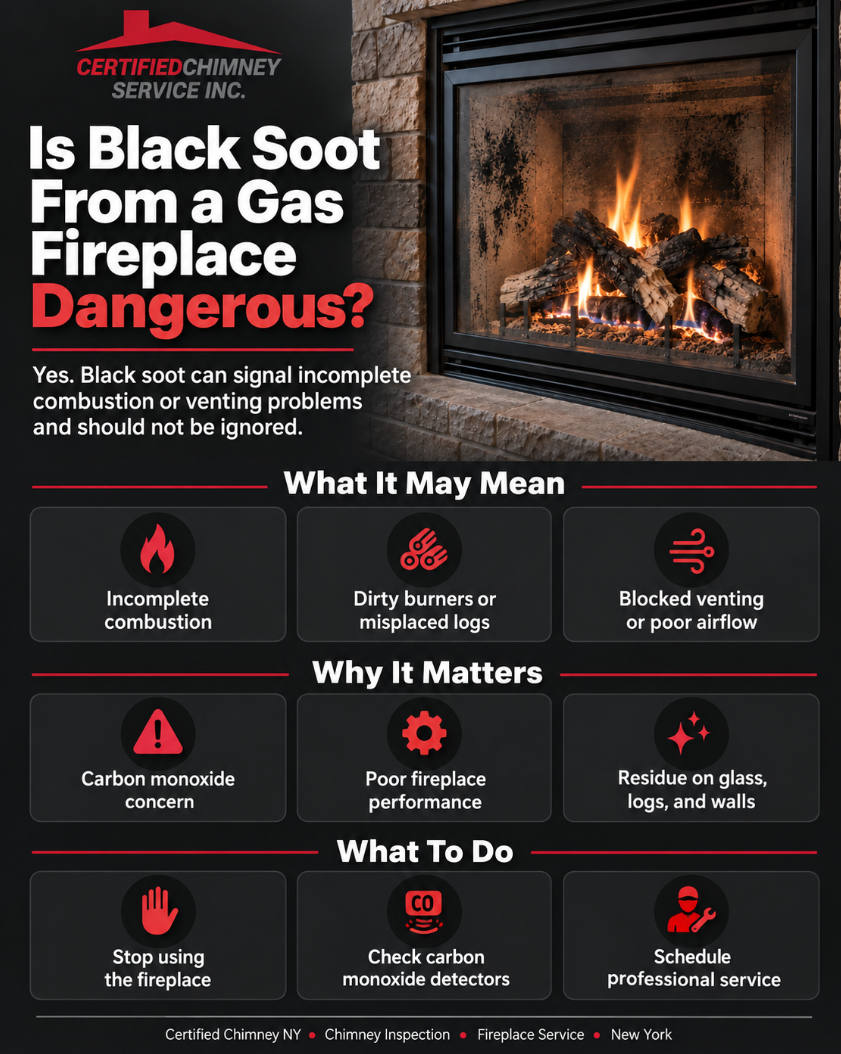
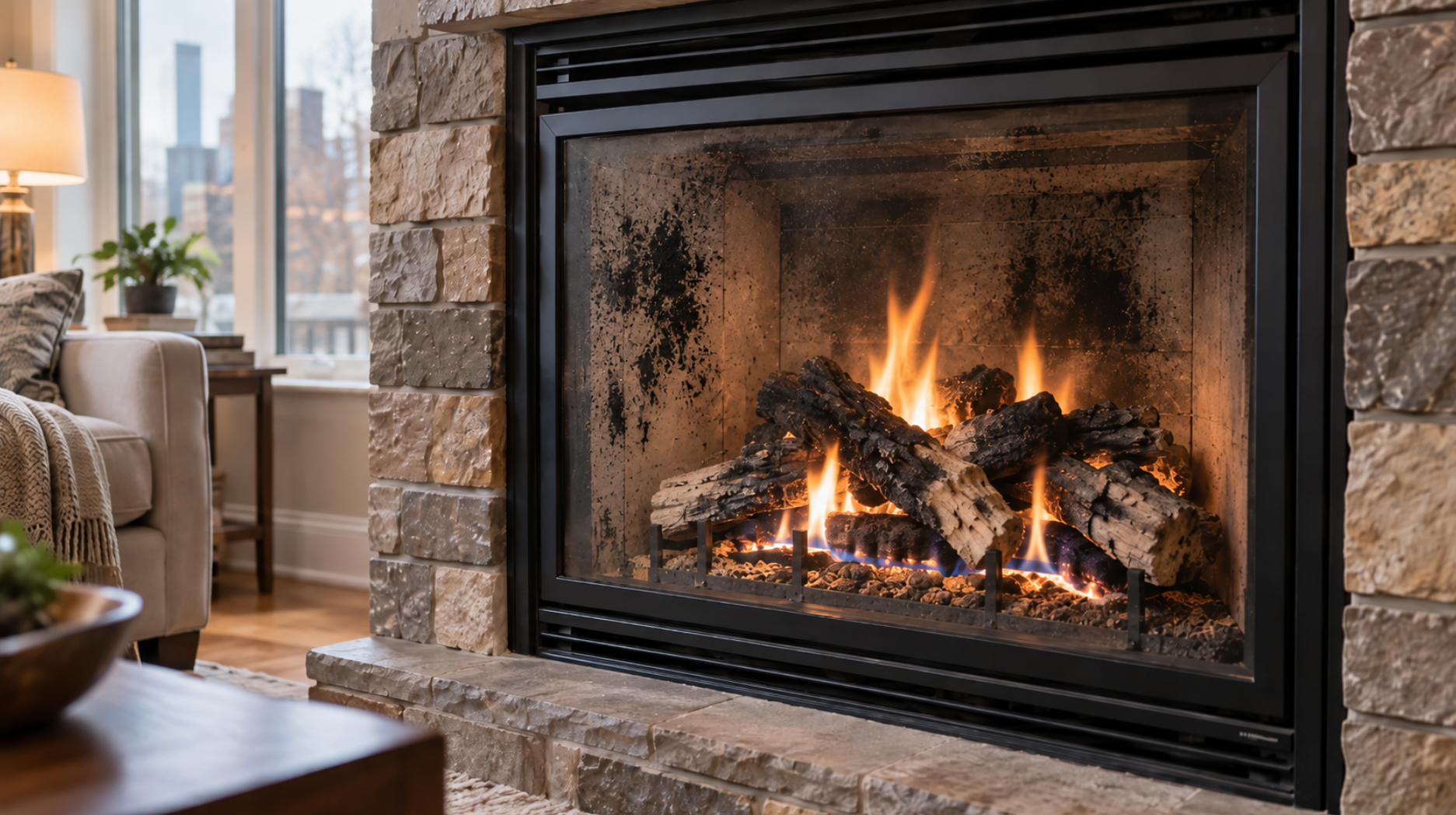
Gas combustion produces water vapor, which can condense in a cold, unlined flue and corrode masonry from within. Soot on gas logs signals incomplete combustion and potential carbon monoxide.
Hidden Problems Unique to Wood
Creosote, cracked liners and damaged dampers cause most wood system failures, plus animal nesting when the cap is missing.
Which Costs Less to Maintain
Gas systems cost a bit less per year to maintain, but a failed gas valve or liner can be costly. Either way, booking before heating season keeps repairs simple.
Cost Comparison
Gas systems usually cost less to clean but can cost more to repair if a valve or burner fails. Wood systems have lower repair parts costs but need annual sweeping. Running costs depend on fuel prices, and many homeowners choose gas for convenience and wood for ambiance.
Annual Checklist for Each
Gas
- Inspect burner and pilot
- Clean glass and logs
- Check vent connections
- Test the carbon monoxide alarm
Wood
- Sweep the flue
- Inspect firebrick and damper
- Check cap and crown
- Dispose of ash safely
Frequently Asked Questions
Can I convert wood to gas logs
Yes, with a liner and a damper clamp or removal, subject to local code.
Are vent free logs safe
They are restricted in some areas and need adequate ventilation and a carbon monoxide alarm.
Which is cleaner
Gas produces fewer particulates than wood.
Why Gas Logs and Wood Systems Wear Differently
Wood fireplaces deal with heat, smoke particles and creosote. Gas systems deal with moisture, trace soot and mechanical parts such as valves and thermocouples. Because the problems are different, the maintenance tasks are different, and a gas system can fail quietly if no one checks it.
Gas Fireplace Annual Service in Detail
- Turn off the gas and let the unit cool
- Remove and clean the glass and the logs
- Vacuum the burner and pilot assembly
- Check the pilot flame color and thermocouple
- Inspect the gasket on the glass door
- Test the shutoff valve and remote
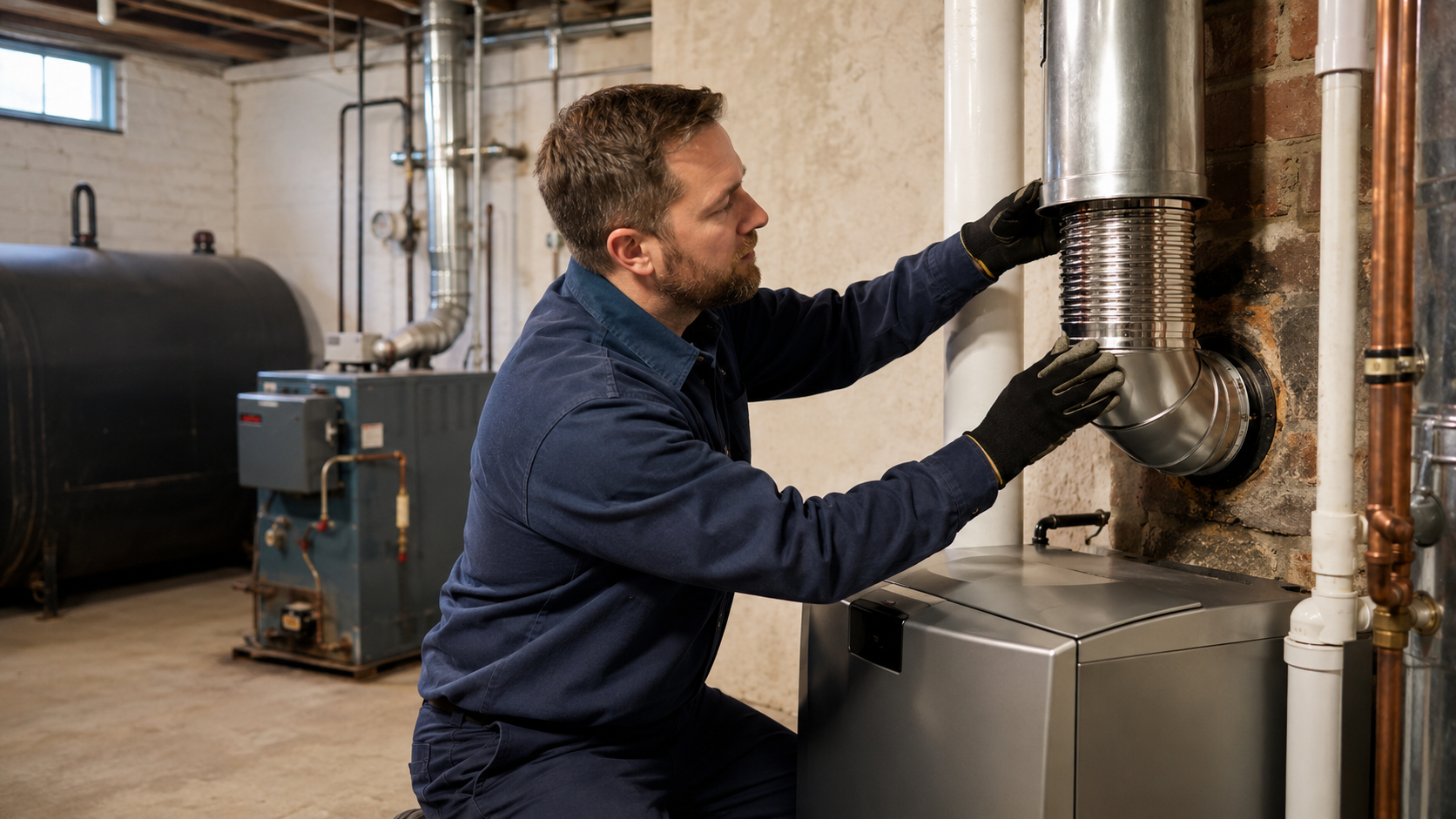
- Inspect the vent for obstruction and corrosion
Wood Fireplace Annual Service in Detail
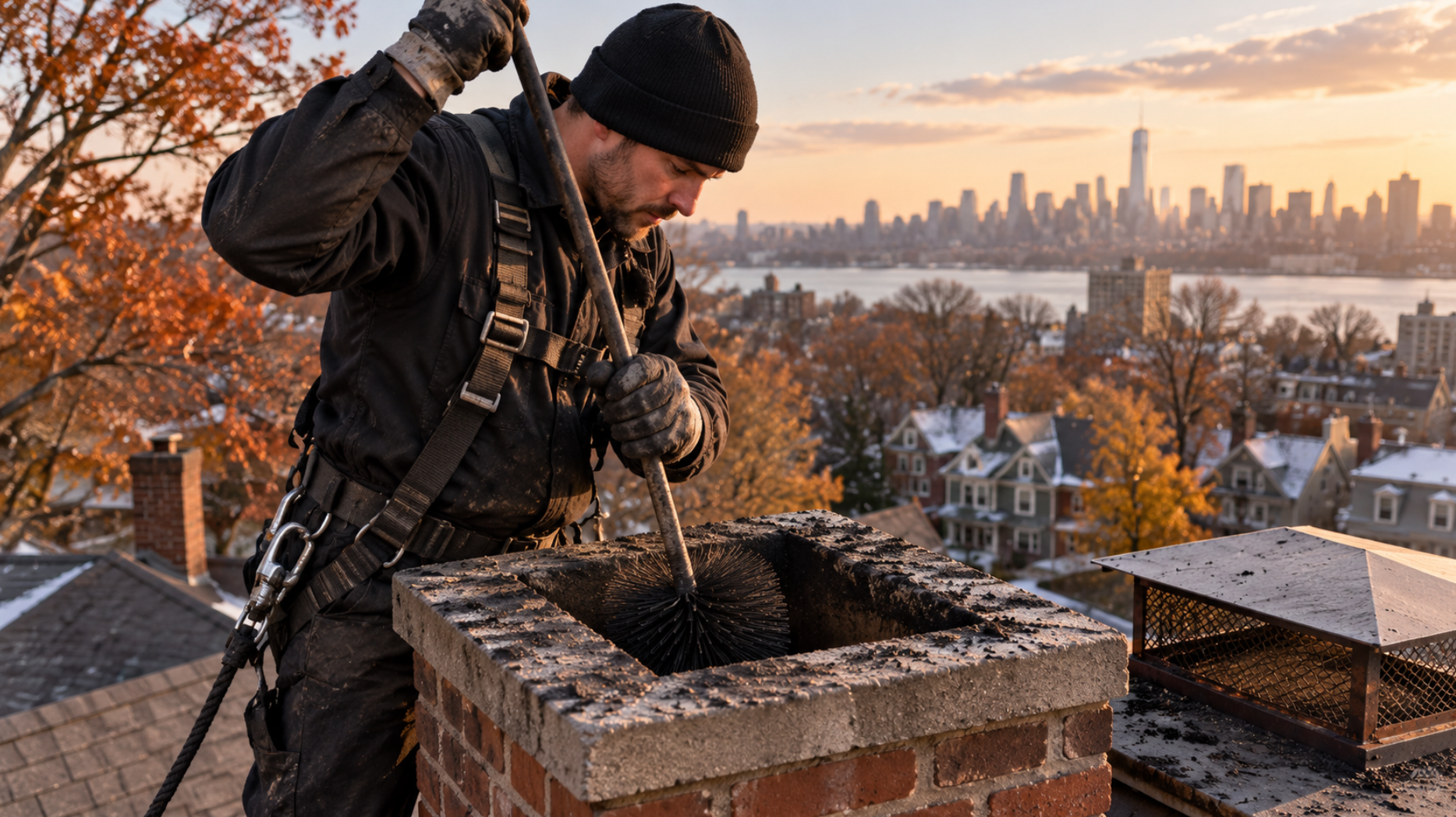
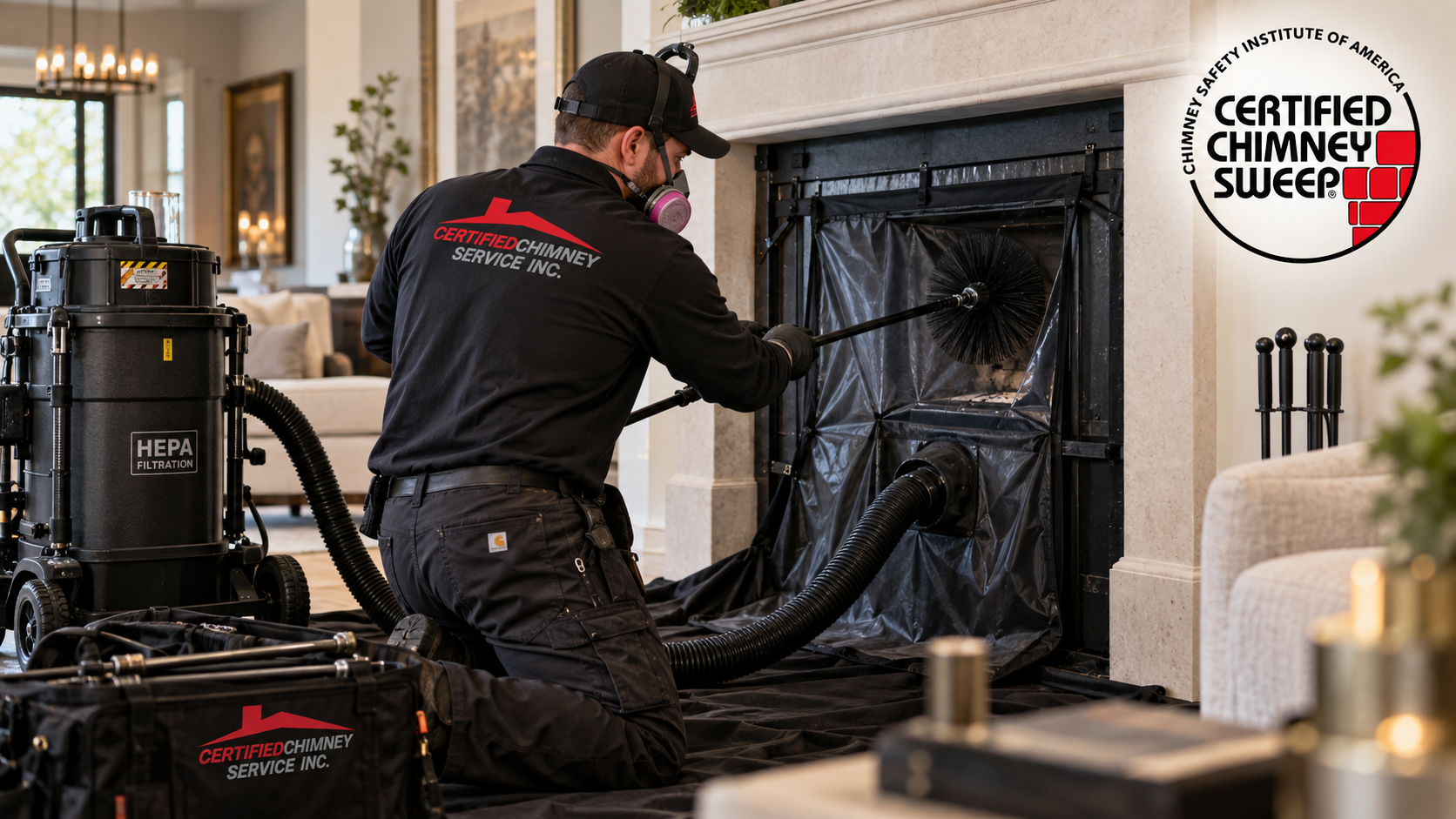
- Sweep creosote from the flue
- Inspect the damper and firebox
- Check smoke chamber and shelf
- Camera scan of the liner
- Inspect cap and crown
Which Should You Choose
Choose gas if you want convenience, steady heat and less cleaning. Choose wood if you value the traditional fire and have a good fuel supply. Many New York homeowners keep a wood fireplace and use a gas starter, which combines both.
Frequently Asked Questions
Can I convert a wood fireplace to gas logs
Yes, subject to code. The damper usually must be kept open or clamped and a liner is recommended.
How often should a gas fireplace be serviced
Annually, before heating season.
Are gas fireplaces safe without a chimney
Direct vent and ventless units exist, but each has its own rules and needs a carbon monoxide alarm.
Local Help and Related Reading
Our crews handle chimney repair in Brooklyn, chimney repair in Queens, the Bronx, Huntington and Yonkers. See every town on our service areas page or visit our services.
More to read: Creosote Buildup in New York Chimneys: Stages, Risks and Removal, Chimney Repointing and Tuckpointing in New York: What It Is and When You Need It, Can You Use a Fireplace in a New York City Apartment or Co-op.
For wider guidance, see the EPA Burn Wise program and the U.S. Department of Energy. New Yorkers can also check NYSERDA for state energy resources.