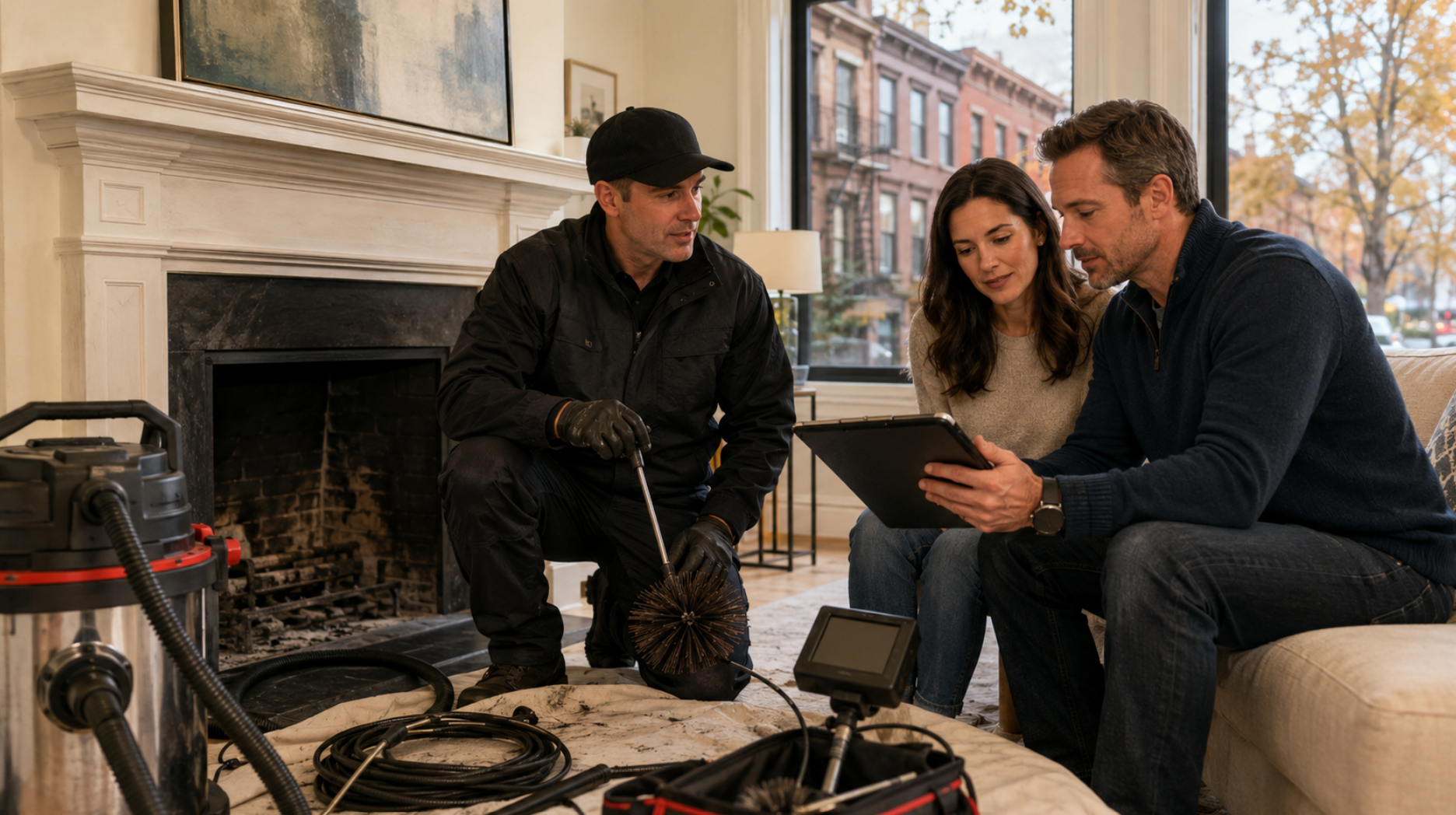
Creosote is a dark, flammable residue left behind when wood smoke cools inside a flue, and it is the leading cause of chimney fires. It builds up faster in New York homes that burn unseasoned wood, run smoldering fires or have oversized flues.
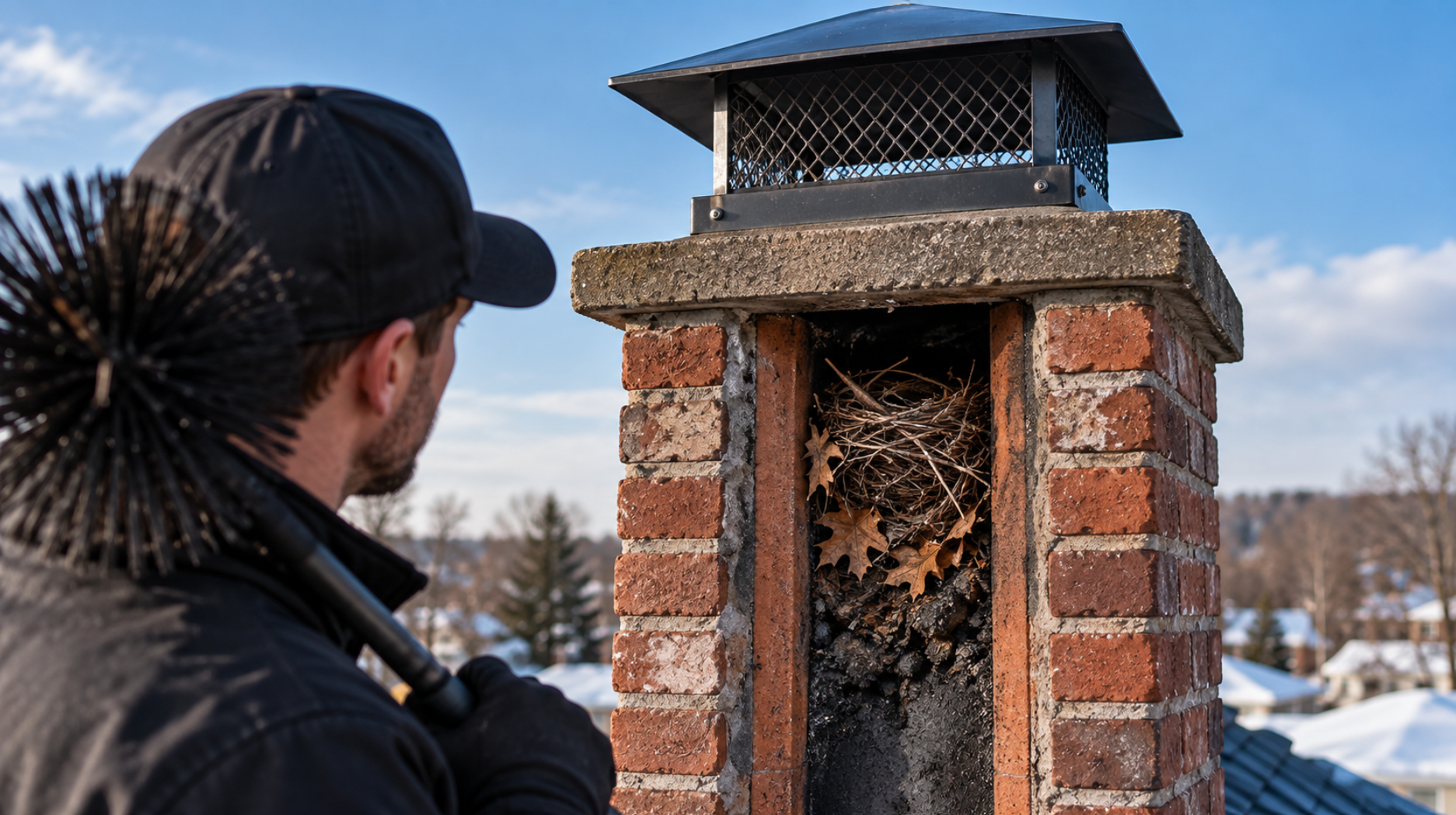
The Three Stages of Creosote
Stage One: Flaky Soot
Light, dusty and easy to remove with a standard brush.
Stage Two: Shiny Flakes
Hard black flakes that require a stiffer brush and more passes.
Stage Three: Glazed Creosote
A tar-like, hardened glaze that is extremely flammable and often needs rotary tools or chemical treatment.
What Causes Heavy Buildup
- Burning wood that is wet or green
- Restricting the air supply so the fire smolders
- A flue too large or too cold for the appliance
- Infrequent cleaning
- Burning softwoods in large amounts
How Professionals Remove It
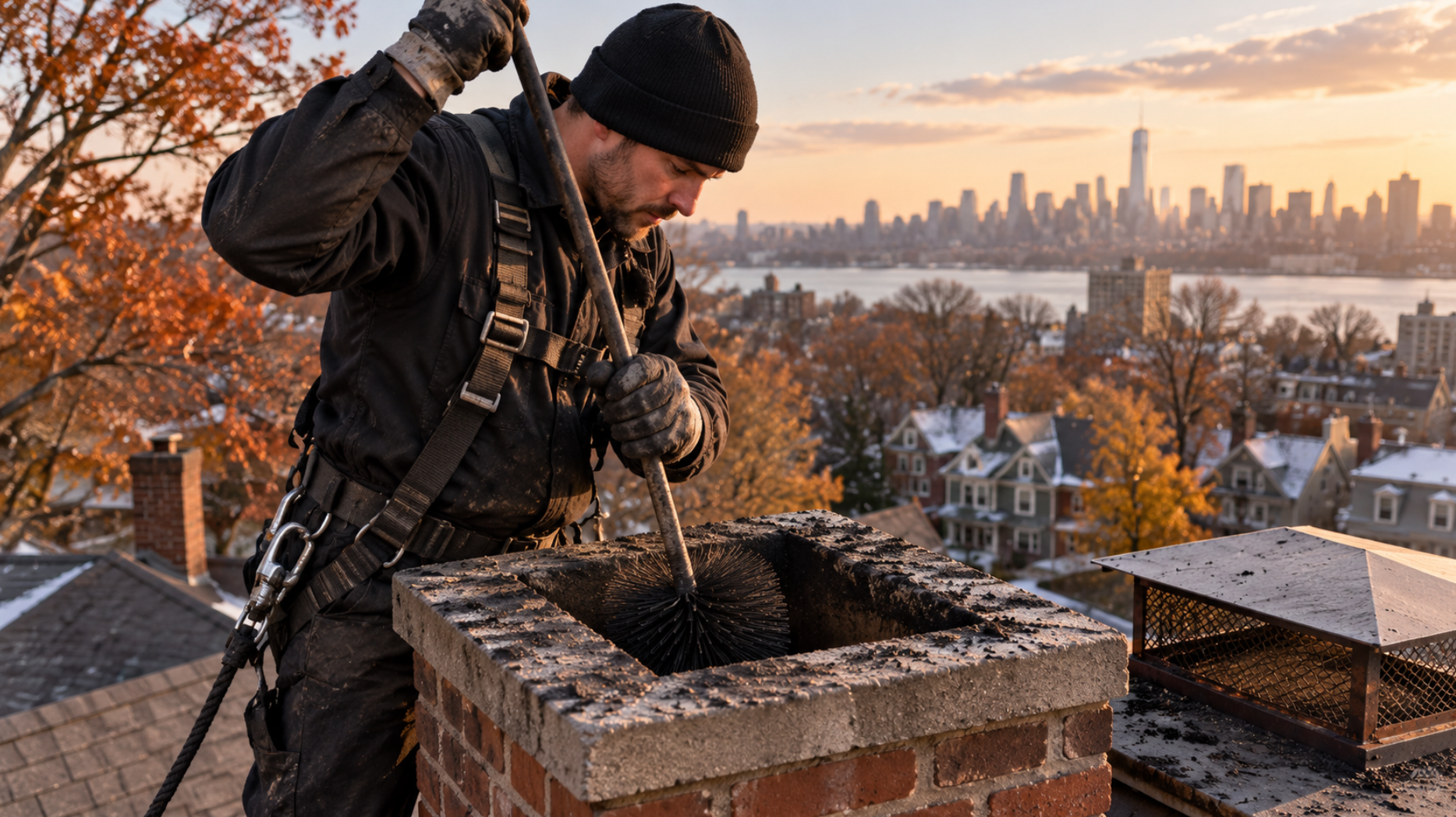
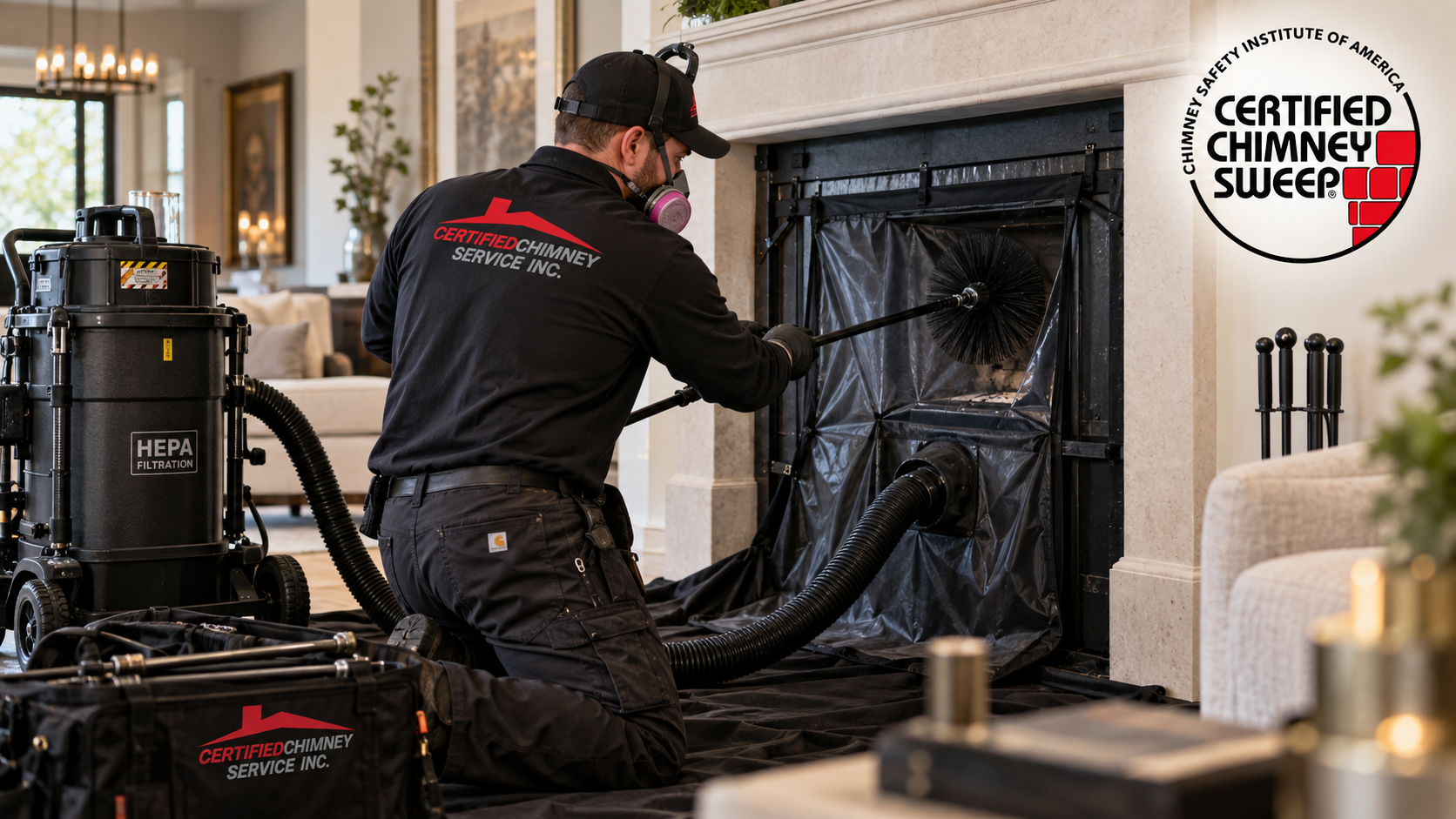
A certified sweep uses rotary power cleaning, brushes sized to the flue and a HEPA vacuum. Stage three deposits may need a second visit or a chemical creosote remover applied before brushing.
How to Burn Cleaner
- Season firewood for at least six months
- Store logs off the ground and covered on top
- Burn hot, bright fires instead of smoldering ones
- Let the stove or fireplace come up to temperature before restricting air
Annual inspection catches heavy buildup before it becomes a fire hazard.
Why Creosote Forms Faster in Some Homes
Creosote needs three things: smoke, a cool surface and time. Oversized flues cool smoke too quickly. Fireplaces without glass doors send extra room air up the flue, cooling it further. Stoves that are turned down overnight run cool and smoky. Understanding these causes helps you reduce buildup between cleanings.
Health and Fire Risks
Heavy creosote does more than start fires. It restricts draft, so smoke spills into the room and carbon monoxide levels can rise. It also releases odors in humid weather.
Cleaning Methods Compared
- Manual brushing: effective for stage one and two deposits
- Rotary power sweeping: a spinning flail removes heavier stage two and three deposits
- Chemical treatments: help break down glazed creosote before cleaning
- Camera verification: confirms the flue is clean
Frequently Asked Questions
How thick is too thick
One eighth of an inch or more calls for cleaning.
Do creosote logs work
They may reduce buildup slightly but do not replace sweeping.
Does gas produce creosote
No, though gas can leave soot and moisture.
Local Help and Related Reading
Our crews handle chimney repair in Brooklyn, chimney repair in Queens, the Bronx, Huntington and Yonkers. See every town on our service areas page or visit our services.
More to read: Is a Chimney Liner Required in New York, What a Chimney Cap Does and When to Replace It, Chimney Fire Warning Signs Every New York Homeowner Should Know.
For wider guidance, see the EPA Burn Wise program and the U.S. Department of Energy. New Yorkers can also check NYSERDA for state energy resources.