A chimney that leaks water into your home is rarely a single-cause problem. Flashing, the crown, cracked brick, missing mortar and a missing cap each let water in, and New York storms push rain sideways into any weak point. Finding the true source matters, because resealing the wrong spot just hides the leak for a season.
The Most Common Causes of a Leaking Chimney
Failed Flashing
Flashing is the metal seam where the chimney meets the roof. Sealant dries out and metal pulls away as the house settles, which is the number one source of leaks near ceilings beside the chimney.
Cracked Crown
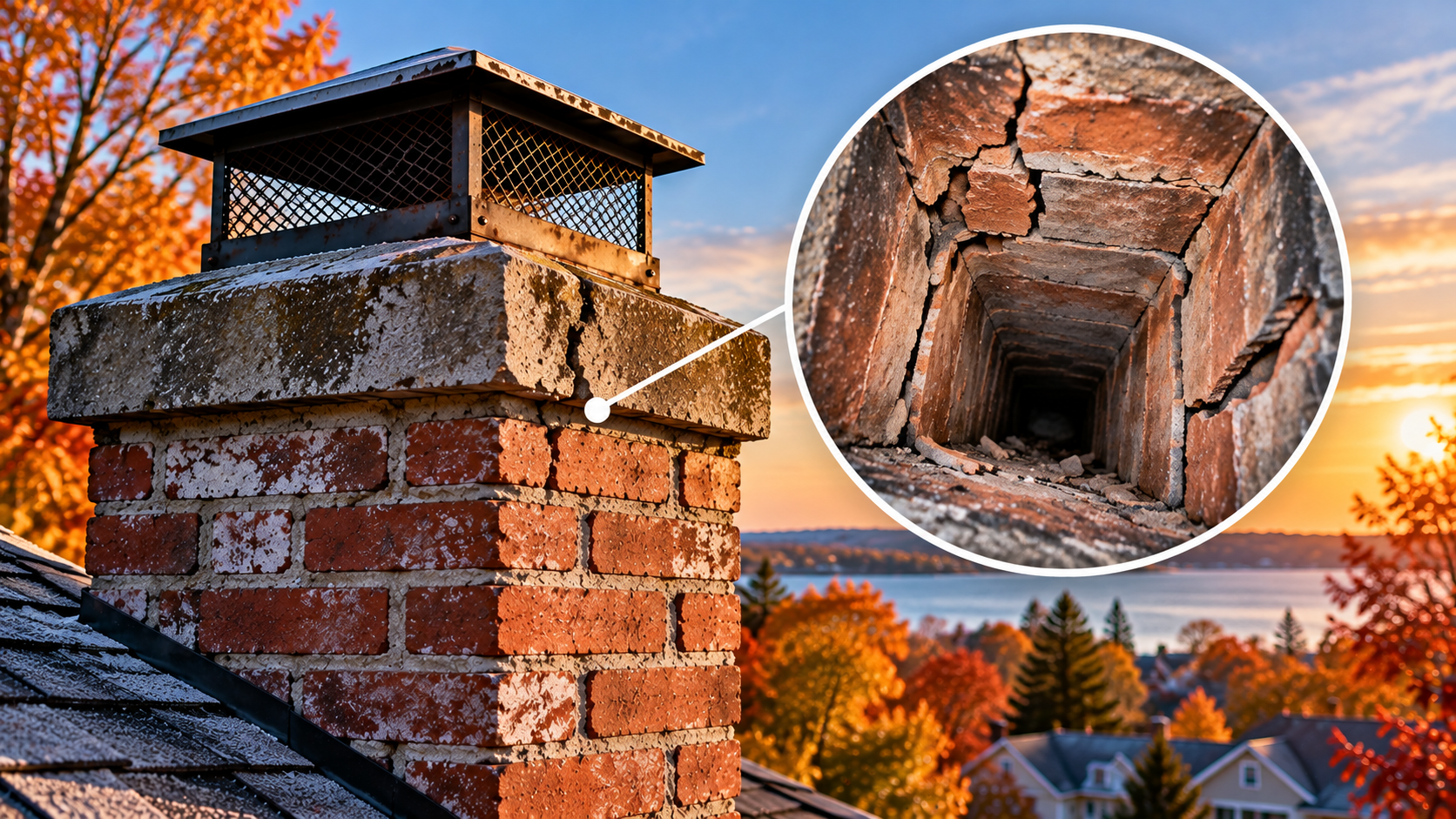
The concrete crown caps the top of the masonry. Hairline cracks let water into the brick below, and the damage spreads every winter.
Deteriorating Mortar and Brick
Brick absorbs water. When mortar joints erode, water travels inside the wall and shows up as stains on interior plaster.
Missing or Damaged Chimney Cap
Without a cap, rain falls straight down the flue, soaking the damper and firebox and rusting metal parts.
How Professionals Find the Source
- Visual roof and masonry inspection
- Water test, wetting one area at a time to isolate the entry point
- Camera inspection of the flue and smoke chamber
- Moisture reading of surrounding framing when staining is present
Typical Repairs
- Re-flashing with step and counter flashing in lead-coated copper or aluminum
- Crown repair or full crown rebuild
- Tuckpointing and repointing mortar joints
- Installing a stainless steel cap with a mesh screen
- Applying a breathable, vapor-permeable waterproofing treatment
How to Prevent Chimney Leaks
Schedule an annual inspection, trim trees that drop debris on the cap, and fix small cracks before winter. Avoid thick film-forming sealers, because they trap moisture in the brick and make freeze damage worse.
If you see ceiling stains, damp walls or rust in the firebox, call a certified technician before the next storm.
How to Tell Where the Water Is Coming From
Water travels along rafters, wires and framing before it shows up on a ceiling, so the stain is rarely directly under the entry point. Technicians work from the top down and isolate each area.
The Water Test
One person on the roof applies water to a single area at a time, such as the flashing, then the crown, then the brick face, while another person watches the attic and interior. The area that triggers the drip is the source.
Condensation Is Not a Leak
Oil and gas furnaces vented into an unlined chimney produce condensation that can look like a leak. A camera inspection and a look at the appliance venting can tell the two apart.
What a Leak Can Damage
- Roof sheathing and rafters that rot over time
- Plaster and drywall near the fireplace
- Insulation that loses its R-value when wet
- Mold that grows in warm, damp wall cavities
- The firebox and damper, which rust and fail early
Repair Costs and Timing
Small repairs such as re-sealing a cap or crown are usually among the lowest cost services, while re-flashing or masonry rebuilds take more time. Delaying repairs adds interior damage, so leaks found before a heating season should be fixed first.
Seasonal Checklist
- Spring: look for new stains after thaw
- Summer: schedule masonry repairs while it is dry
- Fall: check the cap, crown and flashing before the first storm
- Winter: watch for ice dams near the chimney
Frequently Asked Questions
Can I seal a leaking chimney myself
Surface sealant can slow a leak, but it does not fix failed flashing or a cracked crown. A proper repair addresses the cause.
Will insurance cover chimney leaks
Coverage depends on the cause. Sudden storm damage may be covered while long-term wear usually is not.
How long does a repair last
Copper flashing and a properly built crown can last decades.
Local Help and Related Reading
Our crews handle chimney repair in Brooklyn, chimney repair in Queens, the Bronx, Huntington and Yonkers. See every town on our service areas page or visit our services.
More to read: What Actually Qualifies as an Emergency Chimney Repair, Chimney Odors in Fall: Causes and Fixes for New York Homes, How Often Should You Sweep a Chimney in New York.
For wider guidance, see the EPA Burn Wise program and the U.S. Department of Energy. New Yorkers can also check NYSERDA for state energy resources.