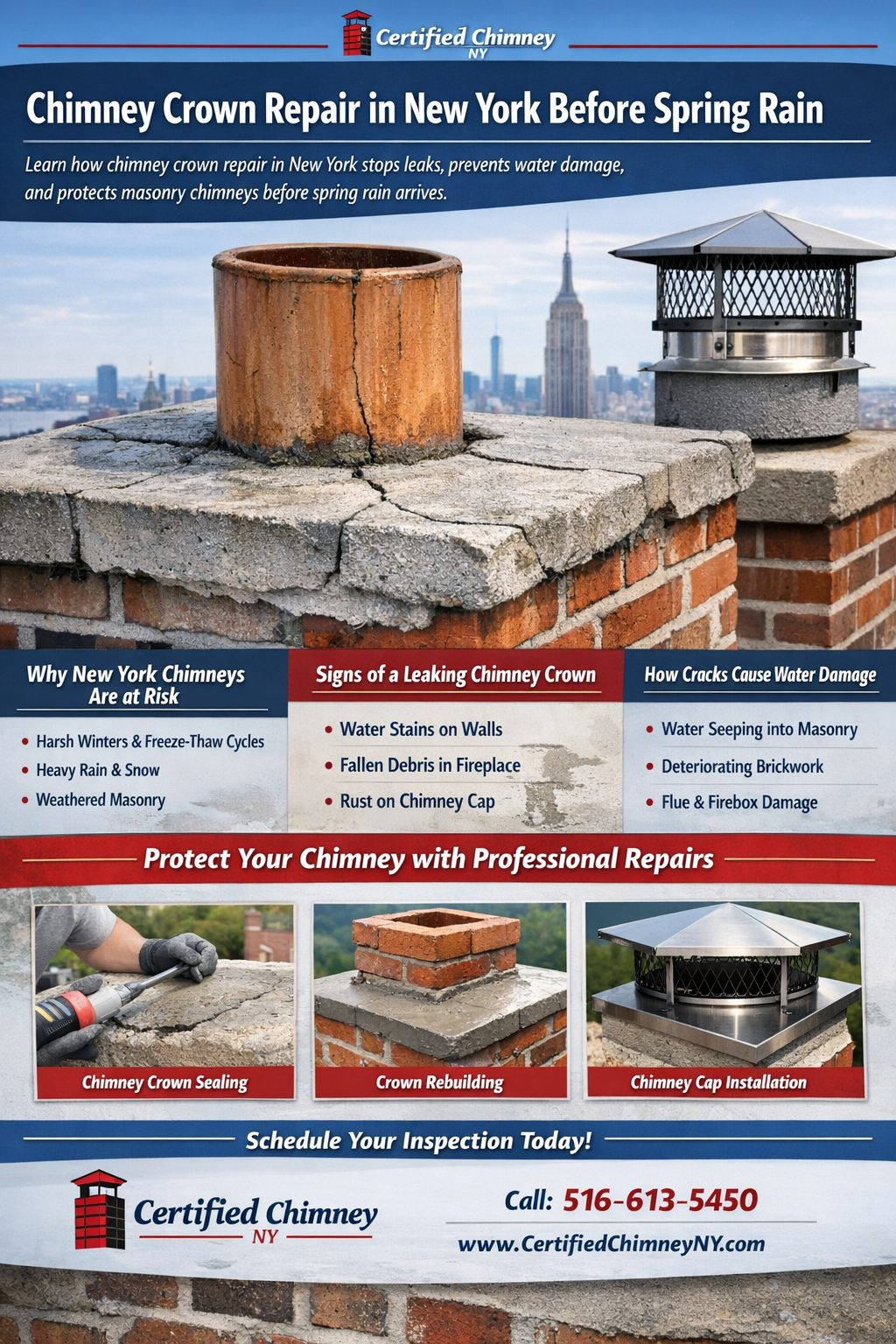
Fall storms hit the very top of the chimney first. Wind loosens caps, driven rain finds hairline cracks in the crown, and branches strike masonry that rarely gets looked at. Left alone, those small injuries become the winter leak that stains the ceiling.

What the crown and cap actually do
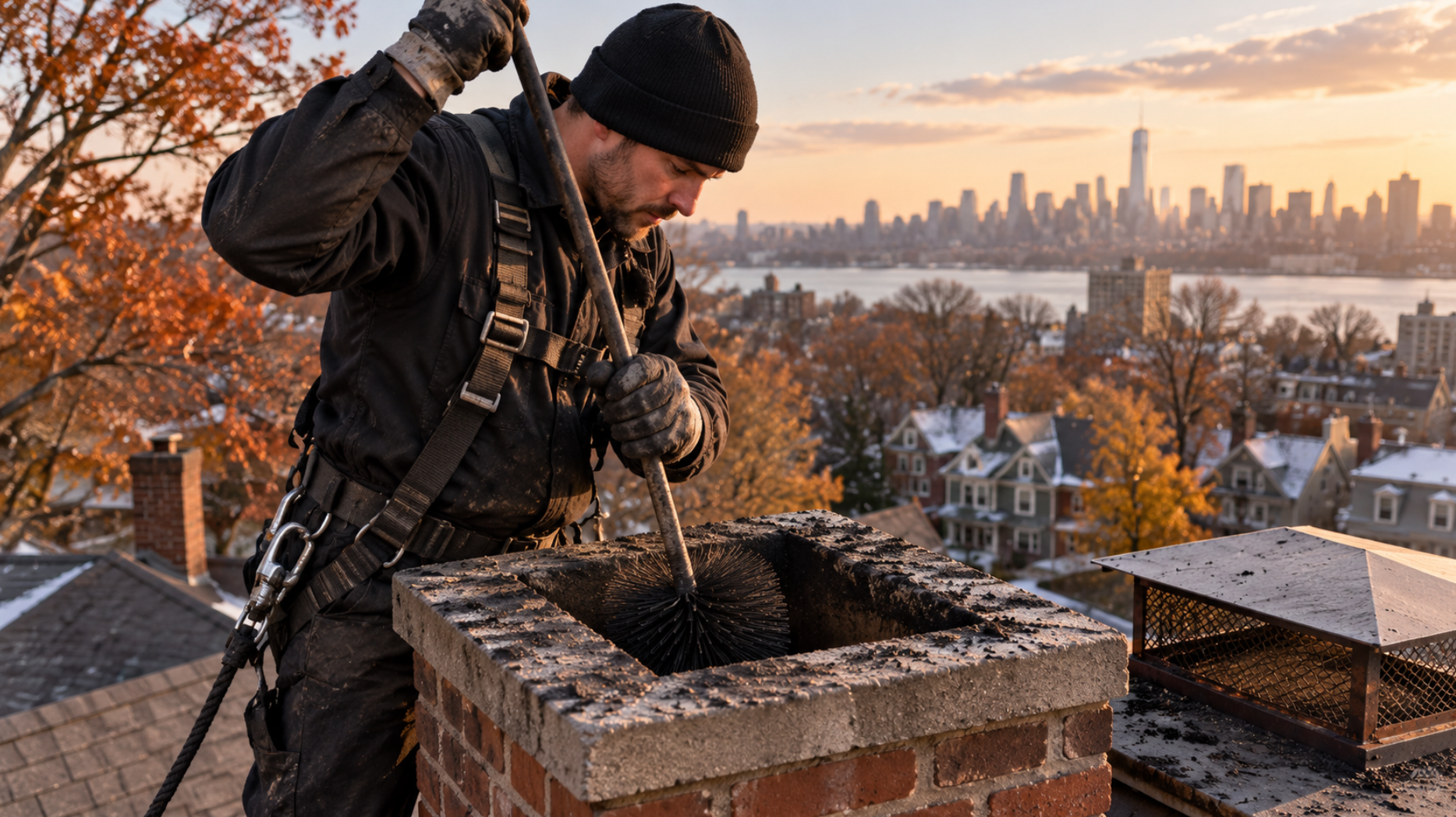
The crown is the slab of mortar or concrete that caps the masonry and sheds water. The cap sits over the flue and keeps out rain, snow, leaves and animals. Together they are the only things standing between the weather and everything inside the chimney.
Signs of storm damage
- Cracks or crumbling along the crown, especially at the edges
- A cap that is tilted, rusted or missing
- Debris or nests visible at the top of the flue
- Water stains on interior walls near the chimney after rain
- Chunks of mortar or brick in the yard or gutters
Why small cracks matter
Water that enters a crack in the fall freezes and expands in winter, widening the crack and loosening the brick below. The Chimney Safety Institute of America recommends yearly inspection because this kind of damage builds quietly.
Repair options
| Damage | Repair |
|---|---|
| Hairline crown crack | Crown sealant |
| Wide or crumbling crown | Rebuild the crown |
| Bent or missing cap | Stainless steel cap with mesh |
| Loose flashing | Reseal or replace flashing |
Most of these fixes take a single visit. See how our team handles chimney repair in Queens and across the other boroughs.
Frequently asked
Is a crack in the crown an emergency? Not usually, but it should be sealed before freezing weather.
Can a cap be replaced without repairing the crown? Yes, but if the crown is failing, new caps will not stop water from getting in around them.
Anatomy of the Top of a Chimney
The crown, cap and flashing form the weather shield for the entire chimney. The crown is the sloped concrete slab that sheds water off the top. The cap sits over the flue opening and keeps out rain and animals. The flashing seals the joint where the chimney meets the roof. Fall storms test all three at once, with wind-driven rain, falling leaves and branches, and the first hard freezes of the season.
Storm Damage Signs After a Nor’easter
- Cap knocked askew or missing
- Dents or bent mesh from flying debris
- New cracks in the crown, or crown pieces on the roof
- Flashing lifted at the edges
- Wet stains inside or on the attic side of the chimney
- Bricks near the top that look shifted
Why Small Cracks Matter
Water that enters a crown crack in October can freeze in December, expand by about nine percent and widen the crack. Repeated cycles loosen brick and mortar below the crown, which leads to expensive rebuild work. Repairing a crack costs a fraction of a rebuild.
Repair Options
- Seal hairline cracks with a flexible crown sealant
- Resurface a worn crown with a bonded coating
- Rebuild the crown with a poured concrete slab and a drip edge
- Replace the cap with stainless steel or copper
- Re-flash with step flashing and counter flashing
Safety Note
Do not climb on a wet or icy roof to inspect a chimney. A technician can inspect from the roof with fall protection or use a drone camera to photograph damage safely.
Frequently Asked Questions
How soon after a storm should I inspect
As soon as it is safe. Water entry causes more damage the longer it continues.
Does homeowners insurance cover storm damage
Sudden storm damage may be covered. Ask your insurer and keep photos and inspection reports.
Can I patch a crown myself
Only temporary patching is possible. A lasting repair needs proper materials and technique.
Local Help and Related Reading
Our crews handle chimney repair in Brooklyn, chimney repair in Queens, the Bronx, Huntington and Yonkers. See every town on our service areas page or visit our services.
More to read: The Real Cost of Skipping Your Chimney Inspection Before Winter, Chimney Draft Problems: What Changes When the Temperatures Drop.
For wider guidance, see the EPA Burn Wise program and the U.S. Department of Energy. New Yorkers can also check NYSERDA for state energy resources.