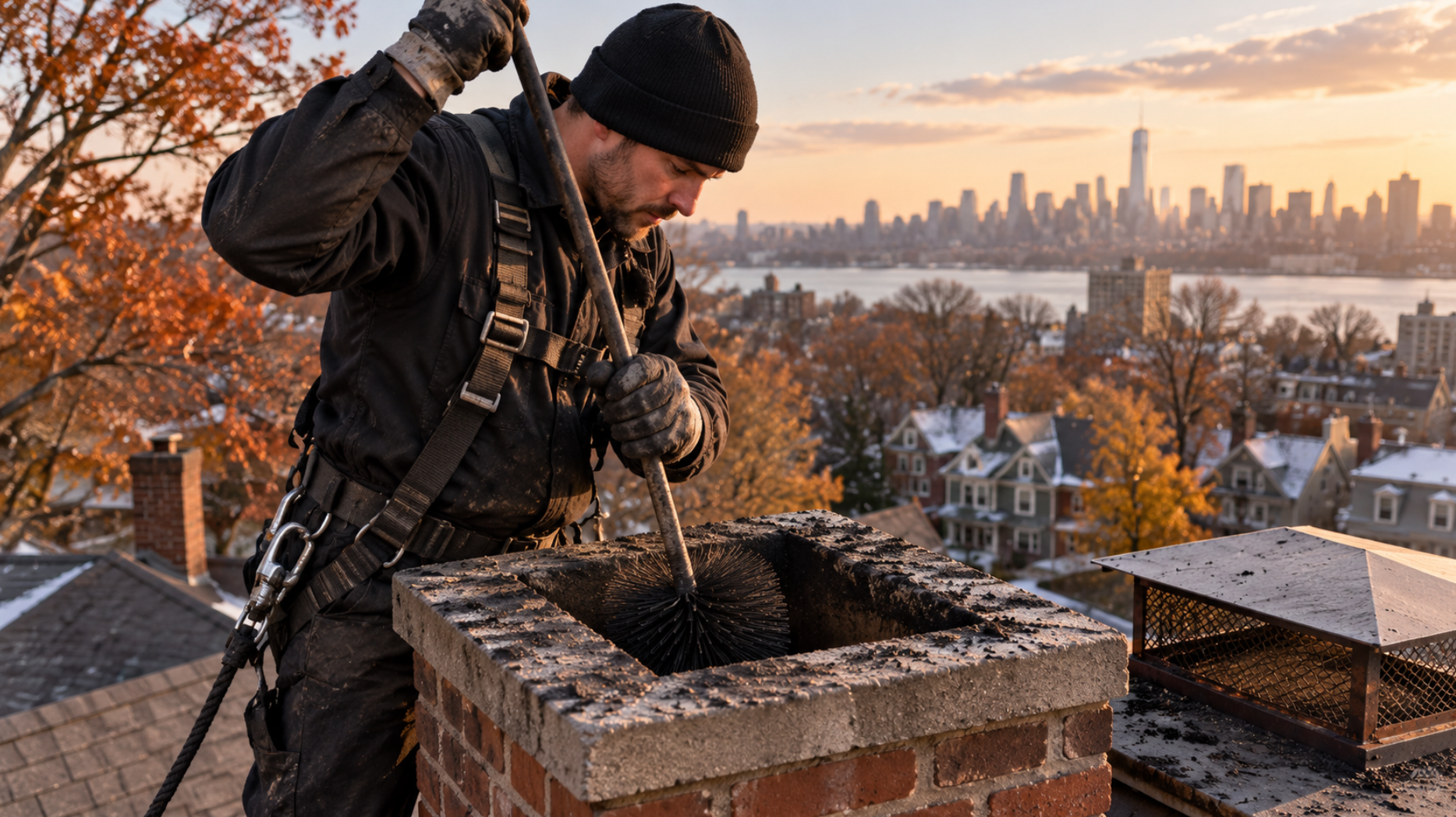
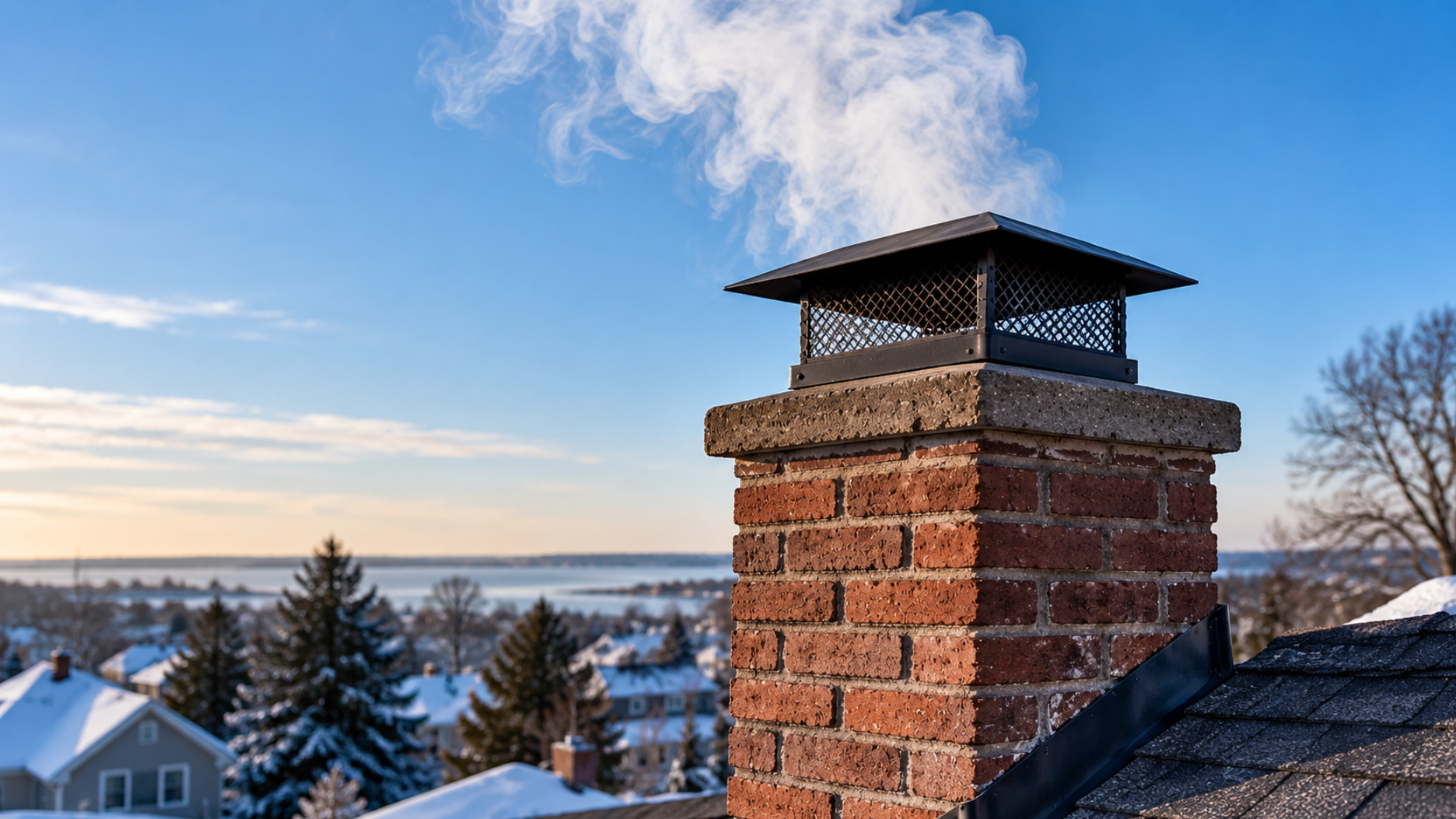
A chimney cap is a metal cover with a mesh screen that sits on top of the flue. It keeps rain, snow, birds, squirrels, raccoons and burning embers out of the chimney, and it costs far less than the damage caused by leaving a flue open.
What a Chimney Cap Protects Against
- Water: rain that rusts dampers and stains firebox walls
- Animals: nests and carcasses block draft and release odors
- Debris: leaves and twigs can clog the flue
- Sparks: mesh screens reduce roof fire risk from embers
- Downdrafts: some designs reduce wind pushing smoke back into the room
Signs Your Cap Needs Replacing
- Rust streaks on the cap or the masonry below
- Bent, loose or missing mesh
- Animals entering the chimney
- Water in the firebox after rain
- A cap that rattles or leans in wind
Choosing a Replacement
Stainless steel lasts longest and will not rust in coastal air on Long Island. Copper is a premium option that ages to a green patina. Galvanized caps are cheaper but corrode sooner. Sizing matters: the cap must fit your flue and leave enough open area so exhaust can escape.
Cap, Crown and Flashing Work Together
A new cap on a cracked crown only solves part of the problem. Ask your technician to inspect the crown, flashing and top courses of brick at the same visit, which is also when fall storm damage is easiest to spot.
Replacement is usually a same-day job and one of the most affordable preventive repairs a chimney can have.
Types of Chimney Caps
- Single flue caps: fit directly on the flue tile and are common on older homes
- Multi flue caps: cover several flues and sit on the crown
- Top mount caps: installed on the top of the flue tile with a mesh screen
- Top sealing dampers: a cap and damper in one that closes tightly in summer
Sizing and Installation
Measuring the flue is the first step. Round liners need a cap that fits the outside diameter, and rectangular flues need a custom size. A cap that is too small restricts exhaust, and one that is too large may not secure. Installation takes about an hour for a typical single flue and requires roof access.
Cap Care
Check the cap each spring. Clear leaves and nests from the mesh, look for rust, and confirm it is still tight. Stainless steel needs little care, but copper may be cleaned periodically if you want to keep the original color.
Cap vs Crown Cover vs Spark Arrestor
A cap covers the flue opening. A crown cover protects the entire masonry crown. A spark arrestor is a mesh screen that stops embers from escaping and is built into most caps. Homes with wood fireplaces near trees benefit most from a screened cap.
Frequently Asked Questions
Is a chimney cap required
Many codes and insurers expect one, and it is a smart safeguard even where not required.
Will a cap stop birds
A properly fitted mesh cap keeps out birds, squirrels and raccoons.
Does a cap restrict draft
A correctly sized cap does not. A cap with mesh that is clogged with creosote can, which is why it should be cleaned with the flue.
Local Help and Related Reading
Our crews handle chimney repair in Brooklyn, chimney repair in Queens, the Bronx, Huntington and Yonkers. See every town on our service areas page or visit our services.
More to read: How Often Should You Sweep a Chimney in New York, Chimney Leaks in New York: Causes, Fixes and Prevention, Is a Chimney Liner Required in New York.
For wider guidance, see the EPA Burn Wise program and the U.S. Department of Energy. New Yorkers can also check NYSERDA for state energy resources.