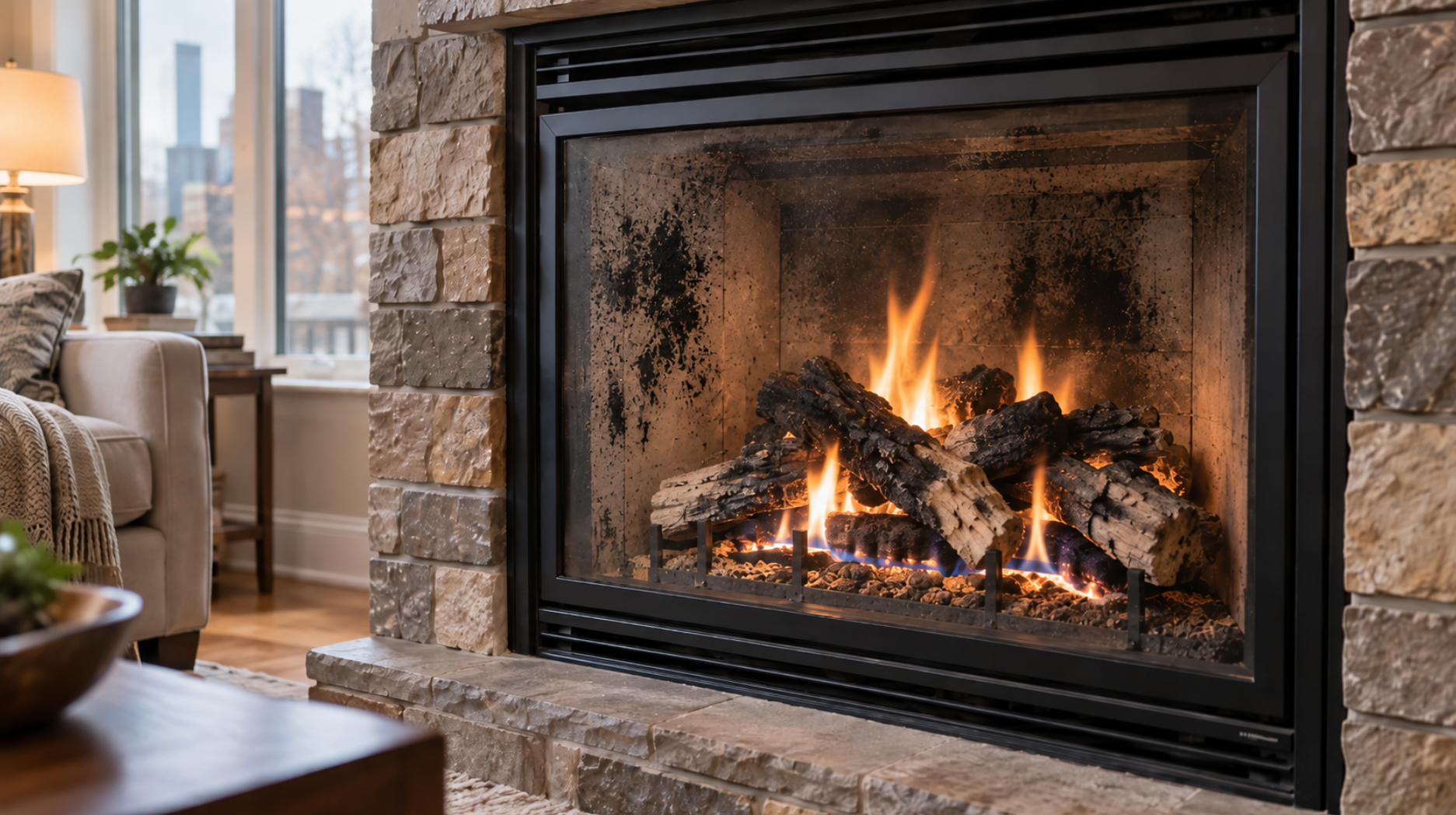
The warning signs of a chimney fire are often subtle, and many fires burn slowly inside the flue without the homeowner noticing. The NFPA reports thousands of chimney fires every year in the United States, and most trace back to creosote that built up over seasons without a cleaning.

Signs of an Active Chimney Fire
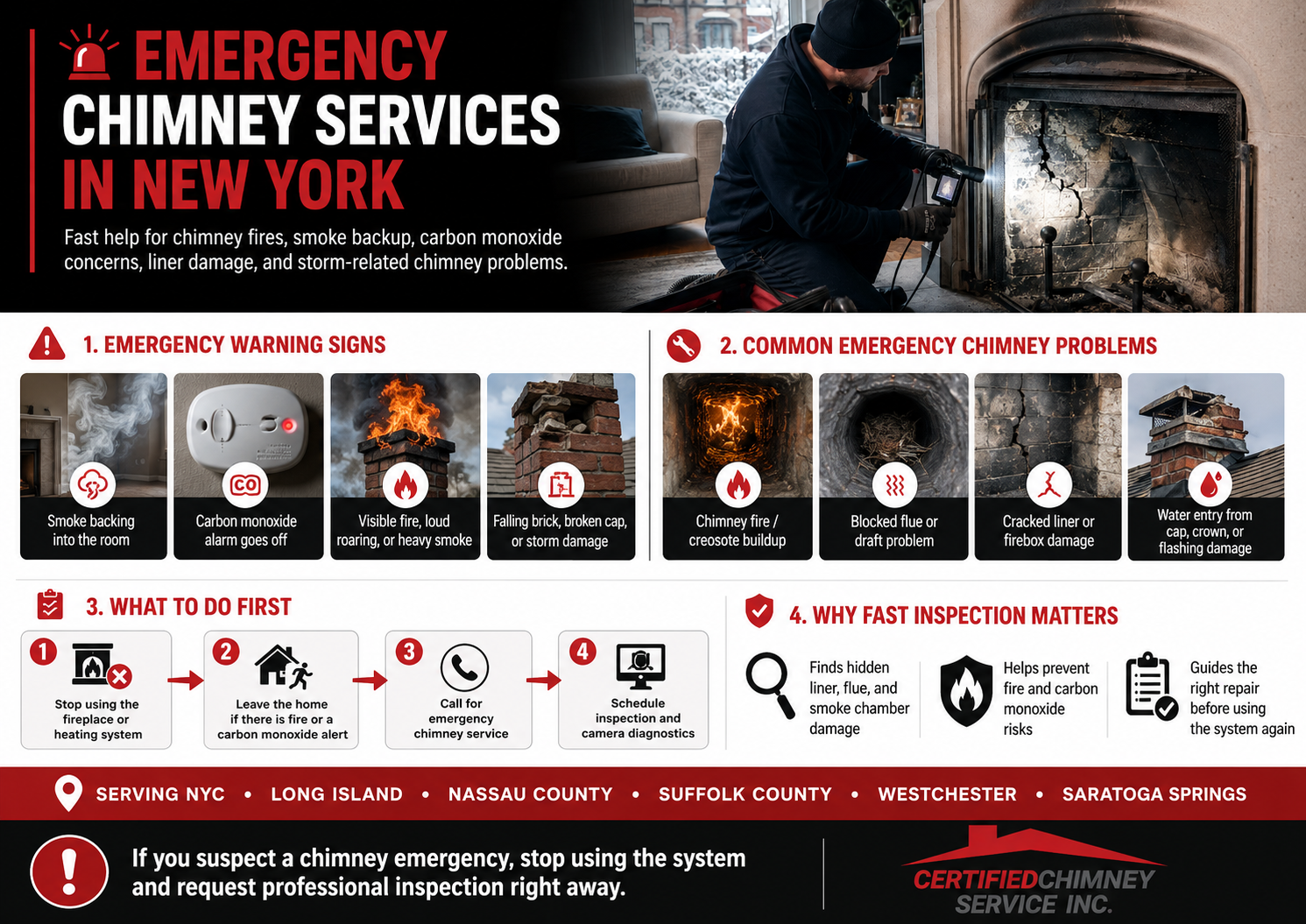
- A loud cracking or popping sound, or a low rumble like a freight train
- Dense smoke pouring from the chimney or fireplace
- An intense, hot smell from the flue
- Flames or sparks shooting from the chimney top
- A fireplace that seems to roar even with the damper partly closed
Signs of a Past Chimney Fire
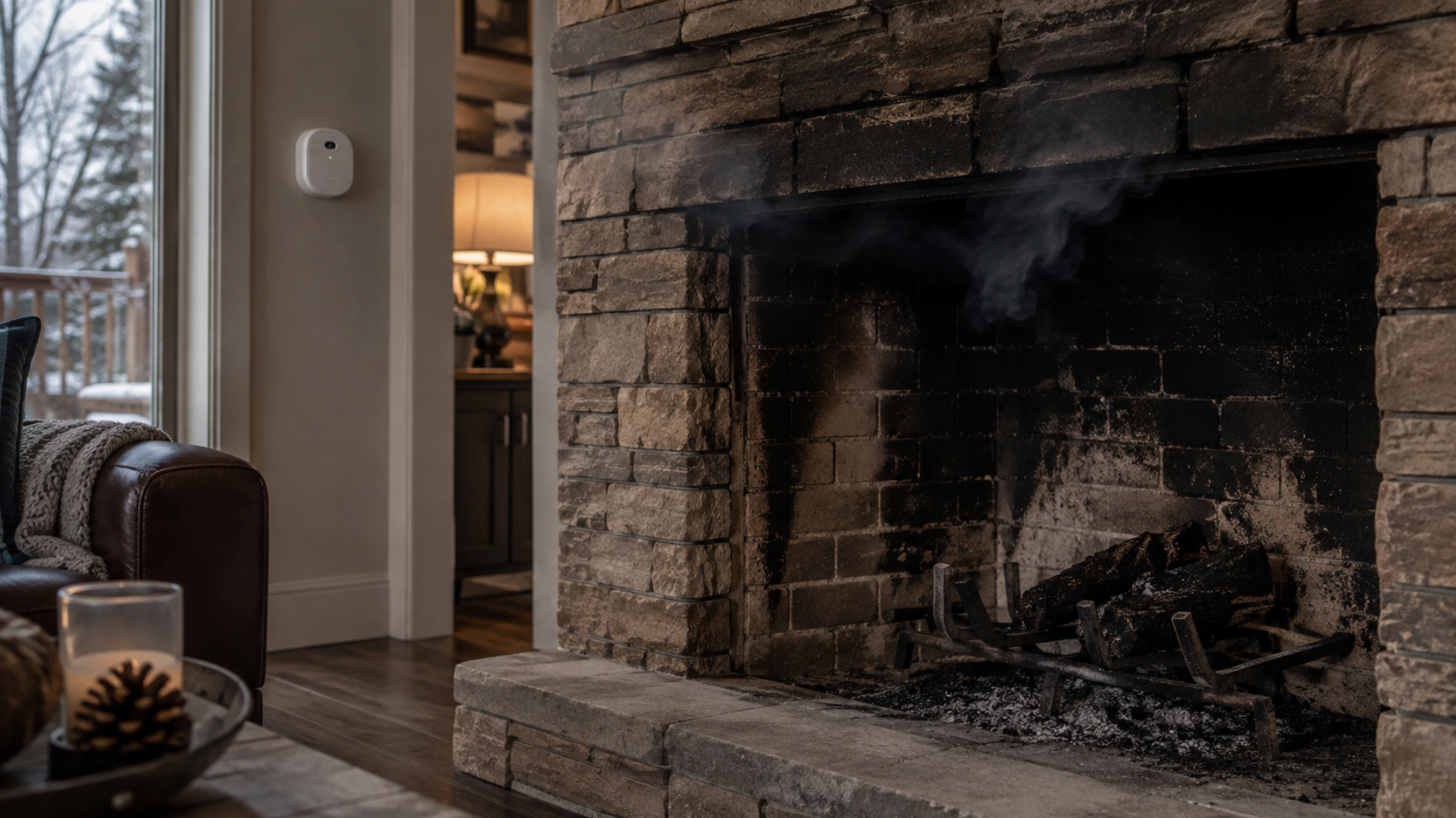
- Puffy, honeycombed creosote that looks like burned popcorn
- Warped or discolored damper and metal parts
- Cracked flue tiles or missing pieces of liner
- Roofing damaged by falling sparks
- Heavy discoloration on the outside of the chimney
What to Do if You Suspect a Fire
Get everyone out, call 911 and do not use water on the fireplace. After the fire department clears the home, schedule a Level 2 inspection before using the fireplace again. A chimney that has burned may look fine from the outside while the liner has cracked inside.
How to Prevent One
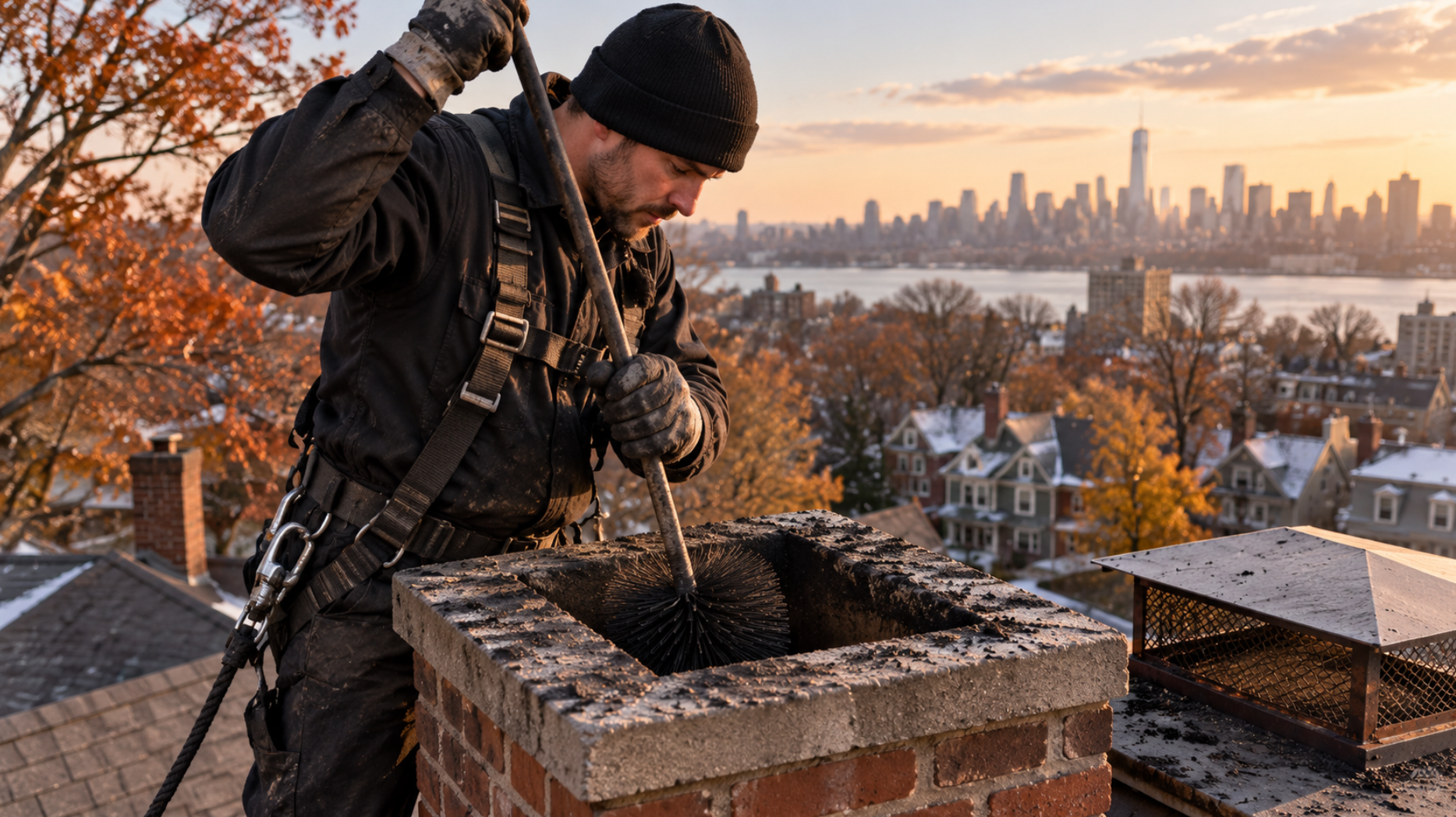
- Schedule an annual inspection and cleaning
- Burn only seasoned hardwood with moisture below 20 percent
- Never burn trash, cardboard or treated lumber
- Keep the damper fully open while a fire burns
- Install a cap with a spark screen
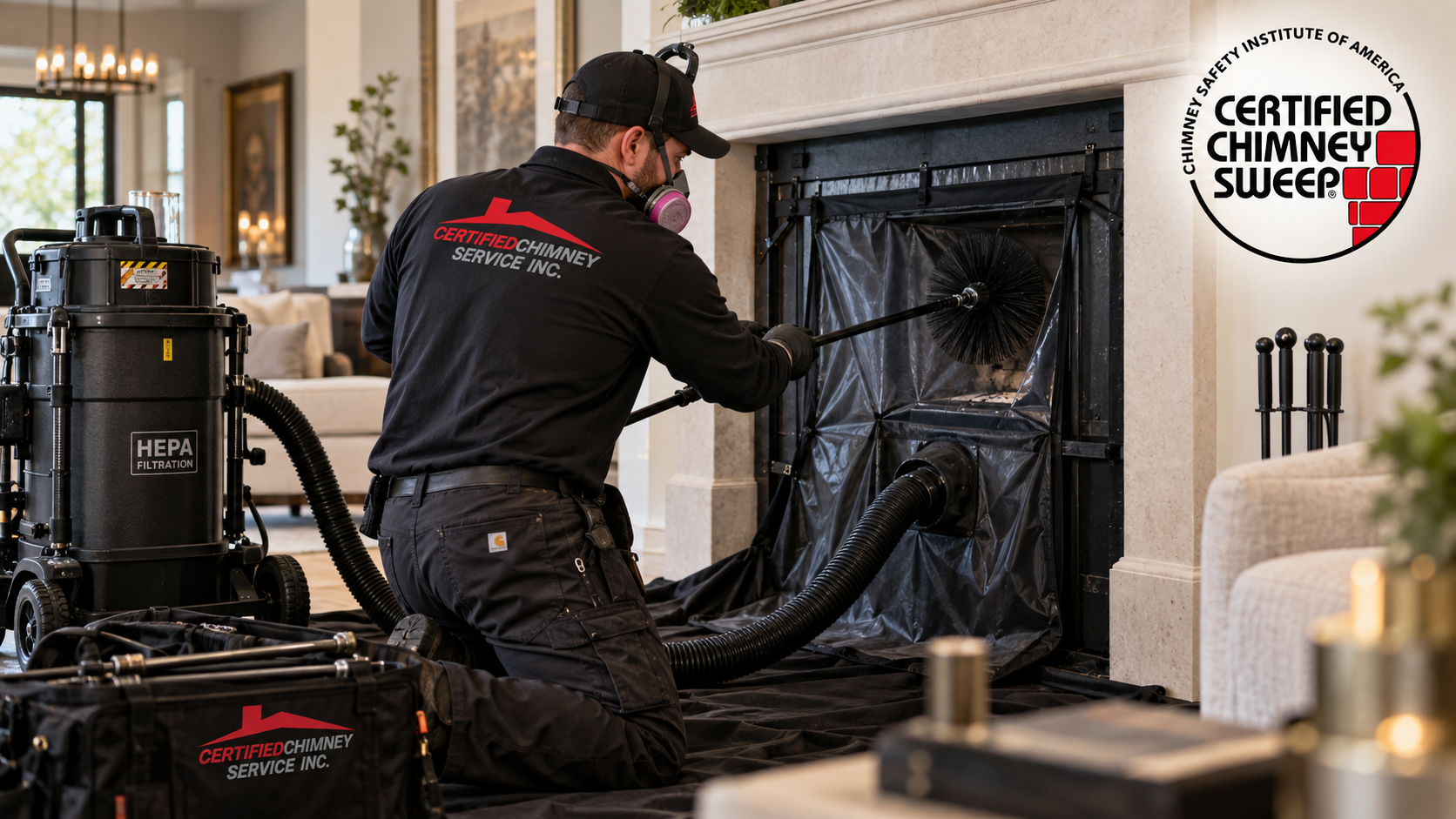
A certified technician can show you your chimney through a camera so you know exactly what condition it is in.
What Happens Inside a Chimney Fire
Creosote ignites at temperatures that a normal wood fire can reach. Burning deposits can heat the flue past 2,000 degrees, which is enough to crack clay tiles, warp metal liners and spread heat to nearby framing. Some chimney fires are fast and loud. Others are slow and quiet, which is why many homeowners only learn about them during a later inspection.
Immediate Safety Steps
- Get everyone out of the house and call 911
- Close the damper and the stove air inlet only if it is safe to do so
- Do not throw water on the fireplace
- Keep a distance until the fire department says the home is safe
- Do not use the fireplace again until it is inspected
After the Fire Department Leaves
Call your insurer, then schedule a Level 2 inspection. Even a small chimney fire can crack the liner. Cracks allow heat to reach combustible framing next time and let carbon monoxide leak into the living space.
Frequently Asked Questions
Can a chimney fire happen without anyone noticing
Yes. Slow burning fires can damage the liner while producing little noise or smoke.
How do I prevent chimney fires
Annual cleaning, dry hardwood, hot fires and a capped flue are the most effective steps.
Is a chimney fire covered by insurance
Many policies cover fire damage, but coverage depends on your policy and maintenance records.
Local Help and Related Reading
Our crews handle chimney repair in Brooklyn, chimney repair in Queens, the Bronx, Huntington and Yonkers. See every town on our service areas page or visit our services.
More to read: Chimney Leaks in New York: Causes, Fixes and Prevention, Is a Chimney Liner Required in New York, What a Chimney Cap Does and When to Replace It.
For wider guidance, see the EPA Burn Wise program and the U.S. Department of Energy. New Yorkers can also check NYSERDA for state energy resources.