After a nor’easter rolls through, most Long Island homeowners check the roof and the yard, but the chimney is often the part that took the hardest hit and shows it the least. Wind driven rain, salt air and repeated freezing all work on a chimney in ways that aren’t obvious from the ground, and the damage tends to surface weeks or months later as a leak, a smell or a draft problem.
Think your chimney took storm damage? Call 877-793-3712 and we’ll come take a look.
How a Nor’easter Actually Damages Masonry
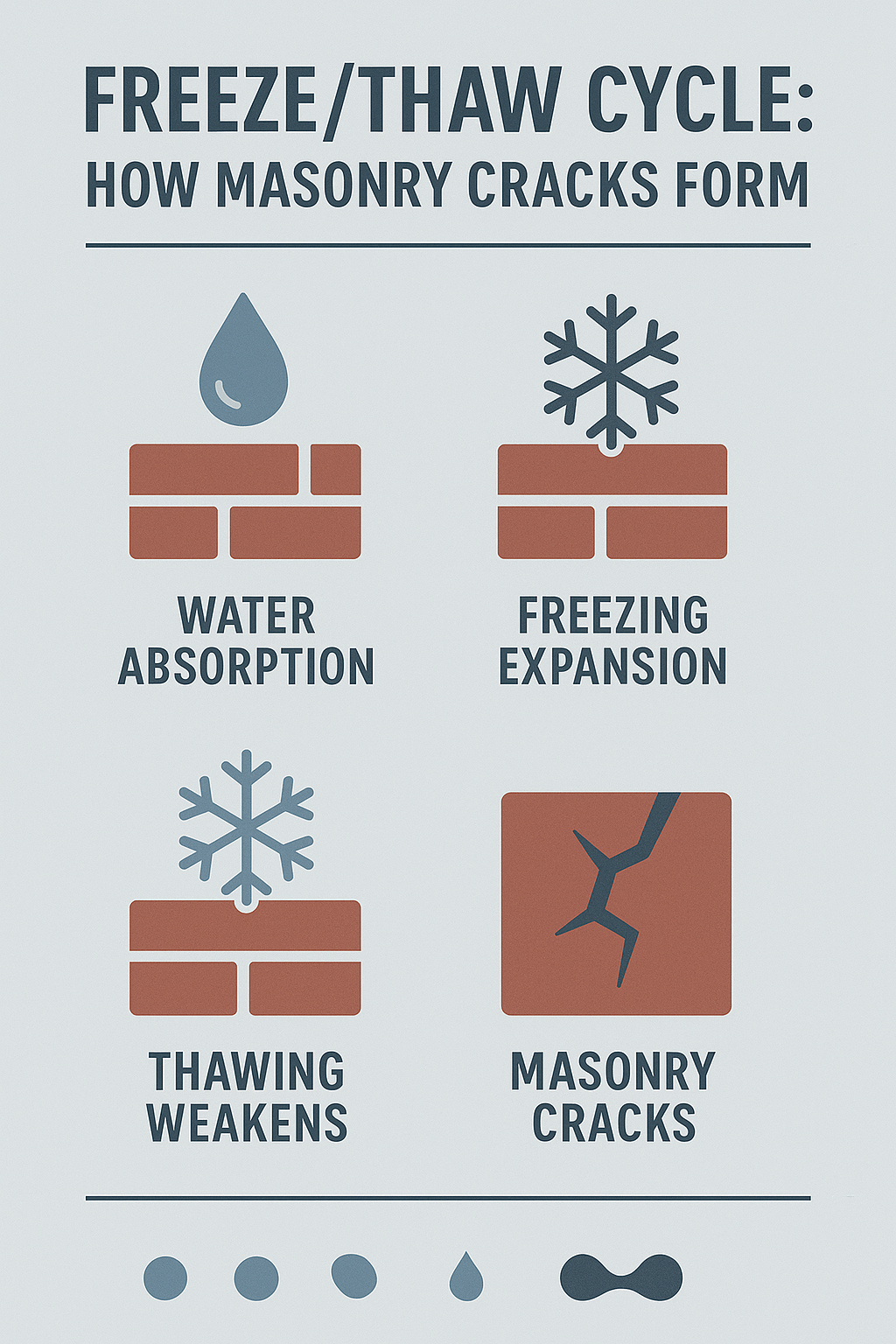
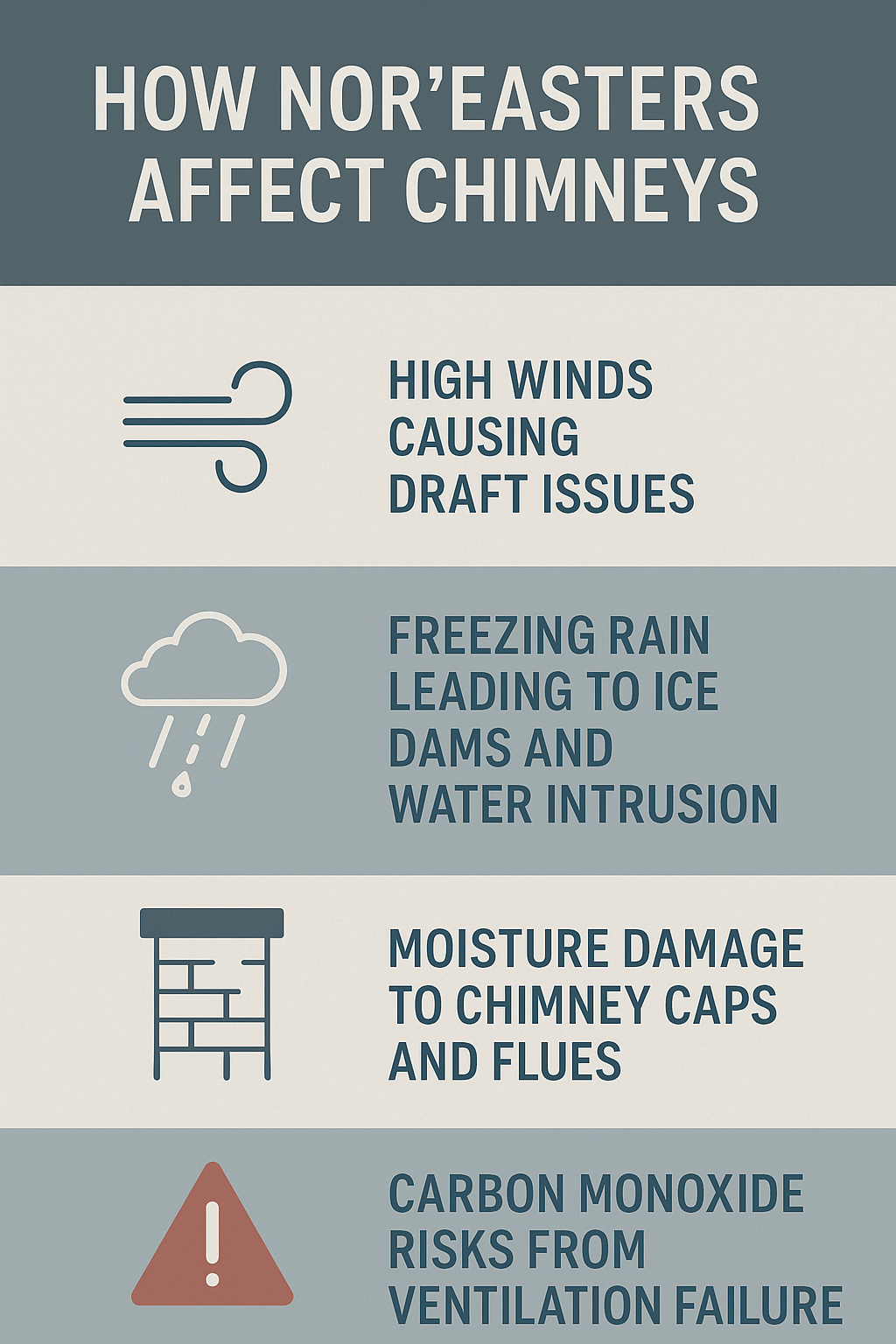
Brick and stone look solid, but they’re porous. When wind drives rain sideways into a chimney stack for hours at a time, the mortar joints and brick faces absorb far more water than they would in an ordinary rainstorm. Once that moisture is inside the structure, it has nowhere to go quickly, which sets up the next problem.
Long Island gets somewhere between 80 and 100 freeze and thaw cycles each winter. Water trapped in a joint expands by roughly 9% the moment it freezes, and that pressure chips away at the face of the brick a little more each time. The outer “skin” that protects the brick eventually flakes off, a process called spalling, and once it’s gone the softer interior is exposed and the damage accelerates.
Sustained Wind Is Its Own Kind of Stress
Unlike a short thunderstorm, a nor’easter can push wind against a chimney stack for the better part of a day. That steady buffeting creates tiny fractures in the mortar over time, and those hairline cracks become the easiest path for the next storm’s water to get in.
Where Storms Tend to Find the Weak Points
A few parts of the chimney take the brunt of it:
- The crown, the concrete slab at the top that’s supposed to shed water away from the flue, can crack from temperature swings and salt exposure and start funneling water straight down instead
- The flashing where the chimney meets the roof is the single most common source of a storm related leak once wind works it loose
- The cap can shift or tear off entirely in high gusts, leaving the flue wide open to rain and to nesting wildlife
Why the Coast Makes All of This Worse
Salt air is chemically aggressive toward metal. Flashing, caps and even stainless liners corrode faster near the water than they would a few miles inland, and that corrosion makes everything more brittle right when a storm needs it to hold. South Shore homes tend to deal with more humidity and algae growth on the masonry itself, while North Shore homes on higher bluffs take more direct wind. Either way, storms are coming more often than they used to, which means chimneys have less time to dry out between events.
Signs Your Chimney Took Storm Damage
| What you notice | What’s likely happening |
|---|---|
| Granules or mortar chips in the gutters | Wind has been scouring the roof and chimney crown |
| A musty smell from the fireplace | Moisture has built up in the firebox or flue |
| Water stains on drywall near the chimney | Water is bypassing the exterior seals |
| Visible leaning or loose bricks | Structural movement that needs professional attention right away |
If a flue liner has cracked or shifted, combustion gases including carbon monoxide can leak into the home. Stop using the fireplace until a professional has confirmed the flue is safe.
The Inspection That Actually Catches Storm Damage
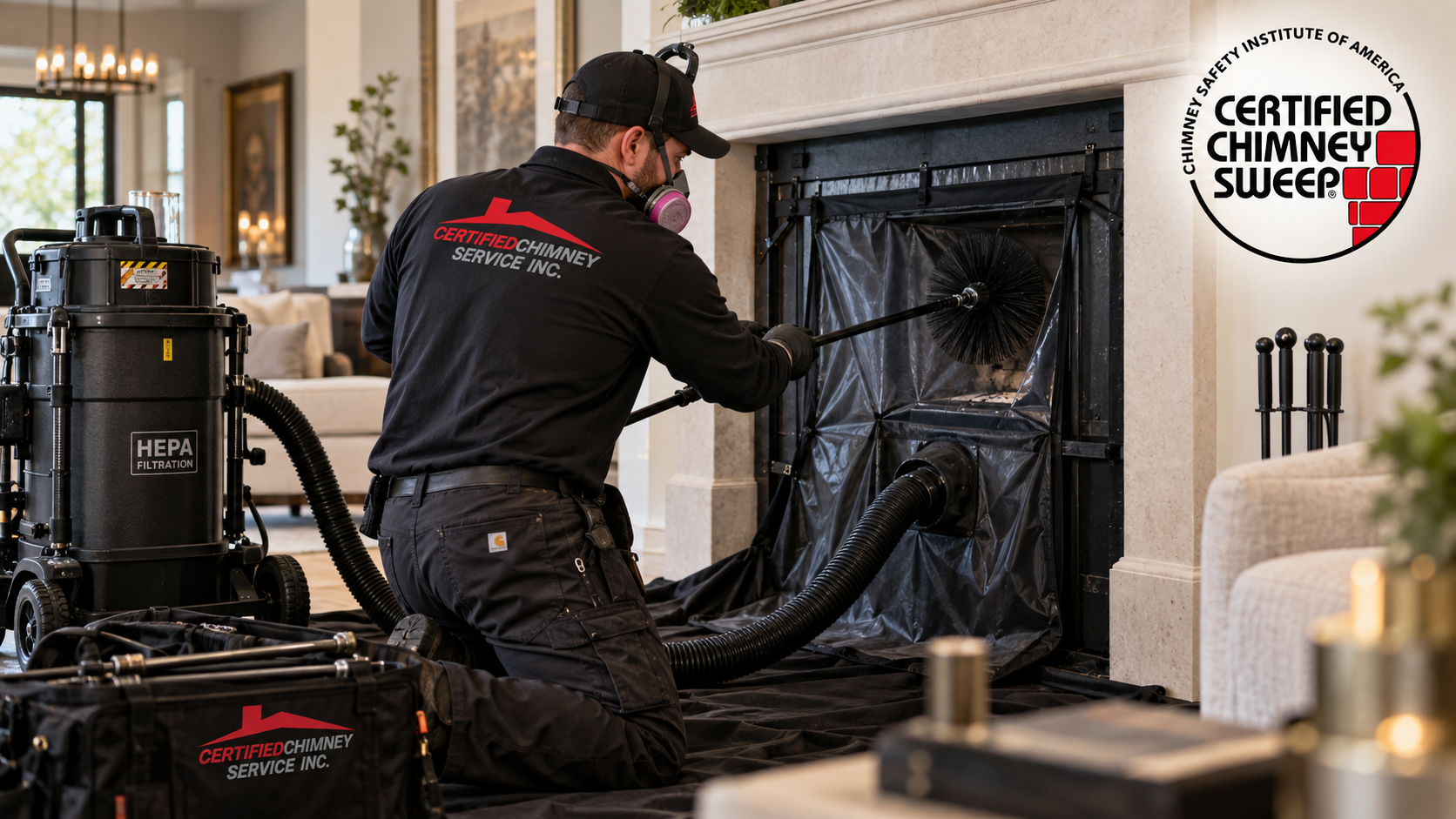
A visual check from the ground only tells you so much. A thorough inspection uses thermal imaging to find cold, damp spots behind the masonry and an internal camera to check the liner for hairline cracks a flashlight would miss. Early fall, before the first nor’easter of the season, is the best time to have this done.
Frequently Asked Questions
Can storm damage to a chimney get worse even if I don’t see a leak right away?
Yes. Cracks from wind stress or freeze and thaw cycles often widen quietly over several storms before a leak actually shows up inside the house.
Should I get a written report after a storm inspection?
Yes, it gives you a clear record of the masonry, flashing, cap and liner condition, which is useful for maintenance planning and for any insurance conversation that follows.
Is a full rebuild always necessary after storm damage?
Not usually. If the damage is limited to the top few courses of brick, repointing is often enough. A full rebuild is typically reserved for a leaning stack or deeper structural compromise.
Local Storm and Chimney Safety Resources (click to expand)
The sooner storm damage is caught, the cheaper it is to fix. Call Certified Chimney NY at 877-793-3712 for a post-storm inspection, or reach out online and we’ll follow up with a time that works.