
Share:
A chimney sits quiet all summer, but quiet does not mean safe. Heat waves, thunderstorms and humidity all work on the chimney system while nobody is using it. By the time you light the first fire, damage to the flue can be well along, and a damaged flue is one of the most common ways a chimney fire becomes a house fire.
A fall inspection is the best moment to find it. Here is what Certified Chimney technicians look for, and why chimney liners get so much attention.
The liner is the protective lining on the interior chimney wall. It carries smoke and carbon monoxide out of the house, shields the surrounding masonry from heat and acidic gases, and keeps combustion byproducts from leaking into your home. When it fails, every one of those jobs fails with it. Our chimney liner service page explains the options.
Most older masonry chimney construction uses clay tile. It lasts for decades, but it cracks under thermal shock and the mortar joints between tiles wear away. Gaps let heat and carbon monoxide leaks reach the framing of the house.
A stainless steel liner is the common replacement, especially when you switch to a wood stove or fireplace insert. An insulated chimney liner improves draft and slows creosote buildup because the flue stays warmer.
Some homes get a cast in place lining that seals cracked masonry from the inside. It suits odd shaped flues where a rigid pipe will not fit.
Summer is rougher on chimneys than most homeowners expect. Water entry through a cracked crown or a missing chimney cap runs down the flue and loosens tile. Flashing that has pulled away lets rain into the wall, and the result is water staining on the ceiling or damp patches around the chimney breast. Animals nest in the flue, and flue blockages from nests become a fire hazard the moment the damper opens.
Storms add more. Flood damage and wind driven rain soak the masonry, and the first freeze turns that moisture into cracks. Water leaks that start small become severe damage by spring.
You do not need to climb a ladder to notice trouble. Look for pieces of tile or flakes of metal in the firebox, rust on the damper, white staining on exterior brick, or a smoky smell that gets worse in humid weather. A fire that smokes into the room or burns poorly points to flue problems too. For a closer look at one common symptom, read how to tell if your flue is blocked.
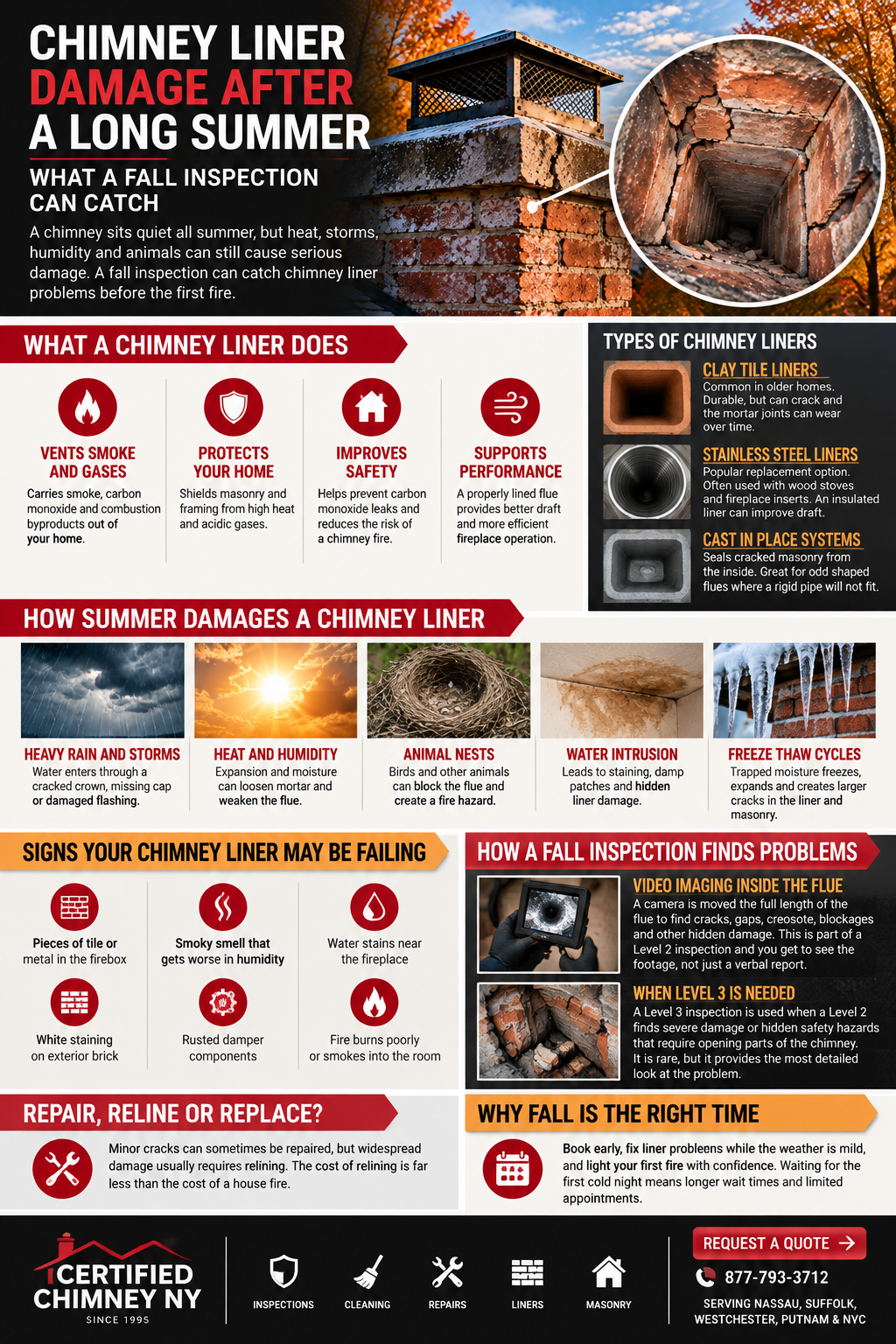
A flashlight shows the first few feet. A camera shows the rest. Video imaging, also called a video scan, moves a camera the full length of the flue and records cracks, gaps and creosote. You see the footage, not just a verbal report. This is what a Level 2 inspection includes, and it is the right choice after a storm, a chimney fire or before you buy a home. See our chimney inspection services for the levels.
A Level 3 inspection is the deepest option, used when a Level 2 inspection finds severe damage or hidden safety hazards that require opening parts of the chimney. It is rare, but it is the only way to confirm what is behind the masonry.
Small cracks in a clay liner can sometimes be repaired, but a flue with widespread failure usually needs relining. The cost of relining is far smaller than the cost of a house fire. The Chimney Safety Institute of America FAQ notes that chimney damage is often invisible without inspection, and the EPA Burn Wise guidance reminds homeowners that nearly 7 percent of home fires start with creosote buildup in the chimney.
Waiting for the first cold night means competing with every other homeowner for a limited number of appointments. Book early, fix liner problems while the weather is mild and light your first fire with confidence. Our seasonal maintenance tips help you prepare, and chimney cleaning is the natural next step once the liner checks out.
How long does a liner last? Clay tile can last fifty years or more with care. A stainless steel liner often carries a lifetime warranty when installed correctly.
Can I use my fireplace with a cracked liner? No. A crack lets heat and carbon monoxide reach the house, so the fireplace should stay unused until it is repaired.
Does a gas fireplace need a liner? Often yes, since gas produces acidic moisture that eats away at old masonry.
Certified Chimney has served Nassau, Suffolk, Westchester, Putnam and New York City since 1995. Call 877-793-3712 or request a quote, and for urgent problems our 24/7 emergency service is ready.
Learn how summer weather can affect chimney liners, which warning signs to watch for, how inspections uncover hidden damage, and when repair or relining may be needed.
A chimney liner carries smoke, carbon monoxide, and other combustion byproducts out of the home while helping protect the surrounding masonry and combustible framing from heat and corrosive gases. A damaged liner can interfere with all of those functions.
Yes. Summer heat, humidity, thunderstorms, wind-driven rain, and water entering through a cracked crown, missing cap, or damaged flashing can affect the flue and surrounding chimney system. Animal nests and debris can also create hidden blockages while the fireplace is not being used.
Warning signs can include pieces of clay tile or flakes of metal in the firebox, rust on the damper, white staining on exterior masonry, water stains near the fireplace, smoky odors, poor draft, or smoke entering the room during a fire.
A more detailed inspection can use video imaging to examine the full length of the flue. The camera can reveal cracks, missing mortar, gaps, creosote buildup, blockages, and other damage that may not be visible from the fireplace opening or chimney top.
A Level 2 inspection includes a more detailed evaluation and typically uses video scanning inside the flue. A Level 3 inspection is used when serious hidden damage is suspected and may require opening or removing portions of the chimney or surrounding construction to reach the problem.
Some localized liner damage may be repairable, depending on the liner type and severity of the problem. More widespread cracking, missing sections, or deterioration may require relining with a new approved liner system.
No. A cracked or deteriorated liner can allow heat and combustion gases to escape outside the intended flue passage. The fireplace should remain unused until the chimney is inspected and the liner problem is properly addressed.
A fall inspection gives homeowners time to identify liner damage, schedule repairs or relining, and complete chimney cleaning before regular fireplace use begins. Booking before the first cold stretch can also help avoid the seasonal rush.
Have the flue inspected before fireplace season so cracks, gaps, blockages, or water damage can be addressed before regular winter use.
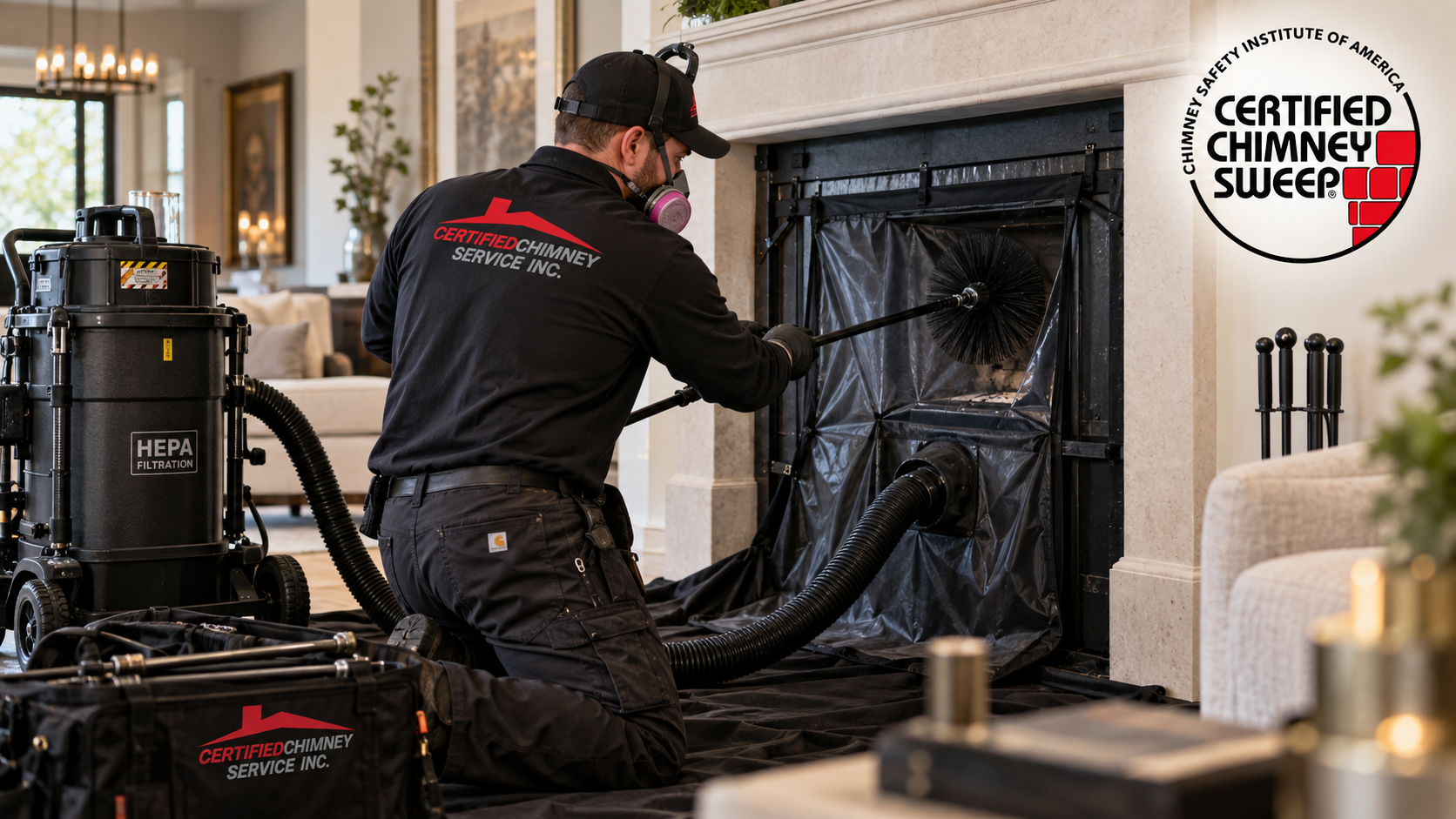
Covers fireplaces, wood stoves, pellet stoves, and heating systems including gas and oil systems. Book now before the winter rush fills our schedule.