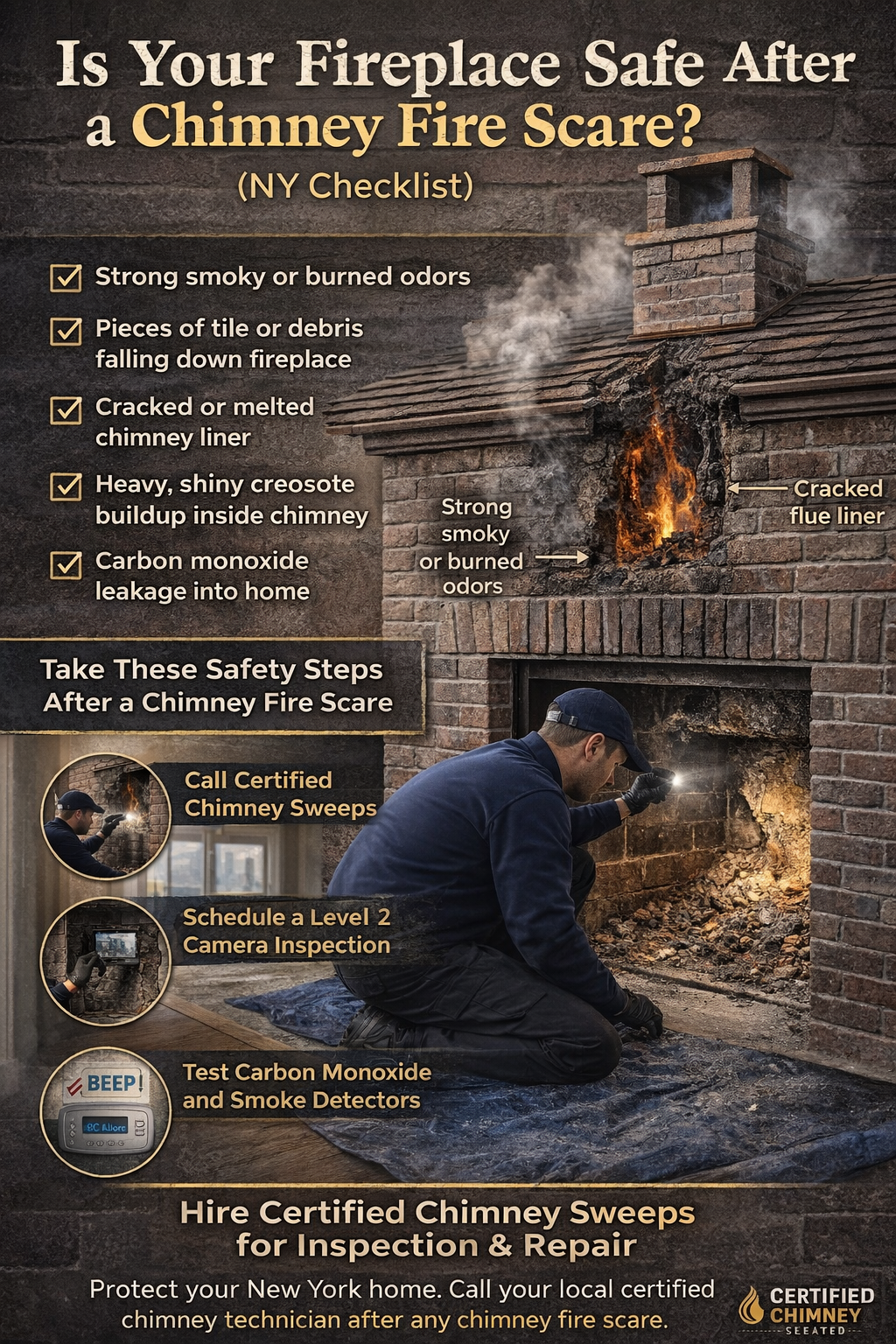
A roaring fireplace is one of the best parts of a New York winter, but the chimney behind it is doing more work than most homeowners realize. Understanding what actually happens inside a flue during a chimney fire, and what causes one in the first place, is the best way to keep that comfort from turning into an emergency.
Not sure when your chimney was last inspected? Call Certified Chimney NY at 877-793-3712 and we’ll help you figure out where things stand.
What’s Actually Burning Inside Your Chimney
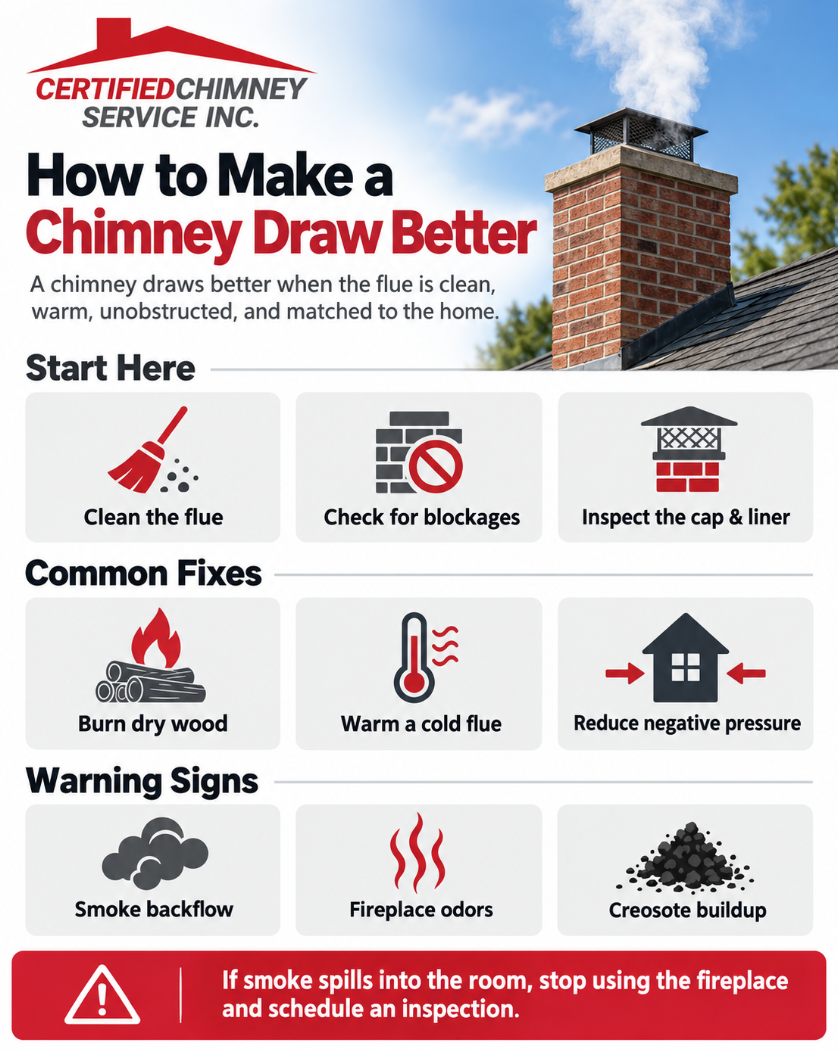
Every time wood burns, it releases moisture, smoke and unburnt particles. As those vapors travel up into the cooler part of the flue, they condense into creosote, a sticky, flammable residue that coats the chimney walls. Left alone, that buildup stops being a byproduct and starts being fuel.
The Chimney Safety Institute of America groups creosote into three stages: a light flaky soot, a harder crusty layer, and a thick, tar like glaze that is genuinely difficult to remove. That third stage is concentrated fuel sitting inside a structure most homeowners assume is fireproof.
Why New York’s Climate Makes It Worse
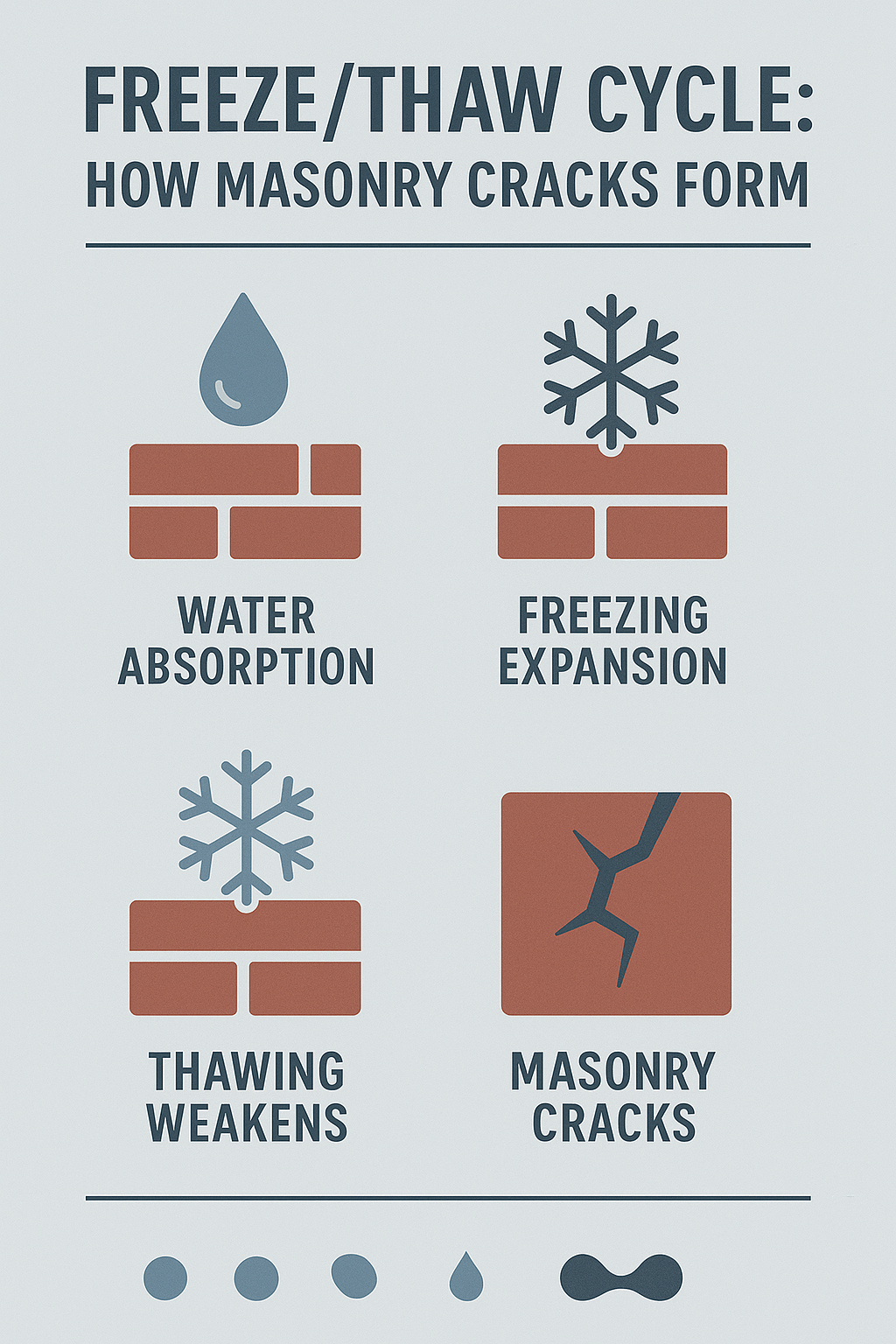
New York’s freeze and thaw cycles put real stress on masonry chimneys, opening hairline cracks in the flue liner over time. High humidity also slows down how firewood dries, which leads a lot of homeowners to unknowingly burn wood that is still too wet. Wet wood burns cooler and smokier, and that smoke deposits creosote faster than a clean burning fire ever would.
What Happens Once a Chimney Fire Starts
Once enough creosote has built up, it reaches a point where it can ignite on its own. From there the chimney stops venting smoke and starts acting as a second combustion chamber, pulling in air from the room and pushing flue temperatures past 2,000°F. That heat is far beyond what masonry or a metal liner was built to handle.
Thermal shock from that kind of heat can crack or split clay tile liners, and in a factory built metal chimney it can warp the metal and destroy the insulation around it. Either way, the structure that is supposed to contain the fire becomes the thing that fails.
Signs a Chimney Fire Is Happening
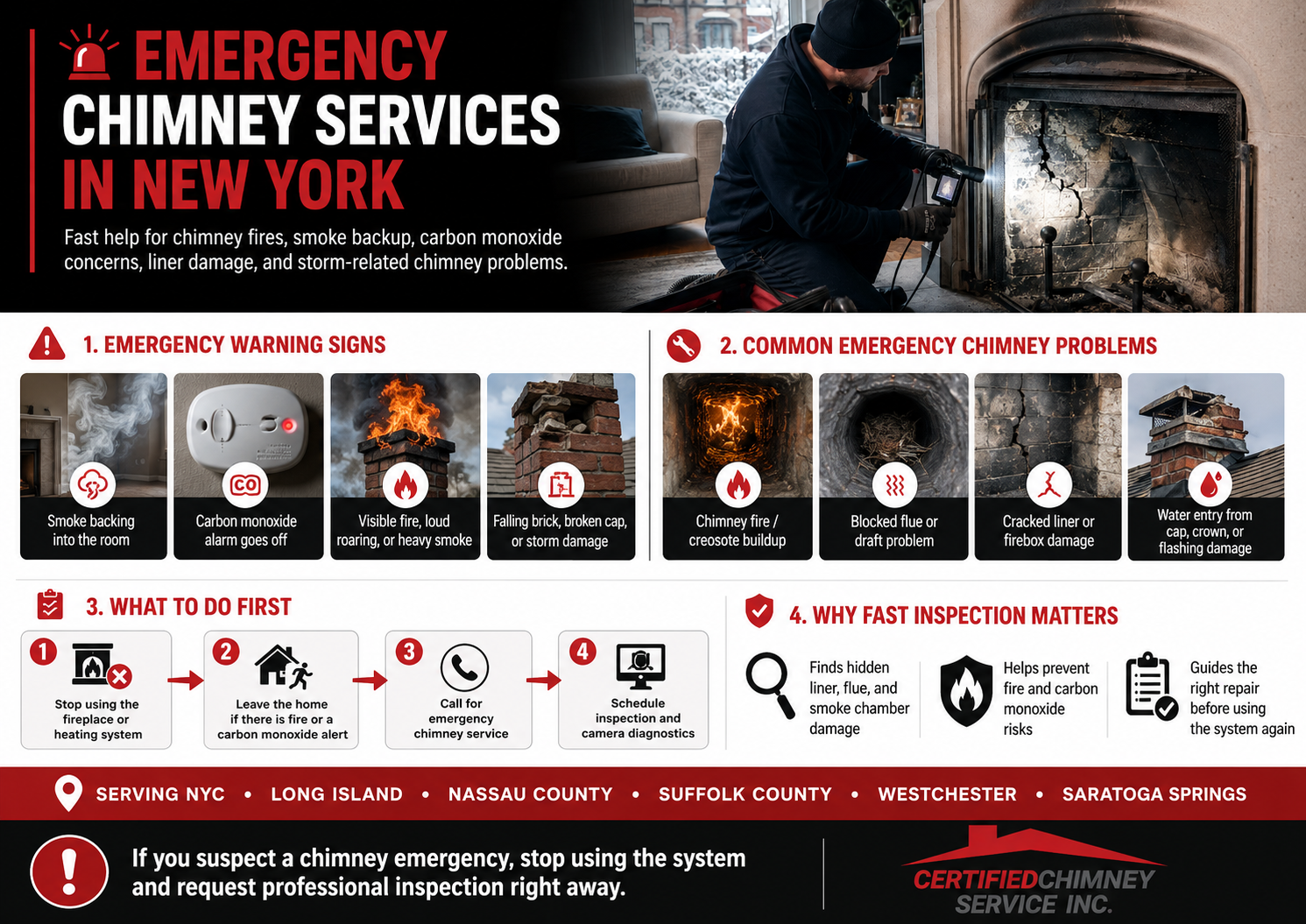
A chimney fire rarely goes unnoticed if you know what to listen and look for.
- A loud rumble often described as a freight train passing through the house
- Popping or cracking sounds as masonry or metal liners fail under the heat
- Dense black or thick yellow smoke, or visible sparks, coming from the chimney cap
- A sharp, metallic smell, closer to burning tar or plastic than wood smoke
If anyone in the house notices any of these, treat it as the emergency it is.
What to Do in the First Few Minutes
| Do this | Not this |
|---|---|
| Get everyone outside and call 911 immediately | Try to assess or fight the fire from inside |
| Use a dry chemical extinguisher only if the fire is still contained to the firebox | Spray water into a hot flue |
| Let the fire department handle anything in the flue itself | Reopen the damper or add air once you suspect a chimney fire |
Water turns to steam almost instantly against a superheated flue, and that steam expansion can crack or shatter masonry outright. It is one of the few home emergencies where doing less, and getting out faster, is the right call.
How a Professional Inspection Prevents All of This
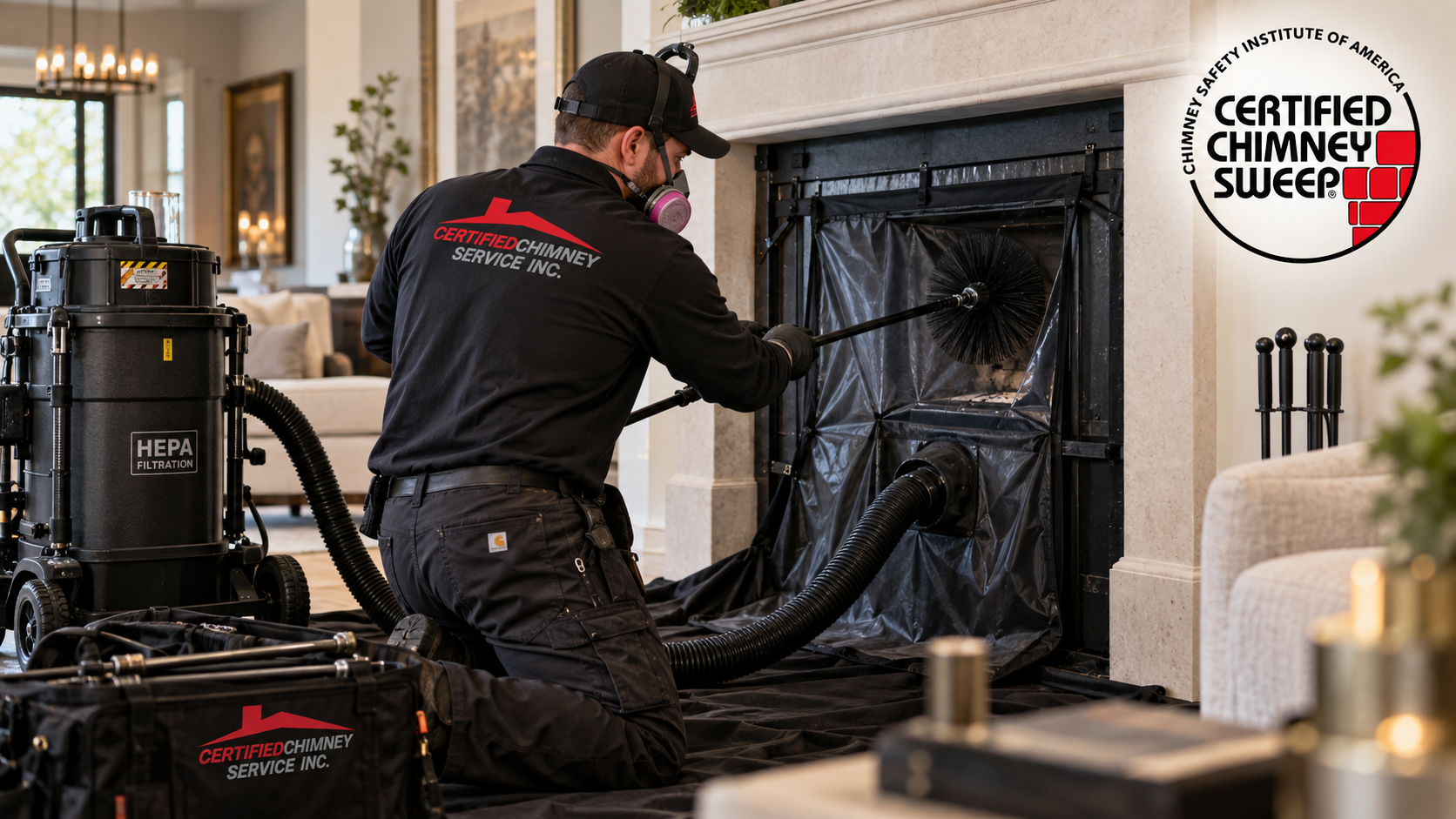
Because New York heating systems run for six to eight months of the year, an annual inspection from a certified chimney sweep is not optional in any practical sense. A professional sweep clears bird nests and seasonal debris, removes creosote buildup at every stage, and inspects the liner and spark arrester with a diagnostic camera rather than a guess.
A damaged liner can let carbon monoxide and heat migrate into the walls of your home, and a missing or blocked spark arrester lets burning embers land directly on your roof. Both are inexpensive to fix and expensive to ignore.
Burning Smarter the Rest of the Season
Seasoned hardwood, dried for six to twelve months down to under 20% moisture, burns hot and clean. Green or wet wood does the opposite, wasting its energy boiling off moisture and leaving behind the thick, sticky smoke that coats a flue in creosote. If your home relies on a wood stove, an EPA certified catalytic or non catalytic model will re-burn smoke and gases before they ever reach the chimney, cutting creosote buildup dramatically compared to an older unit.
Frequently Asked Questions
How often should a chimney actually be swept in New York?
Once a year at minimum for a chimney in regular winter use, and more often for a primary heat source burning daily.
Can a small chimney fire cause damage even if no one sees flames?
Yes. A low, slow burning chimney fire can crack a liner or damage a chimney’s structure without producing the dramatic signs people expect, which is part of why annual inspections matter even when nothing seems wrong.
Is it safe to keep using a fireplace after a suspected chimney fire?
No, not until a certified professional has inspected the flue for cracks or structural damage. Using it again before that inspection risks carbon monoxide exposure or a second, larger fire.
Local Fire Safety and Inspection Resources (click to expand)
A clean, well maintained chimney is what turns a cold New York night into a comfortable one instead of a risk. Call Certified Chimney NY at 877-793-3712 to schedule an inspection, or reach out online and we’ll get back to you with a time that works.