
Short answer: a wood stove usually needs service more often than an open fireplace, but the real answer depends on how you burn, what you burn and what kind of system you own. A masonry fireplace and a wood burning stove vent differently, collect creosote differently and fail in different places.
This guide compares them side by side so you can set the right schedule before the heating season starts.
An open fireplace pulls a huge amount of air up the flue, which keeps the chimney cooler and carries some smoke away quickly. That also means a lot of the heat leaves with it. Soot buildup is slower, but the flue is wider and the masonry fireplace takes direct flame and sparks.
A wood stove is designed to burn efficiently with less air. Less air means lower flue temperatures, and cooler smoke condenses into creosote on the liner. Cast iron stoves and other wood burning stove models can run for hours on a damped fire, which is exactly when creosote forms fastest. Wood-burning stove owners often need cleaning twice in a heavy season.
A fireplace insert sits inside an existing opening and connects to the flue through a smaller pipe. It heats better than an open fireplace but behaves like a stove, so it needs stove style care and a stainless steel chimney liner.
A pellet stove burns compressed fuel and produces very little creosote, but it still has a vent, an ash drawer and fan parts that need checking. Gas fireplaces do not make creosote, yet they can develop gas leaks, blocked vents and carbon monoxide fumes, so annual gas fireplace inspections matter. Factory built fireplaces use metal flues that rust differently than masonry, and their parts are not interchangeable with a brick system.
The Chimney Safety Institute of America recommends an annual inspection for every system, whatever the fuel. Cleaning depends on use. A sweep is due when about an eighth of an inch of soot has built up, which happens at different speeds in each setup. Our chimney cleaning service covers all of them.
A simple guide: an open fireplace used a few times a month may go a year between sweeps. A wood stove that is the main heat source may need cleaning mid season. A fireplace insert falls in between. Gas systems need inspection even though they need no sweeping.
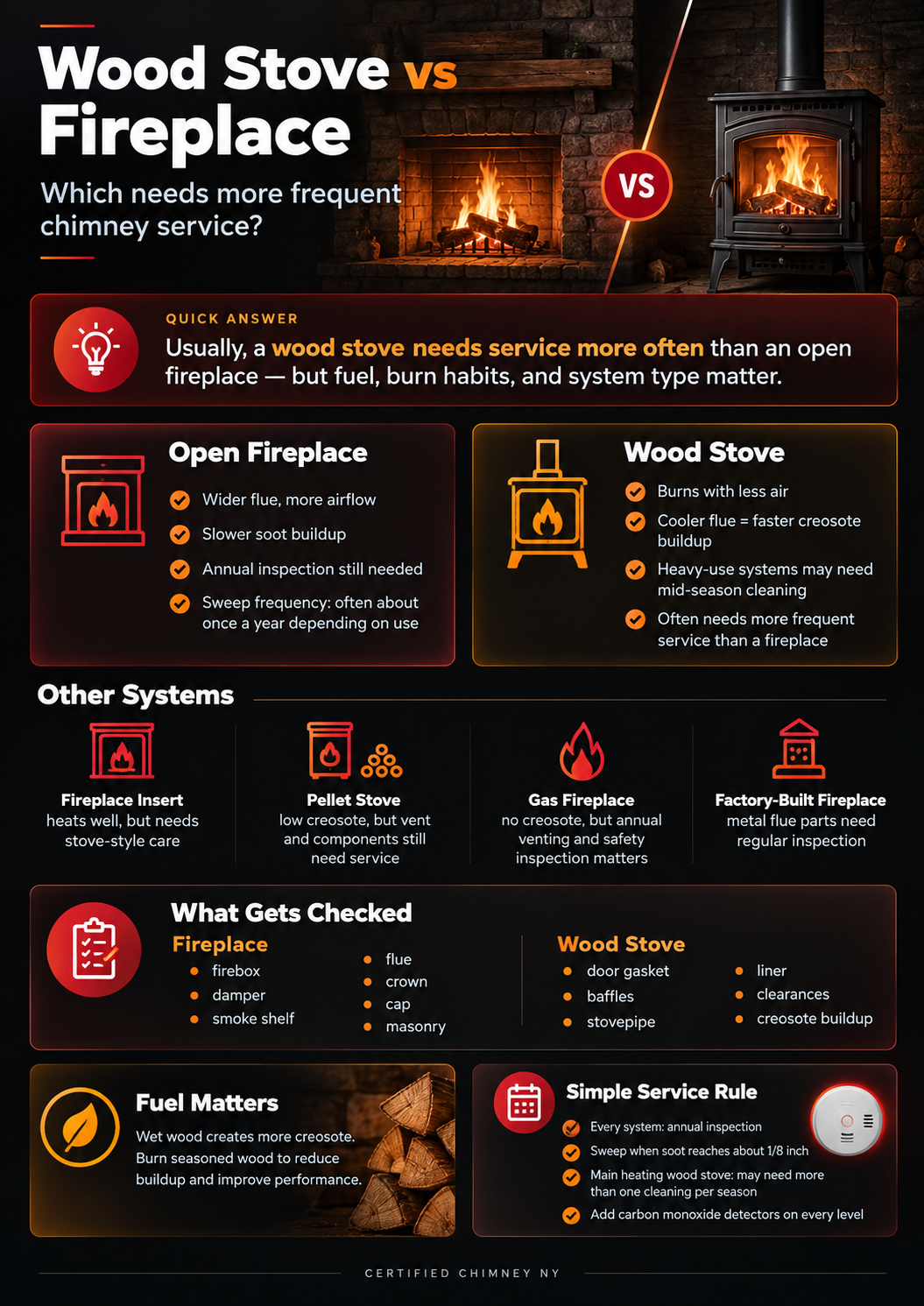
The throat damper, smoke shelf, firebox and flue all get checked, along with the crown and cap on the roof. Masonry fireplaces need the closest look at mortar, brick and the damper.
The glass door seal, gaskets, baffles and stovepipe connection matter, along with clearance to nearby walls. The stove flue needs a camera check because creosote hides where you cannot reach with a brush.
Our chimney inspection services cover both, and our chimney liner team can fit a stainless steel liner when a stove or insert is installed.
Wet wood is the biggest cause of heavy creosote. The EPA Burn Wise program says to burn seasoned wood that has dried for at least six months and notes that creosote buildup causes nearly 7 percent of home fires. Cleaning logs and other maintenance products can help a little, but they do not replace a real sweep and a chimney brush in professional hands.
A carbon monoxide detector on every level is the simplest safeguard, and it protects you whichever system you use. Good air flow helps too. If your fire is hard to start or smoke spills into the room, read our guides on improving chimney draw and spotting a blocked flue, and use our seasonal maintenance tips to stay ahead.
Is a stove safer than a fireplace? A modern, properly installed stove is more efficient, but safety depends on installation, fuel and maintenance, not the type.
Can I switch from a fireplace to a stove? Often yes, but the flue must be lined and sized to match the appliance.
Do I still need a sweep if I only burn pellets? Yes. The vent and fan still need an annual check.
Certified Chimney has served Nassau, Suffolk, Westchester, Putnam and New York City since 1995. Call 877-793-3712 or request a quote, and for urgent problems our 24/7 emergency service is ready.
Learn how summer weather can affect chimney liners, which warning signs to watch for, how inspections uncover hidden damage, and when repair or relining may be needed.
A chimney liner carries smoke, carbon monoxide, and other combustion byproducts out of the home while helping protect the surrounding masonry and combustible framing from heat and corrosive gases. A damaged liner can interfere with all of those functions.
Yes. Summer heat, humidity, thunderstorms, wind-driven rain, and water entering through a cracked crown, missing cap, or damaged flashing can affect the flue and surrounding chimney system. Animal nests and debris can also create hidden blockages while the fireplace is not being used.
Warning signs can include pieces of clay tile or flakes of metal in the firebox, rust on the damper, white staining on exterior masonry, water stains near the fireplace, smoky odors, poor draft, or smoke entering the room during a fire.
A more detailed inspection can use video imaging to examine the full length of the flue. The camera can reveal cracks, missing mortar, gaps, creosote buildup, blockages, and other damage that may not be visible from the fireplace opening or chimney top.
A Level 2 inspection includes a more detailed evaluation and typically uses video scanning inside the flue. A Level 3 inspection is used when serious hidden damage is suspected and may require opening or removing portions of the chimney or surrounding construction to reach the problem.
Some localized liner damage may be repairable, depending on the liner type and severity of the problem. More widespread cracking, missing sections, or deterioration may require relining with a new approved liner system.
No. A cracked or deteriorated liner can allow heat and combustion gases to escape outside the intended flue passage. The fireplace should remain unused until the chimney is inspected and the liner problem is properly addressed.
A fall inspection gives homeowners time to identify liner damage, schedule repairs or relining, and complete chimney cleaning before regular fireplace use begins. Booking before the first cold stretch can also help avoid the seasonal rush.
Have the flue inspected before fireplace season so cracks, gaps, blockages, or water damage can be addressed before regular winter use.
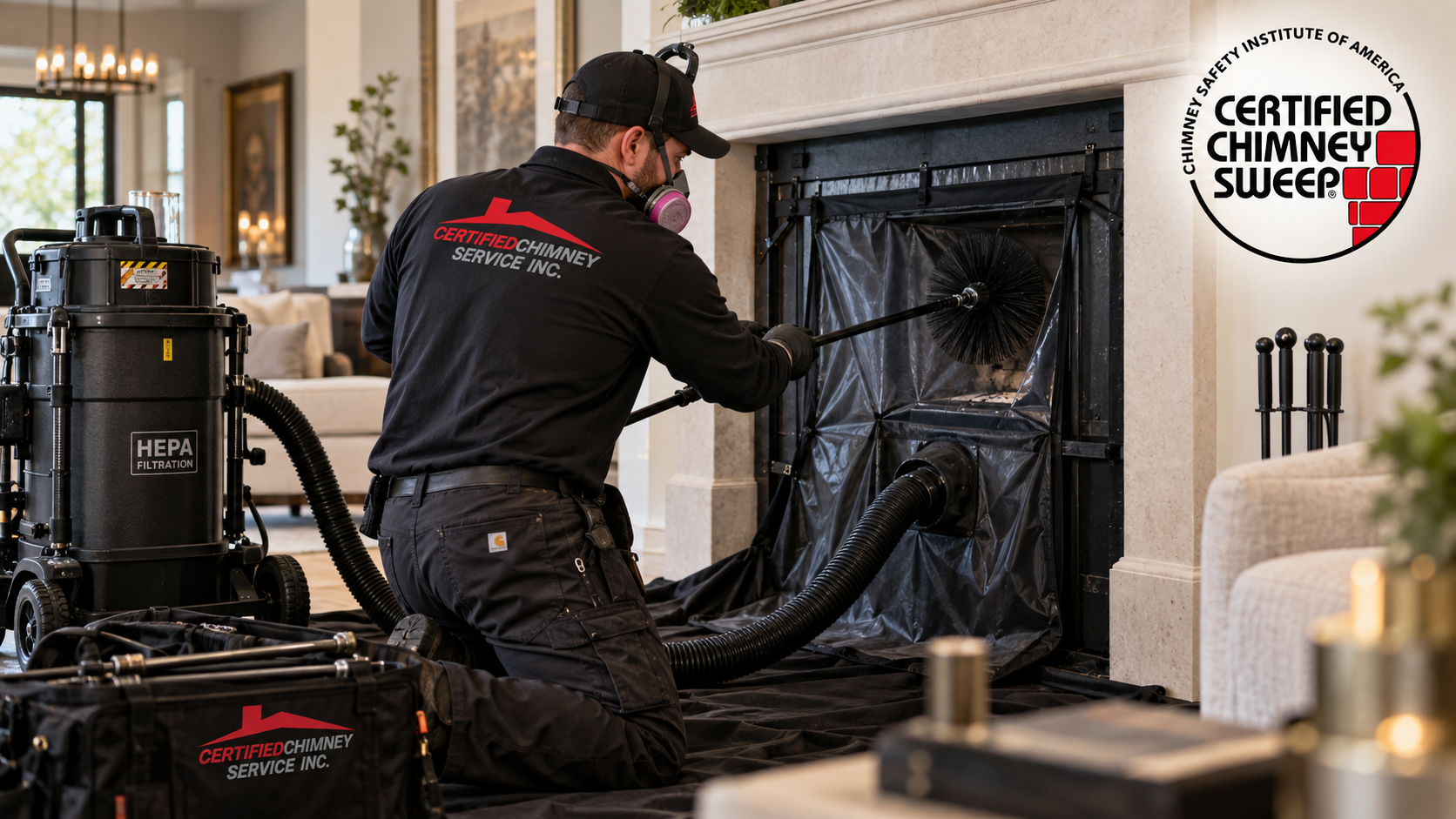
Covers fireplaces, wood stoves, pellet stoves, and heating systems including gas and oil systems. Book now before the winter rush fills our schedule.