
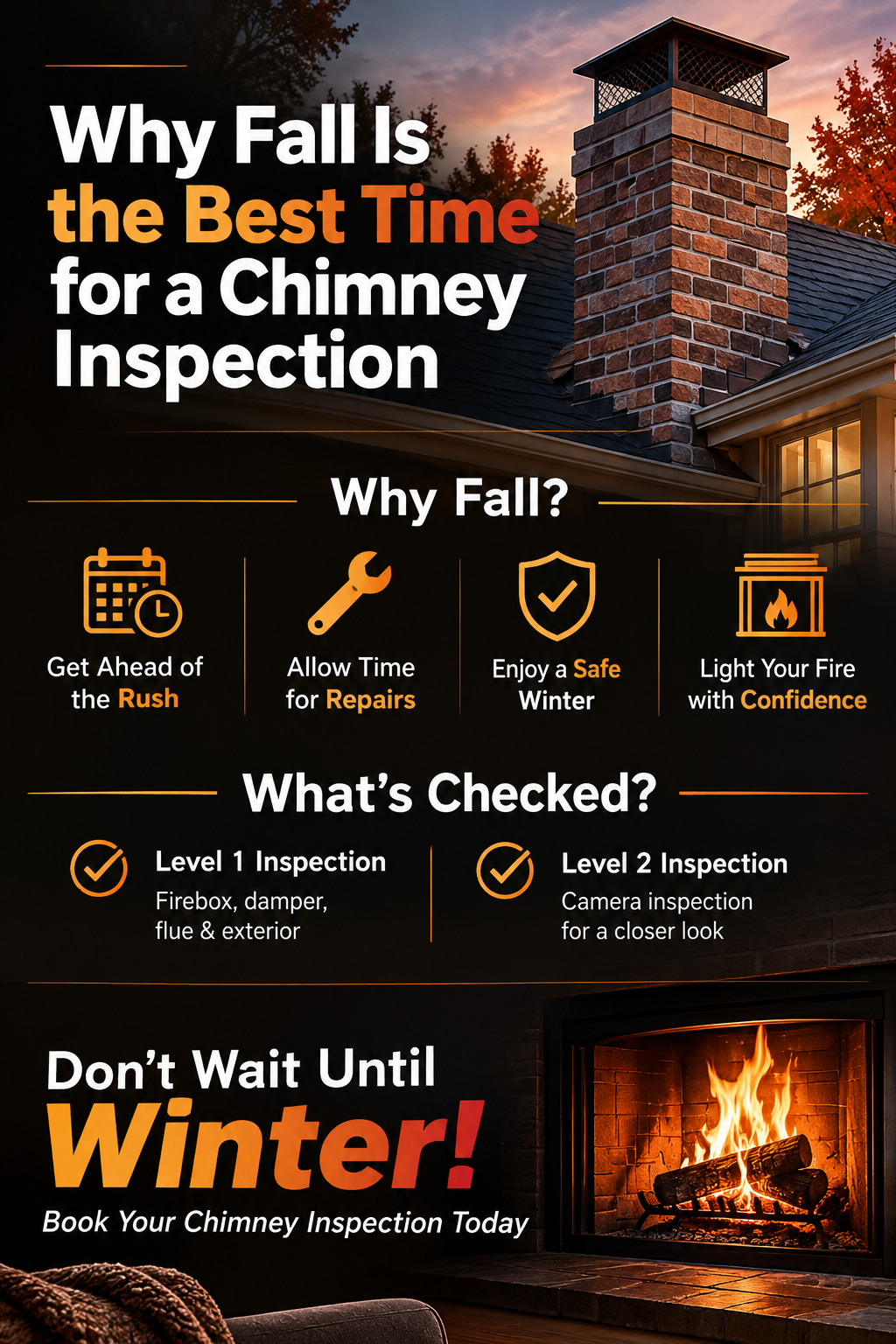
Book it in early fall. That is the short answer, and it comes down to timing. September and early October give you weeks of breathing room to inspect the chimney, fix whatever turns up, and still light the first fire on your own schedule. Wait until the first cold night and you are competing with everyone else who just remembered.
The National Fire Protection Association sets the baseline. Its NFPA 211 standard says chimneys, fireplaces and vents should be inspected at least once a year for soundness, freedom from deposits and correct clearances, and the Chimney Safety Institute of America repeats that on its own FAQ page. Fall is simply the best moment to do it.
Chimney sweeps tend to book up fast once the temperature drops. A homeowner who calls in November often hears the same thing: the earliest opening is weeks away. That leaves two bad options, waiting without a fire or lighting one in a chimney nobody has checked.
An inspection is only the first step. If it finds a cracked crown, a failing liner or loose mortar, those repairs need time to schedule, order materials and cure. Find the problem in September and the work is done before the heating season. Find it in December and you are stuck.
A Level 1 inspection covers the parts of the chimney we can reach without tearing anything apart. We look at the firebox, the damper, the flue and the exterior, and check for blockages, soot and obvious damage. It is the right choice for a chimney you have used regularly with no changes. Our chimney inspections page explains what is included.
A Level 2 goes further, using cameras to look inside the flue. It is recommended when you buy or sell a home, after a chimney fire, or after any major change to the chimney system, such as a new appliance. If you are buying, a real estate chimney inspection is worth doing before closing.
A chimney sits unused for months, and a lot can happen up there. Birds and squirrels build nests in the flue. Summer storms push water through a worn crown or failing flashing, and that leads to chimney leaks and crumbling brick that look fine from the ground. Animal nests and bird nests are more than a nuisance, because they block the flue and create fire hazards the moment you light a fire. If you hear animal noises in the fireplace, tell us before you burn anything.
Every wood fire leaves soot and creosote on the flue walls. Creosote is the tar like residue that ignites in a chimney fire. The EPA notes that nearly 7 percent of home fires are caused by creosote buildup in the chimney, and its Burn Wise program tells homeowners to have the chimney cleaned each year by a certified chimney sweep. A fall chimney inspection tells us how much has built up since last winter, and whether a chimney cleaning is due before the burning season starts.
A wood burning fireplace and a wood burning stove both burn solid fuels and leave creosote behind, so both need the full check. Gas fireplaces burn cleaner, but they still need an inspection, because venting problems and a damaged chimney liner can let combustion gases back into the house. If you have switched fuels recently, the liner may not match the new appliance. Not sure what you have? Look at the fuel, and then call us.
Think in three steps. In September, book the inspection and the chimney cleaning. In early October, handle any chimney repairs the report recommends. By the time the first cold snap arrives, the chimney is clear and the fire is ready to light. That seasonal schedule beats scrambling in December, and our guide to seasonal chimney maintenance covers what else to check.
Some problems cannot wait. Call right away if you notice smoke entering the room when you light a fire, a strong smell from the fireplace, bits of crumbling brick or mortar on the ground, a rusted damper, or the fire struggling to draw. Poor chimney draw can mean a blocked flue, and a blocked flue is dangerous. See our guides on how to tell if your flue is blocked and how to make a chimney draw better. For urgent problems, our 24/7 emergency service is available.
Do I need a chimney inspection if I only burn occasionally? Yes. NFPA 211 applies to little used chimneys too, because animals nest in flues and deterioration happens unnoticed.
How often should a chimney be swept? CSIA says masonry chimneys should be swept when soot reaches an eighth of an inch, or sooner if glaze is present. Many homeowners find an annual sweep with the inspection is simplest.
Is a chimney inspection the same as a cleaning? No. An inspection checks the condition of the chimney. A cleaning removes soot and creosote. We usually do both in one visit, and our 12 point fire and safety inspection covers the full system.
Certified Chimney has served homeowners since 1995 across Nassau County, Suffolk County, Westchester County, Putnam County and New York City. Call 877-793-3712 or request a quote, and we will get your chimney ready before the first fire.
Learn when to schedule a chimney inspection, what technicians check, when cleaning may be needed, and why early fall is a smart time to prepare your fireplace for New York's heating season.
Early fall is one of the best times to schedule a chimney inspection. September and early October give homeowners time to identify chimney problems, complete any needed repairs, and have the fireplace ready before regular cold-weather use begins.
Chimneys, fireplaces, and vents should generally be inspected at least once each year. An annual inspection can identify creosote buildup, blockages, damaged liners, masonry problems, animal nests, moisture damage, and other conditions that may affect safe fireplace operation.
A Level 1 inspection is the routine inspection used when the chimney system has not changed and there are no known problems. It generally includes accessible portions of the fireplace, firebox, damper, flue, chimney exterior, and visible venting components to check for deposits, blockages, and obvious damage.
A Level 2 inspection provides a more detailed evaluation and typically includes video scanning of the flue. It may be recommended after a chimney fire, when buying or selling a home, after major system changes, when changing appliances or fuel types, or when hidden chimney damage is suspected.
No. A chimney inspection evaluates the condition and safety of the chimney system. Chimney cleaning removes soot, creosote, ash, debris, and other buildup from the flue and fireplace system. Depending on the condition of the chimney, both services may be performed during the same visit.
Yes. Chimneys can develop problems even when they are used only occasionally. Birds or animals may build nests, moisture can damage masonry or flashing, chimney caps can deteriorate, and venting problems can develop while the fireplace sits unused.
Schedule service promptly if smoke enters the room, the fireplace has a strong or unusual odor, the fire struggles to draw, you hear animals inside the chimney, the damper is badly rusted, or pieces of brick, mortar, or flue tile appear in the fireplace. These can indicate a blockage, deterioration, or another condition that should be evaluated before additional fireplace use.
Yes. Wood-burning fireplaces and wood stoves can produce soot and creosote, while gas appliances still depend on safe venting of combustion gases. The chimney liner, flue, connections, and venting system should be appropriate for the appliance and remain in good condition.
Schedule your annual inspection early so there is time to clean the chimney, address repairs, and prepare your fireplace before the winter rush.
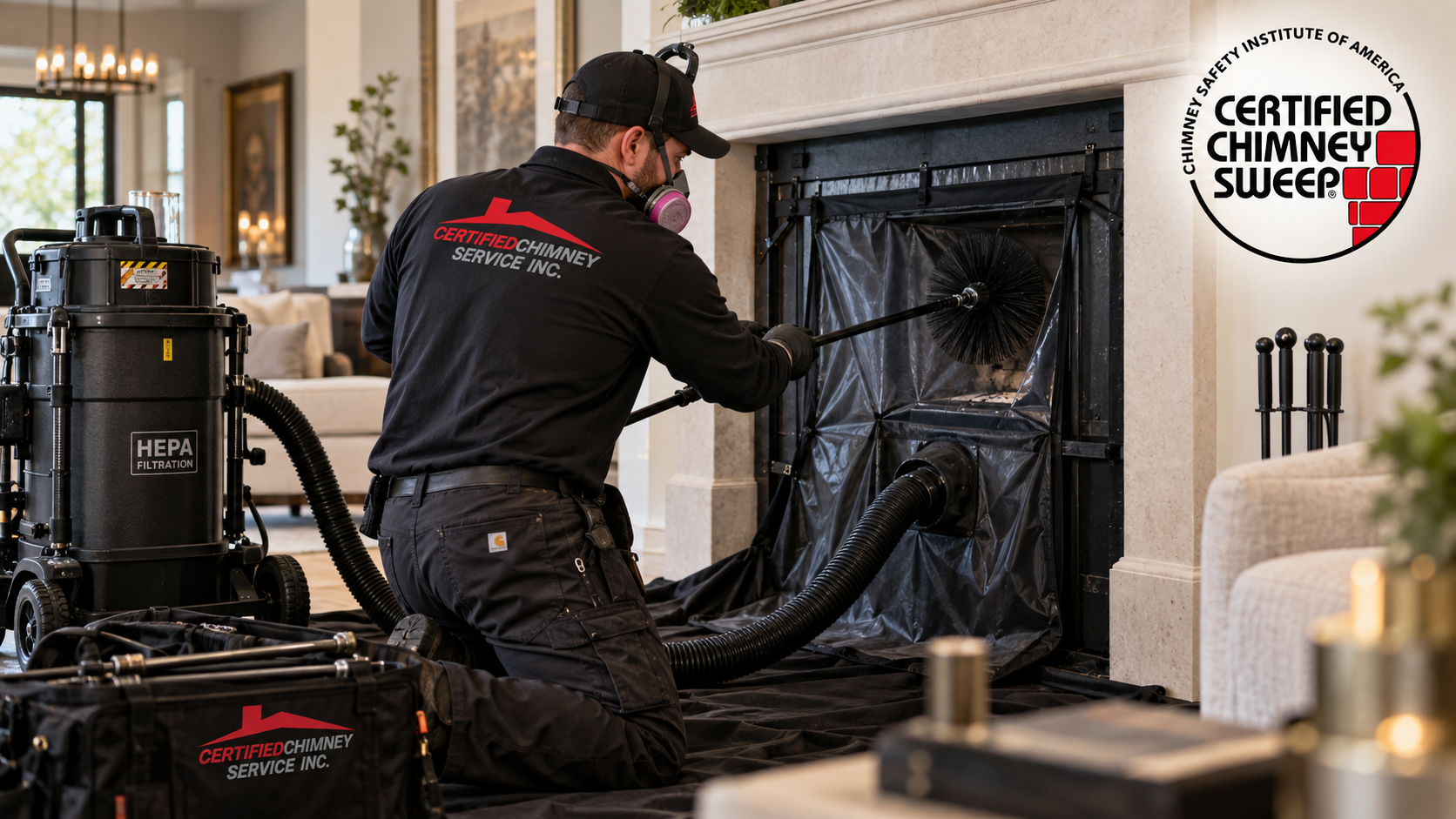
Covers fireplaces, wood stoves, pellet stoves, and heating systems including gas and oil systems. Book now before the winter rush fills our schedule.