
A chimney draws better when the chimney flue is clean, correctly sized, properly heated, free from blockages, and able to create enough pressure difference to move combustion gases outside. In New York homes, poor chimney draft can cause smoke backflow, creosote buildup, fireplace odors, carbon monoxide concerns, and lower fireplace efficiency. Common causes include a blocked chimney cap, cold flue, damaged chimney liner, negative pressure, exhaust fans, poor chimney height, wrong chimney diameter, or wet wood. Certified Chimney NY provides chimney inspection, chimney cleaning, chimney sweep service, chimney liners, masonry repair, and draft problem troubleshooting across New York.
Chimney draft is the upward movement of warm air, smoke, and combustion gases through the chimney system. It works because of the stack effect. Hot air inside the chimney flue is lighter than the colder outside air, so it rises and creates a pressure difference. A stronger temperature difference usually improves draft. If the flue gas temperature is too low, the chimney is blocked, or the house has negative pressure, the draft can weaken. That is when smoke may spill into the room instead of moving up the flue path.
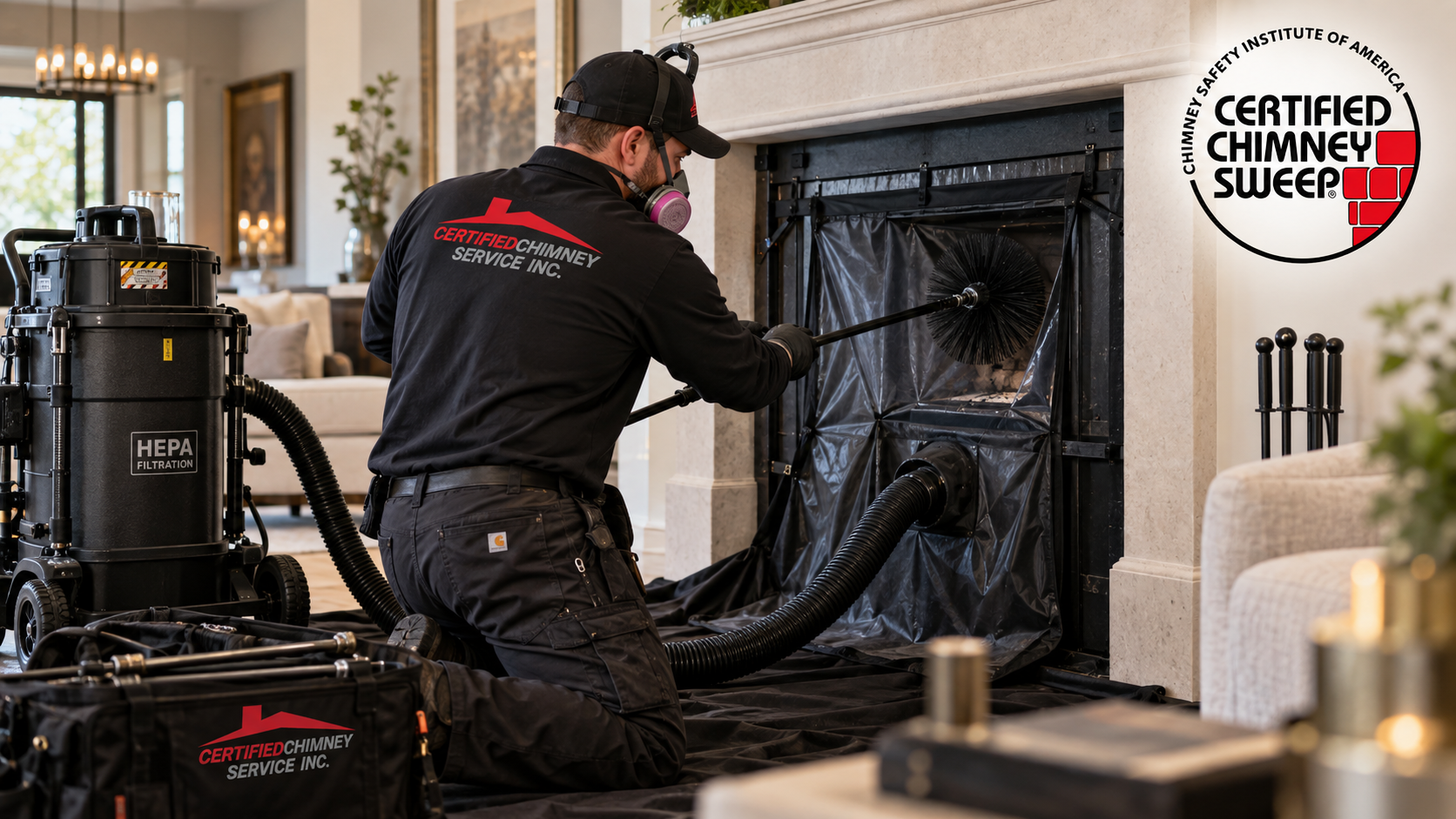
The first step is chimney inspection and chimney cleaning. Creosote deposits, soot, leaves, nests, and debris can narrow the chimney flue and reduce airflow. A chimney sweep can remove creosote buildup, check the smoke shelf, inspect the smoke chamber, and review the chimney cap, flue liner, and fireplace grate. CSIA follows NFPA 211 guidance that chimneys, fireplaces, and vents should be inspected once a year for soundness, deposits, and correct clearances. Cleaning also reduces chimney fire risk before draft changes are made.
Creosote buildup can cause drafting problems by restricting the chimney flue and cooling the venting path. A damaged flue, cracked clay flue, loose mortar, or collapsed liner can also block airflow. Stainless steel liners, insulated liners, and other chimney liners may improve draft when the old liner is damaged, oversized, undersized, or poorly matched to the appliance. A chimney professional can use smoke tests, infrared cameras, or inspection equipment to check for cracks or damage before recommending liner repair or chimney relining.
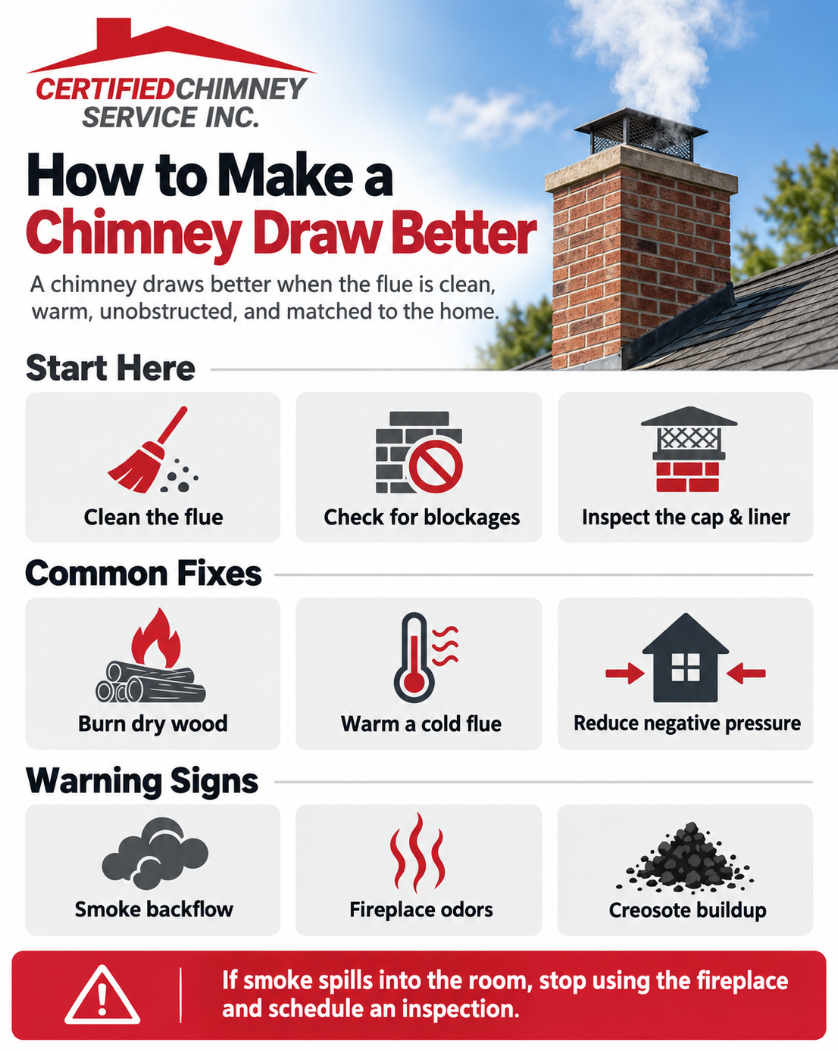
A chimney cap helps keep rain, leaves, animals, and debris out of the chimney flue. Some chimney caps and covers can also help reduce downdrafts caused by wind. If the cap is clogged, rusted, undersized, or poorly designed, it may restrict airflow. New York homes exposed to gale-force winds, coastal storms, or taller nearby structures may need a different cap design. Wind caps, draft-improving caps, or a properly fitted stainless steel cap may help in some cases, but the chimney should be inspected before changing parts.
Negative pressure happens when the house pulls air down the chimney instead of letting the chimney draw upward. Exhaust fans, kitchen hoods, clothes dryers, sealed windows, attic leaks, and some HVAC systems can create negative air pressure. If the house is acting like a better chimney than the chimney itself, smoke backflow may occur. Opening a nearby window slightly may improve draft temporarily, but the long-term solution may involve make-up air vents, air balancing, fireplace installation corrections, or ventilation system review.
If smoke spills into the room when exhaust fans are running, negative pressure may be the problem. Turn off kitchen fans, bathroom fans, and dryers before starting a fire. Make sure adjustable air vents are open when using wood burning systems, pellet stoves, masonry stoves, or wood stoves. Some homes may need make-up air vents or a combustion air source to support safe operation. A chimney technician can check whether the draft problem is caused by the chimney design or the home’s air pressure.
Burning dry, well-seasoned wood helps a chimney draw better because it creates hotter, cleaner combustion. Wet wood lowers flue gas temperature, increases smoke, and adds creosote buildup. A moisture meter can confirm whether firewood is dry enough to burn. Before building a full fire, some homeowners warm the flue with a small starter flame to reduce cold air sinking down the chimney. A fireplace grate, fire grate, or fire basket can also help position wood so air moves under the fire and improves combustion.
Chimney height, chimney diameter, and overall chimney design affect draft performance. A short chimney may not create enough draft, while an oversized flue may cool gases too quickly. The stove outlet size should match the liner and venting system. Masonry chimneys, factory-built chimneys, wood stoves, pellet stoves, and fireplaces all have different requirements. Building codes and manufacturer instructions matter before adding a taller chimney, draft regulator, chimney fan, draft inducer, draw collar, barometric damper, or other fireplace accessories.
Draft devices may help only after the cause of the poor draft is understood. A chimney fan, chimney ventilator, draft inducer, draw collar, or barometric damper may improve certain systems, but these devices are not a substitute for chimney cleaning, liner repair, masonry repair, or proper fireplace design. Installing the wrong device can make carbon monoxide or smoke problems worse. If the home has carbon monoxide alarms, smoke backflow, or repeated draft failure, stop using the fireplace until the system is inspected.
Certified Chimney NY helps homeowners improve chimney draft with chimney inspection, chimney cleaning, chimney sweep service, chimney liners, stainless steel liners, masonry repair, chimney cap service, chimney leak repair, fireplace safety checks, and venting solutions. Their team serves New York homeowners across Long Island, Nassau County, Suffolk County, Westchester, NYC, and nearby communities. If your fireplace has smoke backflow, poor draft, creosote odors, heat loss, carbon monoxide concerns, or a damaged flue, request service through Certified Chimney NY to diagnose the chimney system before using it again.
Learn what black soot can mean, when it may point to a combustion or venting problem, and when to stop using your gas fireplace and schedule professional service.
Black soot from a gas fireplace should not be ignored because it can indicate incomplete combustion, poor airflow, blocked venting, dirty burner ports, incorrect log placement, or another fireplace problem. Incomplete combustion can also increase concerns about carbon monoxide. If you notice visible soot building up on the logs, glass, walls, or fireplace opening, stop using the fireplace until the cause has been evaluated.
Common causes include dirty or clogged burner ports, ceramic logs that are positioned incorrectly, poor air intake, blocked vents, improper gas pressure, burner problems, or an incorrect air-fuel mixture. Flame impingement can also cause soot when the flame hits the logs in a way that interferes with clean combustion.
Yes. Any fuel-burning appliance can produce carbon monoxide if fuel does not burn completely or combustion gases are not vented properly. Problems such as blocked venting, restricted chimney flues, poor combustion, damaged components, or improper appliance setup can increase the risk. Working carbon monoxide detectors are an important safety measure in homes with gas fireplaces.
Flame appearance varies by fireplace model, so the manufacturer's instructions should always be followed. Many gas fireplaces are designed to have some yellow flame for appearance. However, flames that are unusually large, lazy, unstable, or producing heavy soot may indicate a combustion, airflow, burner, or log-placement problem that should be inspected.
If visible black soot is actively building up on the fireplace glass, logs, walls, or surrounding surfaces, it is safest to stop using the unit until it has been checked. Continued operation may allow the underlying combustion or venting problem to continue. A fireplace professional can inspect the burner, logs, venting, gas pressure, and combustion conditions.
Light surface dust may sometimes be cleaned using products and methods approved by the fireplace manufacturer. Heavy black soot should not simply be wiped away without identifying the cause. The soot may return if the burner, log placement, airflow, gas pressure, or venting system is not operating correctly.
Annual professional inspection is a good safety practice for fuel-burning fireplaces and venting systems. A technician can inspect the burners, ignition system, gas logs, venting, chimney flue, fireplace interior, and visible components while checking for soot buildup, blocked vents, damaged parts, or unsafe operating conditions.
A gas leak occurs when natural gas or propane escapes from a gas line, valve, fitting, or appliance connection. Natural gas is commonly odorized so leaks are easier to notice. Carbon monoxide is a colorless, odorless gas created by incomplete combustion. If you smell gas, leave the property and contact the gas utility or emergency services. If a carbon monoxide alarm sounds, leave the home and call emergency services.
Have the fireplace and venting system inspected before using it again.
Covers fireplaces, wood stoves, pellet stoves, and heating systems including gas and oil systems. Book now before the winter rush fills our schedule.