
Yes, black soot from a gas fireplace can be dangerous because it may point to incomplete combustion, poor venting, dirty burner ports, improper gas pressure, blocked air vents, or an incorrect air-fuel mixture. A small amount of dust inside the fireplace interior is common, but visible black soot buildup on ceramic logs, glass, fire logs, walls, or the fireplace opening should not be ignored. Certified Chimney NY provides chimney inspection, chimney sweeping, fireplace maintenance, chimney repair, masonry repairs, and professional cleaning for New York homeowners with gas fireplaces, gas logs, wood stoves, pellet stoves, and wood burning fireplace systems.
Soot buildup in a gas fireplace usually happens when the flame is not burning cleanly. Clean natural gas combustion should produce mostly heat, water vapor, and carbon dioxide. When combustion is incomplete, soot and carbon monoxide can become concerns. Common causes include clogged burner ports, misplaced ceramic logs, a dirty pilot light, a blocked venting system, poor air intake, a malfunctioning gas valve, gas regulator problems, or incorrect gas line pressure.
Flame impingement is another common cause. This happens when the flame burner touches the ceramic logs or fire logs in a way that blocks proper combustion. When the flame hits the logs incorrectly, black soot can form quickly. A yellow flame may look attractive, but if it is too large, lazy, or uneven, it may signal poor combustion efficiency. Pet hair, dust, blocked air intake shutters, dirty gas burners, and poor maintenance can also affect the air-fuel ratio.
Yes, a gas fireplace can cause carbon monoxide poisoning if combustion gases are not vented safely or if the appliance is not burning properly. CDC says carbon monoxide is an odorless, colorless gas that can cause sudden illness or death, and it can come from fireplaces, gas ranges, furnaces, stoves, grills, and other fuel-burning equipment.
Carbon monoxide risks may increase when the venting system is blocked, the chimney flue is restricted, the fireplace is dirty, or a vent-free gas fireplace is not operating correctly. Gas inserts, direct vent insert systems, vented gas log sets, vent-free gas log sets, natural gas fireplaces, and propane units all need proper setup, safety checks, and annual inspection. Homeowners should keep working smoke and carbon monoxide detectors near sleeping areas and living spaces. If a carbon monoxide alarm sounds, leave the home and call emergency services.
A gas leak and a carbon monoxide problem are not the same thing. A gas leak usually involves natural gas or propane escaping from a gas line, gas valve, or connection. Natural gas is commonly given a strong odor so leaks are easier to notice. Carbon monoxide has no smell and forms when fuel does not burn completely. If you smell gas, leave the home and call the gas utility or emergency services. If you see soot, smell unusual odors, or notice a weak pilot light, schedule fireplace service before using the system again.
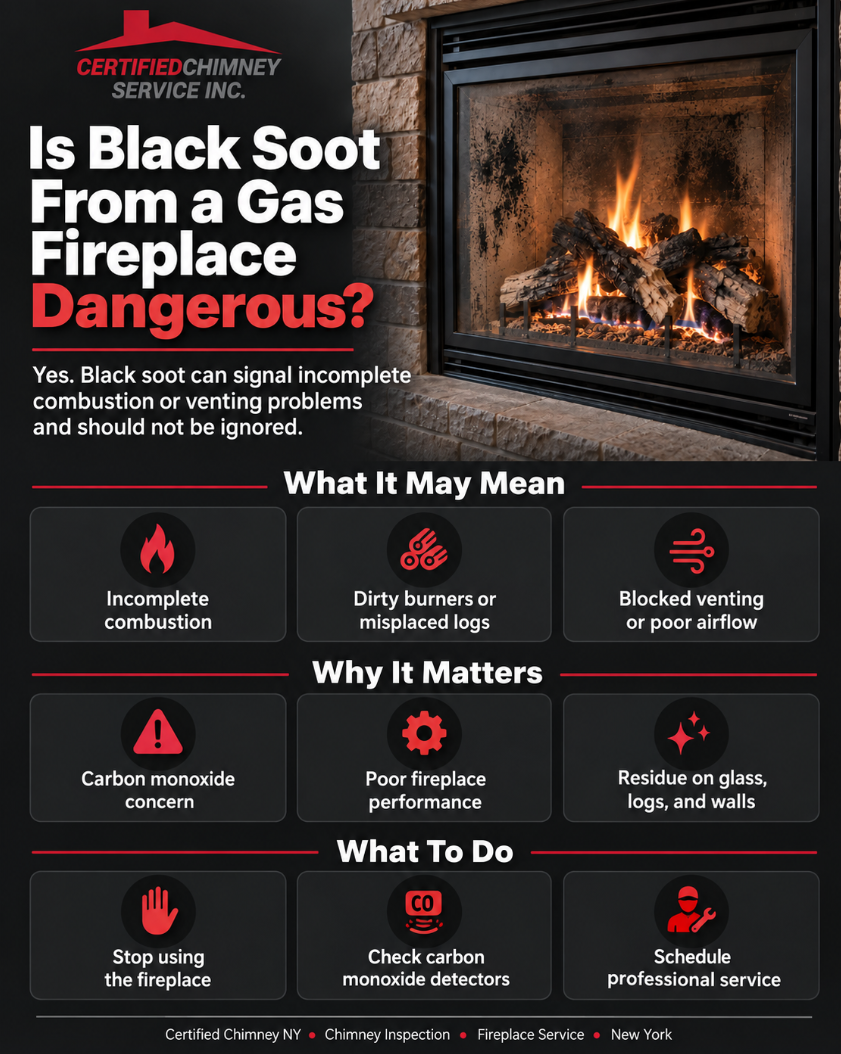
Before using a gas fireplace, check for black soot, unusual odors, delayed ignition, cracked glass, damaged ceramic logs, loose refractory cement, dirty burner ports, blocked air vents, and a pilot light that will not stay lit. The flame color should be stable and appropriate for the unit. Do not rearrange ceramic logs unless the fireplace manufacturer’s instructions allow it. Log placement affects flame pattern, combustion efficiency, and soot buildup.
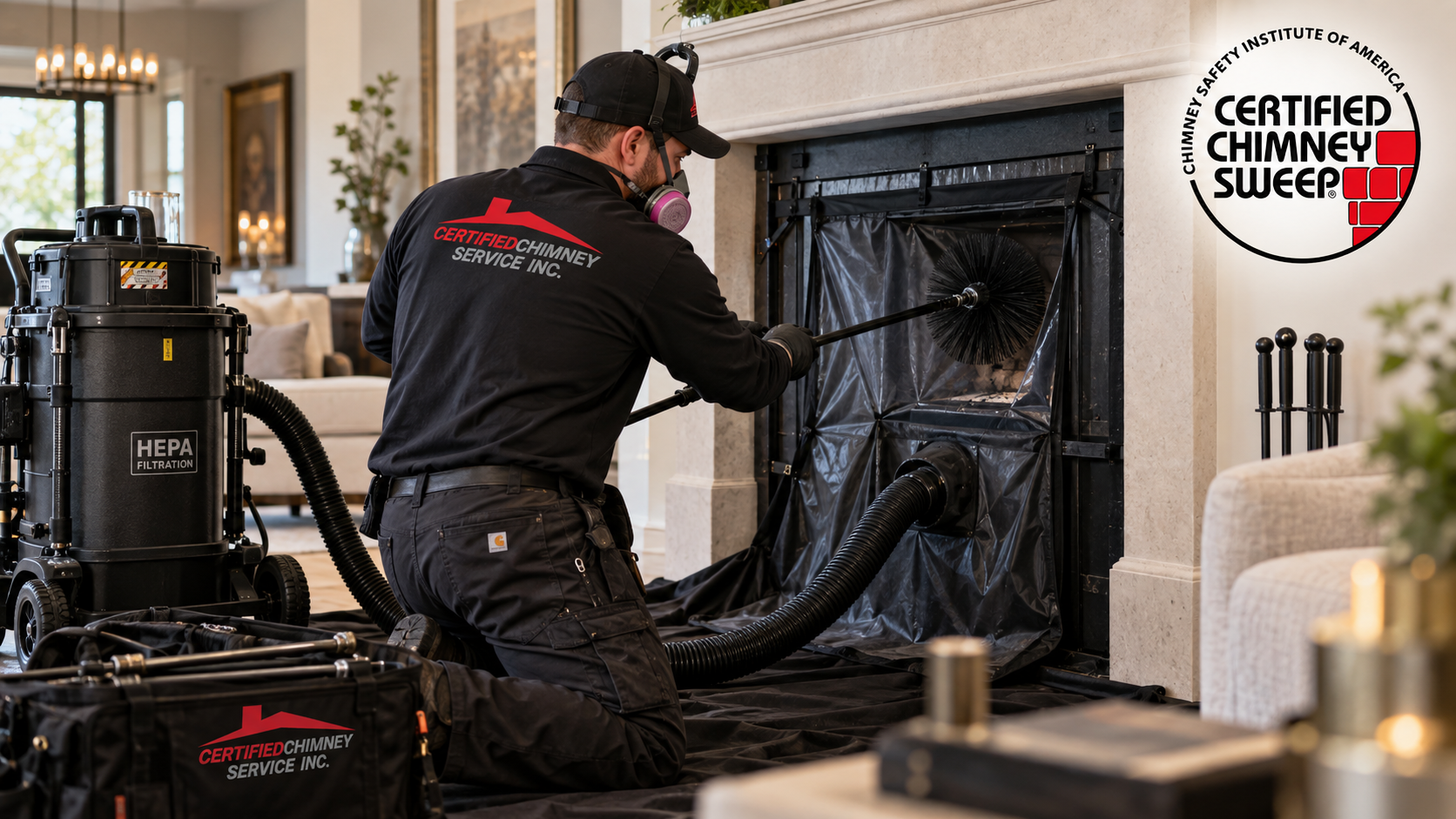
CPSC urges homeowners to schedule yearly professional inspection of fuel-burning home heating systems, including fireplaces, chimneys, flues, vents, furnaces, boilers, wood stoves, and water heaters. Annual inspection can help identify carbon monoxide hazards, blocked vents, chimney damage, and unsafe operation before the heating season. Professional cleaning may include a stiff-bristled brush, vacuum cleaner, cleaning tools, burner cleaning, glass cleaning, and inspection of the ignition assembly, gas burners, venting system, and fireplace interior.
Homeowners can sometimes wipe light surface dust from glass with approved products, but black soot buildup should be handled carefully. Do not use harsh chemicals, random cleaning tools, or a household vacuum cleaner inside the fireplace unless the manufacturer says it is safe. Soot can contain fine particles, and the underlying cause may be a safety issue. A professional can clean the gas log set, inspect the burner ports, check the air-fuel mixture, and determine whether the problem is maintenance, venting, gas pressure, or damaged components.
Certified Chimney NY helps New York homeowners address black soot, gas fireplace maintenance, chimney inspection, chimney sweeping, chimney repair, masonry repairs, fireplace maintenance, professional cleaning, and safety checks. If your gas fireplace has soot buildup, yellow flame problems, unusual odors, delayed ignition, carbon monoxide concerns, or visible residue on ceramic logs or glass, stop using it until it is inspected. Request service through Certified Chimney NY to schedule gas fireplace and chimney service before the next heating season.
Learn what black soot can mean, when it may point to a combustion or venting problem, and when to stop using your gas fireplace and schedule professional service.
Black soot from a gas fireplace should not be ignored because it can indicate incomplete combustion, poor airflow, blocked venting, dirty burner ports, incorrect log placement, or another fireplace problem. Incomplete combustion can also increase concerns about carbon monoxide. If you notice visible soot building up on the logs, glass, walls, or fireplace opening, stop using the fireplace until the cause has been evaluated.
Common causes include dirty or clogged burner ports, ceramic logs that are positioned incorrectly, poor air intake, blocked vents, improper gas pressure, burner problems, or an incorrect air-fuel mixture. Flame impingement can also cause soot when the flame hits the logs in a way that interferes with clean combustion.
Yes. Any fuel-burning appliance can produce carbon monoxide if fuel does not burn completely or combustion gases are not vented properly. Problems such as blocked venting, restricted chimney flues, poor combustion, damaged components, or improper appliance setup can increase the risk. Working carbon monoxide detectors are an important safety measure in homes with gas fireplaces.
Flame appearance varies by fireplace model, so the manufacturer's instructions should always be followed. Many gas fireplaces are designed to have some yellow flame for appearance. However, flames that are unusually large, lazy, unstable, or producing heavy soot may indicate a combustion, airflow, burner, or log-placement problem that should be inspected.
If visible black soot is actively building up on the fireplace glass, logs, walls, or surrounding surfaces, it is safest to stop using the unit until it has been checked. Continued operation may allow the underlying combustion or venting problem to continue. A fireplace professional can inspect the burner, logs, venting, gas pressure, and combustion conditions.
Light surface dust may sometimes be cleaned using products and methods approved by the fireplace manufacturer. Heavy black soot should not simply be wiped away without identifying the cause. The soot may return if the burner, log placement, airflow, gas pressure, or venting system is not operating correctly.
Annual professional inspection is a good safety practice for fuel-burning fireplaces and venting systems. A technician can inspect the burners, ignition system, gas logs, venting, chimney flue, fireplace interior, and visible components while checking for soot buildup, blocked vents, damaged parts, or unsafe operating conditions.
A gas leak occurs when natural gas or propane escapes from a gas line, valve, fitting, or appliance connection. Natural gas is commonly odorized so leaks are easier to notice. Carbon monoxide is a colorless, odorless gas created by incomplete combustion. If you smell gas, leave the property and contact the gas utility or emergency services. If a carbon monoxide alarm sounds, leave the home and call emergency services.
Have the fireplace and venting system inspected before using it again.
Article details:
Share:
Covers fireplaces, wood stoves, pellet stoves, and heating systems including gas and oil systems. Book now before the winter rush fills our schedule.