
In New York, chimney cleaning in 2026 usually costs about $150 to $400+ for a standard chimney sweep and basic inspection. The exact cost depends on the chimney type, fuel type, chimney height, creosote buildup, roof access, flue condition, and whether the home needs a Level 1 inspection, Level 2 chimney inspection, video scan, cap installation, crown repair, masonry repair, or dryer vent cleaning. National 2026 cost guides place the average chimney sweep around $254 to $255, but New York pricing can be higher because of labor rates, roof access, and cost of living.
The average cost to have a chimney cleaned in New York is usually in the low-to-mid hundreds for a normal fireplace cleaning. A simple chimney cleaning service may include chimney sweeping, soot removal, light creosote removal, fireplace cleaning, damper check, chimney cap review, and a basic visual inspection. Prices increase when the chimney system has heavy creosote accumulation, glazed creosote, smoke backflow, two-flue systems, wood and pellet-stove flues, damaged terra cotta flue tiles, or carbon monoxide issues that require more inspection time.
Chimney cleaning prices vary because no two chimney systems are exactly the same. A short masonry chimney with easy access may cost less than a tall chimney on a steep roof in New York City, Brooklyn NY, Park Slope, or another dense area. Chimney height, parking, roof pitch, metal roofs, chimney type, chimney cap condition, and the number of flues can all affect labor. A wood stove, insert, stove pipe, ash pit, or heating system flue may also require different tools and equipment than a standard open fireplace.
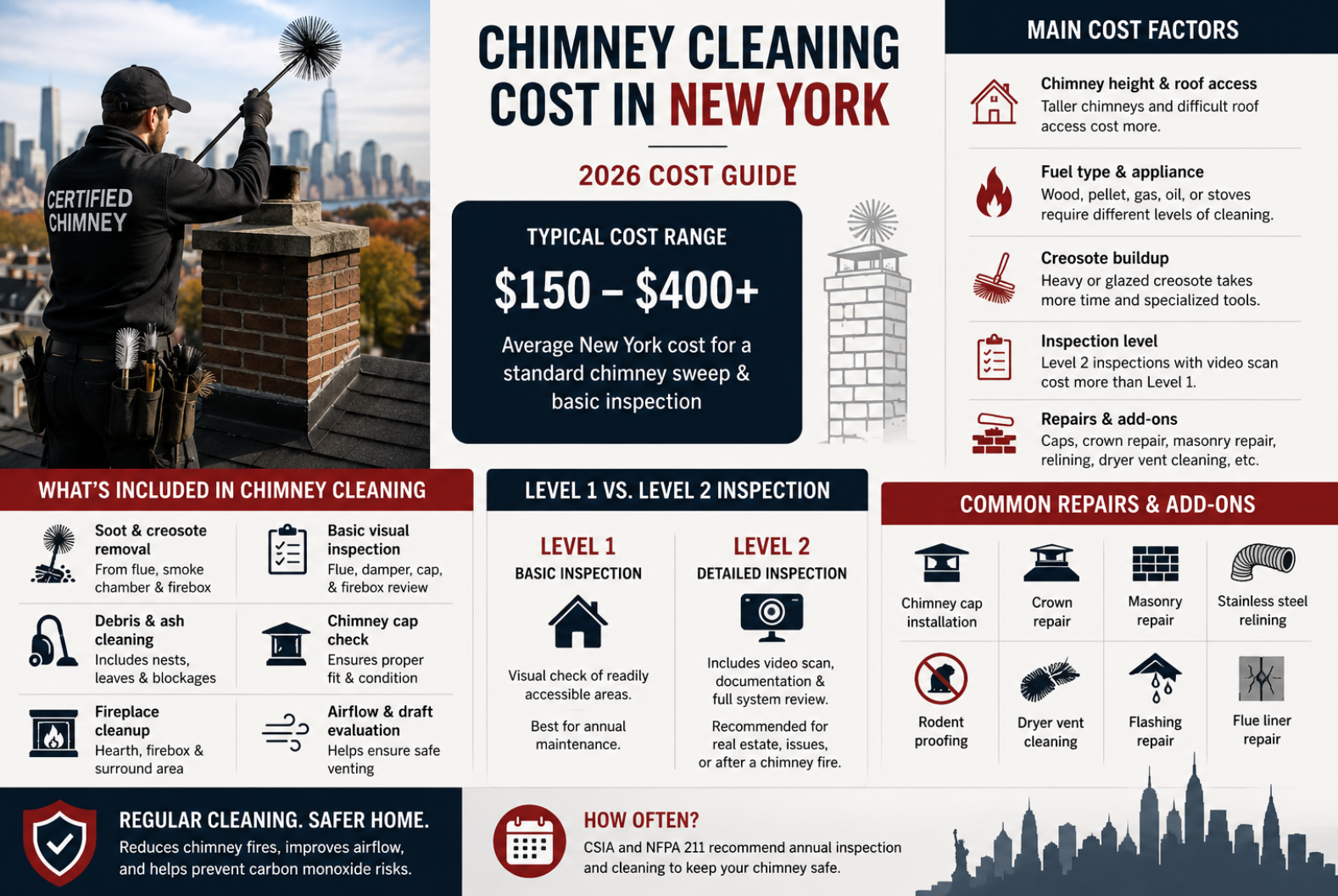
The biggest chimney sweep cost factors are access, buildup, inspection level, and repair needs. Heavy creosote buildup takes longer to remove than light soot. Glazed creosote may require specialized tools, chemical agents, or PCR treatment. A Level 2 inspection with camera inspections, image-scanning technology, video inspection, or a written inspection report can cost more than a basic Level 1 inspection. If the technician finds flue liner damage, chimney crown repair needs, masonry repair, or a missing chimney cap, those repairs are usually priced separately.
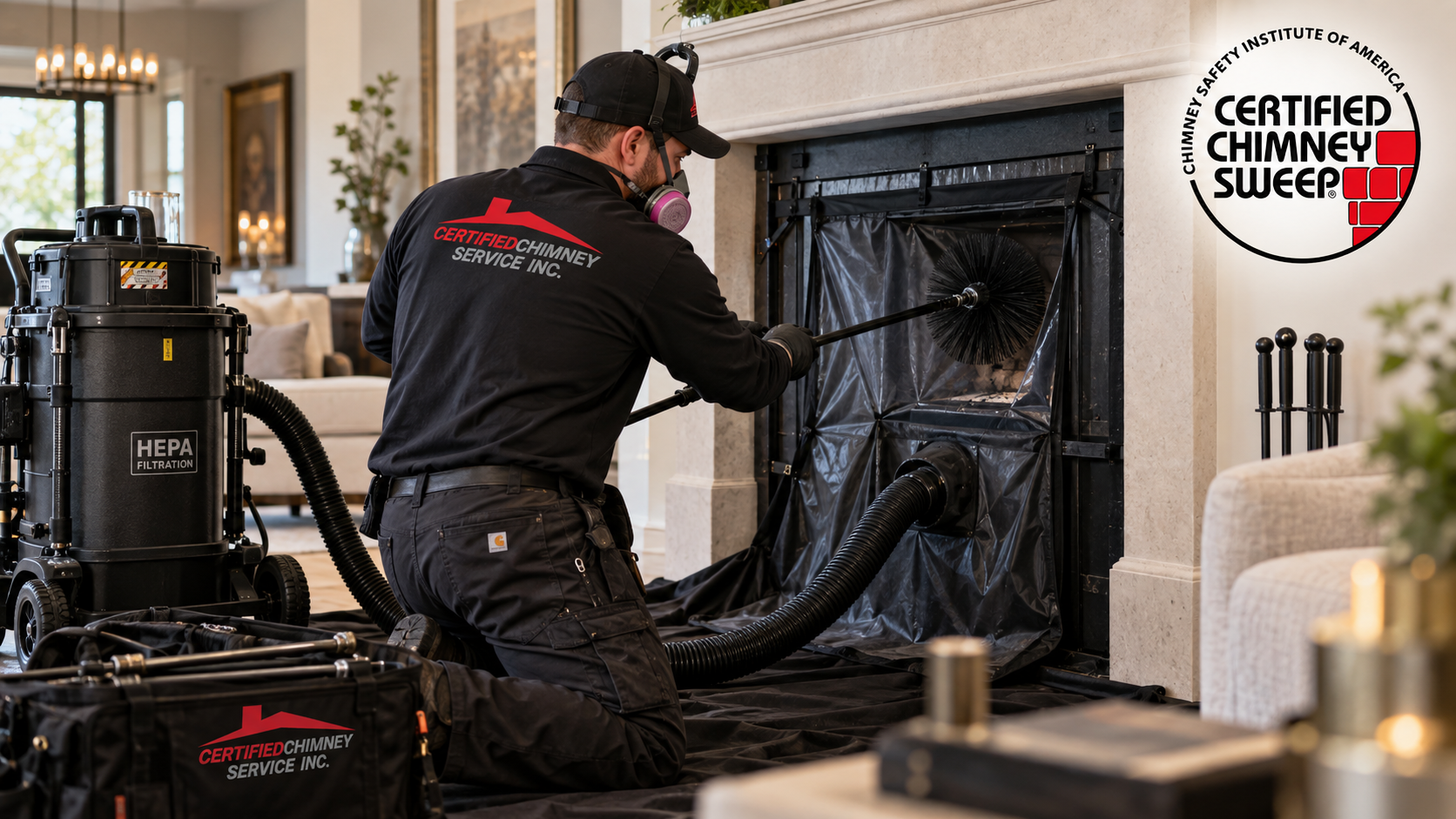
A chimney sweep removes soot, dirt and dust, creosote deposits, debris, ash, animal nesting material, and loose blockages from the chimney system. Professional cleaners may use brushes, rods, industrial vacuum cleaners, HEPA vacuum equipment, drop cloths, and inspection equipment to protect the home and clean the flue. Chimney sweep services may also include fireplace airflow optimization, smoke chamber review, damper door check, chimney cap inspection, and flue liner review. The goal is to reduce fire hazard concerns and help smoke and gases vent correctly.
Chimney sweeping helps reduce fire risks because creosote is combustible. If creosote buildup ignites inside the flue, it can cause a chimney fire and damage the flue liner, masonry, smoke chamber, and nearby chimney systems. CSIA says mechanical sweeping removes layers of creosote from the flue surface and removes loose soot and creosote from the chimney, fireplace, or wood stove. CSIA also follows NFPA 211 guidance that chimneys, fireplaces, and vents should be inspected at least once a year.
A Level 1 inspection is usually the basic inspection used when the chimney system has not changed and there are no known performance problems. It checks readily accessible parts of the chimney, fireplace, flue liner, and venting system. A Level 2 chimney inspection is more detailed and may include video scan documentation of the flue. A Level 2 inspection is often recommended when a home is sold, a new appliance is connected, a chimney fire is suspected, or the homeowner has smoke backflow, water damage, or carbon monoxide protection concerns.
Repairs can increase the total cost of chimney care. Common add-ons include chimney cap installation, chimney cap repair, chimney crown repair, crown repair, masonry repair, firebox repair, flashing repair, stainless steel relining, full liner install, rodent-proofing services, dryer vent cleaning, and vent maintenance. A damaged chimney cap can allow rain, animals, and debris into the flue. A cracked crown can let water reach the brick and mortar. A damaged flue liner can increase fire hazards and carbon monoxide concerns. Cleaning finds buildup, but repairs fix the source of bigger problems.
Chimney cleaning alone is not enough when the chimney has structural damage, cracked terra cotta flue tiles, missing mortar, water intrusion, rusted damper doors, damaged flashing, or a failed liner. It is also not enough when the fireplace has repeated smoke backflow or the heating system has venting issues. In those cases, the chimney sweep may recommend inspection services, chimney repairs, masonry repair, stainless steel relining, or a Level 2 inspection before the system is used again.
Choose a chimney sweep based on certification, insurance, inspection documentation, safety protocols, customer service, and clear pricing. Ask whether the company provides chimney cleaning, chimney sweeping, Level 1 inspection, Level 2 chimney inspection, camera inspections, creosote removal, chimney cap installation, masonry repair, and dryer vent cleaning. A qualified sweep should be able to explain the cost of cleaning, show photos or video scan findings, and recommend work based on the chimney’s condition. Avoid choosing only by the lowest price, especially if the chimney has not been serviced in years.
Certified Chimney NY provides chimney cleaning, chimney sweep services, chimney inspection, fireplace cleaning, creosote removal, Level 1 inspection, Level 2 chimney inspection, chimney cap installation, crown repair, masonry repair, dryer vent cleaning, and vent maintenance across New York. If your fireplace has smoke backflow, odor, creosote accumulation, water damage, carbon monoxide issues, or unknown service history, request service through Certified Chimney NY to schedule chimney cleaning and get a clear estimate for your home.
Get answers to common questions about dirty chimneys, carbon monoxide risks, blocked flues, chimney inspections, CO detectors, and fireplace safety in New York homes.
Covers fireplaces, wood stoves, pellet stoves, and heating systems including gas and oil systems. Book now before the winter rush fills our schedule.