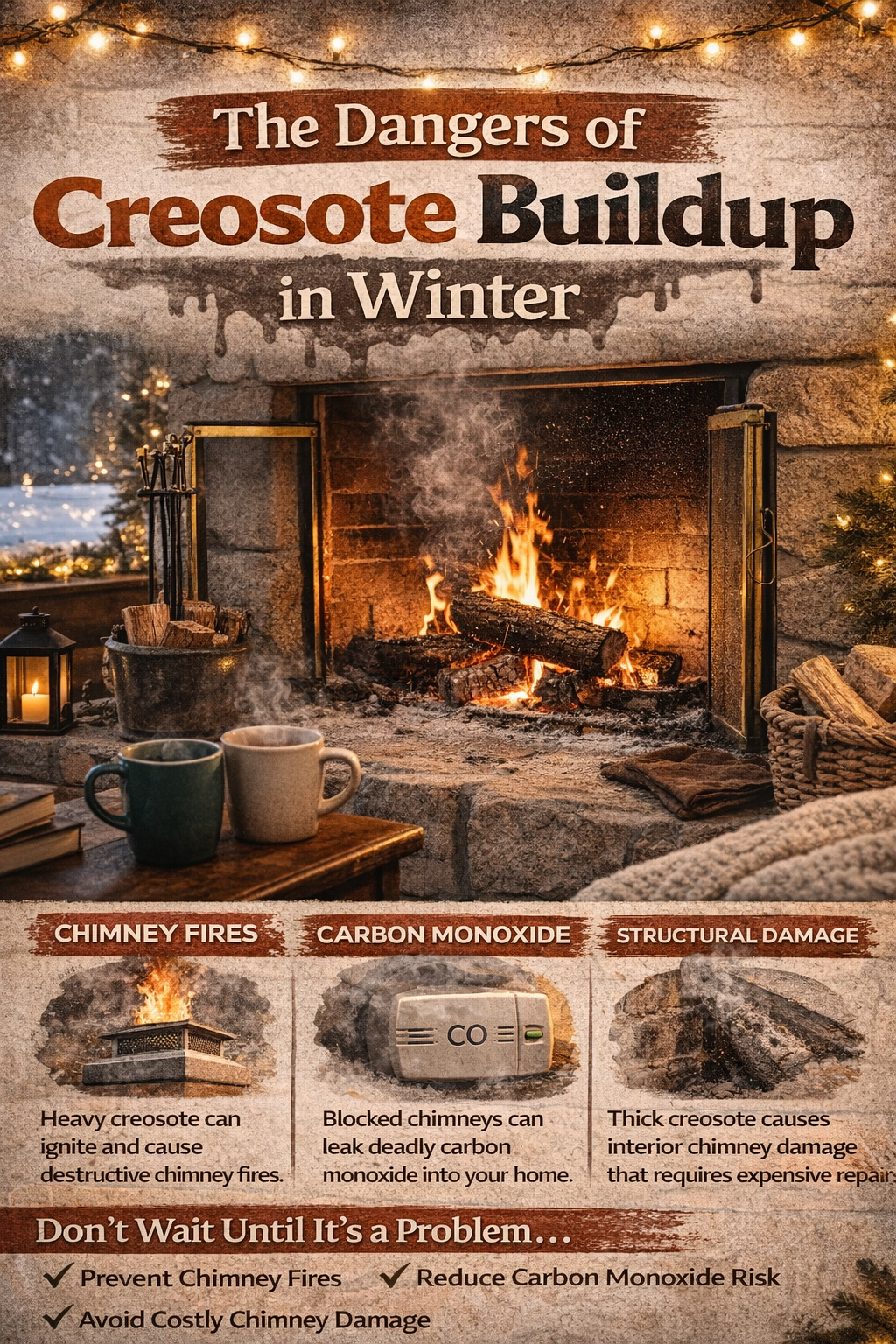
The Dangers of Creosote Buildup During Peak Winter Heating

If you rely on your fireplace or wood stove during the colder months, understanding creosote buildup can make all the difference in keeping your home safe. Many homeowners do not realize how quickly this flammable byproduct forms when winter temperatures drop, creating real risks like chimney fires, carbon monoxide exposure, and hidden structural damage inside the flue. 

Share:

Table of Contents

There is something comforting about lighting a fire on a freezing Long Island night, especially when the cold season settles in and the house feels quiet. Many homeowners I’ve spoken with tell me the same thing: they notice the fire burns differently during the colder months. A strong campfire smell, darker smoke, or even black soot stains on the surround. Most of the time, these are early signals of creosote formation, a flammable byproduct that quietly collects inside the chimney as you burn wood. The danger grows when winter hits its peak and families turn to wood stoves and fireplaces daily. That is when creosote can reach a dangerous level and increase the risk of house fires, carbon monoxide exposure, and structural deterioration inside the flue.

Understanding why creosote forms, when to worry, and how regular chimney inspections prevent these issues gives homeowners real peace of mind. Below is what Certified Chimney teaches families across Suffolk, Nassau, Queens, Brooklyn, and Connecticut every winter.

What Is Creosote and Why Does It Build Up Faster in Winter?

Creosote is the dark, sticky residue that forms from incomplete combustion. When wood does not burn hot enough, smoke particles condense along the cool walls of the flue and harden into deposits. Burning wet wood, smoldering or low-heat fires, poor airflow, and a closed damper all make buildup more rapid during the mid-winter season.

Because chimneys stay colder in the winter, creosote thickens more aggressively. This is why frequent cleaning, expert cleanings and a regular cleaning schedule are essential during the colder months.

How Creosote Forms Inside the Chimney System

After working with countless homeowners, I have learned that many assume creosote only forms when they burn “bad wood”. In reality, even seasoned hardwood produces creosote if the fire never reaches an efficient burn. Here is what typically causes the problem:

Poor Chimney Draft

A chimney that does not pull strong airflow sends more smoke back into the flue, where it cools too quickly. This can happen because of rusted dampers, partial blockages, a cold flue, or hidden damage inside the chimney liner.

Wet Wood or Low-Temperature Fires

Burning wet wood or firewood that has not fully dried forces the fire to burn cooler. Cooler smoke equals faster creosote buildup.

Loads of Wood With Limited Air Supply

When too many logs are stacked too tightly, smoldering occurs instead of cleaner burns. Low oxygen fires increase sticky glaze deposits that are extremely dangerous.

Fireplace Type and User Habits

Wood stoves with poor draft, older masonry fireplaces, or users who do not maintain perfect burning habits often see buildup between service appointments.

The Three Types of Creosote Deposits

Different homes show different signs, and each stage increases the risk of a catastrophic chimney fire.

StageDeposit TypeDescriptionRisk Level

Stage 1

Light deposits

Flaky residue that brushes off easily

Low but still needs a chimney sweep

Stage 2

Sticky glaze

Tar-like deposits that cling to the liner

High due to harder ignition

Stage 3

Hardened creosote

Dense, shiny, rock-like buildup

Extremely dangerous and requires professional chimney cleaning

These stages explain why Certified Chimney always stresses professional cleaning instead of trying to burn deposits off. Hotter fires will not remove creosote and may actually ignite it.

When to Worry About Creosote Buildup

Most homeowners start to worry after noticing thick soot, poor chimney draft, or difficulty keeping a fire lit. But there are also subtler signs:

Strong Campfire Smell Indoors

This often indicates creosote warming inside the chimney.

Black Soot Stains or Falling Debris

These are signs that creosote has begun to flake off, which usually happens as deposits reach a dangerous level.

Smoke Backing Up Into the Room

This is a sign of dangerous blockages or a failing chimney liner.

A Loud Roaring Sound

This is a sign of creosote igniting and requires immediate emergency response.

For additional safety guidance, the National Fire Protection Association recommends annual inspections for all wood-burning systems.

Health Risks: Can You Get Sick From Creosote?

Yes. Long-term exposure can irritate the skin, eyes, and respiratory system. More importantly, heavy creosote buildup increases the risk of carbon monoxide entering the home. Carbon monoxide is colorless and odorless, which is why mid-winter inspections are especially important when homes are sealed tightly for warmth. The CDC provides information on carbon monoxide hazards.

Why Professional Chimney Cleaning Matters During Peak Winter

Certified Chimney uses specialized brushes, inspection tools and professional cleaning methods designed to remove hardened creosote safely. Unlike DIY tools, professional equipment reaches the full height of the flue and identifies hidden damage that could affect insurance purposes later.

Homeowners also get expert advice on wood type, proper draft, and chimney cleaning frequency based on their fireplace type and burning habits.

Regular chimney cleanup provides long-lasting protection, especially for those who burn loads of wood during the cold season.

Burning Practices That Reduce Creosote Formation

Good burning habits make a remarkable difference. Homeowners across Long Island often tell us that once they switched to proper burning techniques, their mid-season inspections looked cleaner.

Use Seasoned Firewood Only

Properly seasoned hardwood burns hotter and reduces sticky glaze deposits.

Keep Fires Hot

Hotter fires promote efficient burn and limit incomplete combustion.

Ensure Good Airflow

Keep the damper fully open and avoid stuffing the firebox with too many logs.

Avoid Smoldering Overnight Fires

These low-heat fires are a major cause of heavy glaze buildup.

The EPA provides a helpful guide on wood-burning safety.

Does a Hot Fire Remove Creosote?

No. This is a common myth. A hot fire might burn off stage 1 flakes but will not remove stage 2 or 3 buildup. In fact, trying to “burn it off” is a major cause of chimney fires during mid-winter.

This is why Certified Chimney recommends expert cleanings rather than at-home attempts.

How Regular Inspections Prevent Catastrophic Chimney Damage

Certified Chimney often finds hidden damage during routine cleanings: cracked tiles, failing liners, rusted dampers, or poor chimney draft issues that homeowners never notice. Finding these issues early prevents structural deterioration and major repairs later.

A mid-season mark inspection provides peace of mind during the time of year when fires burn most frequently.

Final Thoughts and Practical Tips For Safer Winter Burning

Creosote is a natural byproduct of wood burning, but its risk becomes serious when homeowners skip inspections or rely on oversized fires to “clean the flue”. With the colder months pushing fireplaces and wood stoves into daily use, regular cleaning, smarter burning habits and professional chimney services are the key to protecting your home and family.

Certified Chimney encourages homeowners to schedule inspections before winter and again mid-winter if they burn heavily. With informed decisions and consistent maintenance, you get cleaner burns, safer fires, and peace of mind all season long.

Article details:

Share:

Winter Chimney Cleaning Special

Chimney Cleaning – $99.99 per flue