
The first hard frost has a way of exposing every problem a chimney picked up over the year. One cold morning you light a fire, smoke rolls into the room, and the winter season starts with a service call at the worst possible time. The better move is to read the warning signs now, while appointments are easy to get and repairs are not rushed.
Here is what Certified Chimney technicians look for first, and what you can spot yourself from the ground and from inside the house.
A sharp, smoky or tar like odor that gets worse on humid days usually points to creosote buildup. The smell is stronger in summer because moisture wakes the residue up. Foul smells can also mean animal nests or a dead animal in the flue.
If smoke spills into the room, the fire is hard to start, or flames look lazy, the chimney is not venting properly. Smoke backdrafts are more than an annoyance, because they bring carbon monoxide into living space. Start with our guide on how to tell if your flue is blocked, then read how to make a chimney draw better.
Soot on the firebox walls, dark streaks above the opening or stains on the ceiling near the chimney breast all signal incomplete combustion or leaks. Wood stove owners should check the pipe connections too.
Step outside with binoculars and look up. A chimney tells its story in the masonry long before it fails inside.
Spalling brick, white powder and open mortar joints let water in. Water infiltration, also called water intrusion or moisture intrusion, is the main cause of structural issues in masonry chimneys, and freezing weather makes every small crack bigger.
The chimney crown is the concrete slab on top, and a cracked one sends water straight down the walls. A rusted or missing chimney cap or rain cap invites animals, debris and rain. Cap replacements are inexpensive compared with the water damage they prevent, and chimney waterproofing protects the brick that is left.
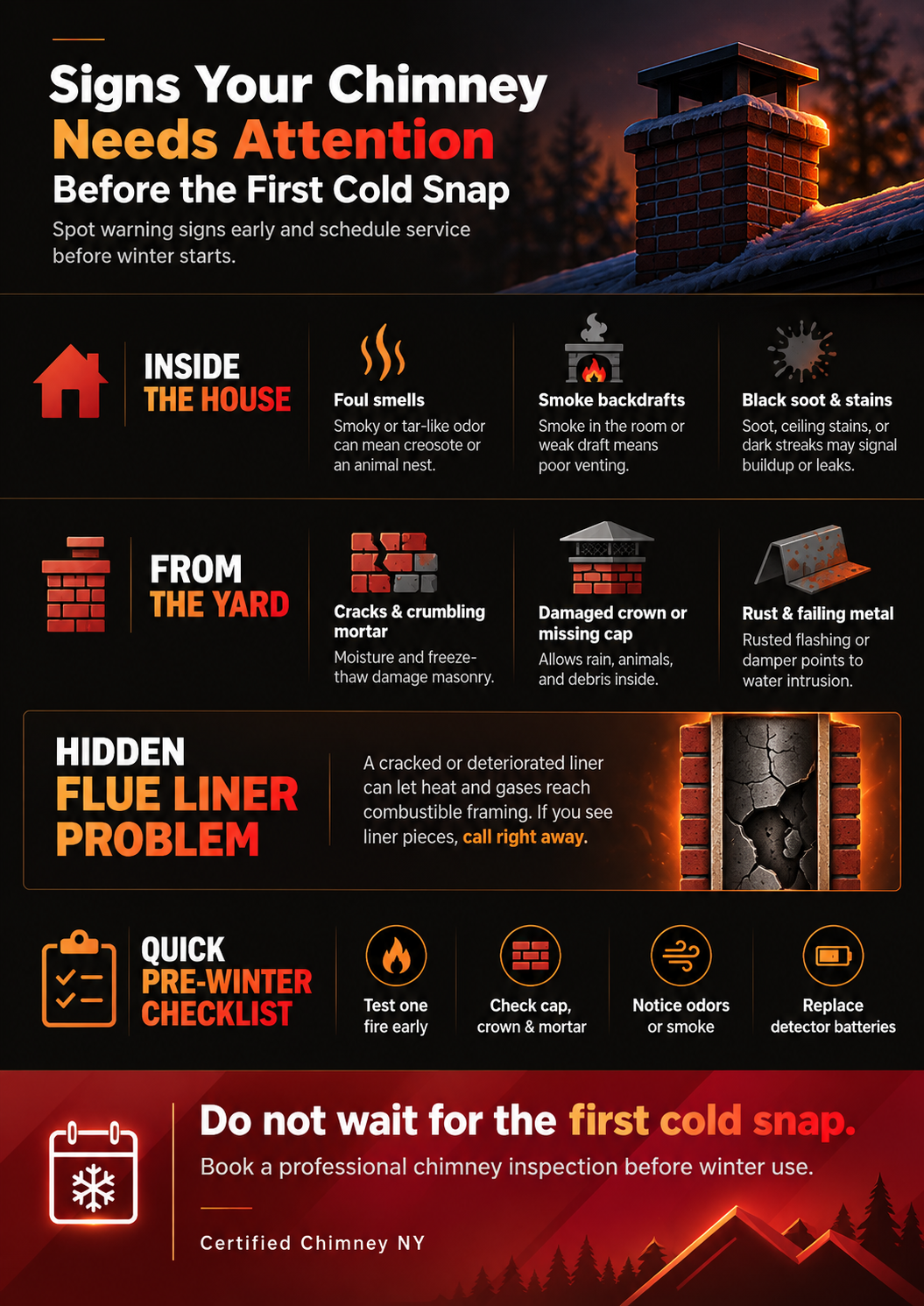
Rust streaks, a corroded damper or loose flashing show that water is getting past the metal components. Left alone, flashing leaks reach the roof deck and ceiling, and water leaks inside the home are far more expensive to fix than the flashing itself.
A cracked or deteriorated chimney liner is one of the most dangerous hidden problems, because heat and gases escape toward combustible framing. Pieces of flue liner in the firebox or a flue that looks rough with a flashlight are clear signs to call. A chimney system works only if every layer is intact.
Chimney fires and carbon monoxide poisoning both peak when heating season starts. The EPA notes that nearly 7 percent of home fires are caused by creosote buildup in the chimney. The same page recommends seasoned hardwoods and an annual cleaning by a certified chimney sweep. Gas fireplaces need attention too, since a blocked vent still produces carbon monoxide.
Standards back this up. The National Fire Protection Association calls for annual inspection, and the Chimney Safety Institute of America FAQ explains why. The National Chimney Sweep Guild offers similar guidance on fireplace maintenance. A smoke or carbon monoxide detector on every level is the cheapest safeguard you can add.
Light one test fire in the early fall and watch the draft. Look at the cap, crown and mortar from the yard. Sniff the fireplace for odors. Check the detector batteries. Anything that looks wrong gets scheduled before the cold arrives, not after.
Do not light a fire if you see smoke backdrafts, smell gas or find cracked liner pieces. Book a professional chimney inspection. If buildup is the issue, chimney cleaning comes next, and chimney repair follows when the inspection finds damage. Our seasonal maintenance tips help you keep up between visits, and for urgent problems we offer 24/7 emergency service.
How often should a chimney be inspected? At least once a year, before you use it for the winter season.
Can I use the fireplace if I smell something odd? No. Have it checked first, since the cause could be buildup, animals or a damaged flue.
Are gas fireplaces safe without a check? Not always. Venting, valves and the chimney flue all need an annual look.
Certified Chimney has served homeowners since 1995 across Nassau, Suffolk, Westchester, Putnam and New York City. Call 877-793-3712 or request a quote and we will find the problem before the first cold snap does.
Learn which chimney problems should be addressed before winter, what common warning signs mean, and when you should stop using your fireplace until the system is inspected.
Chimneys, fireplaces, and venting systems should generally be inspected at least once each year. Scheduling an inspection before the heating season gives homeowners time to address creosote buildup, damaged masonry, blocked flues, liner problems, and other issues before regular winter use.
A strong smoky or tar-like fireplace odor may indicate creosote buildup. Odors can become more noticeable during warm or humid weather. Animal nests, debris, moisture, or a dead animal inside the flue can also create unusual fireplace smells.
Smoke entering the room can indicate poor chimney draft, a blocked flue, creosote buildup, an animal nest, a damaged venting system, or another airflow problem. Stop using the fireplace and have the chimney evaluated before lighting another fire.
From the ground, look for cracked or spalling bricks, open mortar joints, white staining, a damaged chimney crown, a missing or rusted chimney cap, loose flashing, and visible masonry deterioration. These conditions can allow moisture into the chimney and worsen during freeze-thaw cycles.
Yes. A cracked or deteriorated chimney liner can allow heat, smoke, and combustion gases to reach areas outside the intended flue passage. Pieces of flue tile in the firebox or visible liner damage should be evaluated before the fireplace is used again.
Water can enter small cracks in brick, mortar, and the chimney crown. When temperatures drop, that moisture can freeze and expand. Repeated freeze-thaw cycles may enlarge cracks, loosen mortar, and contribute to spalling and deeper masonry damage.
It is safer to have the chimney checked first. Unusual odors, poor draft, smoke backflow, rusted components, or debris inside the fireplace may indicate a blockage, creosote buildup, water damage, liner deterioration, or another condition that can affect safe venting.
Yes. Gas fireplaces burn cleaner than wood-burning systems, but they still rely on proper venting. A blocked flue, damaged liner, poor draft, or venting problem can interfere with the safe removal of combustion gases, including carbon monoxide.
If you notice smoke, odors, damaged masonry, poor draft, or signs of flue damage, have the chimney checked before regular winter use begins.
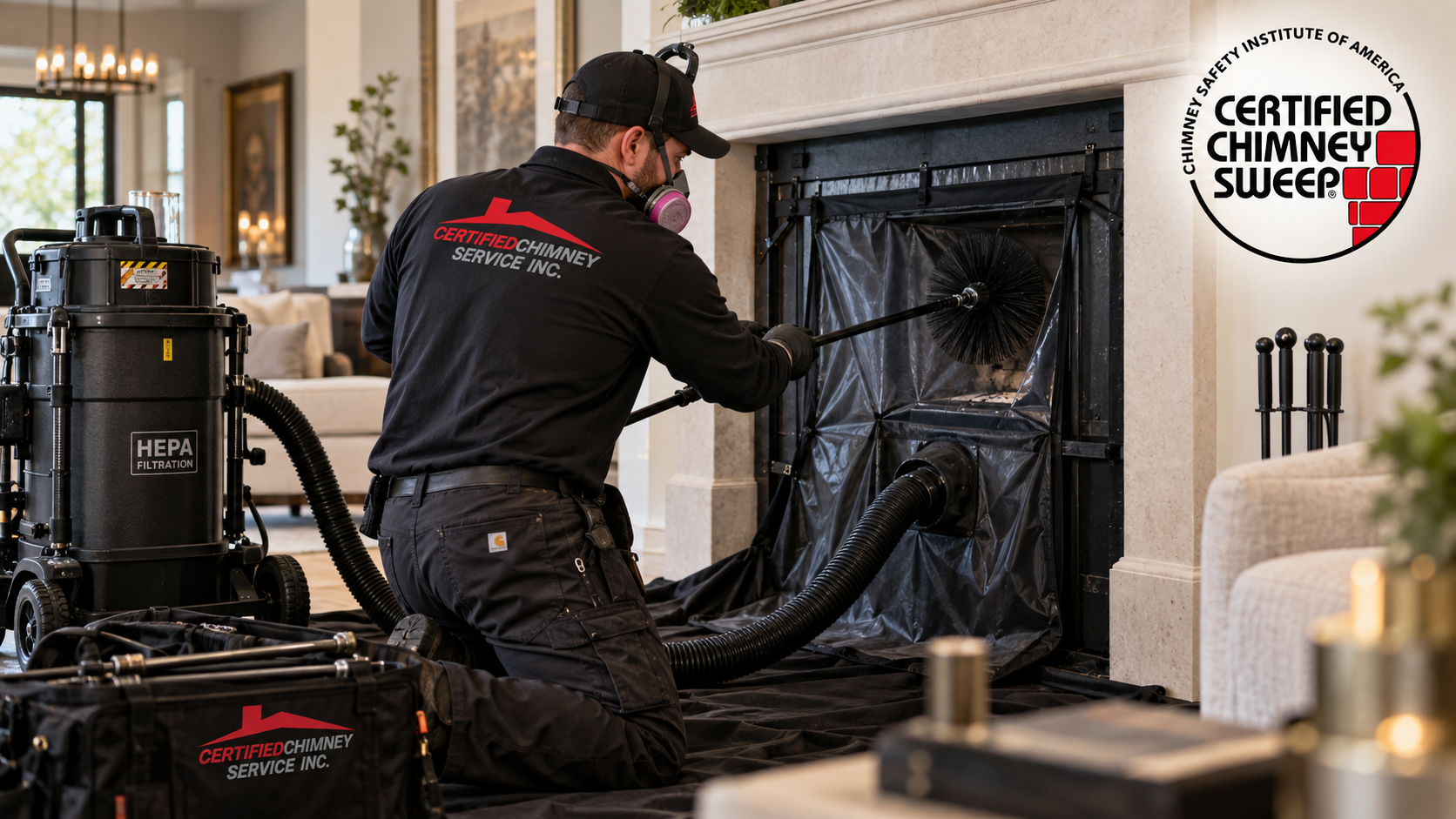
Covers fireplaces, wood stoves, pellet stoves, and heating systems including gas and oil systems. Book now before the winter rush fills our schedule.