
Yes, some apartments share a chimney, but they should not share the same flue unless the chimney system was specifically designed, approved, and maintained for that setup. In New York apartment buildings, co-op buildings, brownstones, townhouses, and multistory homes may have one chimney structure with multiple separate flues inside it. Each flue may serve a different fireplace, gas furnace, water heater, or other combustion appliance. Certified Chimney NY provides chimney inspection and chimney sweeping services for New York properties with fireplaces, shared chimney systems, chimney liners, chimney caps, and venting concerns.
A shared chimney system usually means multiple apartments or appliances use the same chimney structure, not necessarily the same chimney flue. One masonry chimney may contain separate flue liners for different units or appliances. For example, one flue may serve a wood-burning fireplace, while another serves gas furnaces or a water heater. This separation matters because flue gases, smoke, carbon monoxide, and combustion byproducts must vent safely. If a shared chimney flue is overloaded, damaged, or connected incorrectly, fire safety and carbon monoxide risks can increase.
Two apartments should not assume they can use the same flue. Shared flue systems need to be evaluated based on chimney capacity, appliance type, fuel type, building regulations, and safety codes. Wood-burning fireplaces, gas fires, balanced flue gas fireplaces, flueless gas fireplaces, and combustion appliances have different venting requirements. A chimney service professional can inspect the chimney liner, flue relining needs, chimney cap, mortar joints, and chimney venting before any fireplace is used. If the system is unsafe, chimney liner installation or venting corrections may be needed.
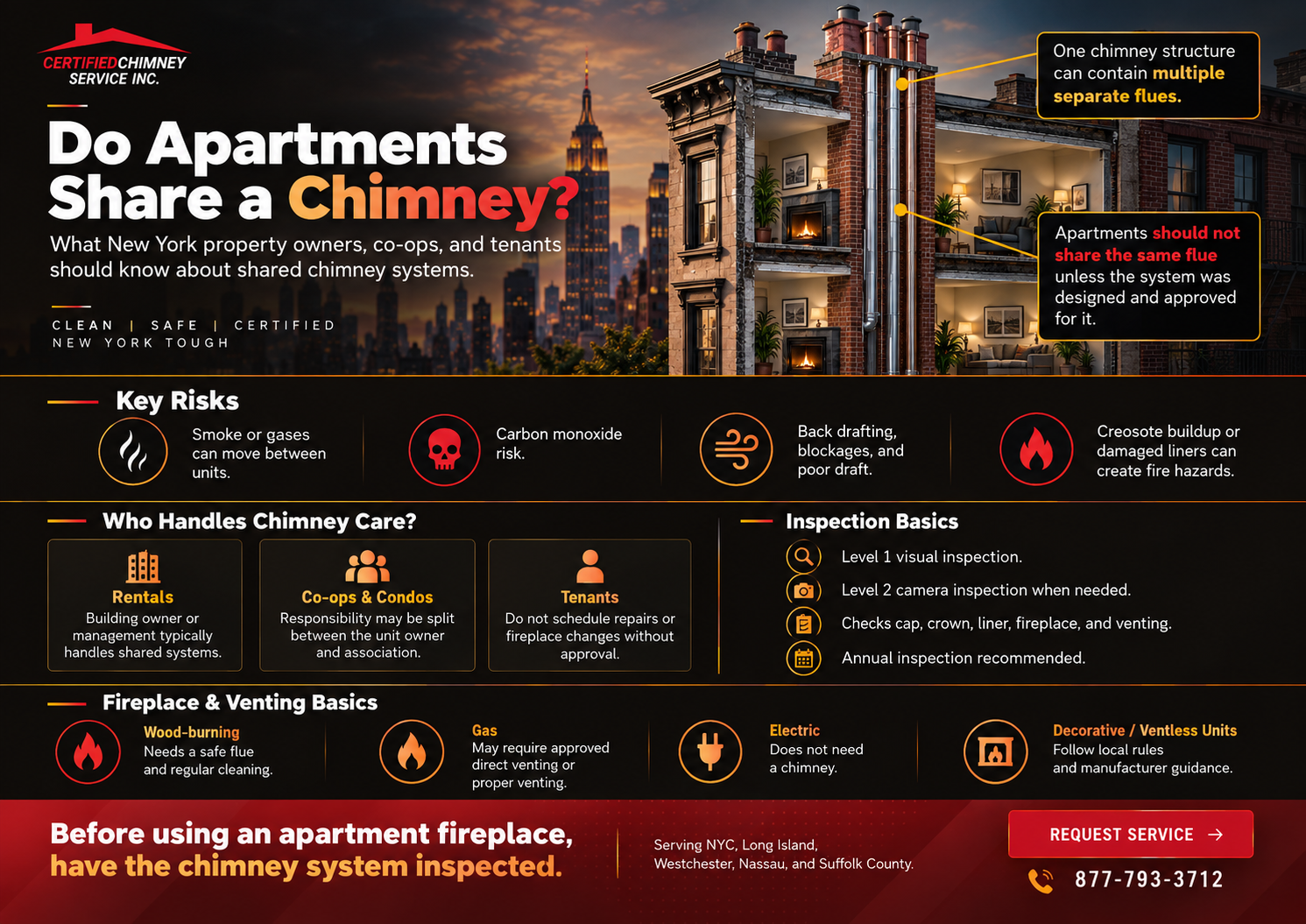
A shared chimney flue can become risky when smoke, carbon monoxide, or flue gases from one unit move into another unit. Back drafting, creosote buildup, poor draft, blocked flues, missing chimney caps, and damaged liners can all create safety issues. A blocked or undersized flue can also cause combustion byproducts from gas furnaces or water heaters to spill into living areas. This is why carbon monoxide detectors, smoke alarms, chimney cleaning, and professional maintenance are important in multi-unit dwellings.
Responsibility depends on the lease agreement, co-op rules, condominium agreement, homeowners’ association documents, and building ownership structure. In many rentals, common areas and shared building systems are handled by the property owner or building management. In co-op buildings or condominiums, responsibility may be split between the unit owner and building association. Tenants should not schedule major chimney repairs, flue relining, or fireplace modifications without approval. The safest step is to review the lease or building agreement and ask management who handles chimney inspection, chimney sweeping, and fireplace maintenance.
A chimney inspection may include a Level 1 visual inspection, Level 2 checkup with camera equipment, or more detailed review if damage is suspected. The technician may inspect the chimney exterior, chimney cap, chimney crown, flue liner, fireplace hearth, gas line area, venting system, and accessible chimney components. The Chimney Safety Institute of America follows NFPA 211 guidance that chimneys, fireplaces, and vents should be inspected at least once a year. Inspection helps identify creosote buildup, liner damage, carbon monoxide risks, and fire hazards.
Apartments may have wood-burning fireplaces, gas fireplaces, electric fireplaces, flame effect electric fires, water vapor fireplaces, decorative mantels, gel fireplaces, ethanol fireplaces, or bio-ethanol fireplace units. Electric fireplaces do not need a chimney because they do not create flue gases. Gas fireplaces may need direct venting, balanced flue systems, or manufacturer-approved venting. Wood-burning fireplaces need a safe chimney flue, chimney cap, and proper chimney cleaning. Ventless gas fireplace products and decorative fuel appliances should be reviewed carefully because local rules, ventilation, lease restrictions, and manufacturer instructions matter.
Carbon monoxide is a major concern in apartment buildings because combustion appliances, shared flue systems, and ventilation problems can affect more than one unit. NYC 311 says rental and cooperative building owners must provide and properly install at least one approved carbon monoxide alarm within 15 feet of the primary entrance to each sleeping room. Homeowners and tenants should also follow fire safety basics, keep smoke alarms working, avoid blocking air vents, and report smoke extraction or back drafting problems immediately. If an alarm sounds, leave the apartment and call emergency services.
Certified Chimney NY helps New York apartment owners, co-op boards, property managers, and homeowners evaluate shared chimney systems, shared flue systems, chimney sweeping, chimney inspection, chimney cleaning, flue relining, chimney liner installation, chimney cap repair, and fireplace safety. Their team serves Long Island, NYC, Westchester, Nassau County, Suffolk County, and nearby communities. Request service through Certified Chimney NY before using an apartment fireplace or making changes to any shared chimney system.
Learn how shared chimney systems work in apartments, co-ops, condos, brownstones, and other multi-unit New York buildings.
Yes. Multiple apartments may use the same chimney structure, especially in brownstones, co-ops, townhouses, and multi-unit buildings. However, one chimney can contain several separate flues, with each flue serving a different fireplace, furnace, water heater, or combustion appliance.
Two apartments should not automatically share the same flue. A shared flue must be specifically designed and approved for the appliances connected to it. Flue size, appliance type, fuel type, chimney capacity, venting requirements, and the condition of the chimney liner all need to be evaluated.
A shared chimney means several apartments or appliances use the same chimney structure. Inside that chimney, there may be multiple separate flues. A shared flue means more than one appliance is connected to the same venting passage, which requires proper design and evaluation to make sure combustion gases can vent safely.
Responsibility depends on the property. In rental buildings, chimney maintenance is often handled by the building owner or property manager. In co-ops and condominiums, responsibility may be divided between the unit owner and the building association. Review the lease, co-op rules, condominium documents, or building agreement before scheduling work.
Chimneys, fireplaces, and venting systems should generally be inspected at least once a year. An annual chimney inspection can help identify creosote buildup, damaged liners, venting problems, blockages, and other conditions that may affect fireplace or appliance safety.
Depending on the chimney and its condition, an inspection may include the fireplace, chimney exterior, chimney cap, crown, flue liner, venting system, accessible connections, and visible masonry. A Level 2 inspection may also use a video camera to evaluate the inside of the flue when a more detailed review is needed.
A damaged, blocked, undersized, or improperly connected chimney system can increase the risk of combustion gases entering living areas. Warning signs may include smoke entering the apartment, unusual odors, poor draft, or a carbon monoxide alarm. If a carbon monoxide alarm sounds, leave the property and contact emergency services.
Yes, depending on the building and local requirements. Wood-burning fireplaces require a properly maintained chimney and flue. Gas fireplaces may use approved direct venting or another manufacturer-specified venting system. Electric fireplaces do not produce combustion gases and therefore do not require a chimney.
Have the chimney and flue system inspected before using an apartment fireplace or making changes to the venting system.
Article details:
Share:
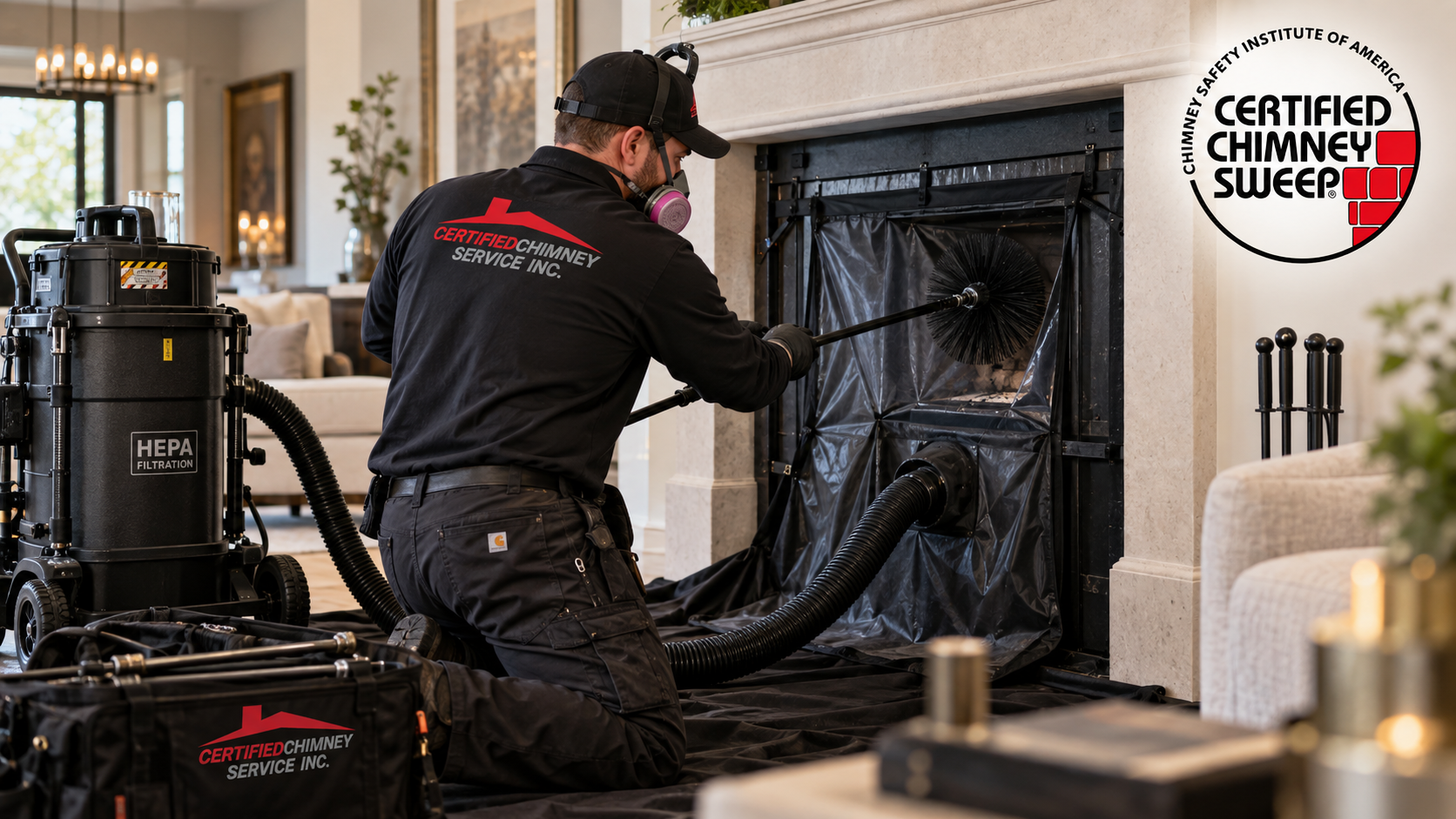
Covers fireplaces, wood stoves, pellet stoves, and heating systems including gas and oil systems. Book now before the winter rush fills our schedule.