
Yes, winter weather can compromise your chimney, especially in New York homes exposed to snow, ice, wind, coastal moisture, and repeated temperature fluctuations. A chimney system sits above the roofline, so the chimney cap, chimney crown, mortar joints, brick masonry, flue liner, flashing construction, and chimney exterior take direct exposure during the cold winter season. If the chimney already has small cracks, water intrusion, creosote buildup, or a missing cap, winter can make those problems worse. Certified Chimney NY provides chimney inspection, chimney sweeps, chimney maintenance, chimney repair, chimney waterproofing, and masonry work across New York.
Winter weather damages masonry chimneys when water enters small cracks in brick, mortar joints, or the chimney crown. During the freeze-thaw cycle, that trapped moisture freezes, expands, and pushes against masonry materials. Over time, this can cause cracked bricks, spalling damage, stress fractures, deteriorating mortar joints, and structural damage. Salt air on Long Island and storm damage in coastal New York areas can speed up wear on exposed masonry and metal components. CSIA warns that water penetration can damage brickwork, dampers, flue liners, wood, wall coverings, ceilings, and heating
The chimney cap and chimney crown are the first lines of defense against winter moisture. A chimney cap with a spark cage helps keep out rain, snow, leaves and twigs, birds nests, and debris. A stainless steel cap can also reduce rust problems compared with weaker metal. The chimney crown should shed water away from the chimney flue and masonry. If the crown is cracked or the cap is missing, water penetration can reach the flue liner, chimney walls, and fireplace system. That can lead to water stains, moisture buildup, and costly chimney problems.
Warning signs include white staining, spalling brick, rusted damper parts, water stains near the fireplace, creosote odor, smoke backflow, loose mortar, cracked bricks, and pieces of masonry inside the firebox. Cold air coming through the fireplace can also point to a pressure imbalance, stack effect issue, or damaged damper. If these signs appear after a North American winter storm, snow damage, or repeated freeze/thaw cycles, schedule a chimney inspection before using the fireplace again.
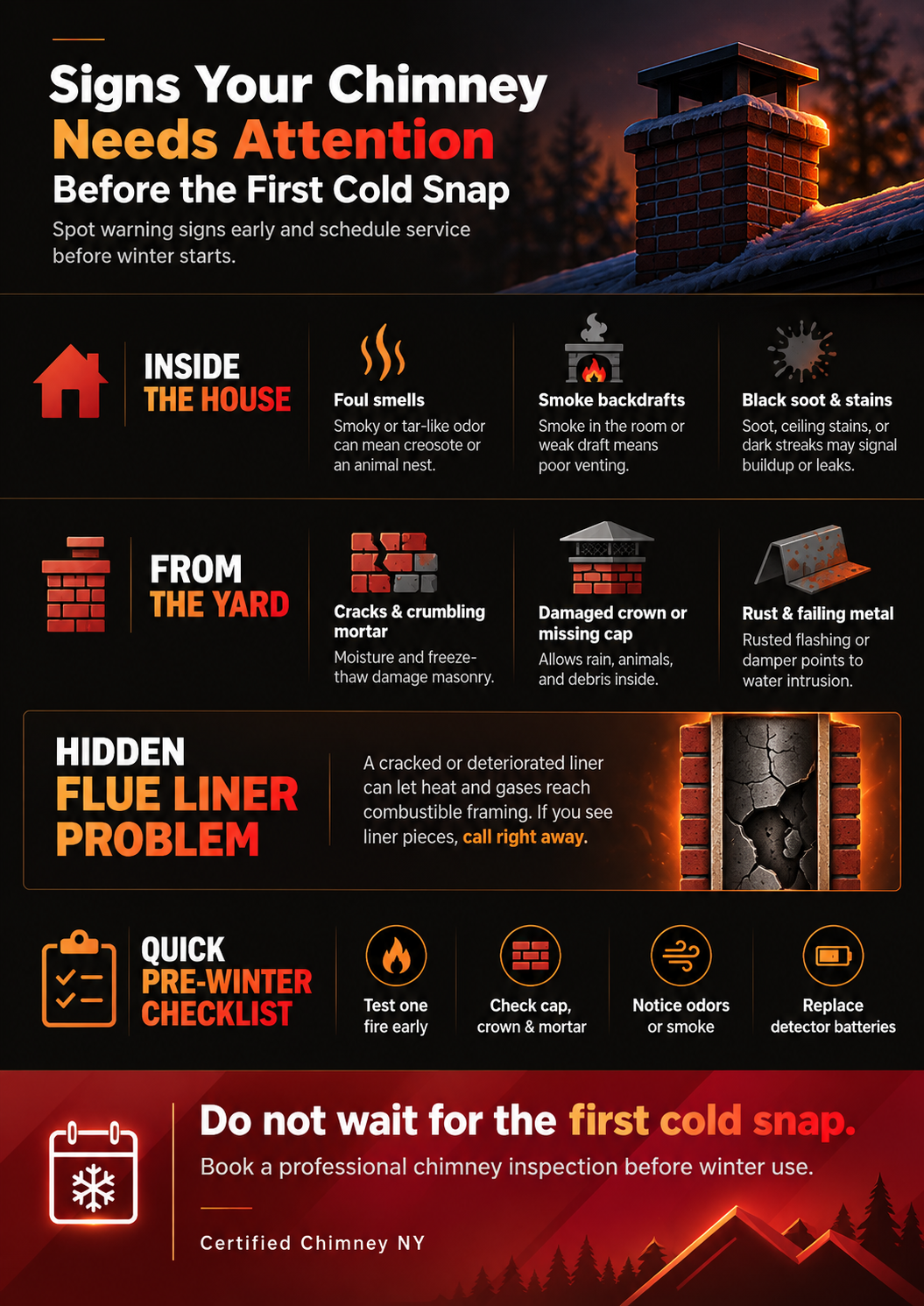
The flue liner helps move smoke, flue gases, and combustion byproducts out of the home. Winter damage can crack a clay liner, corrode metal parts, or weaken the chimney liner. A damaged flue liner can increase fire hazard risk and carbon monoxide concerns. Carbon monoxide poisoning is especially dangerous because the gas has no smell or color. A blocked chimney flue, creosote buildup, damaged chimney cap, birds nests, or poor draft can also interfere with safe venting. Chimney sweeping and inspection help identify these risks before regular fireplace use.
Creosote buildup can become more dangerous during winter because fireplaces and wood stoves are used more often. Burning unseasoned wood, low-temperature fires, or poor draft can create heavier deposits inside the chimney flue. If the chimney has leaves and twigs, animal nesting, a clogged cap, or a draft problem, smoke backflow can enter the living space. Use seasoned hardwoods when building fires and schedule chimney sweeps when soot, odor, or poor draft appears. A clean system helps reduce fire hazards and supports better fireplace performance.
Some winter chimney repairs can be done, but not every repair is ideal in freezing conditions. Emergency work, cap replacement, certain flashing repairs, chimney sweeping, inspections, and temporary water protection may be possible during cold weather. Larger masonry repairs, mortar replacement, chimney rebuilding, waterproofing sealant, and exterior masonry expansion work may need warmer temperatures or special materials. Cold weather can affect curing, bonding, and waterproofing formulas. A chimney service technician can determine whether the issue needs immediate repair or should be stabilized until better weather.
Certified Chimney NY helps homeowners protect chimney systems during the winter season with chimney inspection, chimney sweeping, chimney repair, chimney waterproofing, flue liner review, masonry repair, chimney cap service, flashing repair, and fireplace safety support. Their team serves Long Island, Brooklyn New York, NYC, Nassau County, Suffolk County, Westchester, and nearby New York communities. If you notice smoke backflow, water stains, cracked bricks, creosote buildup, cold air, chimney cap damage, or carbon monoxide concerns, request service through Certified Chimney NY before the problem causes deeper structural damage.
Learn how snow, ice, moisture, and freeze-thaw cycles affect your chimney, which warning signs to watch for, and which repairs can be handled during winter.
Yes. Snow, ice, wind, moisture, and repeated freeze-thaw cycles can worsen existing chimney problems. Small cracks in brick, mortar, or the chimney crown can absorb water, and freezing temperatures can expand that moisture and contribute to additional cracking, spalling, and masonry deterioration.
Freeze-thaw damage occurs when moisture enters brick, mortar, or cracks in the chimney and then freezes. As the water expands, it places pressure on the surrounding masonry. Repeated cycles can create larger cracks, loose mortar joints, spalling brick, and other structural deterioration.
The chimney cap helps keep rain, snow, animals, leaves, and other debris out of the flue. The chimney crown helps direct water away from the masonry below. A missing cap or cracked crown can allow moisture into the chimney, where freezing conditions may accelerate deterioration.
Watch for white staining, cracked or spalling brick, loose mortar joints, water stains near the fireplace, rusted damper components, damaged flashing, crumbling masonry, smoke backflow, or pieces of brick or mortar appearing inside the firebox.
Yes. Moisture, corrosion, freeze-thaw conditions, and existing chimney deterioration can affect clay or metal flue liners. A damaged liner can interfere with safe venting and may allow heat or combustion gases to reach areas outside the intended flue passage.
Fireplaces and wood stoves are generally used more often during winter, which can increase soot and creosote deposits. Poor draft, unseasoned wood, low-temperature fires, animal nests, or a partially blocked flue can make buildup and smoke problems worse. Creosote is combustible and should be removed when professional cleaning is needed.
Some repairs can be completed during winter. Inspections, chimney sweeping, chimney cap replacement, certain flashing repairs, and temporary water protection may still be possible. Major masonry work, rebuilding, mortar replacement, or waterproofing may need warmer conditions because cold temperatures can affect curing and bonding.
Stop using the fireplace and schedule an inspection if smoke enters the room, you notice strong creosote odors, water is entering near the fireplace, pieces of masonry or flue liner appear in the firebox, the chimney has significant cracking, or a carbon monoxide alarm activates.
If you notice cracks, water stains, damaged masonry, smoke problems, or cap and flashing damage, have the chimney inspected before the problem spreads.
Covers fireplaces, wood stoves, pellet stoves, and heating systems including gas and oil systems. Book now before the winter rush fills our schedule.