
Yes, a dirty chimney can increase the risk of carbon monoxide problems inside a home. Carbon monoxide is a colorless, odorless toxic gas produced when wood, oil, natural gas, propane, or another fuel does not burn completely. A working chimney carries these combustion gases outside. When creosote buildup, soot, animal nests, or chimney damage blocks the flue, the gases may enter living areas instead. New York homeowners face greater risk during the heating season because fireplaces, furnaces, boilers, and water heaters may operate for long periods during cold weather.
A carbon monoxide leak does not always mean the chimney is completely blocked. Even partial blocked airflow can weaken the draft and cause reverse air flow. This backdraft can pull carbon monoxide, smoke, and other combustion gases through the fireplace or chimney connector pipe. Cracks in a chimney liner may also allow gases to escape before reaching the top of the chimney. The Environmental Protection Agency warns that blocked, leaking, or damaged chimneys and flues can release harmful pollutants and dangerous concentrations of carbon monoxide indoors.
Creosote buildup is one of the most common problems found inside wood-burning chimney flues. Creosote forms when smoke cools and sticks to the flue liner. Over time, this material can narrow the venting path and reduce airflow. Heavy deposits may also ignite and cause a chimney fire. A professional chimney cleaning removes the buildup before it interferes with ventilation. Cleaning also gives chimney sweeps an opportunity to check the smoke chamber, smoke shelf, damper, chimney cap, and other areas where soot or debris may collect.
Chimney damage can create similar safety concerns even when the flue looks clean. Cracked clay liners, separated flue tiles, rusted metal components, and damaged masonry may allow combustion gases to leak into walls, attics, or rooms. Moisture from New York rain, snow, coastal air, and freeze-thaw cycles can make this damage worse. A chimney inspection can determine whether the home needs masonry repair, a stainless steel chimney liner, or another approved flue liner system. Repairs restore a protected path that moves heat, smoke, and gases outside.
Carbon monoxide problems are not limited to wood-burning fireplaces. Any fuel-burning appliance can produce carbon monoxide when fuel burns poorly or exhaust cannot vent correctly. This includes gas fireplaces, pellet stoves, oil furnaces, gas water heaters, boilers, natural gas stoves, and liquefied petroleum gas appliances. A damaged heat exchanger, blocked chimney connector pipe, weak pilot light, or poorly maintained heating system may contribute to unsafe conditions. The U.S. Consumer Product Safety Commission recommends regular maintenance for fuel-burning appliances and proper ventilation throughout the home.
Carbon monoxide can also be present in homes without chimneys. Gas stoves, unvented space heaters, generator engines, attached garages, and charcoal-burning barbeque grills can all create CO. Generators and grills should never operate inside a home, garage, basement, or enclosed outdoor living space. A blocked furnace vent or gas appliance can also cause dangerous indoor levels. Therefore, homeowners should not view chimney maintenance as their only form of protection. Fireplace servicing, heating system inspections, proper appliance use, and working carbon monoxide detectors must all support the home’s overall fire safety plan.
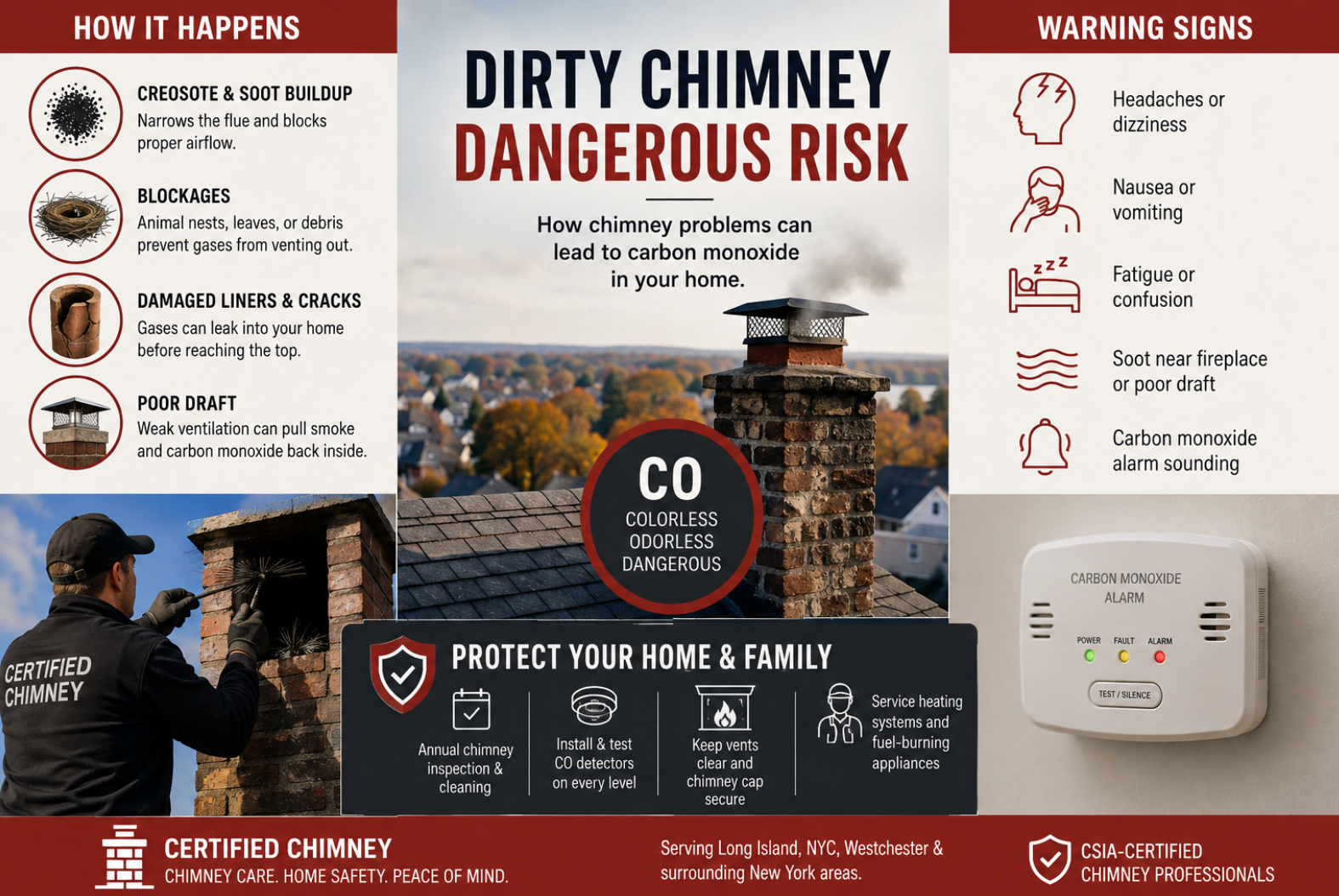
Early symptoms of CO poisoning often resemble the flu. A person may experience headache, dizziness, weakness, nausea, confusion, fatigue, chest discomfort, or shortness of breath. Symptoms may improve after leaving the house and return after going back inside. Long or severe exposure can affect the brain, heart, vision, and respiratory system. It may lead to brain damage, heart problems, loss of consciousness, or death. People with respiratory problems, older adults, infants, and those with certain health conditions may be affected more quickly than healthy adults.
If a carbon monoxide alarm sounds, everyone should leave the building immediately and move into fresh air. Call 911 or local emergency services from outside. Do not reenter the home until emergency personnel say it is safe. Do not assume that opening windows has solved the problem. A chimney sweep, heating technician, or other qualified professional must identify the source before the fireplace or appliance is used again. The New York State Department of Health explains that carbon monoxide can harm or kill people before they know it is present.
Carbon monoxide detectors are the most reliable way to detect CO because people cannot see, smell, or taste the gas. Install CO detectors on every level of the home and outside sleeping areas. Follow the manufacturer’s placement and replacement instructions. Look for alarms tested to recognized standards, such as current Underwriters Laboratories safety standards. Test each carbon monoxide alarm regularly and replace batteries when required. Smoke detectors and fire or smoke alarms remain necessary because a CO detector does not detect smoke, flames, creosote fires, or every other home safety threat.
New York’s Amanda’s Law requires carbon monoxide alarms in residential dwellings, including single-family homes, multiple-family homes, apartments, and many other sleeping facilities. Rental property owners must provide alarms that meet applicable state and local requirements, while tenants may have responsibilities such as replacing batteries or reporting a faulty device. Requirements can vary by building type and municipality. Property owners and renters should review the guidance from the New York State Department of Health and confirm local rules with their building department.
A chimney should receive a routine chimney inspection at least once each year, even when the fireplace is not used daily. The amount of chimney cleaning needed depends on the fuel type, fireplace use, flue condition, and amount of creosote buildup. An annual inspection can find animal nests, bird nesting materials, damaged flue liners, missing chimney caps, moisture damage, and blocked airflow before the heating season begins. The Chimney Safety Institute of America explains that annual professional inspections can help prevent chimney fires and carbon monoxide intrusion.
The off-season is often a practical time to schedule chimney sweeps because problems can be corrected before cold weather arrives. Spring and summer appointments allow time for masonry repair, chimney cap replacement, liner work, or professional chimney maintenance without interrupting regular fireplace use. DIY chimney cleaning may remove some loose soot, but it cannot confirm that the entire flue is open or that the liner is structurally sound. Professional equipment and inspection methods help find hidden problems that homeowners cannot safely see from the firebox or roof.
New York homeowners can lower their carbon monoxide risk by combining working CO detectors with routine chimney inspections, professional chimney cleaning, and heating system maintenance. Keep chimney caps secure, have fuel-burning appliances serviced, and never operate generators or charcoal grills indoors. Watch for soot near the fireplace, unusual odors, moisture inside windows, poor draft, pilot light problems, or a carbon monoxide alarm. These warning signs may point to blocked venting or incomplete combustion and should not be ignored.
Certified Chimney provides chimney cleaning, inspections, liner services, chimney masonry repair, fireplace servicing, and related safety solutions across New York. Its CSIA-certified team can evaluate creosote buildup, damaged chimney flues, animal nests, chimney caps, and other conditions that may interfere with proper ventilation. Scheduling a professional chimney inspection and cleaning before the heating season helps keep combustion gases moving outside. This supports safer fireplace use, protects the chimney system, and gives homeowners clearer information about repairs that may be needed.
Get answers to common questions about dirty chimneys, carbon monoxide risks, blocked flues, chimney inspections, CO detectors, and fireplace safety in New York homes.
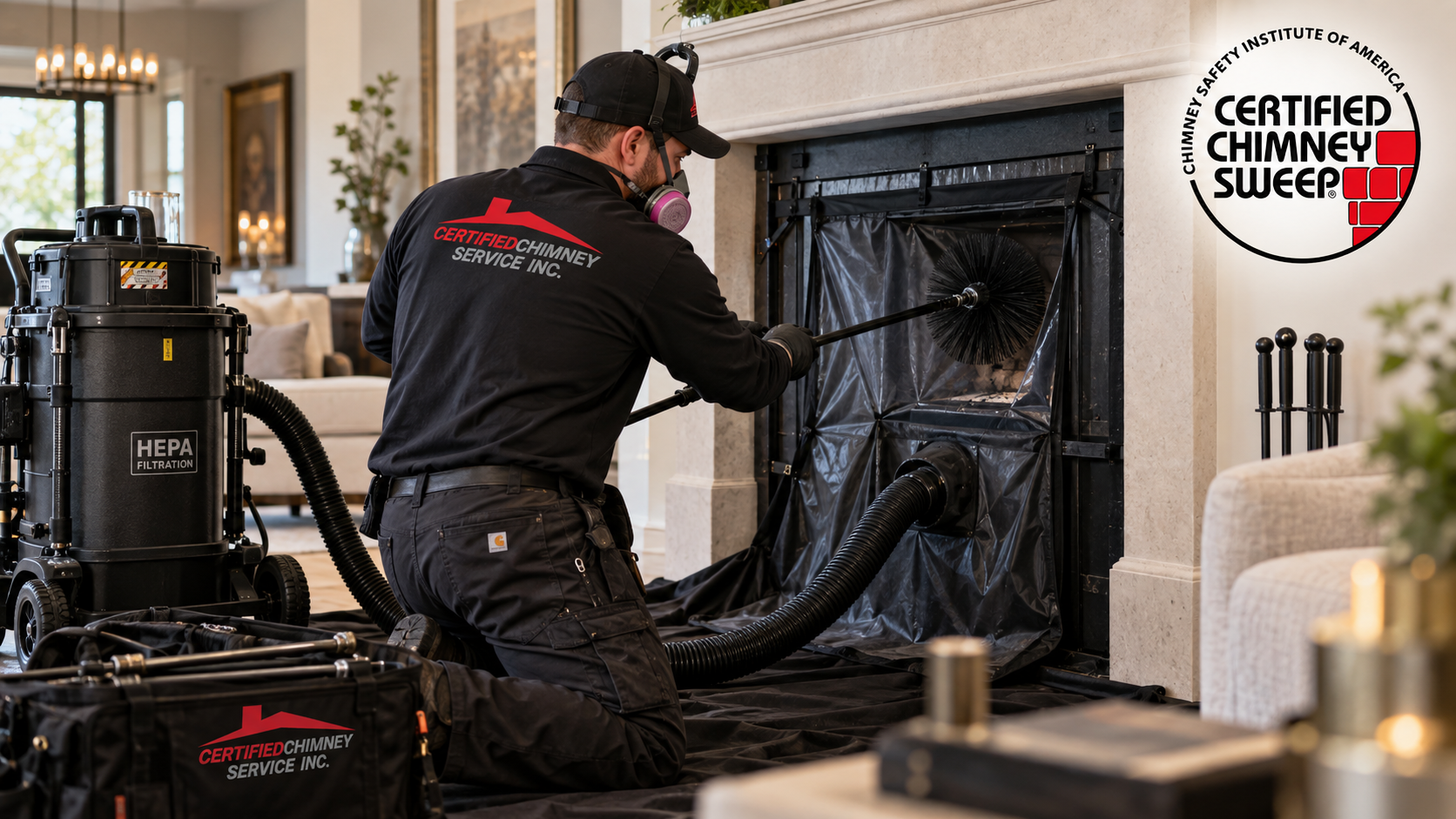
Covers fireplaces, wood stoves, pellet stoves, and heating systems including gas and oil systems. Book now before the winter rush fills our schedule.