
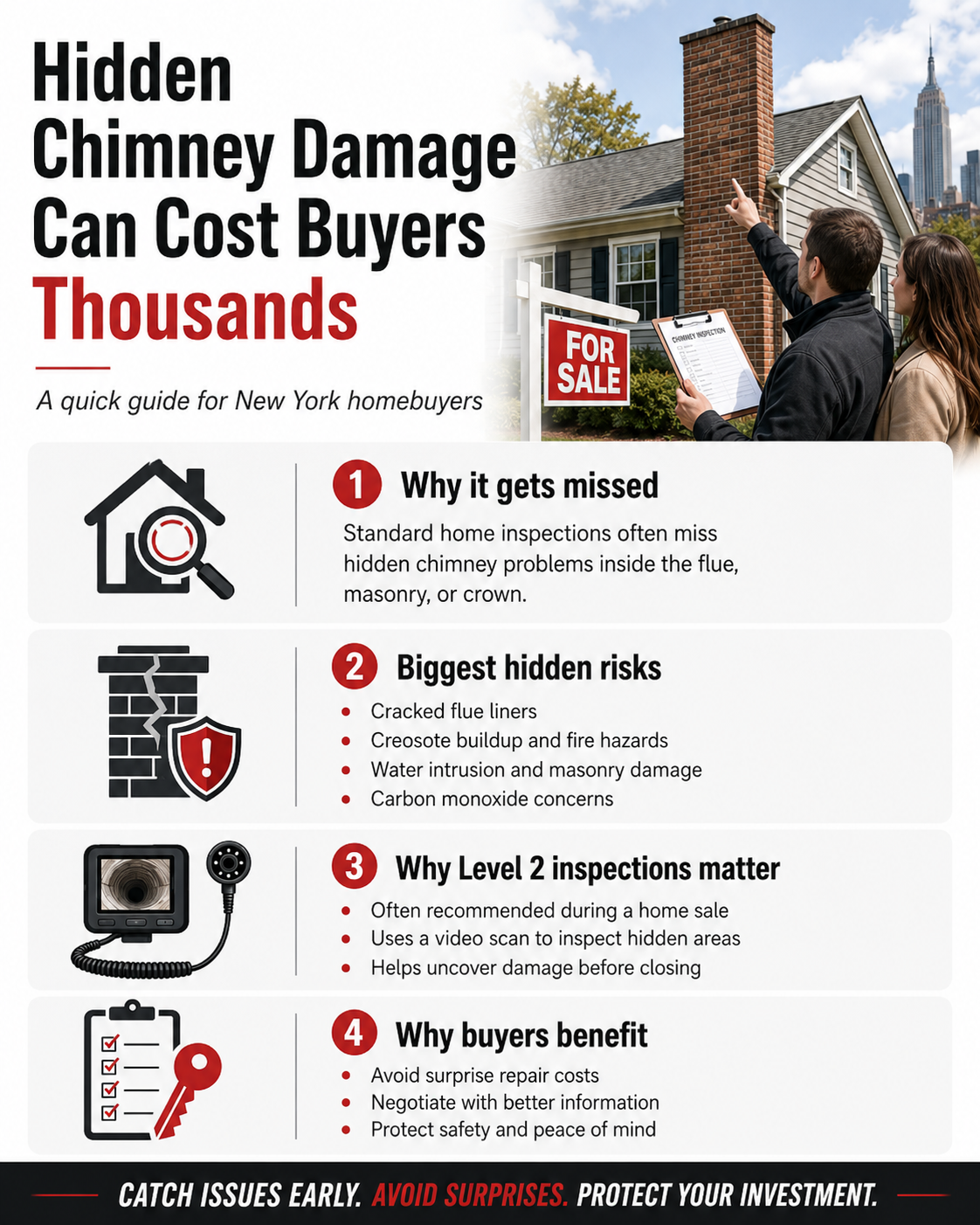
Hidden chimney damage is one of the most overlooked problems during a New York home sale. Many buyers focus on the roof, foundation, HVAC system, and general home inspection, but the chimney system often receives less attention. This can be a costly mistake because chimney damage is not always visible from the ground or from inside the fireplace. Problems hidden inside the flue, masonry, or chimney crown can lead to expensive chimney repairs after closing. For buyers in New York, a chimney inspection can help uncover hidden risks before they become major financial problems.
Many chimney problems stay hidden because a standard home inspection only looks at visible areas. A home inspector may notice water stains or loose bricks, but deeper problems inside the flue or chimney structure can go undetected. Creosote buildup, cracked mortar joints, and water infiltration often develop slowly over time. Because these issues are hidden, they may not appear on a basic home inspection report. That is why buyers should never rely on a visual inspection alone when evaluating a chimney system during a real estate transaction.
A chimney inspection is a detailed review of the chimney system to identify damage, safety hazards, and repair needs. This process looks at the chimney cap, chimney crown, flue liner, masonry, smoke chamber, and other important components. According to the Chimney Safety Institute of America inspection guidelines, there are different inspection levels depending on the condition of the chimney and the reason for the inspection. For home buyers, this type of inspection helps uncover hidden chimney damage before a home sale is finalized.
Some hidden chimney problems are more dangerous than others because they create serious fire hazards and safety concerns. Cracked flue liners can allow heat and smoke to escape into walls and ceilings. Creosote accumulation inside the chimney can increase the risk of a chimney fire. Water intrusion can weaken mortar joints and cause masonry damage that affects the stability of the chimney. In severe cases, falling bricks or loose chimney sections can become a danger to the home and the people inside it. Hidden damage can also reduce property values and make repairs more expensive over time.
A Level 2 inspection is often recommended during a home sale because ownership is changing. This inspection goes beyond a basic Level 1 inspection by using video equipment to examine the inside of the flue and other hidden areas. A Level II chimney inspection may identify flue relining needs, smoke backdrafts, water damage, or signs of previous chimney fires. The NFPA 211 inspection standards recommend Level 2 inspections whenever there is a transfer of property ownership. For buyers, this inspection provides a better understanding of the chimney’s condition before closing.
Water damage is one of the most common causes of hidden chimney repairs in New York. Moisture damage often starts when rain enters through a cracked chimney crown, damaged chimney cap, or worn mortar joints. Storm-driven rain, hail damage, and wind damage can make these problems worse over time. Once water enters the chimney system, it can create water stains, mold, masonry damage, and water leaks inside the home. In colder areas of New York, freeze-thaw cycles can make cracks expand even faster. If ignored, water infiltration can eventually lead to chimney reconstruction.
Signs of chimney water damage may include white staining on the brick, rust on metal parts, cracked mortar joints, and water stains near the fireplace. Some homeowners may also notice musty smells, peeling paint, or visible leaks during heavy rain. These issues usually indicate that water is entering the chimney system through damaged masonry or missing protective components. If water damage continues, it can weaken the entire chimney structure and create larger repair costs. Identifying these signs early can help prevent more serious structural assessment issues later.
A chimney fire can damage parts of the chimney that are difficult to see without a professional inspection. Even a small chimney fire can crack the flue liner, damage mortar joints, and create fire damage inside the walls surrounding the chimney. According to the National Fire Protection Association, chimney fires are often caused by creosote buildup that has not been removed through regular chimney cleaning. After a chimney fire, a Level 2 inspection is usually necessary to determine if hidden fire hazards remain inside the chimney system.
Carbon monoxide from a damaged chimney can be extremely dangerous because it has no smell, taste, or color. If the chimney system has cracks, smoke backdrafts, or blocked venting areas, carbon monoxide can move back into the home instead of leaving through the flue. This can happen after storm damage, fire damage, or years of neglected chimney maintenance. In homes with fireplaces, wood stoves, or heating appliances, carbon monoxide exposure can quickly become a serious health risk. That is why chimney inspections are important for both fire safety and indoor air safety.
Structural chimney damage can impact much more than the chimney itself. Brickwork problems, loose mortar joints, and a failing chimney crown can allow moisture to spread into nearby walls and ceilings. In severe cases, environmental contamination from water intrusion can lead to mold growth or wood rot around the chimney chase. Falling trees, vehicle impact, and severe weather can also weaken the chimney structure without obvious signs from the ground. These hidden problems may affect homeowner insurance policies, delay a home sale, and increase long-term repair costs for buyers.
Chimney repairs can range from minor fixes to major reconstruction depending on the extent of the damage. Small repairs like replacing a chimney cap or reinforcing the brick are usually more affordable than full chimney reconstruction or flue relining. However, when hidden damage goes unnoticed, repair costs can increase quickly. Water damage, fire damage, and structural problems often require more labor and materials to fix properly. For buyers in New York, spending money on a chimney inspection before closing is usually much more cost effective than paying for unexpected repairs later.
Chimney maintenance should be scheduled at least once a year to keep the system safe and working properly. Annual chimney inspections and chimney cleaning help reduce creosote buildup, identify water damage, and catch early signs of masonry damage before they become larger problems. The frequency may need to increase for homes exposed to severe weather, heavy fireplace use, or older chimney systems. Buyers who are purchasing older homes in New York should strongly consider scheduling maintenance soon after moving in. Regular maintenance protects the chimney, supports fire safety, and helps avoid expensive repairs in the future.
A professional chimney inspection can help buyers avoid hidden chimney damage that could cost thousands after closing. Whether the issue is water infiltration, chimney fires, masonry damage, or flue relining, early detection makes repairs easier and less expensive. For buyers in New York, chimney inspections provide valuable information that may not appear in a standard home inspection report. To learn more about professional chimney inspection services before a home sale, visit Certified Chimney New York.
Get clear answers to common questions New York homebuyers have about hidden chimney damage, inspection reports, repair costs, water damage, and safety risks before closing.
Article details:
Share:
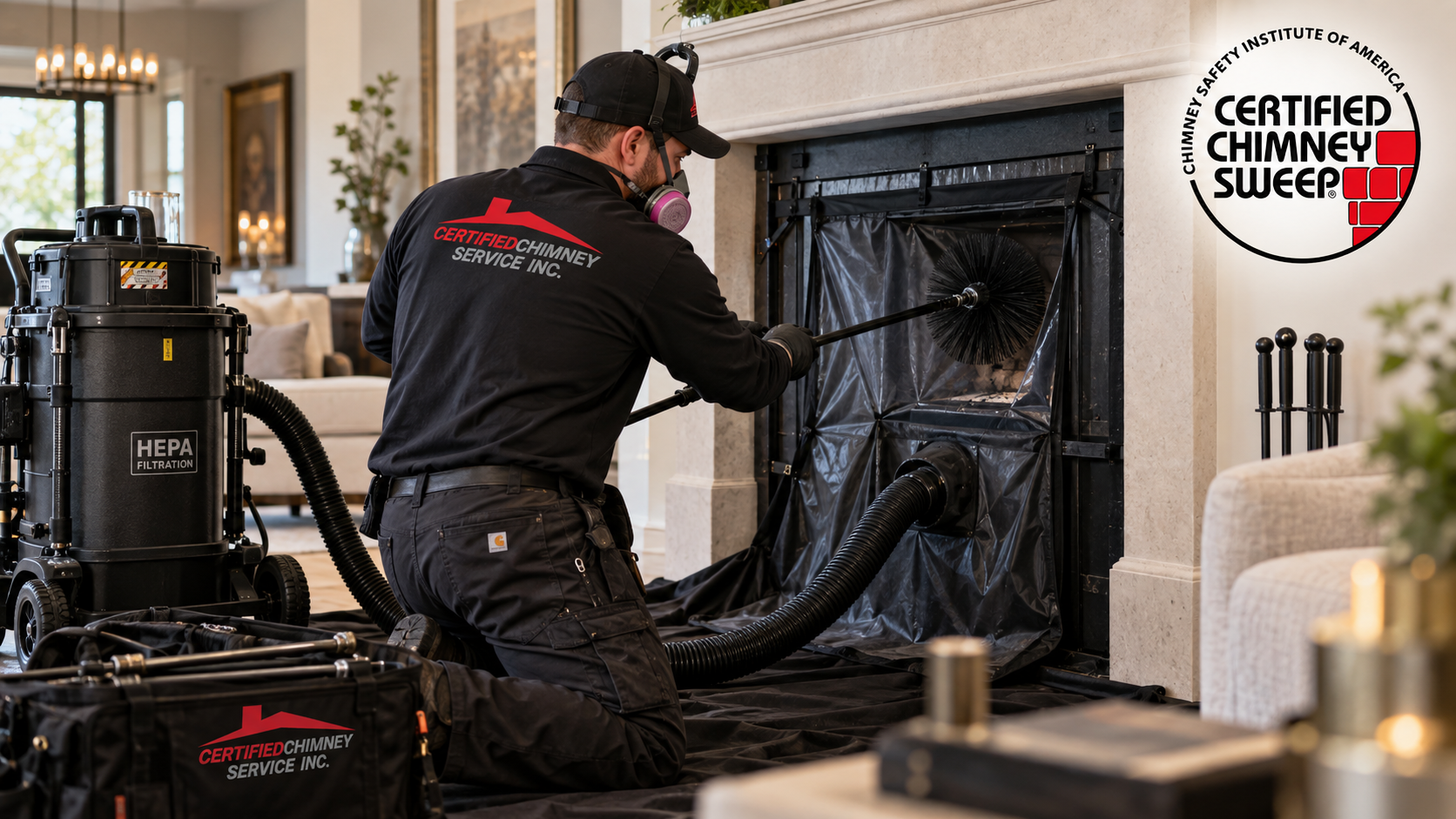
Covers fireplaces, wood stoves, pellet stoves, and heating systems including gas and oil systems. Book now before the winter rush fills our schedule.