
There’s a very specific kind of frustration that happens in Westchester County during winter. You finally get home, it’s dark by 4:30, the heat has been running all day, and all you want is a clean, cozy fire. You light it… and within minutes the room smells like smoke. Your eyes start stinging, the fire feels like it’s “pushing back,” and now you’re standing there wondering if you did something wrong.
The truth is, winter chimney draft problems in Westchester are incredibly common, and a lot of them are caused by normal seasonal conditions. But some are not normal at all and can become serious fast, especially when carbon monoxide and creosote buildup enter the picture.
This guide breaks down what’s expected during a cold Westchester winter, what’s a warning sign, and what you can do to improve draft and airflow safely. If your fireplace is acting up, Certified Chimney NY can perform draft testing, chimney cleaning, and a full chimney inspection to help you use your system with confidence again.
Your chimney draft is simply the upward pull that moves flue gases out of your home. When the draft is strong, smoke rises naturally and your fireplace feels smooth and steady. When draft is weak, smoke can stall, spill out, or backdraft into the room.
In Westchester NY, draft problems spike when winter really settles in because:
Draft issues are not just about comfort. They connect directly to home safety, air quality, and fire risks.
People ask all the time: Does a chimney draw better in cold weather?
Yes, sometimes. Cold weather can improve draft because the temperature difference between the warm air inside the flue and the cold air outside creates stronger upward movement.
But here’s the problem in Westchester: the chimney itself can be ice cold. If the chimney is cold-soaked, the flue can act like a heavy column of cold air sitting in place, and your smoke struggles to rise.
That is why winter can create two completely opposite experiences:
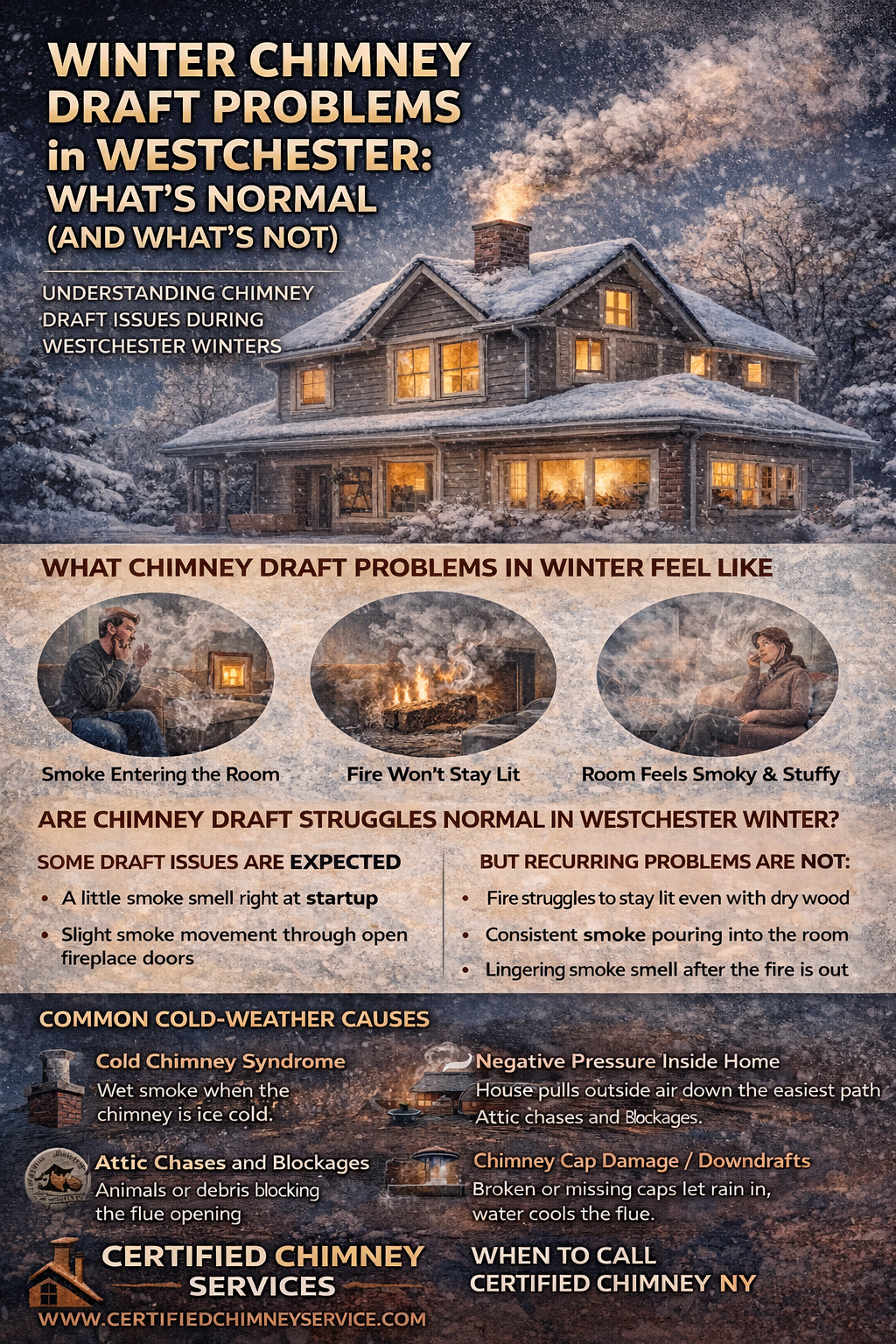
Not every draft issue means something is broken. Westchester winters are rough on chimney systems, and some “quirks” are expected.
If you are unsure, Certified Chimney NY can do a professional chimney inspection and determine if the issue is draft-related, mechanical, or structural.
Most homeowners in Westchester do not say “draft issue.” They describe symptoms like these:
If you are dealing with repeated smoke problems, it is worth getting ahead of it before it turns into a bigger repair.
Cold chimney syndrome is basically what happens when your chimney is so cold that it blocks the initial upward flow of smoke. In Westchester, it’s common after:
A simple way to reduce this issue is to pre-warm the flue, but if it keeps happening, it often points back to maintenance or airflow problems that Certified Chimney NY can solve.
This is one of the biggest reasons fireplaces struggle in winter, especially in updated homes.
Negative pressure happens when your house is pulling more air out than it is letting in. The fireplace becomes the easiest place for air to enter, which means smoke can spill into the room instead of flowing up.
Common causes:
If your fireplace gets smoky every time you cook or do laundry, this is a huge clue.
Draft is airflow, but Westchester winters also bring water, ice, and freeze-thaw cycles. That is where chimney cap and crown issues show up fast.
A good chimney cap helps prevent nesting animals and reduces downdrafts that cause smoke problems.
A cracked chimney crown lets water into the masonry. Over time, this leads to:
The National Weather Service regularly reminds homeowners that winter storms and freeze-thaw weather can contribute to property damage risks, which absolutely applies to masonry chimneys.
If your draft issues are constant, even after cleaning, the liner may be part of the issue.
Common chimney liner problems:
This is where chimney relining or flue relining becomes the right fix, not a temporary patch.
Many Westchester homes benefit from stainless steel liners, especially when converting heating appliances or improving venting consistency. Stainless steel is durable and commonly used for modern units because it handles heat and moisture better than older systems.
Certified Chimney NY can evaluate if you need chimney relining, a cast-in-place liner, or another solution based on your chimney system.
If your fireplace worked last season and suddenly smokes badly now, the culprit is often simple:
This is extremely common in Westchester County because squirrels, birds, and raccoons look for warm, protected spaces in colder months.
A video camera inspection is one of the quickest ways to confirm what is going on without tearing anything apart.
Before we list quick actions, one important note: if smoke is heavy or persistent, stop using the fireplace until it is inspected. Draft problems can lead to carbon monoxide exposure and smoke damage.
Here are safe troubleshooting steps:
These are not “repairs,” but they can help you determine if the problem is seasonal draft behavior or something deeper.
If your fireplace is smoky once in a while, that can be normal in winter. But if it becomes consistent, it is time for a professional to step in.
You should call Certified Chimney NY if you notice:
A professional inspection also helps identify hidden issues like damaged flue liners, crown cracks, and draft failures caused by pressure imbalances.
A little draft adjustment in winter is normal. Westchester homes deal with cold chimneys, windy conditions, and airtight building pressure changes all the time.
But smoke pouring into the home, repeated smoky chimney behavior, or any sign of carbon monoxide risk is not normal. Those issues usually point to a chimney system problem that needs real attention.
If you want your fireplace to work the way it is supposed to, Certified Chimney NY can help with chimney cleaning, chimney inspections, chimney repairs, and draft testing throughout Westchester County and nearby areas.
When your chimney drafts correctly, the difference is immediate. The fire lights cleaner, the room stays comfortable, and you are not spending winter nights wondering if something is wrong.
Protect your chimney from rain, moisture, and costly water damage.