
There’s a very specific kind of panic that only New York homeowners understand.
It’s 7:30 PM, the temperature just dropped hard, and you’re doing the classic cold snap routine: hoodie on, thermostat bumped up, maybe even one of those backup space heaters running in the hallway just to take the edge off.
Then you light the fireplace.
And instead of that cozy, clean draft you expected, smoke starts creeping back into your living room like it owns the place. It’s not even subtle. It rolls out of the fireplace opening, hangs near the ceiling, and leaves that sharp smell in your throat that makes you question every life decision that led to “let’s have a relaxing fire tonight.”
If this has happened to you, you’re not alone. At Certified Chimney NY, smoke blowback is one of the most common cold-weather calls we get, especially during sudden temperature drops and winter storms. The good news is: most of the causes are fixable. The bad news is: some are dangerous if you ignore them.
Let’s walk through why it happens, what you can do right away, and when it’s time to bring in a professional chimney inspection.
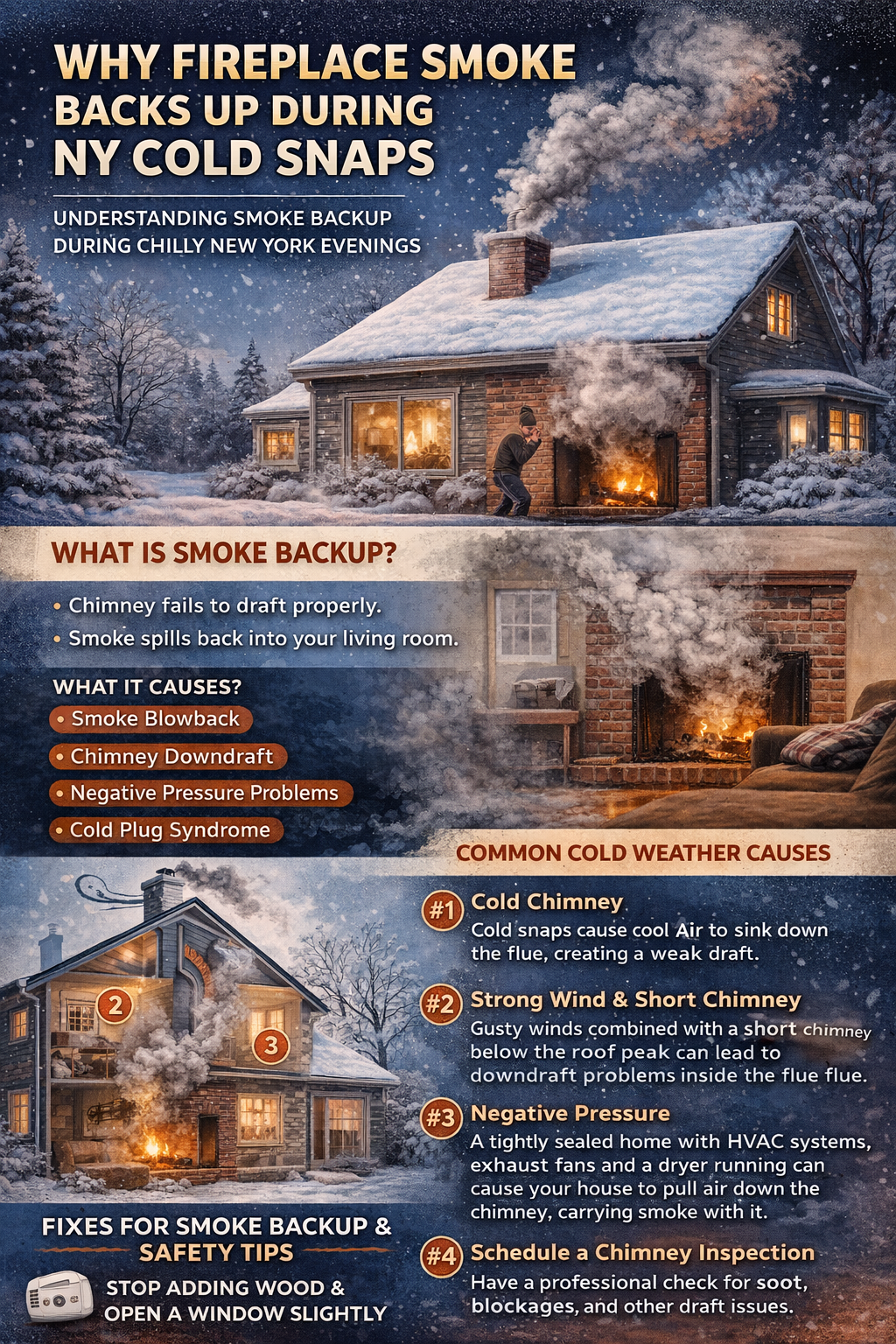
When smoke comes back into your home, it usually means your chimney is not drafting properly. Your fireplace is supposed to pull smoke up and out through the chimney flue. During NY cold snaps, the draft can weaken or reverse, so the smoke takes the easiest path, which is back into your room.
You might hear this called:
Whatever you call it, the result is the same: smoke venting is not working correctly.
The number one reason is simple: the chimney is cold and the draft is weak.
When the air inside the flue is colder than the air inside your home, that cold air can act like a plug. Your fire produces smoke immediately, but the chimney is not warmed up enough to pull it upward.
This gets worse when:
Even if your chimney is clean, your house itself can cause smoke backup.
During a cold snap, everything is sealed tight. Doors closed. Windows locked. HVAC running. Bathroom fan running. Range hood running. Dryer running.
That creates negative pressure inside the home, meaning your house starts pulling air from wherever it can get it. If your fireplace is the easiest opening, the house will pull air down the chimney, and smoke comes with it.
This is why smoke backup often happens in homes with strong heating systems and modern HVAC systems, especially when the central heating is running nonstop.
When smoke backs up, it usually points to a problem inside the chimney system. Here are the parts that matter most.
Your flue liner protects the chimney and creates a smooth pathway for smoke and flue gases. If the liner is damaged, oversized, or restricted, draft performance can suffer.
The smoke chamber is the space above the firebox that funnels smoke up into the flue. If it is dirty, poorly shaped, or covered in heavy buildup, smoke can get turbulent and spill out of the fireplace opening.
A damper that is stuck, partially closed, or broken can stop the chimney from drafting properly. Some setups also have an inspection hatch that can leak air or restrict flow if it is damaged or poorly sealed.
A damaged chimney cap, chimney cowl, or clogged bird guard can create a drafting obstruction or trap smoke. These components are also your first defense against wind-driven downdrafts.
A lot of homeowners blame the chimney when it’s actually the wood.
If you burn wet wood, you get more smoke, less heat, and worse draft. Wet wood creates lazy fires that struggle to heat the flue quickly. That increases the chance smoke backs into the home before draft establishes.
A quick way to think about it:
Even if you are not using a classic open masonry fireplace, smoke problems can still happen with:
In these cases, the issue is often sizing and venting. Stove installation has to match the flue size, height, and draft needs. If it does not, you get smoke spillage or poor combustion.
People ask this a lot: What is the 3:2-10 rule for chimneys?
It’s a chimney height guideline meant to improve draft and reduce downdrafts. The NFPA is one of the most credible references for chimney and fire safety standards, and height clearance plays a major role in safe venting.
If your chimney is too short relative to the roof peak or nearby structures, wind can push air down the flue. That makes smoke backup worse during cold snaps.
Smoke is unpleasant. Carbon monoxide is dangerous.
If smoke is backing into your living room, it can signal that combustion byproducts are not venting safely. That includes carbon monoxide, especially if you also use fuel-fired furnaces, hot water heaters, or an oil-burning furnace tied into the same chimney system.
You should always have working carbon monoxide detectors. The U.S. Consumer Product Safety Commission explains CO risks and why detectors matter.
If you notice headaches, dizziness, nausea, or unusual fatigue, stop using the fireplace and call a professional immediately.
If it’s happening in the moment, here’s what helps immediately.
Do not keep feeding it. More fuel means more smoke.
This gives your home make-up air and reduces negative pressure.
Make sure it is fully open. Not halfway.
A cold flue drafts poorly. Pre-warming helps the draft establish sooner.
If smoke is intense, if you have visible soot particles, or if the room feels hard to breathe, treat it like a safety issue.
Smoke backup can cause lingering odors, but sometimes it becomes something much more expensive: soot damage.
A puff back incident is more common with oil systems, but any smoke event can create a mess that settles into walls, fabric, and HVAC returns. The cost isn’t just cleaning. It can become restoration work.
If you ever need documentation for an insurance claim, photos, timestamps, and damage documentation matter. The Ready.gov guidance is a good general reference for winter weather response strategies and safety steps.
If smoke backup happens once, it may be weather-related. If it happens repeatedly, the best solution is a full inspection.
At Certified Chimney NY, we usually recommend:
This is not guesswork. Smoke problems almost always have a root cause, and the sooner you fix it, the safer and cleaner your winter becomes.
When smoke starts coming into your living room, you don’t need a generic answer. You need someone who understands how New York winter weather affects chimney performance and how to solve it without band-aid fixes.
Certified Chimney NY helps homeowners get back to safe, clean fireplace operation with:
If smoke backs into your living room during NY cold snaps, your chimney is telling you something important. It might be a cold flue. It might be negative pressure. It might be a blockage, liner issue, or chimney height problem. But it’s almost never something you should just “deal with.”
The goal is simple: safe venting, clean air, and a fireplace you can actually enjoy.
If your fireplace keeps smoking or you’re noticing soot exposure, odors, or draft problems, Certified Chimney NY can inspect the system and help you fix it the right way.
Protect your chimney from rain, moisture, and costly water damage.