
Share:
One February morning in Stony Brook, a homeowner noticed small fragments of brick scattered across their icy roof. At first, it didn’t seem urgent. But within weeks, water stains appeared on the ceiling near the fireplace, and the chimney began venting smoke poorly. A professional inspection revealed severe masonry deterioration caused by Long Island’s freeze-thaw cycles, coastal humidity, and salt-air corrosion.
This situation is extremely common across Long Island, especially in coastal communities along the North Shore and South Shore. Long Island chimneys crack more frequently than inland chimneys because they face a unique combination of moisture exposure, temperature fluctuations, coastal storms, and saltwater corrosion. Understanding why this happens can help homeowners prevent chimney fires, structural damage, and expensive chimney repair services.
Long Island’s coastal climate exposes chimneys to constant moisture. Coastal humidity, storm surges, and salt-laden air penetrate masonry surfaces year-round. According to the National Oceanic and Atmospheric Administration, coastal regions experience significantly higher humidity levels, which increases the amount of moisture absorbed into building materials.
During winter, this trapped moisture freezes. When water freezes, it expands by approximately 9 percent. This expansion creates internal pressure inside bricks, mortar joints, and chimney crowns.
Repeated freeze-thaw cycles cause:
Over time, this process weakens the chimney’s structural integrity and leads to serious masonry repairs and masonry restoration.
While exterior cracks are often visible, interior damage is equally dangerous. The flue liner, which protects the chimney walls and safely vents smoke from heating systems, is highly vulnerable to freeze-thaw damage.
Older homes across Long Island often have clay tile liners. These clay tile liners absorb moisture and crack when exposed to freezing temperatures. Cracked flue liners allow heat, smoke, and dangerous gases to escape into surrounding masonry.
This damage increases the risk of:
Modern chimney repair services often include flue-liner work and stainless-steel flue liner installation. Stainless steel liners resist moisture and provide superior protection in harsh coastal weather.
Professional camera inspections and draft tests help chimney technicians identify hidden flue liner damage before it becomes a serious safety hazard.
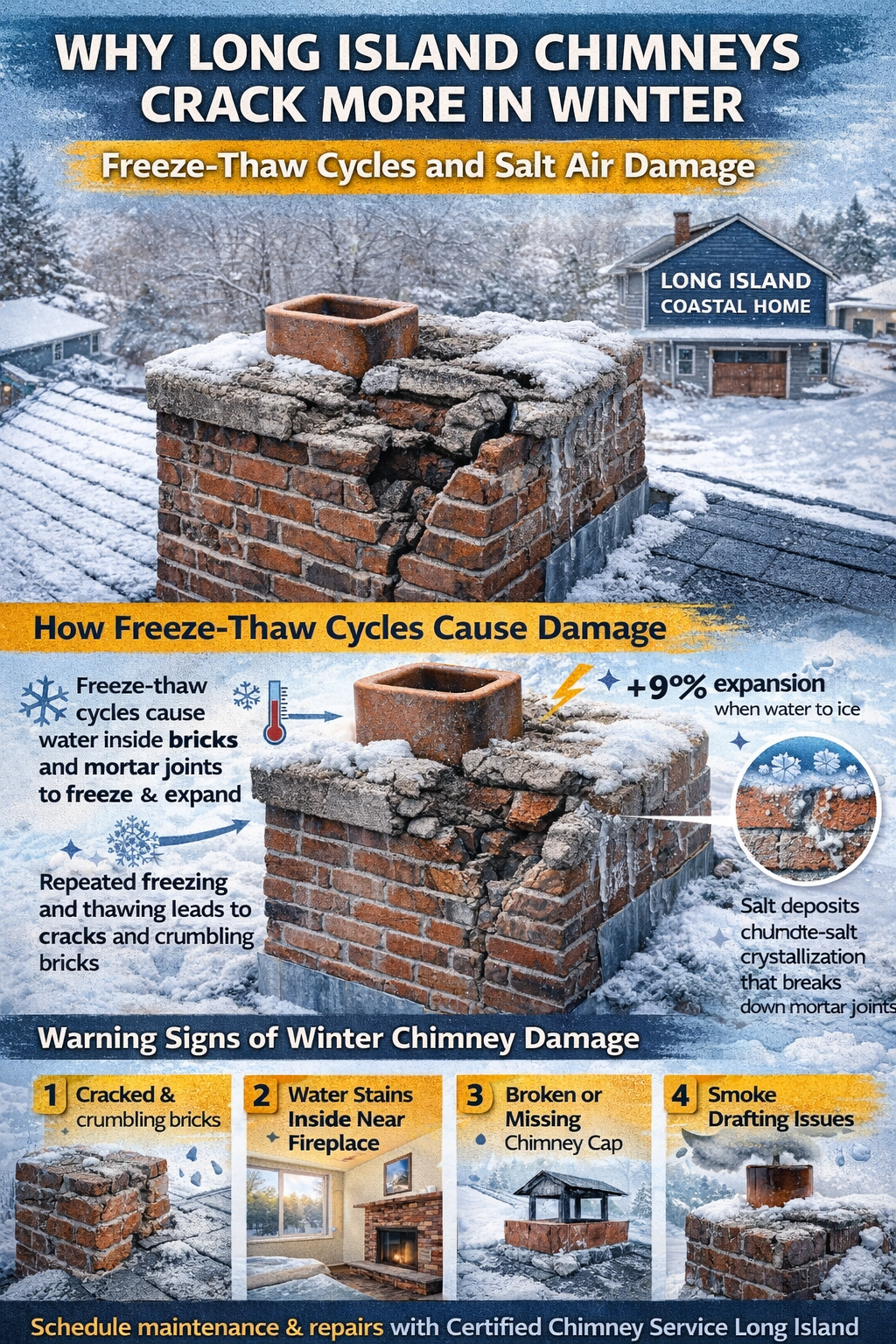
Salt-air corrosion is one of the biggest reasons chimneys deteriorate faster on Long Island.
Salt particles carried by coastal winds settle on masonry surfaces. These salt deposits penetrate bricks and mortar joints. When salt absorbs moisture, it expands through a process called chloride-salt crystallization.
This expansion weakens masonry and causes cracking, flaking, and structural damage.
Communities especially vulnerable include:
Saltwater corrosion, coastal storms, and harsh coastal weather accelerate chimney damage significantly faster than inland environments.
Marine-grade materials are often required to repair and protect chimneys in coastal regions.
Chimney caps and chimney flashing play critical roles in protecting the chimney from water intrusion.
Chimney caps prevent rain, snow, and debris from entering flue openings. However, salt air causes chimney caps to rust and deteriorate. Once chimney caps fail, moisture enters the chimney system and accelerates creosote buildup and masonry damage.
Chimney flashing seals the joint between the chimney and roof materials. Freeze-thaw cycles, ice buildup, and icy roofs cause flashing to separate from the roof structure.
When flashing fails, water enters the home and causes:
Prompt chimney flashing repair is critical to preventing extensive water damage.
Ice dams are another major cause of chimney cracking on Long Island.
Ice dams form when heat escapes through attic insulation and melts snow on the roof. The melted water refreezes near roof edges, trapping moisture behind the chimney.
This trapped water penetrates masonry and roofing materials.
Ice dams contribute to:
Using a roof rake to remove snow buildup and maintaining proper attic insulation helps reduce ice dam formation.
Gutter cleaning, gutter brackets maintenance, and gutter protection systems also help protect the chimney and roof.
Professional waterproofing treatments are essential for protecting chimneys from moisture intrusion.
Certified chimney specialists apply waterproof sealant products designed to block water penetration while allowing the chimney to breathe.
These waterproof sealants protect against:
Waterproofing treatments significantly extend chimney lifespan and reduce the need for costly masonry repairs.
Type N mortar is commonly used in chimney repointing because it provides durability while allowing flexibility during temperature changes.
Chimneys play a critical role in safely venting smoke and gases from heating systems.
Cracked masonry, damaged flue liners, and creosote buildup reduce chimney efficiency and increase fire risk.
Damaged chimneys can cause:
The Environmental Protection Agency warns that moisture intrusion can lead to mold growth and indoor air quality problems.
Regular inspections help identify issues early and prevent serious safety hazards.
Professional chimney repair services are essential for maintaining chimney safety and structural integrity.
Certified chimney technicians perform:
These repairs help restore chimney function and prevent further damage.
Long Island homeowners benefit from specialized chimney repair services designed specifically for coastal environments.
Long Island’s coastal environment exposes chimneys to:
These factors accelerate chimney deterioration.
Professional chimney repair services use marine-grade materials designed for coastal climates.
Certified Chimney Service provides chimney repair services throughout:
Regular maintenance and timely repairs protect Long Island homes from severe winter damage.
Long Island chimneys crack more frequently in winter because of freeze-thaw cycles, salt-air corrosion, and coastal weather exposure.
Moisture intrusion, ice dams, and saltwater corrosion weaken masonry, damage flue liners, and increase chimney fire risks.
Preventative maintenance, waterproofing treatments, chimney caps, and professional chimney repair services help protect homes from costly structural damage.
Regular inspections and timely repairs ensure Long Island chimneys remain safe, functional, and structurally sound despite the region’s harsh winter climate.
Protect your chimney from rain, moisture, and costly water damage.