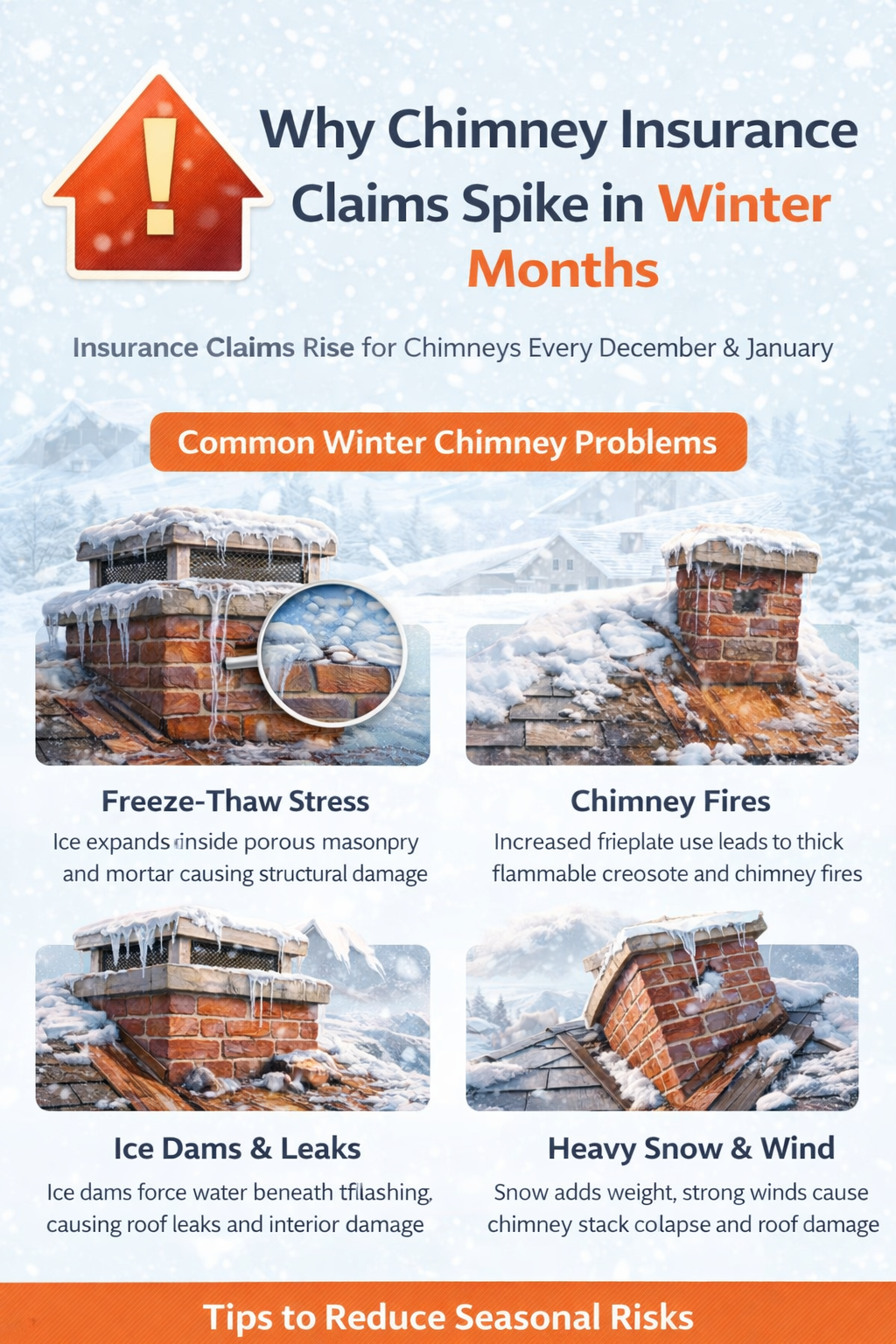
Common Chimney Problems That Trigger Insurance Claims
Chimney Fires and Fire Loss
Chimney fires often occur silently and spread into attic spaces. Creosote buildup ignites, damaging flue liners and surrounding framing. Insurance policies may cover fire loss, but claims can be denied if routine chimney inspection or chimney sweeping was neglected.
The Chimney Safety Institute of America outlines chimney fire causes and prevention .
Carbon Monoxide and Venting Failures
Blocked flues, cracked heat exchangers, and damaged exhaust pipes can push carbon monoxide back into living spaces. Carbon monoxide alarms and CO detectors are critical, especially during winter when windows remain closed.
The Centers for Disease Control and Prevention provides carbon monoxide safety guidance.
Water Damage and Frozen Pipes
Chimney water leaks often travel unnoticed behind walls. Combined with frozen or burst pipes, sump pump overflow, and melting snow, water damage becomes one of the most expensive winter insurance claims.
Why December and January Are the Peak Months
Holiday Season Risks
The holiday season increases fire risk due to candles, overloaded electrical wiring, and heavy fireplace use. Fireplace safety is often overlooked during busy gatherings, increasing the likelihood of house fires and insurance claims.
Fire safety officers consistently recommend keeping fire extinguishers accessible and smoke detectors tested. Local fire stations often offer free home fire safety visits during winter.
Weather Patterns and La Niña Effects
Winter Weather patterns like La Niña often bring heavier snowfall and rapid temperature swings. These conditions accelerate chimney damage and increase claims tied to snow and ice damage, roof leaks, and structural failure.
The National Oceanic and Atmospheric Administration tracks winter climate trends .
The Role of Chimney Inspections in Reducing Claims
Identifying Problems Before They Escalate
A professional chimney inspection identifies cracked flue tiles, damaged chimney caps, deteriorated flashing, and early signs of water penetration. A documented chimney condition report also supports insurance claims if damage occurs later.
Chimney Sweeping and Fire Prevention
A CSIA Certified Chimney Sweep removes creosote buildup and checks for obstructions like bird nests. Chimney sweeping significantly reduces chimney fire risk and supports compliance with homeowners insurance requirements.
Maintenance Steps That Lower Insurance Risk
Homeowners who prioritize home maintenance experience fewer insurance issues. The most effective prevention steps include:
- Installing stainless steel chimney caps to block water and debris
- Sealing chimney flashing and roof joints
- Scheduling annual chimney inspections and chimney sweep service
- Cleaning gutters and installing gutter guards to reduce ice dams
- Maintaining attic insulation and roof ventilation
These steps support fire prevention and reduce the likelihood of denied Home Insurance Claims.
How Insurance Policies View Chimney Damage
What Is Typically Covered
Most homeowner’s insurance policies cover sudden and accidental damage caused by chimney fires, storms, or falling objects. Coverage often includes roof damage, smoke damage, and fire loss.
What Often Gets Denied
Claims tied to neglect, lack of maintenance, or long-term water damage are frequently denied. Insurance agencies may request inspection records, chimney repairs invoices, or proof of routine maintenance.
The Consumer Financial Protection Bureau offers guidance on understanding insurance policy coverage.
Smart Safety Systems and Modern Prevention
Many homeowners now rely on smart home sensors to detect problems early. Motion detectors in garages, humidity sensors near chimneys, and alarms operating throughout the home provide early warnings for moisture intrusion or fire hazards.
Smoke alarms and carbon monoxide detectors should be tested monthly during the winter heating season.
Final Thoughts on Reducing Winter Chimney Insurance Claims
December and January expose chimney weaknesses faster than any other time of year. Freezing temperatures, heavy use, and winter storms combine to create the perfect conditions for insurance claims.
At Certified Chimney NY, we encourage proactive chimney inspections, routine chimney sweeping, and proper fire safety planning. These steps protect your home, reduce fire risk, and help ensure your homeowner’s insurance works for you when it matters most.