
Spring cleaning is a smart time to schedule chimney cleaning because the burning season has just ended. A wood stove or fireplace system can leave soot, fireplace debris, and creosote buildup inside the chimney flue. If that buildup sits through warm, humid weather, it can cause odors, mold and mildew, and a stronger fire hazard next fall. The Chimney Safety Institute of America explains that chimney care includes inspection, cleaning, and maintenance to help protect the home. Spring service gives New York homeowners time to fix problems before colder weather returns.
A chimney inspection should come before any major chimney maintenance. A certified technician can check the chimney cap, chimney crown, mortar joints, flue liner, damper, smoke chamber, refractory panels, fireplace grate, and visible masonry. This matters because freeze-thaw cycles can crack mortar, loosen bricks, and damage liners during winter. A level 1 inspection may be enough for routine use, while video scan technology may be used when deeper damage is suspected. A professional inspection helps find structural damage, water leaks, cracked flue liners, and safety concerns before they spread.
The chimney cap, rain and top covers, and chimney crown help keep water, animals, and debris out of the chimney system. If a cap is missing or bent after a weather event, rain can enter and create water damage. A cracked crown can let moisture reach the masonry and cause spalling bricks over time. During a spring home maintenance visit, the chimney professional should look for rust, loose metal, masonry cracks, and damaged mortar joints. Repairs may include a new cap, crown sealing, waterproofing sealant, or masonry work.
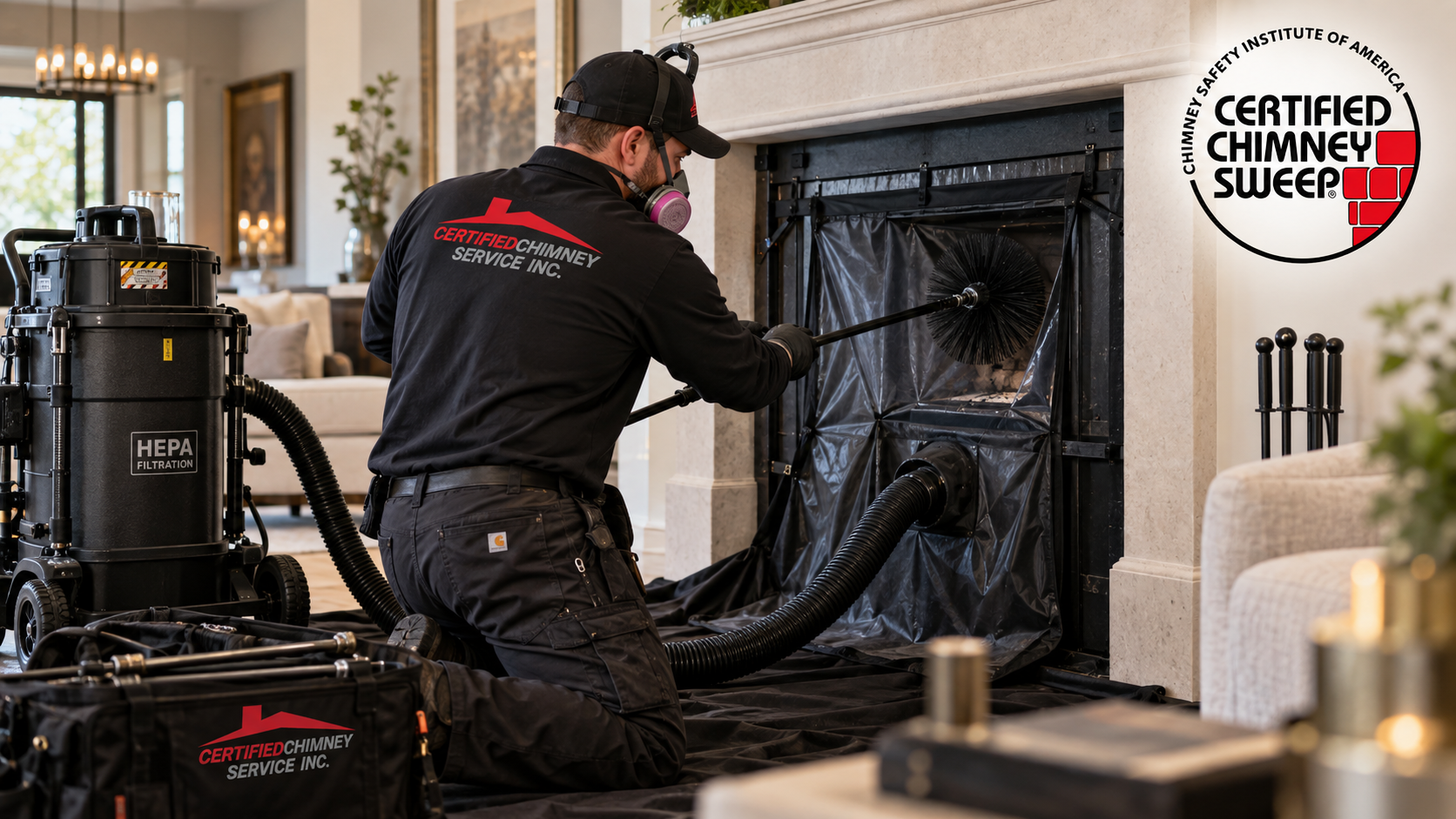
Professional chimney cleaning removes soot, ash, and creosote buildup from the chimney liner, smoke chamber, and fireplace system. This is important because creosote can ignite and cause a chimney fire. The National Fire Protection Association says NFPA 211 helps reduce fire hazards by supporting safe removal of flue gases and proper installation of solid fuel-burning appliances. Chimney sweeping with proper tools is safer and more complete than using a scrub brush, baking soda, household dishwashing liquid, or other home cleaning methods on hidden areas.

New York winters can be rough on masonry chimneys because water expands when it freezes inside small cracks. This freeze-thaw process can create spalling bricks, cracked crowns, damaged mortar joints, and hidden structural damage. Spring is the right time to check for white staining, water stains, damp odors, loose brick, and mold and mildew near the fireplace. If water damage is found, the chimney may need masonry repair, waterproofing sealant, or a new cap. Waiting can allow moisture to reach the flue liner, fireplace system, and nearby framing.
Carbon monoxide safety should be part of every spring chimney checklist. A blocked chimney, cracked liner, poor draft, or damaged heating system can create carbon monoxide leaks. The EPA carbon monoxide safety guidance recommends having fuel-burning appliances, chimneys, and flues inspected by a qualified technician. Homeowners should also test carbon monoxide detectors and replace batteries if needed. If the fireplace has smoke problems, a lack of heat, or draft issues, the chimney system should be checked before it is used again.
Certified Chimney provides chimney sweep service, chimney cleaning, chimney inspection, chimney maintenance, professional chimney cleaning, masonry repair, cap replacement, waterproofing, wildlife removal, and chimney repair for homeowners. Spring scheduling is helpful because chimney cleaners can find issues before the fall rush. This gives you time to fix damaged mortar joints, cracked crowns, water leaks, flue liner problems, and fire protection concerns. Visit Certified Chimney to schedule chimney service and keep your home ready for the next burning season.
Get clear answers to common questions Connecticut homeowners have about spring chimney cleaning, chimney inspections, creosote buildup, water damage, chimney caps, and carbon monoxide safety.
Article details:
Share:
Covers fireplaces, wood stoves, pellet stoves, and heating systems including gas and oil systems. Book now before the winter rush fills our schedule.