
The first time you notice it, it’s usually small. A dusty black outline on the brick. A smudge on the hearth. A little dark film on the fireplace glass that wasn’t there last week.
Most New York homeowners don’t even call it soot at first. They call it “that black stuff” around the fireplace.
But soot around your fireplace is your home’s way of telling you something. Sometimes it’s normal, especially after a few fires. Other times, it’s a warning sign that your chimney system is not venting correctly, your fuel isn’t burning clean, or you could be building up the kind of residue that leads to creosote buildup and even a chimney fire.
In this guide, we’ll break down what soot actually is, what causes it in NY homes, what it means for air quality and safety, and when it’s time to call Certified Chimney NY for professional chimney cleaning and a full chimney inspection.
Soot is made up of tiny carbon particles created when something burns incompletely. That could be wood in a traditional fireplace, or natural gas in gas fireplaces if the air-to-fuel mixture is off.
Think of soot like smoke that never fully leaves. Instead of rising up and out with the flue gases, it settles onto surfaces and leaves behind that powdery black residue.
In New York homes, soot often shows up:
A little soot after regular fireplace use can be normal. Heavy soot build-up is not.
This is where people get confused, and honestly, it makes sense. Soot and creosote both look dark and messy, but they are not the same problem.
Soot is generally dry and powdery. It’s often what you see around the front of the fireplace, especially after multiple fires or a smoky startup.
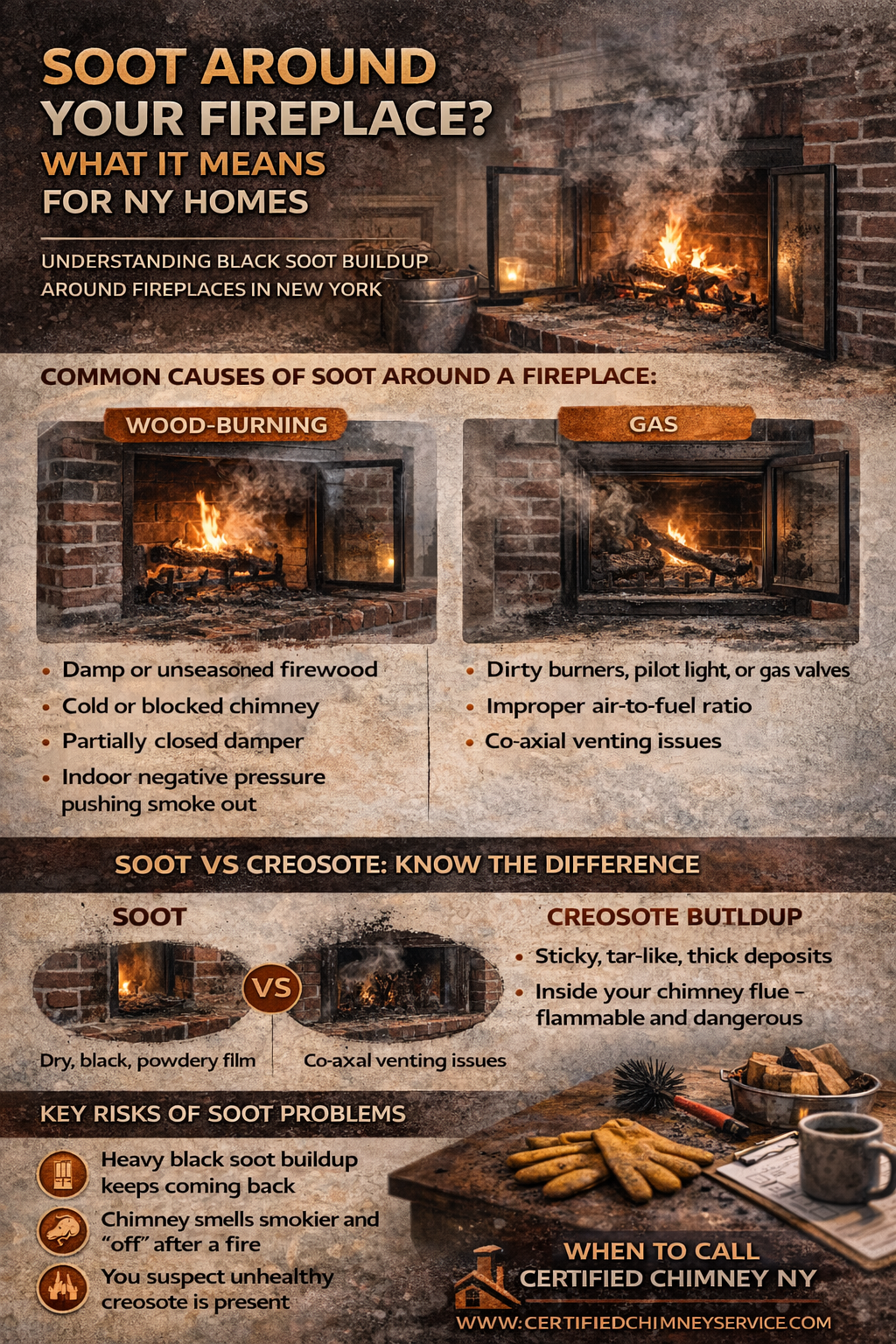
Creosote comes from wood tar vapors that cool and stick to the inside of your flue. Over time it hardens into tar-like spots or thick glazed deposits. Creosote buildup is the bigger danger because it is highly flammable and is one of the main causes of chimney fires.
The NFPA explains why fireplaces, chimneys, and vents need regular maintenance to reduce fire hazards. Their guidance is worth reading if you want the safety side explained clearly
If you are seeing black buildup and you are not sure what it is, Certified Chimney NY can inspect the flue and identify whether you are dealing with surface soot, creosote stages, or both.
Soot does not appear randomly. There is always a reason.
In wood systems, black soot usually points to incomplete combustion or poor venting. That could be from:
When smoke cannot rise cleanly, it spills forward, and soot settles where you can see it.
Gas fireplaces should burn clean. When soot shows up in a gas system, it is usually a signal that something is off with combustion.
Possible causes include:
If you have a gas fireplace and you are suddenly seeing black soot, do not ignore it. That is a situation where a professional inspection makes sense quickly.
This is one of the most common questions NY homeowners ask, and it’s a smart question.
Black soot itself does not automatically mean carbon monoxide is present, but soot can be a sign that combustion is not happening cleanly. And when combustion is off, carbon monoxide risk becomes part of the conversation.
Carbon monoxide is a colorless, odorless gas, which is why carbon monoxide detectors matter so much. The CDC provides a clear overview of carbon monoxide exposure symptoms and prevention, especially relevant during heating season.
If your fireplace is smoky, drafting poorly, or producing unusual soot, it’s worth double-checking that your CO detectors are working and placed correctly.
And if anyone in the home feels dizzy, nauseous, unusually tired, or headachy while a fireplace is running, shut it down and get help immediately.
Yes, it can, especially when it becomes airborne.
Soot is made up of small carbon particles that can irritate your lungs and make the home feel “stale” in winter. If you have kids, older adults, or anyone with asthma, soot exposure can be especially uncomfortable.
Even without major symptoms, soot can lower indoor air quality and leave your home smelling smoky even after the fire is out.
It can also spread farther than you think. In some cases, soot particles get pulled into your air duct/HVAC system and travel through HVAC vents, especially if the fireplace is in a main living area with strong airflow.
Small amounts of soot on the hearth can be cleaned carefully, but homeowners should avoid going too aggressive with DIY soot removal, especially with harsh chemical cleaners.
Before listing anything, here’s the honest truth: some DIY methods make the mess worse by spreading soot through the room like powdered charcoal.
If you want to do light cleanup safely:
Avoid random “internet cleaning formulas” unless you know the surface can handle it. Many products contain solvents that can damage brick, stone, or fireplace finishes.
Also, cleaning the visible soot does not address the real issue if your chimney system is drafting poorly or accumulating creosote inside.
That is where Certified Chimney NY comes in, because professional chimney sweeping removes buildup from the firebox, smoke shelf, smoke chamber, and flue where it actually matters.
A proper chimney cleaning is not just running a brush up the chimney and leaving.
Professional chimney sweeping often involves:
If needed, Certified Chimney NY can also recommend repairs like chimney caps, liner work, or masonry corrections that reduce soot and smoke problems for good.
Most soot around a fireplace is small-scale and manageable. But if you have a larger smoke event, a chimney fire, or a puff-back type incident, soot can spread fast and become a restoration situation.
That is when NY homeowners start asking about:
If you only remember one thing from this article, make it this:
Soot is normal in small amounts. Recurring soot is a message.
You should call Certified Chimney NY if you notice:
Chimney cleaning, chimney inspections, and fireplace maintenance are the fastest way to keep your system safe, efficient, and ready for winter.
Soot around your fireplace is not something to panic about, but it is something to take seriously. It can be harmless surface residue, or it can be your first visible warning sign of draft trouble, creosote buildup, or ventilation problems.
For NY homeowners, the goal is not a perfect spotless fireplace. The goal is a fireplace that burns clean, drafts properly, and does not create fire hazards or health risks.
If you want a professional answer instead of guessing, Certified Chimney NY can inspect your chimney system, remove soot safely, and help prevent chimney fires before they ever become a real problem.
Chimney Cleaning – $99.99 per flue