
Winter weather on Long Island can place serious stress on a masonry chimney. Snow, rain, and freezing temperatures create conditions that weaken chimney masonry over time. Moisture enters small cracks in bricks and mortar joints. When temperatures drop, that moisture freezes and expands. This process is known as freeze-thaw cycles and it can cause crumbling mortar, structural cracks, and loose bricks. Over time, the damage can affect the chimney crown, flue liner, and surrounding metal components. For Long Island homeowners, winter damage can lead to water infiltration and serious structural damage if chimney repair is delayed.
Freeze-thaw cycles are one of the most common causes of chimney masonry damage in coastal regions like Long Island. Water infiltration occurs when rain or melting snow enters cracks and gaps in chimney masonry. As temperatures fall overnight, the trapped water freezes and expands inside the masonry materials. This expansion slowly breaks apart bricks, mortar joints, and chimney crowns. Over time, the structure weakens and small cracks grow into larger structural cracks. These cracks allow more water infiltration, which accelerates the damage. If ignored, freeze-thaw cycles can compromise the structural integrity of a masonry chimney and lead to expensive masonry repair. The National Weather Service notes that repeated freeze-thaw cycles can cause structural damage to exposed masonry materials.
Many homeowners do not notice chimney problems until visible damage appears. Water stains on interior walls near the fireplace can indicate water infiltration through chimney masonry. Cracked mortar, crumbling mortar joints, and loose bricks are also common signs of winter damage. In some cases, homeowners may notice mold and mildew forming near the chimney due to hidden moisture. Smoke damage or poor airflow may also indicate damage to the flue liner or fire bricks inside the chimney system. Recognizing these warning signs early helps prevent larger chimney repair projects and protects the home from interior water damage.
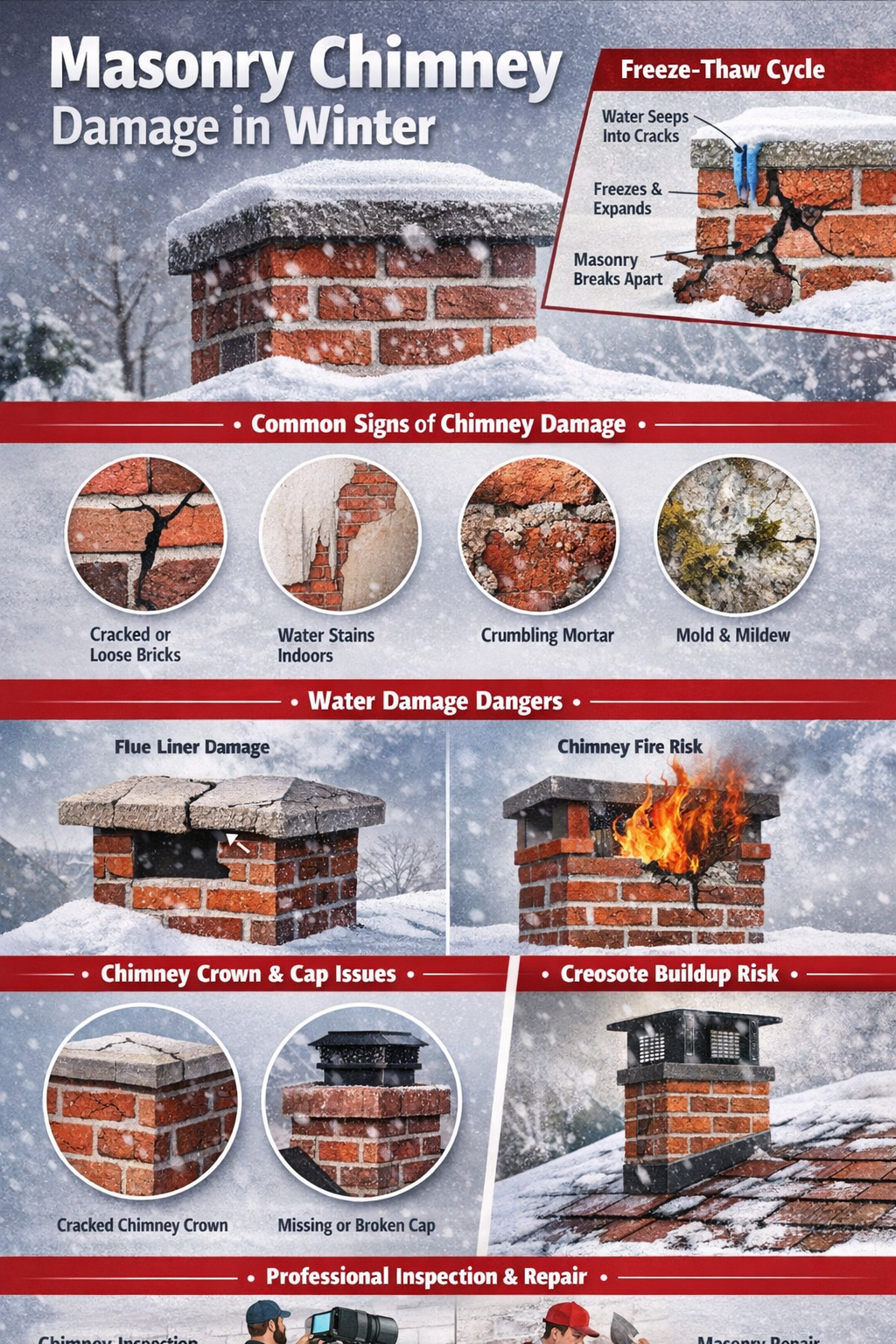
Water damage does more than weaken masonry structures. It can also create serious fire hazards inside the chimney system. When moisture reaches the flue liner, it can damage clay tile liners or refractory brick used to protect the chimney interior. Damaged liners allow heat and gases to escape into surrounding structures. This increases the risk of chimney fires and carbon monoxide entering the home. According to the National Fire Protection Association, chimney systems must remain structurally sound to prevent fire hazards and gas exposure. Maintaining a dry chimney structure helps ensure safe operation of fireplaces, wood stoves, and heating systems.
After a harsh winter season, a professional chimney inspection can identify hidden structural damage. Chimney inspections examine the chimney crown, flue liner, mortar joints, and structural supports that hold the chimney in place. These inspections help detect water infiltration, cracked mortar, and creosote buildup that could lead to chimney fires. The Chimney Safety Institute of America recommends regular chimney inspections to ensure safe chimney operation. Inspections also help homeowners create a repair plan that addresses both safety concerns and long-term chimney durability.
A Level 1 Inspection is the most common type of chimney inspection. It is typically performed during routine home maintenance when the chimney system has not changed. Technicians examine visible components such as the chimney crown, chimney cap, flue liner, and masonry structure. This inspection ensures the chimney operates safely with the current heating system.
A Level 2 Inspection is more detailed and may include video scanning of the flue liner. It is recommended after structural damage, chimney fires, or property transfers. According to NFPA Standard 211, Level 2 inspections help identify hidden structural damage or safety risks that cannot be seen during a basic inspection.
A masonry chimney is a chimney structure built from brick, stone, or concrete blocks. These materials form the outer chimney masonry while the interior contains a flue liner that safely vents smoke and gases. Inside the chimney, fire bricks and refractory brick help protect the structure from high temperatures.
Masonry chimneys are durable when maintained properly. However, they can deteriorate over time due to weather exposure and structural movement. Freeze-thaw cycles, water infiltration, and creosote buildup can weaken masonry structures if repairs are not performed. Regular chimney inspections help protect the structural integrity of these chimney systems.
The chimney crown and chimney cap play a major role in protecting chimney systems from winter damage. The chimney crown is the concrete surface that seals the top of the chimney. It directs water away from the masonry structure and protects the flue liner from exposure.
If the chimney crown cracks, water infiltration can occur. A missing or damaged chimney cap also allows rain, snow, and debris to enter the flue liner. This moisture can lead to interior water damage and mold growth. Repairing the chimney crown and replacing damaged chimney caps helps prevent these problems.
Creosote buildup is another issue that often develops during winter. Creosote forms when smoke and gases cool inside the chimney flue liner. Over time, these deposits build up along the chimney walls in different creosote stages. Thick creosote buildup increases the risk of chimney fires.
Routine chimney cleaning removes these deposits and improves ventilation. Professional chimney cleaning often uses specialized tools and True Ventilation techniques to remove creosote safely. According to the Environmental Protection Agency, proper ventilation and maintenance help reduce indoor air pollution and protect household air quality.
Masonry repair solutions depend on the extent of structural damage. Minor damage may only require repointing mortar joints or sealing cracks in chimney masonry. Repointing restores cracked mortar and strengthens the masonry structure.
More severe damage may require chimney masonry repair involving replacement bricks, structural supports, or a stainless steel liner installation. In some cases, chimney rebuilding may be necessary if the structure becomes unstable. Using high-quality materials and skilled masonry work helps restore chimney safety and structural integrity.
Many homeowners wonder if chimney repair can be completed during cold weather. In some cases, emergency repairs can be performed during winter to prevent further structural damage. Masonry accelerators allow mortar to cure properly even in colder temperatures.
However, major structural work is often easier during warmer months when materials cure more consistently. A professional chimney inspection can determine whether immediate emergency repairs are needed or if the work can wait until spring. Addressing urgent structural cracks early helps prevent larger repair costs later.
For Long Island homeowners, winter weather can cause serious chimney masonry damage. Freeze-thaw cycles, coastal conditions, and heavy precipitation place constant stress on chimney structures. Without regular inspections and repairs, these problems can lead to water damage, chimney fires, and carbon monoxide exposure.
Scheduling a professional chimney inspection with Certified Chimney New York can help identify problems early. Professional chimney repair services restore structural integrity, repair damaged masonry, and protect the chimney system from further weather damage. Regular maintenance ensures your fireplace and heating system remain safe and reliable throughout the year.
Get quick answers to common questions New York homeowners have about chimney inspections, repairs, and seasonal maintenance after winter.
Article details:
Share:
Protect your chimney from rain, moisture, and costly water damage.