
A chimney cap is one of those things most New York homeowners never think about until something feels off.
It usually starts small. You notice a damp smell after a storm. You hear a faint rattling on windy nights. Or you see a water stain forming near the fireplace and suddenly you’re thinking, “Wait… do I even have a chimney cap up there?”
The annoying part is this: a missing or failing chimney cap can cause problems that feel like a roof leak, a fireplace issue, or even a heating system problem. And in NY, where we deal with coastal wind, freeze-thaw cycles, and heavy rainstorms, chimney caps take a beating.
At Certified Chimney New York, chimney cap issues are one of the most common fixes we do because the symptoms show up fast and the damage can get expensive if it’s ignored.
Here’s how to tell if your chimney cap is missing or failing, what it can lead to, and when it’s time to schedule a professional chimney inspection.
A chimney cap is basically the “umbrella” and “screen door” of your chimney system.
It helps prevent:
The Chimney Safety Institute of America (CSIA) explains the importance of chimney components, inspections, and chimney safety, especially when it comes to preventing hazards like chimney fires and carbon monoxide issues.
If you live in New York City or Long Island, chimney caps also matter because the wind can push rain sideways. A cap is not just about rain falling straight down. It’s about keeping your flue protected from everything the weather throws at it.
You don’t need to climb on your roof to catch a lot of chimney cap problems.
Here are the most obvious signs homeowners in NY notice first.
If you hear scratching, fluttering, or chirping, your chimney cap may be missing or the mesh cage is damaged.
Bird guards and mesh screens are there for a reason. Without them, the chimney becomes a warm, protected space for nesting, especially during cold weather.
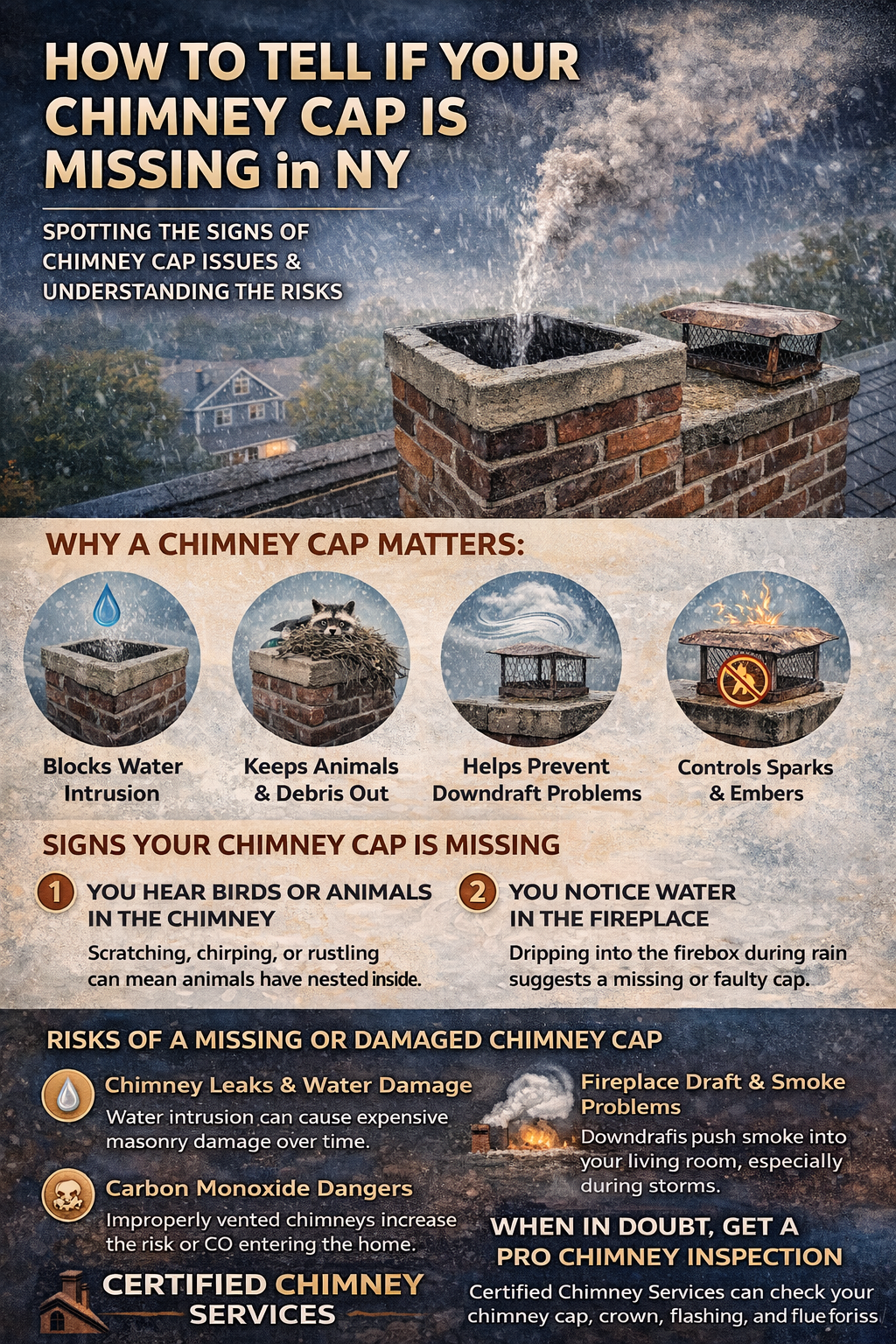
If you see water dripping into the firebox, that’s usually a direct sign of water intrusion.
A cap is supposed to stop rain from getting straight into the chimney flue. If the cap is missing, water can run down into the smoke chamber and leave water stains on the masonry.
If you get that damp, musty smell after storms, it often means moisture is getting into the chimney system and soaking brick, mortar, and even the flue liner.
The longer moisture sits, the higher the chance of mold growth and masonry damage.
The EPA’s mold resource is a credible guide explaining how moisture leads to indoor mold concerns, which is why chimney leaks should be taken seriously.
Sometimes the cap isn’t missing. It’s just worn out or no longer doing its job.
If you see rust stains running down from the top of the chimney, the cap may be corroding. This is common in Long Island areas where salt air accelerates metal wear.
If you have an older metal cover that is not stainless steel, corrosion can happen faster than homeowners expect.
A cap that was poorly secured or is pulling away from the mortar slab can rattle during storms. Those strong coastal gusts in Suffolk County can turn a small loose cap into a full blow-off situation.
From the ground, you might see:
A failing cap is not just an “eventually” issue. In NY winter weather, it can become a right now issue.
Here’s what it can lead to.
Water intrusion does not just stain walls. It breaks down the chimney crown, mortar joints, and chimney liner over time.
Once water gets in, freeze-thaw cycles do the rest. The water expands when it freezes and that causes cracking, spalling bricks, and chimney rebuild needs.
If the cap is missing, wind can blow down the chimney and disrupt fireplace exhaust. That leads to smoke puffing into the home, especially during cold snaps.
When draft is unstable, combustion byproducts do not always vent properly. This matters for fireplaces, but it is even more serious if the chimney system vents home heating appliances.
The U.S. Consumer Product Safety Commission CO safety page explains why carbon monoxide detectors matter and how CO exposure can happen when appliances are not venting correctly.
One reason chimney caps get ignored is because the symptoms can look like something else.
Homeowners often assume the problem is:
And yes, chimney flashing can leak too. But a missing cap can dump water straight into the chimney system, then the moisture travels and shows up in weird places inside your home.
That’s why a chimney inspection should look at the full chimney system, not just the top.
A chimney cap and chimney crown work together.
If the cap is missing or loose, more water hits the crown directly. Over time, you may see:
This is especially common after winter storms, when water infiltration and freeze-thaw damage stack up fast.
Not every cap works for every chimney. In NY, a good cap usually needs to handle wind, moisture, and temperature changes without corroding.
A stainless steel cap is one of the most durable options, especially near Long Island coastal areas where salt air can shorten the life expectancy of cheaper metals.
If you have a multi-flue chimney, a custom cap can protect all flues at once and reduce water intrusion in a cleaner way than patchwork individual rain caps.
Mesh cages help stop nesting, and spark control helps reduce fire risks. This matters more if you actively burn wood and want safer exhaust control.
For general fire safety regulations and chimney standards, many professionals reference NFPA 211 as a widely recognized standard for chimneys, fireplaces, and vents.
If you suspect your chimney cap is missing or failing, the safest move is scheduling a chimney inspection.
At Certified Chimney New York, we can check:
If you live anywhere in New York City, Long Island, Suffolk County, or the Hudson Valley, you don’t want to wait until spring to fix a chimney leak. Winter moisture moves fast, and freeze-thaw cycles are brutal on masonry chimneys.
A missing or failing chimney cap is one of those repairs that feels minor until you see what it can cause: water stains, chimney leaks, draft issues, and long-term masonry damage.
If you’ve noticed dripping, odor, rust stains, animals, or smoke issues, it is worth getting the chimney system checked now.
And if you want a simple, professional answer without guessing, Certified Chimney New York can inspect your chimney cap, explain what’s happening, and help you fix it the right way.
Chimney Cleaning – $99.99 per flue