Squirrels and Rodents
Squirrel infestation increases in winter as food becomes scarce. Rodent movement also increases under snow cover, allowing rats and mice to access foundations and climb into chimneys unnoticed.
Bats
Bats seek stable temperatures and darkness. Small gaps near flue liners or a poorly sealed top-sealing damper can become an entry point.
Risks of Animals in Chimneys
Ventilation and Smoke Problems
Blocked flues restrict airflow, causing smoke to back up into the home. This puts stress on the entire chimney system and can impact indoor air quality.
Fire Hazards and Fire Risk
Nesting materials are highly flammable. When a fire is lit, those materials can ignite quickly. The Chimney Safety Institute of America explains how obstructions increase fire hazards and chimney fires.
Disease, Odors, and Structural Damage
Wild animals carry parasites and bacteria. Their droppings create foul odors and moisture buildup that accelerates damage to flue liners and masonry.
Preventive Measures to Secure Your Chimney
Installing or Repairing a Chimney Cap
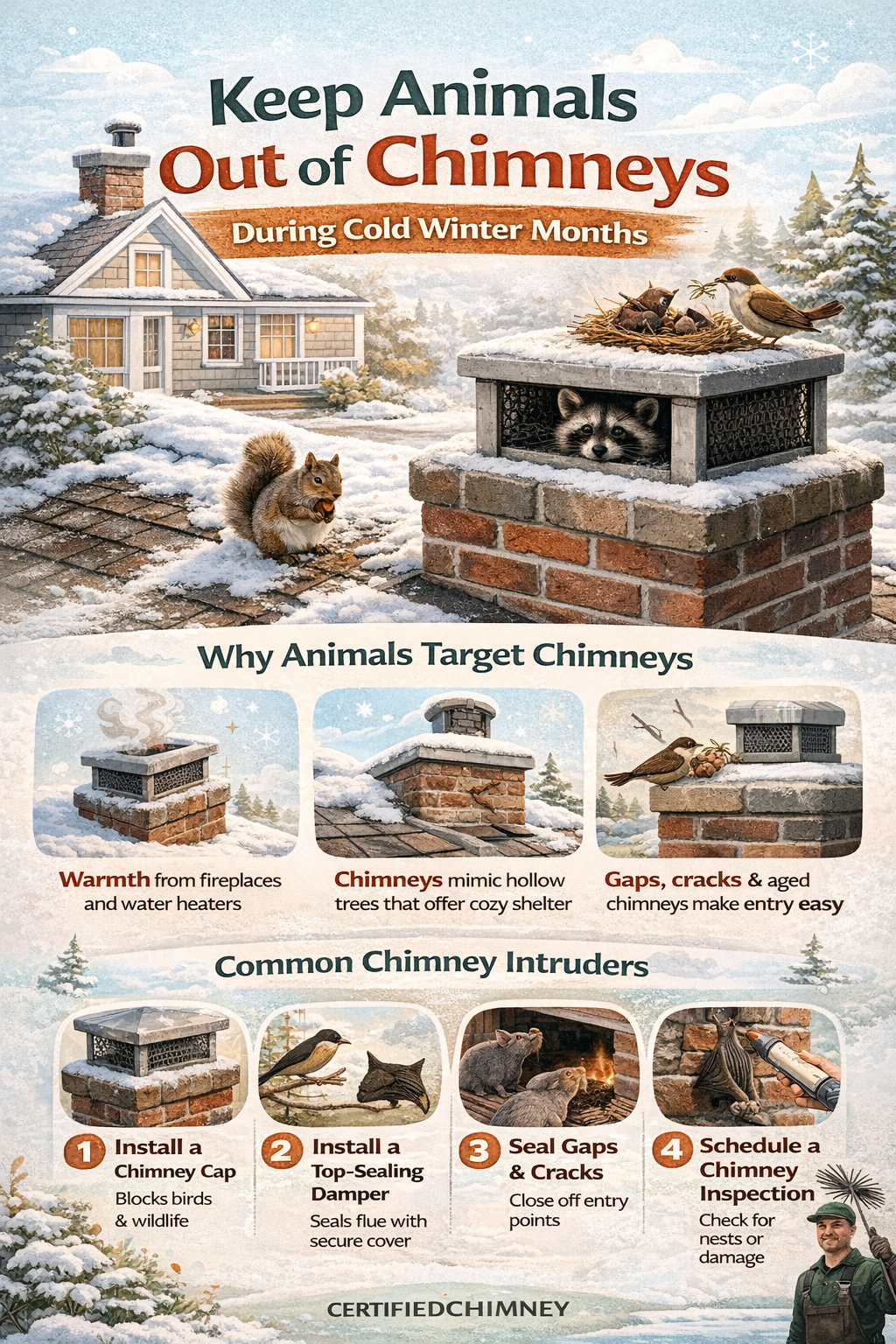
A stainless steel cap is one of the most effective defenses against animal intrusions. A properly installed stainless steel chimney cap blocks wildlife while allowing smoke and gases to exit safely. It also prevents rain and snow from entering the flue.
Using Mesh Screens and Protective Materials
Mesh screen systems made from stainless steel, copper mesh, or hardware cloth keep birds and rodents out. Steel wool may offer a short-term solution, but it should never replace permanent materials designed for chimney use.
Top-Sealing Dampers and Fireplace Doors
A top-sealing damper creates an airtight seal at the top of the flue. Combined with secure fireplace doors, it prevents animals from entering when the fireplace is not in use and improves energy efficiency.
Sealing Points of Entry Around the Chimney
Cracks in masonry, deteriorated roof sealant, and gaps around chimney flashing allow animals to bypass caps altogether. Sealing points of entry reduces the need for wildlife removal later.
Animals often enter adjacent spaces like attics or crawl spaces first, then move into the chimney from inside the home.
Importance of Regular Chimney Inspection
A professional chimney inspection identifies early signs of nesting materials, moisture damage, and animal activity. The National Fire Protection Association recommends annual inspections for fireplaces and venting systems.
A professional chimney inspection is especially important for homes with older flue liners or multiple venting appliances.
The Role of Chimney Sweeping in Prevention
Chimney sweeping removes debris that animals use to build nests. A chimney sweep service also checks for damage caused by claws, chewing, or moisture.
Regular chimney sweeping reduces fire risk and helps identify issues before they require major chimney repairs.
Managing the Exterior Environment Around Your Home
Tree Trimming and Yard Maintenance
Oak trees and overhanging branches provide easy access to rooftops. Trimming branches at least six feet away from the chimney reduces wildlife access significantly.
Removing Food Sources
Bird feeders, pet food bowls, trash cans, and unsecured storage bins attract wildlife. Even small amounts of pet food can encourage repeat visits.
The Humane Society explains how eliminating attractants reduces wildlife conflicts.
Professional Wildlife Removal Services
When to Call for Help
If you hear scratching, chirping, or loud vocalizations coming from the chimney, stop using the fireplace immediately. Wildlife removal should be handled by trained professionals who understand safety protocols and local regulations.
Ethical and Safe Animal Removal
Humane removal services often coordinate with a Wildlife Rehabilitation Center to ensure animals are relocated safely. Resources like explain ethical wildlife handling practices.
Nationally Certified Chimney Professionals combine Technical Services like chimney inspection, chimney sweeping, and sealing points of entry to prevent repeat issues.
Long-Term Prevention Strategies That Work
Blocking a chimney once does not guarantee animals will stay out. Wildlife remembers safe shelter locations. Without consistent maintenance, animal intrusions often return year after year.
A long-term plan includes chimney caps, sealed flashing, routine chimney inspections, and regular chimney sweeping. These steps protect the chimney system, reduce fire hazards, and prevent foul odors from becoming a recurring problem.
Common Questions Homeowners Ask
How do you keep rodents out of chimneys?
Install a stainless steel cap, seal gaps, and eliminate food sources like bird feeders and pet food.
What is the 3:2-10 rule for chimneys?
It is a height requirement that ensures proper draft and indirectly reduces animal access.
How do you block a chimney in winter?
Use a top-sealing damper and keep fireplace doors closed when the fireplace is not in use.