Construction debris or fallen masonry
Flaking flue tiles, deteriorating refractory cement, and loose bricks can fall into the smoke chamber, creating dangerous blockages.
Damaged or missing protective covers
Without a functioning chimney cap or chase cover, leaves, twigs, rainwater, and animals have direct access into the chimney system.
Visible Indicators That Your Chimney May Be Blocked
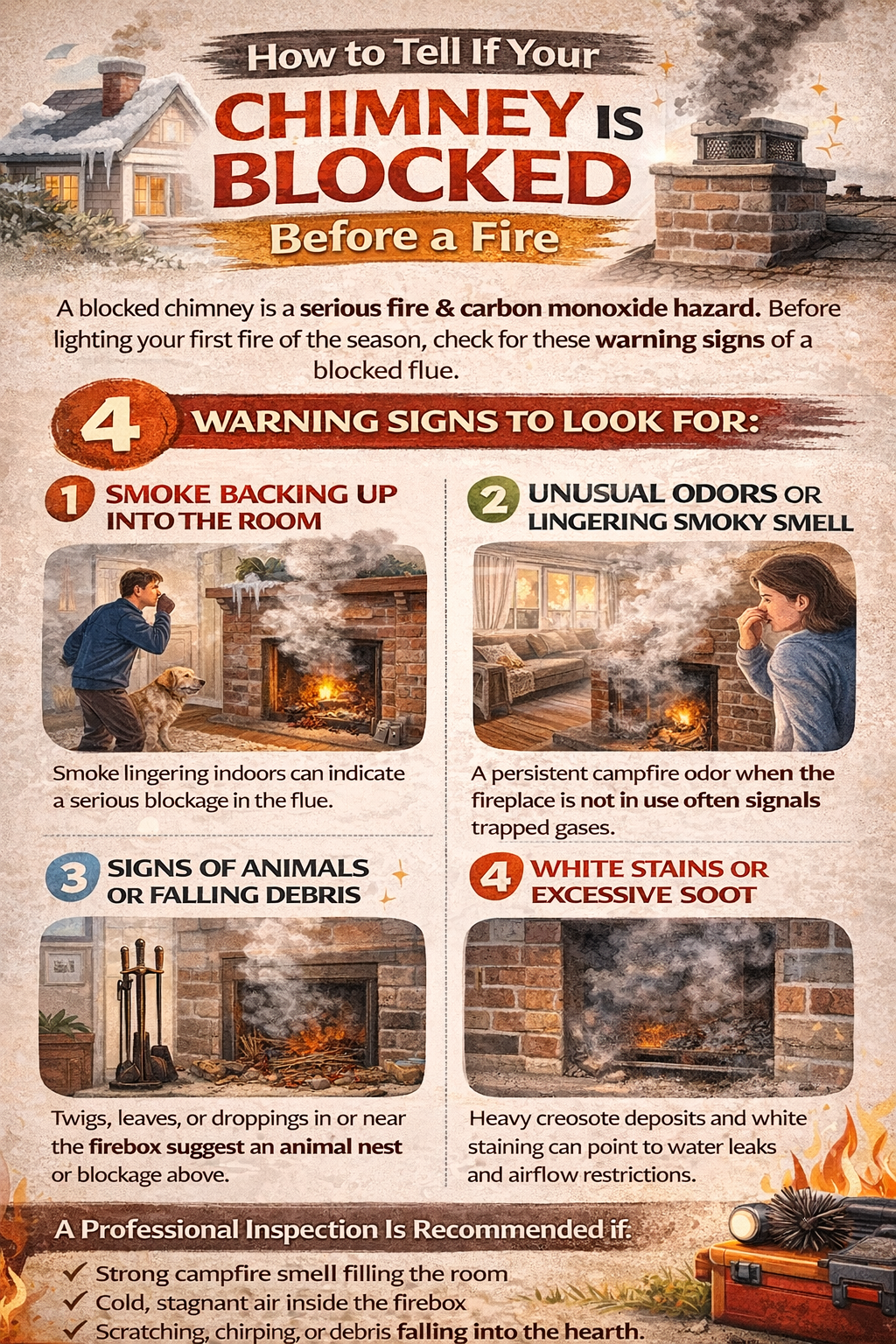
Homeowners often notice small changes before realizing they point to a chimney obstruction.
Excessive soot or black residues around the fireplace
If soot collects unusually fast, airflow through the chimney flue may be restricted.
A persistent smoky smell even when the fireplace is not in use
A smoky smell during humid weather often signals trapped fire byproducts inside the chimney liner.
Water stains or signs of moisture
Leaks around the damper seals or smoke chamber area can indicate structural issues that contribute to blockages.
Unusual sounds
Scratching, chirping, or shifting debris can be the sound of an animal’s nest or loose materials blocking the flue.
How to Assess Your Chimney Draft Before Using Your Fireplace
A simple draft test can reveal early signs of restricted airflow.
Smoke test
Light a small piece of paper in the firebox. Smoke should move upward quickly.
If smoke lingers or rolls into the room, air is struggling to move through the flue.
Difficulty keeping the fire lit
Poor draft forces smoke downward and starves the fire of oxygen.
Cold, stagnant air inside the firebox
This suggests a blockage inside the upper flue or damage to the damper system.
For additional guidance on safe fireplace operation, the National Fireplace Institute provides homeowner safety resources.
Tools Homeowners Can Use for a Basic Check
While full inspections should be left to chimney professionals, homeowners can safely perform minor checks with:
- A flashlight for examining visible areas around the flue and chimney damper
- A small mirror to see past the smoke chamber
- A carbon monoxide detector for early warning of ventilation problems
These tools help identify visible blockages, but complete inspections require specialized chimney cleaning equipment and professional training.
Step-by-Step: What a Quick Home Inspection Should Include
For homeowners who want to check their system before calling a professional chimney sweep, here is what Certified Chimney recommends:
1. Inspect the area around the firebox
Look for excessive soot, draft issues, or crumbling masonry.
2. Open and test the chimney damper
Make sure the damper seals move smoothly and are not obstructed by debris or nesting materials.
3. Look up the flue with a flashlight
If you notice tar-like substances or thick creosote accumulation, avoid using the fireplace until a chimney inspection is completed.
4. Listen for airflow
When the damper is open, you should hear faint airflow moving upward. Silence can indicate a blockage.
When You Should Call a Professional Chimney Sweep Immediately
Homeowners often underestimate how quickly a chimney fire can ignite, especially when creosote buildup sits near nesting materials. You should call a chimney professional right away if you notice:
- Smoke backing up into the room
- A lingering smoky odor not linked to weather
- Water stains near the flue or refractory cement
- A cold draft that persists even with the damper open
Professional help becomes essential if your chimney experiences structural issues, blocked flue tiles, or advanced creosote buildup.
Why Professional Chimney Services Are Essential for Safety
Certified chimney service technicians use advanced inspection cameras, spark arrestors, specialized brushes, and ventilation testing tools to identify hazards homeowners cannot see. A professional chimney sweep also checks for:
- Fire safety compliance
- Proper damper functioning
- Integrity of the chimney liner
- Signs of structural deterioration
- Incorrect installation of chimney caps or chase covers
Annual chimney cleaning inspection is recommended by fire safety experts to prevent home fires and protect against carbon monoxide poisoning. You can review national guidelines from the NFPA for additional safety standards.
Final Thoughts: Safety First Before Lighting Any Fire
A blocked chimney is more than an inconvenience. It can lead to chimney fires, toxic fumes, or carbon monoxide exposure without warning. Taking a few minutes to check for early warning signs and scheduling routine inspections protects your home, your family, and your fireplace investment. If you are unsure about the condition of your chimney, Certified Chimney’s experts can provide thorough chimney solutions, chimney repair service options, and masonry rebuilds to restore safe operation.