Chimney Fires Increase Between Thanksgiving and New Year’s
Across the region, chimney professionals see the same pattern year after year:
- Homeowners haven’t cleaned their chimney since last season
- They light multiple fires in a short period
- Heat, soot, and creosote build up rapidly
- A spark reaches the flammable buildup
Most chimney fires aren’t dramatic explosions—they’re slow, damaging burns inside the flue tiles. Many homeowners have no idea a fire even happened until a Level 2 inspection reveals cracks.
Carbon Monoxide Becomes a Real Risk
When a chimney is blocked or drafting poorly, carbon monoxide can’t escape properly.
This becomes especially dangerous during holiday gatherings because:
- More people are inside
- Windows remain closed
- Fireplaces run for hours
Even a mild blockage can push fumes into the home.
H2: Signs Your Chimney Isn’t Ready for Holiday Use
Many homeowners overlook early warning signs until guests start arriving and the fireplace refuses to behave. Here’s what often shows up right before the big holiday weekend:
H3: Smoke Backing Into the Room
If smoke spills into the living room—especially when starting the fire—something is interfering with the draft. This often points to:
- Creosote buildup
- Flue blockage
- Cold-air plug
- Oversized or damaged flue tile
H3: Strange Smells When the Fireplace Isn’t In Use
A strong, sour, or smoky odor is usually a sign of:
- Moisture mixing with soot
- Animal nesting
- Hidden creosote layers
- Damaged chimney cap
During winter humidity, those odors intensify.
H3: Difficulty Getting the Fire to Stay Lit
A weak flame often means the chimney isn’t pulling air properly.
On Long Island and NYC, older homes especially struggle with:
- Improperly sized flues
- Missing liners
- Rusted or broken dampers
H3: Soot or Dust Falling Into the Firebox
Any debris from above should be treated as a warning—something inside the chimney system is degrading or loose.
H2: What a Holiday-Season Chimney Inspection Includes (And Why It Matters)
A proper inspection before holiday usage isn’t just “cleaning the chimney.”
Certified Chimney Service performs a full diagnostic of the system so homeowners have peace of mind during gatherings.
Here’s what’s included (and why it matters):
|
Creosote Levels
|
Thickness and type of buildup
|
Prevents chimney fires and blockages
|
|
Flue Condition
|
Cracks, gaps, misalignment
|
Ensures fumes and smoke escape safely
|
|
Damper Operation
|
Proper opening/closing
|
Improves draft and fire performance
|
|
Chimney Cap & Screen
|
Nesting, rust, missing parts
|
Prevents animals and moisture
|
|
Smoke Shelf Condition
|
Debris accumulation
|
Reduces smoke backflow
|
|
Firebox Inspection
|
Loose mortar, damaged brick
|
Ensures structural stability
|
|
Exterior Masonry Check
|
Cracks, leaks, water intrusion
|
Protects against freezing damage
|
During the holidays, every one of these components plays a larger role because the fireplace runs longer and hotter than usual.
H3: Why Level 2 Inspections Are Crucial This Time of Year
For homes in NYC, Westchester, and especially older Long Island properties, a Level 2 inspection offers much deeper insight.
It’s recommended if:
- You haven’t had a cleaning in over a year
- You plan to use the fireplace heavily during holidays
- You recently purchased the home
- You’ve experienced smoking issues
A Level 2 inspection uses camera technology to check every inch of the flue—something a standard sweep can’t do.
H2: How to Prepare Your Fireplace for Heavy Holiday Use
Most homeowners wait until the week before Thanksgiving or Christmas to think about their fireplace, but the best results come from getting ahead of the surge. The goal isn’t just to “clean the chimney”—it’s to make sure the entire system is healthy enough to handle long, consecutive burn times.
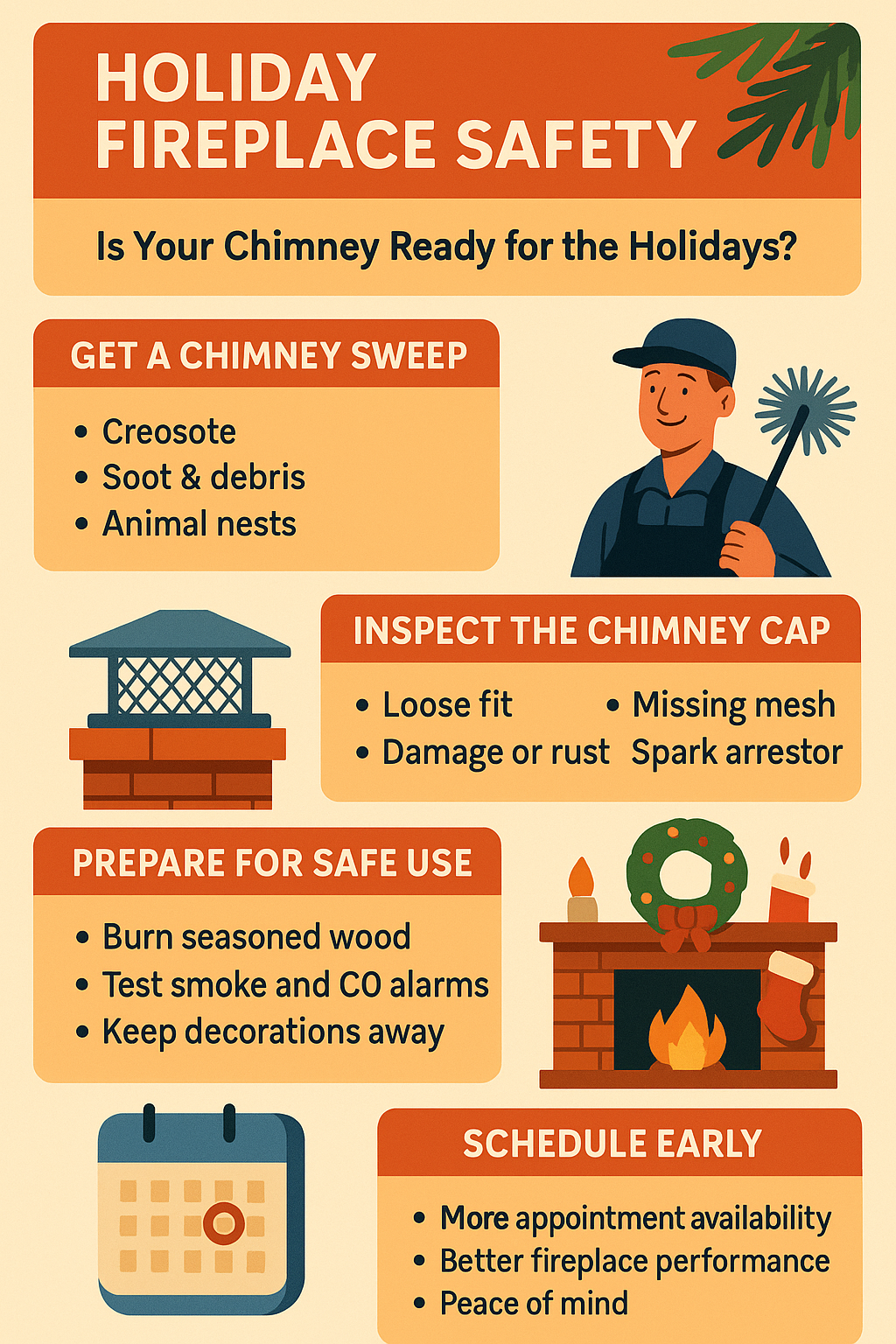
H3: Get a Professional Sweep Before the First Fire of the Season
Your fireplace might have been perfectly fine last winter, but the conditions inside your chimney aren’t the same now. Heat, humidity, rain, nesting, and masonry shifts all change what the inside of a flue looks like.
A professional chimney sweep removes:
- Creosote glaze
- Soot
- Animal debris
- Loose tile fragments
- Leaves and windblown material
This isn’t the kind of cleaning a homeowner can do with a brush—creosote glaze needs specialized tools, and removing obstructions safely requires trained sweep techniques.
H3: Check Your Chimney Cap and Spark Arrestor
A lot of holiday smoke issues aren’t caused by the fireplace at all—they start at the very top of the chimney. If the chimney cap is loose, rusted, or missing mesh, you’re at higher risk of:
- Downdrafts
- Moisture entering the flue
- Squirrels or birds nesting inside
- Burning embers escaping to the roof
A secure chimney cap protects your home more than most people realize.
H3: Burn Properly Seasoned Wood
This one seems small, but it makes a dramatic difference. Homeowners in Long Island and Westchester often store wood outside uncovered, where it absorbs moisture. Wet wood:
- Smokes excessively
- Produces more creosote
- Makes it harder for the fire to heat the flue
Seasoned wood burns hotter and cleaner, which supports a healthy draft.
H3: Test Smoke Detectors and Carbon Monoxide Alarms
During holiday gatherings, the house is full, windows stay shut, and the fireplace burns longer.
This makes smoke and carbon monoxide alarms essential.
They should be tested before the first major fire of the season — not after.
H2: Common Chimney and Fireplace Issues Found During Holiday-Season Calls
Every chimney company sees the same urgent service requests from November to January. These issues can show up suddenly when the fireplace goes from “used once last month” to “running for 8 hours straight.”
H3: Cold-Air Downdrafts
This is especially common in Queens, Brooklyn brownstones, and Westchester multi-story homes. A downdraft pushes cold air down the flue, leading to:
- Smoke spillage
- Difficulty lighting fires
- Lingering chimney odors
Often, it’s a sign that the flue isn’t warming fast enough or the home’s air pressure is off.
H3: Cracked Flue Tiles
These are almost impossible to detect without a camera.
Cracked tiles allow heat to transfer into the structure of the home — one of the leading causes of hidden chimney fires.
H3: Blocked or Dirty Smoke Shelf
This area collects debris and soot, and during holiday season rushes, this becomes a chokepoint that sends smoke straight into the living room.
H3: Water-Damaged Masonry
Freeze-thaw cycles on Long Island and NYC are unforgiving.
Water that entered during the fall expands when temperatures drop, damaging:
- The crown
- Mortar joints
- Bricks
- The flue
By December, the damage can be severe enough to affect safety.
H2: Safety Tips for Holiday Fireplace Use
Even with a clean and healthy chimney, the fireplace still needs to be operated correctly. During the holidays, when guests are around and distractions are everywhere, these best practices make a difference.
H3: Keep the Damper Fully Open
A half-open damper is one of the most common causes of smoke problems. Before lighting the fire, check that it opens smoothly and stays locked in position.
H3: Never Leave a Fire Unattended
During gatherings, people move around the home, step outside, or end up in another room. All it takes is one ember rolling out of the firebox to ignite a rug or flooring.
H3: Avoid Overloading the Fireplace
Piling too many logs at once is dangerous and creates:
- Excess heat that stresses the liner
- Faster creosote buildup
- A taller flame that can reach the smoke chamber
Small, controlled fires produce more heat with much less risk.
H3: Keep Decorations Away from the Hearth
Holiday décor is beautiful — but also flammable.
That includes:
- Stockings
- Ribbons
- Gift wrap
- Artificial greenery
- Hanging garland
During the holidays, it’s easy to forget how close things are to open flame. Keeping the area around the hearth clear is essential.
H2: The Benefits of Scheduling Your Chimney Service Before the Holiday Rush
Homeowners who schedule early avoid the common headaches that come with the season. In fact, many do it specifically because they’ve experienced a last-minute issue in past years.
H3: More Appointment Availability
The weeks leading up to Thanksgiving and Christmas always book fast.
Scheduling early means you aren’t worrying the day before guests arrive.
H3: Better Fire Performance
A clean chimney doesn’t just reduce hazards — it makes your fireplace perform better:
- Faster flue warmup
- Less smoke
- Fuller flame
- More consistent heat
H3: Peace of Mind During Gatherings
With children, pets, and guests around, the last thing you want is smoke spilling out suddenly or the room smelling like soot. A properly inspected chimney removes that concern entirely.
H2: When to Call a Professional Immediately
Even during the busy season, certain issues shouldn’t wait.
H3: Smoke Filling the Room
This is a sign of a poor draft, blockage, or major internal issue.
H3: Loud Clicking or Rumbling Inside the Chimney
These can be early indicators of a chimney fire.
H3: Sudden Strong Odors
A burning, chemical, or sour smell means something is wrong inside the flue.
H3: Water Dripping in the Firebox
Moisture anywhere inside the system signals a structural vulnerability that can get worse quickly in freezing weather.
H2: Get Your Chimney Ready for the Holidays with Certified Chimney Service
As the holiday season approaches, a safe and reliable fireplace becomes one of the most important features of your home. Whether you’re in Long Island, NYC, or Westchester County, Certified Chimney Service provides comprehensive inspections, chimney sweeping, repairs, and diagnostic services to ensure your fireplace performs flawlessly.
Their technicians understand the local homes, the older chimneys across Queens and Brooklyn, and the weather patterns that affect fireplace performance throughout the season.
If you’re planning to use your fireplace this holiday, now is the moment to prepare — before the rush and before your guests gather.
Book Your Chimney Inspection or Sweep Today
Call 877-793-3712
Your home deserves a warm, safe, and stress-free holiday season.