
The call usually starts the same way.
It’s a cold night, the heat is working overtime, and someone notices a brown water stain spreading near the fireplace. Or the fire smells “off” and starts pushing smoke back into the room. Sometimes it’s even more urgent: bricks look loose, the chimney is making a strange tapping noise in the wind, or the carbon monoxide detector starts chirping at the worst possible time.
If you’re dealing with that right now, you’re not alone. Emergency chimney repairs in NY are extremely common during winter because the conditions are brutal on masonry and venting systems. Between freeze-thaw cracking, snow intrusion, high winds, and constant heating use, weak points show up fast.
The good news is this: yes, many chimney problems can be fixed in winter, as long as the repair is done safely and with the right materials. In this guide, we’ll break down what chimney services can be handled during cold weather, what might need to wait for spring repairs, and when you should call Certified Chimney NY for emergency service.
New York winters are hard on any chimney structure, but especially older homes across Long Island and New York City where chimneys have taken decades of weather.
Here’s why winter exposes problems quickly:
Moisture gets into tiny cracks in the mortar joint or brick. Overnight, it freezes and expands. Over time, that turns into:
Winter is when fireplaces, pellet appliances, and heating systems are used the most. More use means venting issues show up faster, including smoke backup and poor draft performance.
High winds can loosen chimney caps, damage flashing, and push water into areas it should never reach. That’s how a small chimney leak becomes interior water damage.
If you’re in areas like Great Neck, Lake Ronkonkoma, or other Long Island communities, it’s especially common to see sudden winter chimney water leaks after heavy rain or wet snow.
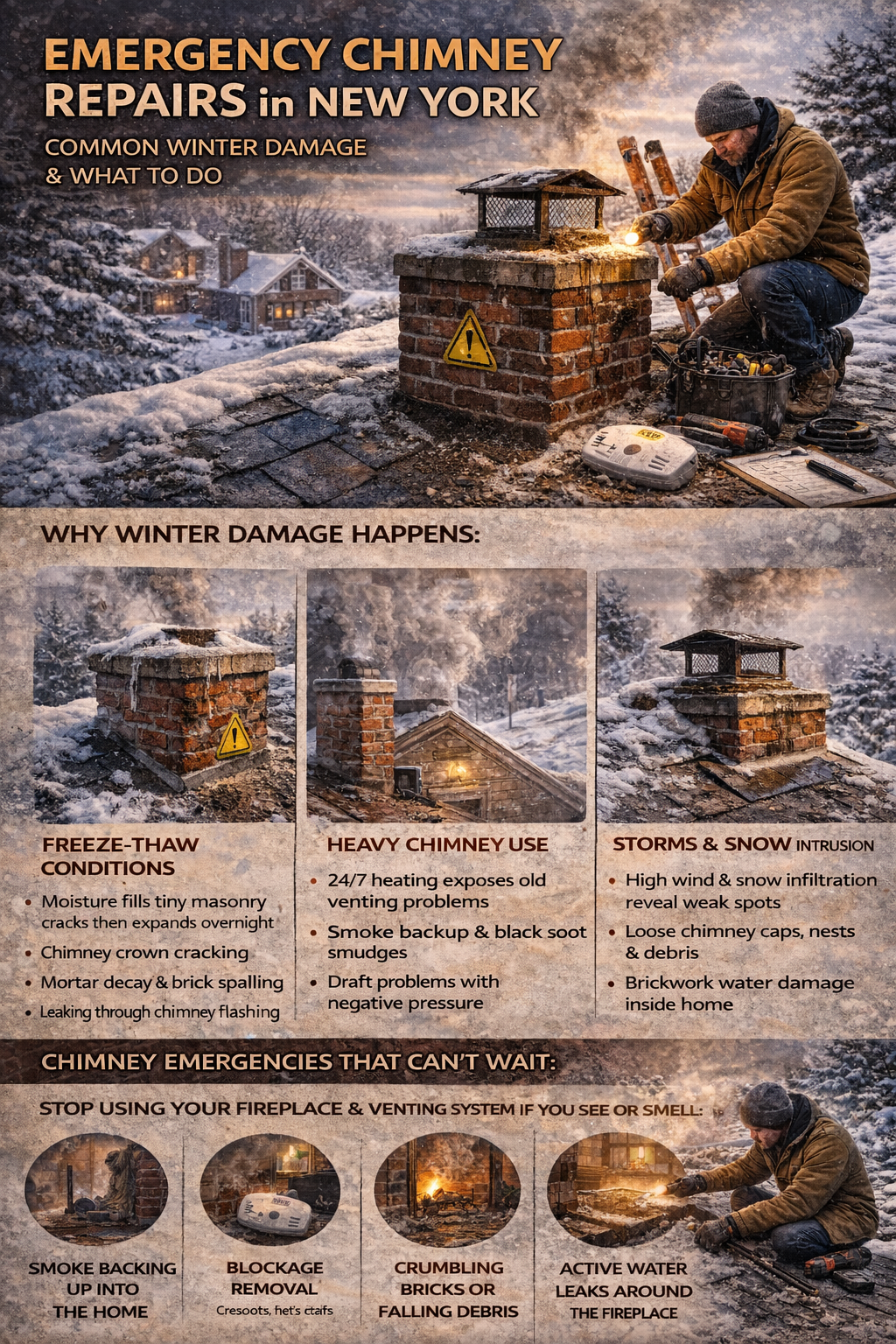
Before we get into what can be fixed, it helps to know when you should stop using the fireplace immediately.
A chimney issue is urgent if you notice:
Carbon monoxide is one of the biggest risks because you cannot see it or smell it. The CDC has clear guidance on warning signs and why working CO alarms matter during heating season.
If anyone in the home feels dizzy, nauseous, unusually tired, or gets headaches while the fireplace is running, treat it seriously and get help.
Yes, but with realistic expectations.
Winter repairs are often focused on:
Some repairs can be completed fully. Others can be stabilized temporarily, then finished properly once temperatures rise.
That’s why homeowners often call Certified Chimney NY for emergency chimney service in winter, then schedule permanent restoration work for spring when conditions are ideal.
If you see water stains near the chimney or fireplace, it’s usually not “just a little leak.” Chimneys act like sponges when water gets in, and winter makes that worse.
Common sources include:
In many cases, chimney leak repair can be done in winter with the right approach:
Stopping water damage quickly matters because moisture can lead to mold, wood rot, and interior structural damage if left alone.
If your fireplace suddenly starts smoking or drafting poorly, blockage removal is often the answer.
Blockages create immediate fire hazards because smoke and flue gases have nowhere to go.
Most blockage removal and chimney cleaning can be performed in winter, and it’s one of the most important services to schedule when you’re dealing with smoke backup.
Chimney cleaning also reduces the risk of chimney fires caused by creosote buildup.
Some repairs can be risky or ineffective when temperatures are too low or surfaces are too wet.
These often include:
If the chimney structure is severely compromised, winter may not be the right time for a full rebuild due to curing and weather delays.
Large tuckpointing or rebuilding projects are typically best scheduled when materials can cure properly.
Targeted sealing is often possible, but full-system waterproofing is usually stronger and longer-lasting when applied under ideal conditions.
A professional evaluation helps you avoid spending money twice. Certified Chimney NY can stabilize what’s urgent now, then plan permanent repairs the right way.
When you call Certified Chimney NY for emergency chimney service in winter, the goal is usually:
Emergency calls in winter often require fast decision-making, but good companies will still document damage and explain repair priorities without rushing you into unnecessary work.
If your chimney is leaking, smoking, or showing signs of structural cracking, winter is not the time to ignore it and hope it holds together until spring. Emergency chimney repairs are often about preventing a small problem from turning into a major one.
Many winter issues can be repaired right away, including chimney leak repair, flashing repair, blockage removal, and urgent safety corrections. Some bigger projects may need to be finished during warmer months, but stabilizing and protecting the chimney now is still a smart move.
If you need help, Certified Chimney NY provides emergency chimney services across Long Island, New York City, and surrounding areas, with experienced technicians who understand what winter damage looks like and how to fix it safely.
Protect your chimney from rain, moisture, and costly water damage.