
Winter in New York puts heavy stress on every chimney liner, especially in older homes with a masonry chimney. Cold air, snow, and freeze-thaw cycles create small cracks that weaken the flue liner over time. When these cracks grow, they allow combustion gases and moisture to escape into areas they should not reach. This can lead to chimney fires, carbon monoxide leaks, and water damage inside your home. For New York homeowners who rely on a heating appliance for months, understanding chimney safety after winter is essential to avoid costly and dangerous problems.
New York winters bring freezing temperatures that affect clay tile liners, stainless steel systems, and even cast-in-place liners. Moisture enters the chimney system and freezes, causing expansion inside the chimney flue and clay tiles. This repeated freeze-thaw cycle leads to cracks, flaking, and separation in the liner. When damage spreads, the chimney loses its ability to safely vent combustion byproducts. This creates venting problems that can push dangerous gases back into your home, making your fireplace system unsafe to use.
A damaged flue liner often shows warning signs that homeowners should not ignore. You may notice water stains on walls near the chimney, pieces of clay tile liner falling into the fireplace, or strong odors caused by creosote buildup. These issues usually come from cracks or gaps that allow moisture and combustion gases to escape. Over time, this leads to corrosion, mold growth, and even carbon monoxide leaks. If left untreated, these problems can turn into chimney fires or expensive chimney repair needs.
A chimney liner plays a key role in protecting your home by directing combustion gases safely out of the chimney system. When the liner is intact, it prevents heat transfer to nearby materials and reduces the risk of chimney fires. According to the National Fire Protection Association, proper liner function is essential for fire safety and meeting building codes. Without a functioning flue liner, dangerous gases like carbon monoxide can enter living spaces, putting your family at serious risk during the heating season.
There are several types of replacement liners available depending on your chimney condition and heating system. Clay tile chimney liners are common in older homes but are prone to cracking under New York weather conditions. Stainless steel chimney lining is a popular upgrade because it offers strong corrosion resistance and works well with gas appliances and fireplaces. Cast-in-place chimney liners use a poured-in-place compound to create a seamless liner that strengthens the entire chimney structure. Each option has benefits, and a chimney technician can recommend the best solution after a chimney inspection.
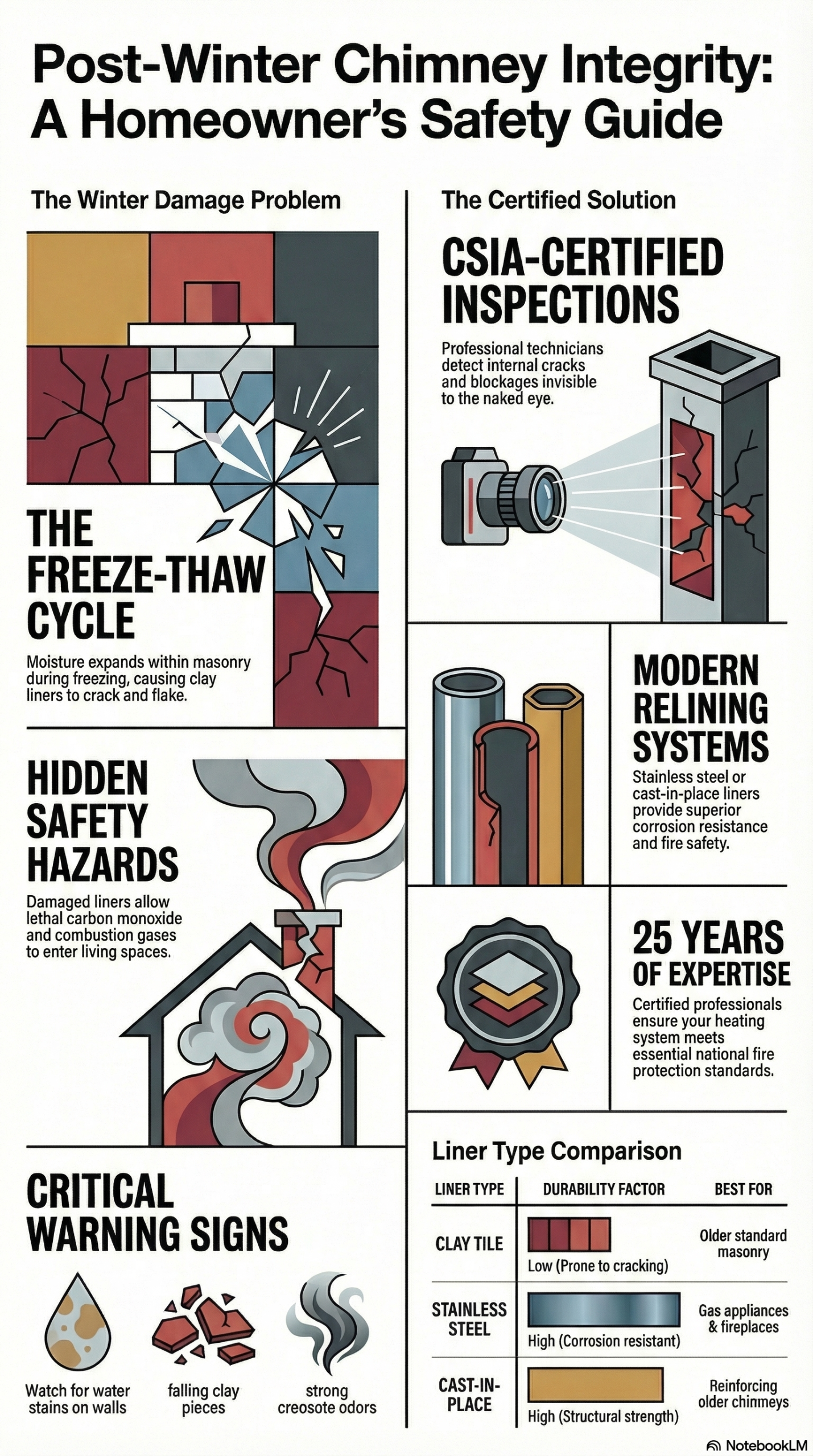
After winter, scheduling a professional chimney inspection is one of the most important steps for homeowners in New York. A CSIA-certified chimney technician can check for cracks, creosote buildup, and damage inside the chimney flue that is not visible from the outside. The Chimney Safety Institute of America recommends annual inspections to maintain chimney safety and prevent unexpected repairs. Regular inspections help detect small problems early before they turn into major issues that require full chimney relining.
Not all chimney liner issues require full replacement, but many winter-related problems do. Minor cracks in clay tiles may be repaired using resurfacing methods like the HeatShield process. However, when there is widespread damage, gaps, or severe corrosion, full chimney relining is usually the safest option. Ignoring the need for replacement liners can result in ongoing venting problems and increased risk of chimney fires. A certified chimney inspection will determine whether repair or complete relining is needed to restore chimney safety.
Maintaining your chimney system throughout the year helps prevent winter damage from becoming a major issue. Routine maintenance such as cleaning by a chimney sweep, installing a chimney cap, and addressing water damage early can extend the life of your flue liner. New York’s climate makes it important to protect against moisture entering the chimney chase and crown of your chimney. By staying proactive, homeowners can avoid costly chimney rebuilds and ensure their heating system operates safely every season.
If your chimney liner has gone through a harsh New York winter, it is important to take action before using your fireplace or heating appliance again. Damage caused by freeze-thaw cycles, creosote buildup, and moisture can compromise your chimney system and lead to serious safety risks. Scheduling certified chimney inspections and addressing issues early will protect your home from carbon monoxide leaks and chimney fires. Taking these steps ensures your chimney remains safe, efficient, and ready for the next heating season.
Get quick answers to common questions New York homeowners have about damaged flue liners, chimney safety, inspections, and relining after winter.
Chimney Cleaning – $99.99 per flue